
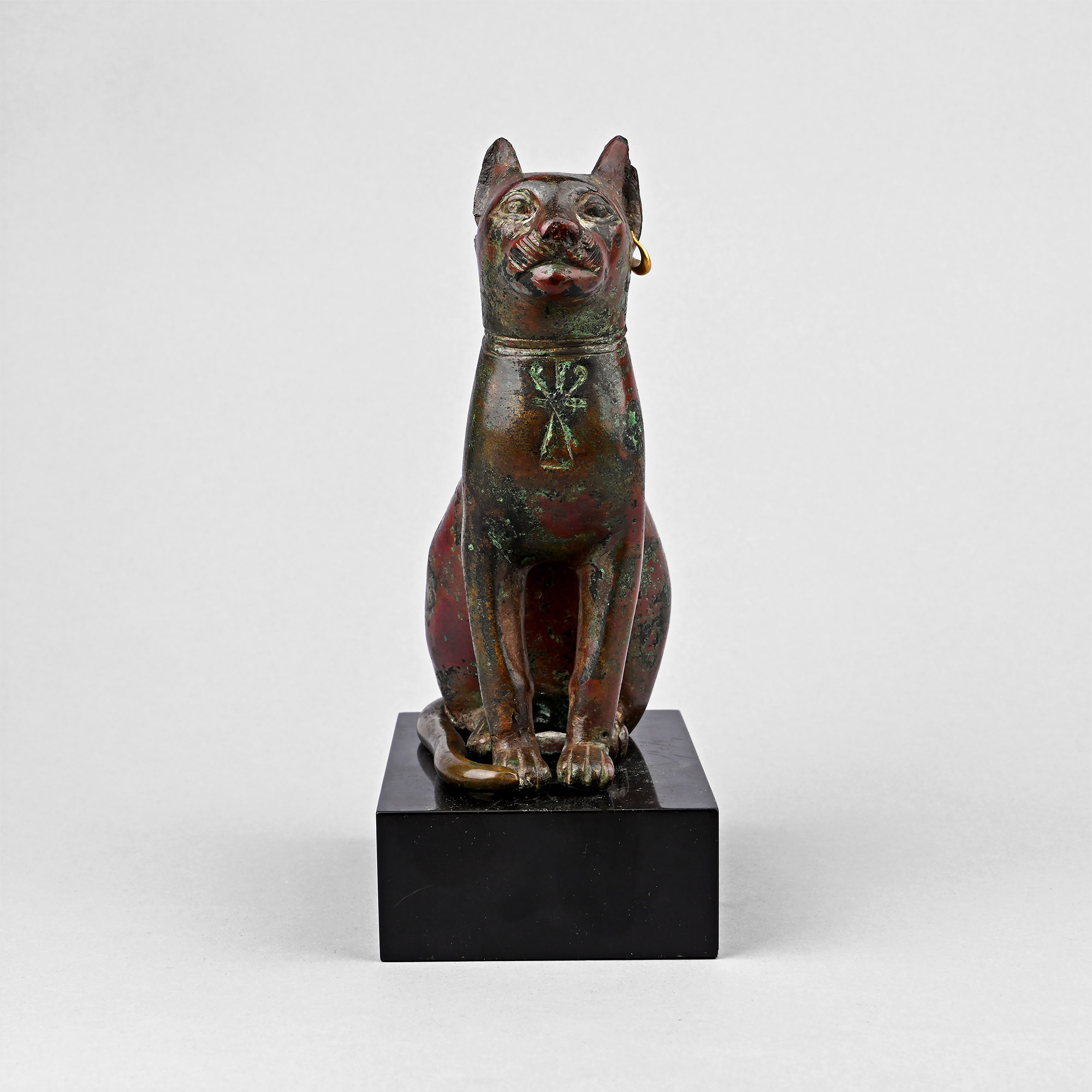
The Egyptian bronze cat of Bastet in the Peter Clayton collection has a gold ring in its left ear. The right ear is pierced for a second ring, now missing. The cat sits upright with its head raised, 16 cm tall, its tail laid round to its forepaws, a collar incised at its neck and a pendant with the emblem of Hathor on its chest. Norman Davis of Seattle bought it from Spink in London in 1956, and about 1972 he gave it to his friend Peter Clayton, the Egyptologist who later wrote Chronicle of the Pharaohs.
Davis was a Manchester-born brewer who travelled the world for ancient Greek coins and left many of them to the Seattle Art Museum. In 1973, the year Thames & Hudson published his book on Hellenistic coins with Clayton as the firm's archaeology editor, he gave Clayton a second present, the limestone head of an Old Kingdom official in a wig of tight curls that is now lot 5.
Clayton is TimeLine's own specialist in Egyptian antiquities, and the Egyptian part of his collection fills lots 1-32 and 391-500 of the sale that opens on 1 December 2026. He wrote each purchase up on a numbered card with the place, the date and the price, and many of those cards are sold with the lots.
What is in the Peter Clayton collection?
In 1972, at about the time the cat arrived, Clayton opened a paper in the Journal of Egyptian Archaeology with the sentence: "After the ubiquitous scarab, the shawabti figure, mummiform or in civilian dress, is the commonest of Egyptian antiquities." Shabtis (also called shawabtis or ushabtis) are the small figures put in tombs to do the work of the dead in the fields of the afterlife. The collection holds nearly thirty of them, alongside eighteen funerary cones, some two dozen flint tools, and moulds, amulets, sherds and inscribed fragments of stone.
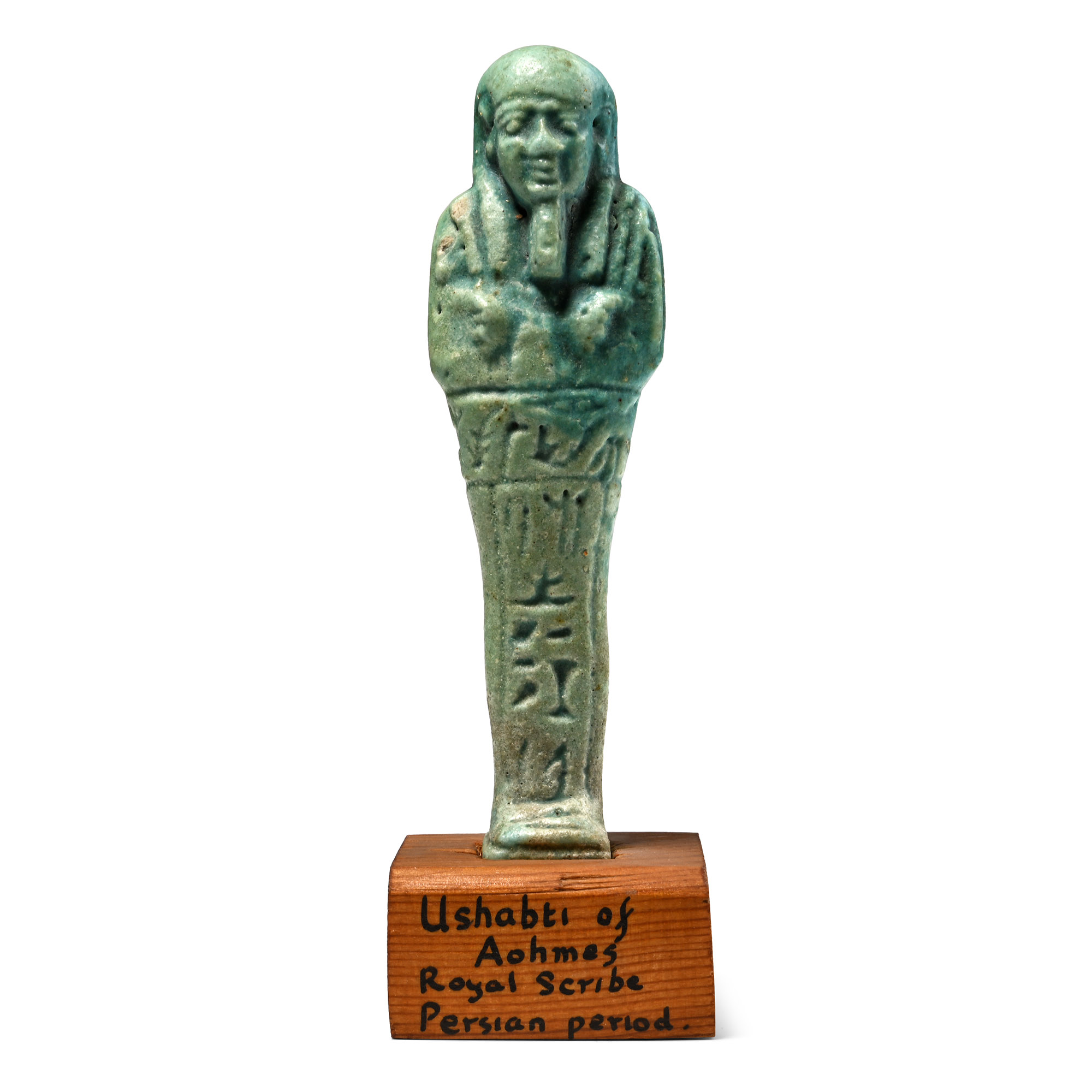
Card number 4 is a blue faience shabti of the royal scribe Aahmes, whose inscription names his mother, Hotep-Bastet. Clayton bought it in Herne Bay High Street early in 1957 for 2s 6d, half a crown, which is about £4 in today's money. He was nineteen and worked in Islington's public libraries.
The numbered cards go up to 149, in April 1980, and the places on them are Portobello Road and Church Street, Michael's in Crawford Street, Richardson's in St Christopher's Place, and the Friday Caledonian Market in Bermondsey. At the Caledonian Market in January 1960 he paid four shillings for an ibis-headed bronze Thoth, later restored in the Institute of Archaeology laboratory (lot 395).
Over the same years he moved from the public libraries to Thames & Hudson and then to British Museum Publications, as its founding managing editor, and the numbered series stops in 1980, the year he left to found the antiquities department at B. A. Seaby. In 1994 he published Chronicle of the Pharaohs, a reign-by-reign record of Egypt's rulers that has since been translated into fifteen languages, and his own collection can be read the same way, king by king, with shabtis standing in for several of them.
Tutankhamun, Akhenaten and Nefertiti
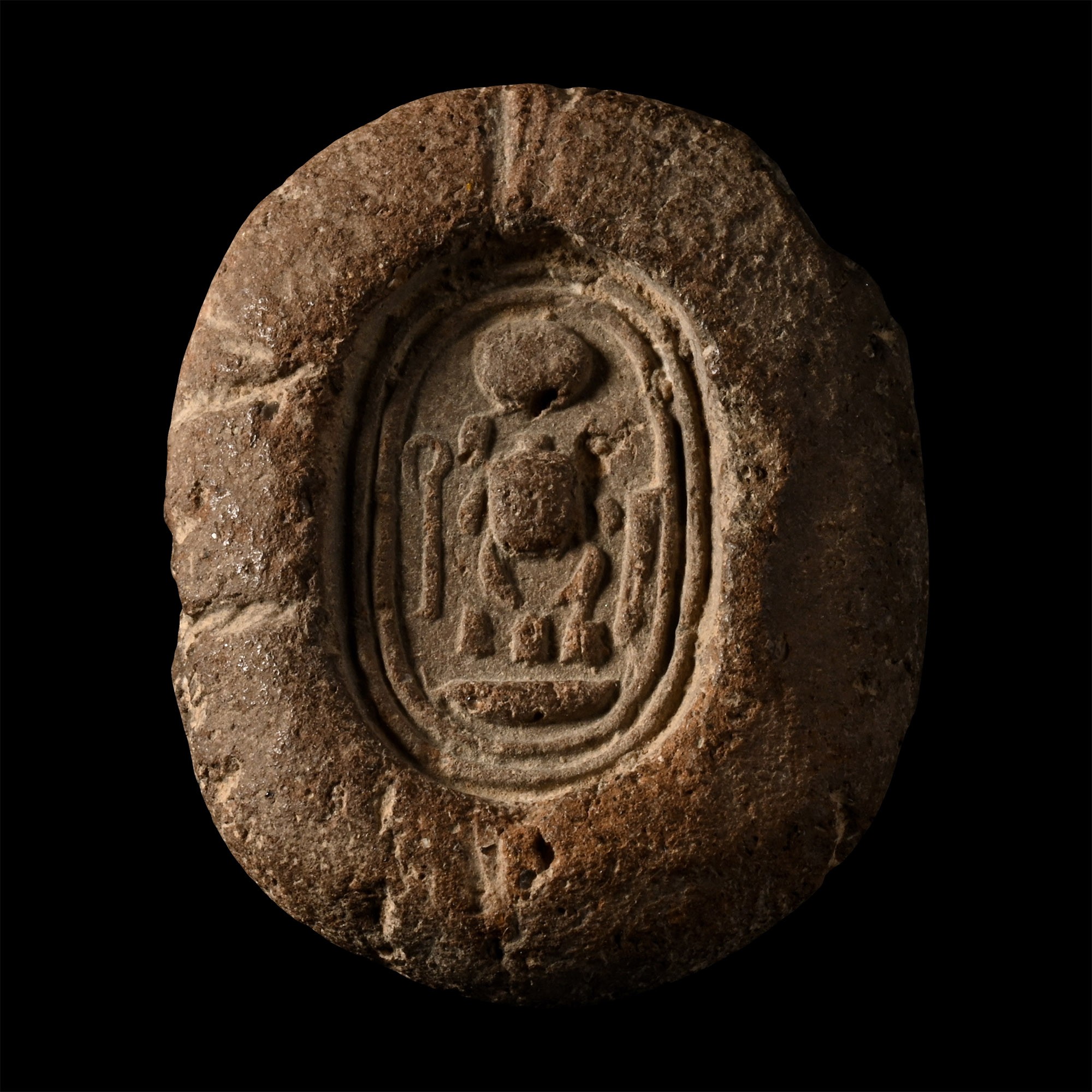
Card number 50 cost the same half a crown at the Caledonian Market in November 1958. It is an oval of fired clay 29 mm long, pressed with the cartouche of Tutankhamun as ruler of Hermonthis, the town now called Armant. Moulds like this made faience bezels for finger rings: a popular ring was borrowed from a friend and pressed into a lump of clay, and the clay was baked and sent off to a glazier, who used it to turn out copies.
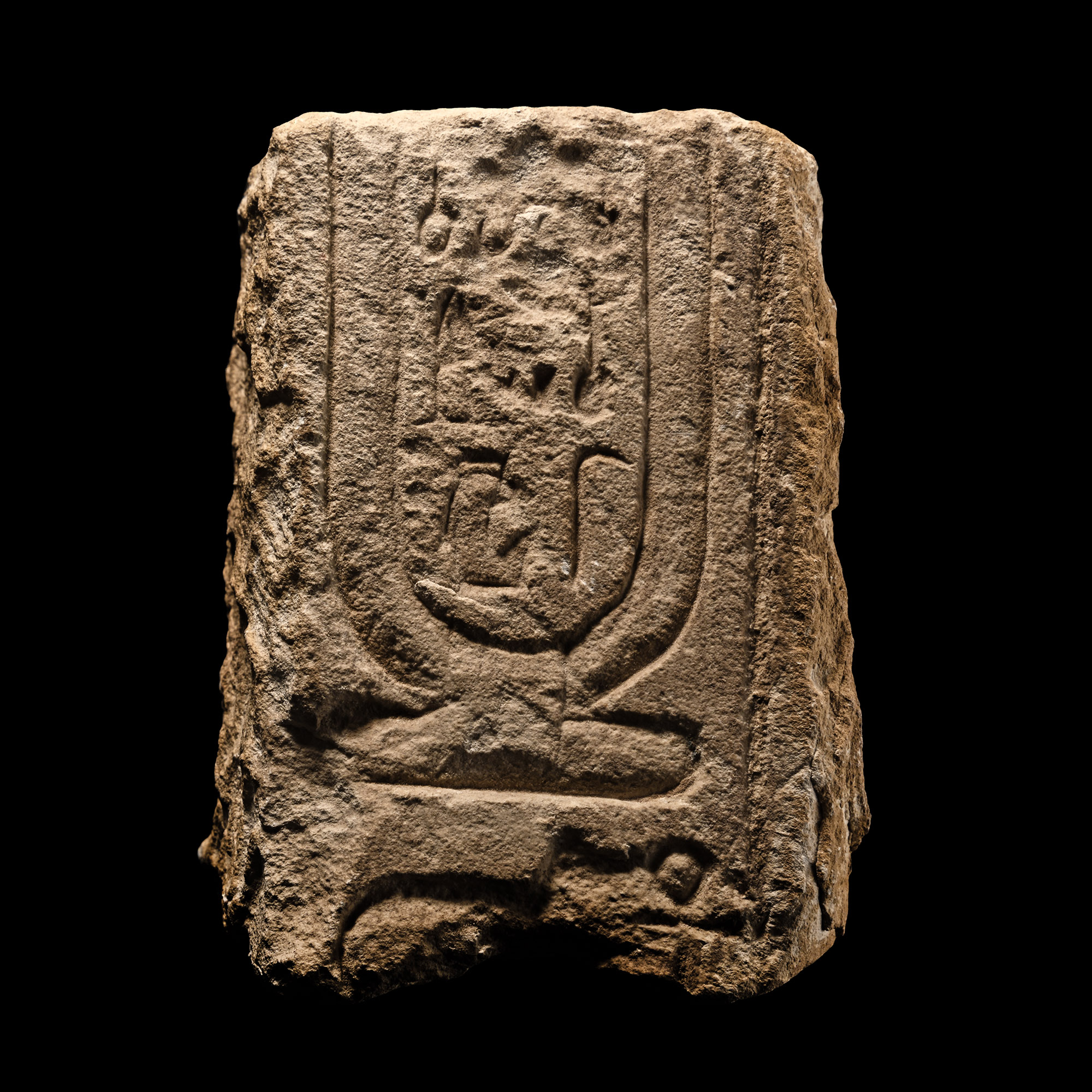
Four of Clayton's cards fall in March 1977, nearly twenty years after the mould, and two of them are for limestone from the reign of Akhenaten. One is a fragment with the end of the king's throne name, Nefer-kheperu-Re, "Beautiful are the Manifestations of Re", which still carries traces of blue and white paint (lot 9). The other is a dressed block from a tomb with most of a cartouche naming his queen, Neferneferuaten Nefertiti. Some scholars think that Nefertiti went on to rule beside Akhenaten, or on her own after him, under the name Neferneferuaten.
The first of that month's cards, number 126, is for an alabaster shabti of Ramesses VI (lot 19). It is a peg-like figure whose wig, arms, collar and inscription, with both of the king's cartouches, are drawn on in black, a type Egyptologists call à contours perdus, "with lost outlines". Ramesses VI cut his tomb in the Valley of the Kings just above Tutankhamun's, and the huts of the men who built it covered the older tomb's entrance until Howard Carter cleared them in November 1922 and found the first step of Tutankhamun's stairway beneath.
Seti I's wooden shabtis, some of them lit as torches
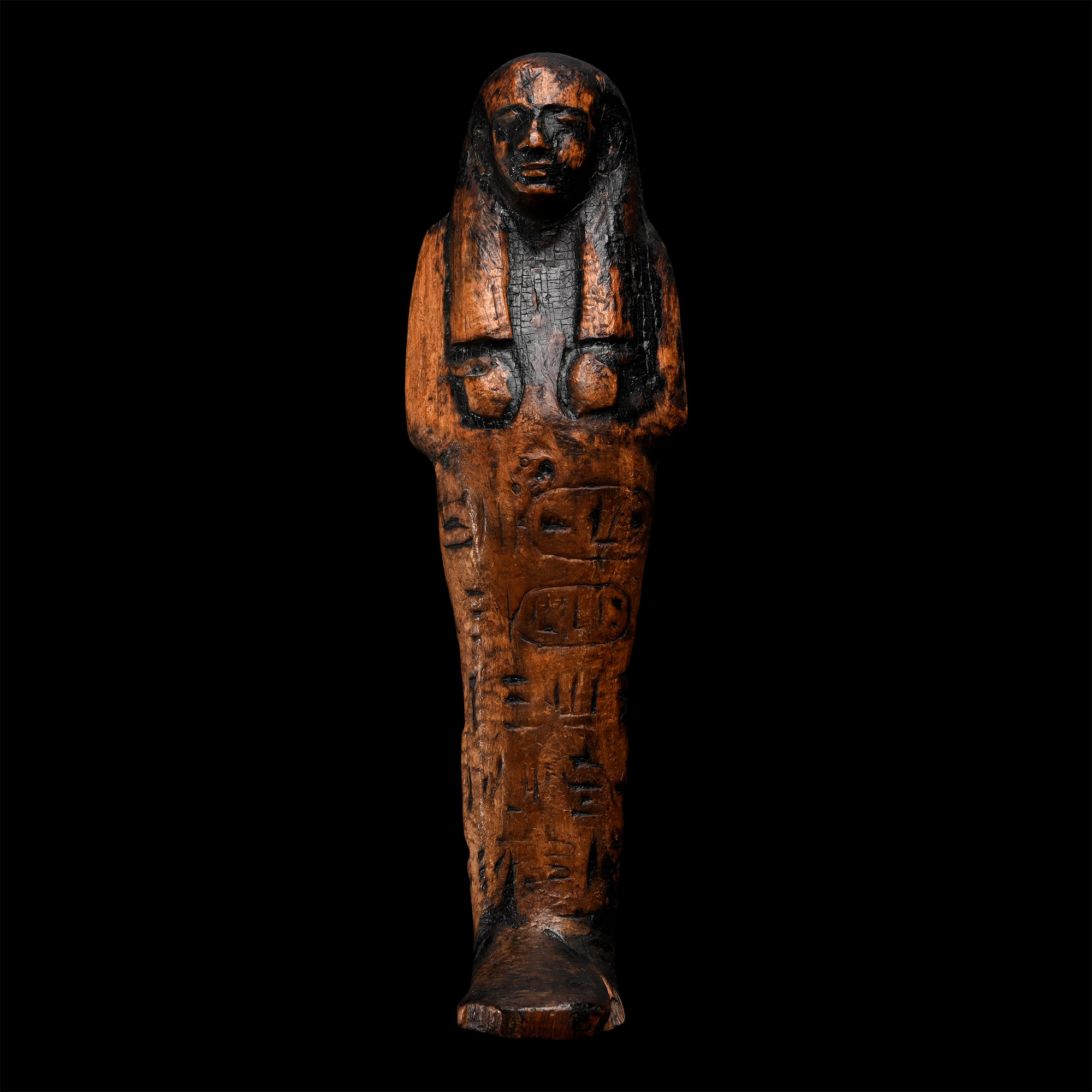
Giovanni Belzoni, the circus strongman who turned excavator, opened the tomb of Seti I in October 1817. In a side chamber he found "an immense quantity of small wooden figures of mummies six or eight inches long, and covered with asphaltum to preserve them". Lot 14 is a figure of that kind, 18.5 cm tall, a little over seven inches. It is carved with Seti's two cartouches and six rows of the shabti spell, and black varnish still lies between the lappets of the wig. Clayton paid £20 for it at a London antiques market in the 1960s. Of Seti's wooden figures he has said that "no one will ever know how many there were", and that there are accounts of them being held three or four together in the hand and lit as a torch.
Belzoni's prize lay in the burial hall, an alabaster sarcophagus nine feet five inches long, which Sir John Soane bought in 1824 and which is still in his house in Lincoln's Inn Fields. Lot 15 is a thick piece of alabaster carved with parts of both of Seti's cartouches, Men-Maat-Re and Seti-mery-en-Ptah. It may come from that sarcophagus, as Clayton noted on his card, and perhaps from its lid, which Belzoni found broken in pieces outside the tomb's entrance and which survives only in a small number of fragments.
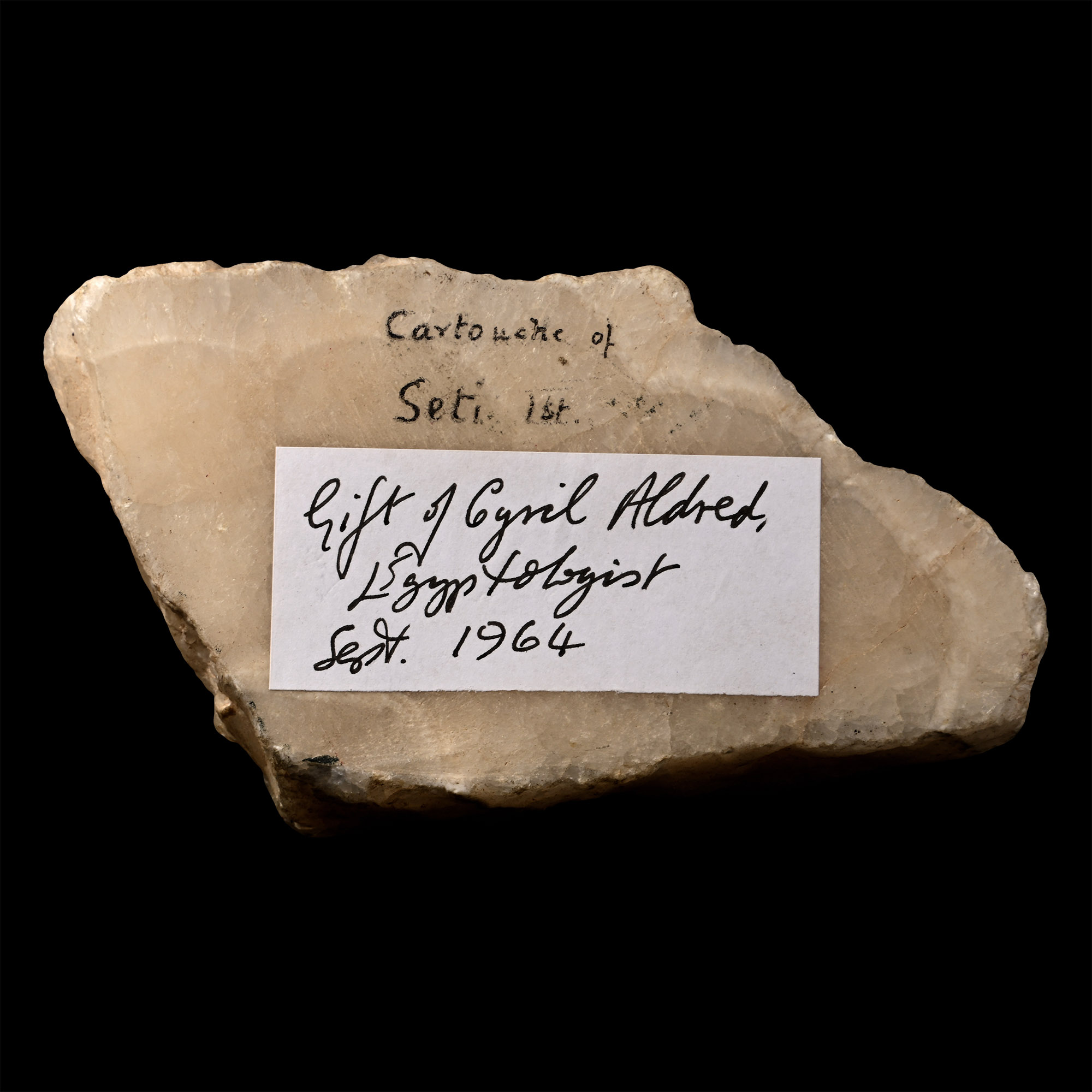
The fragment was a gift in September 1964 from Cyril Aldred of the Royal Scottish Museum, a leading authority on Amarna art, whose Akhenaten, Pharaoh of Egypt (1968) would carry seven of Clayton's colour photographs. In 1978 Clayton was invited to lecture at the University of Padua, Belzoni's home town, for the bicentenary of Belzoni's birth.
Shabtis from the Egypt Exploration Society
In 1888 Amelia Edwards, the novelist who helped found the Egypt Exploration Fund (as the Society was then called), told its committee that the "many hundreds of worthless ushebtis" Flinders Petrie had found at Tell Nebesheh had probably done more to interest its subscribers than all the more important objects put together. After the 1899 season at Abydos the Fund had shabtis enough to give one to every subscriber. Clayton sat on the Society's committee for many years, and his cards record four shabtis bought from it on 30 June 1965 for half a crown each (lots 7, 13, 398 and 473).
Card number 122 belongs to a deep blue faience shabti that sold for £5 at an E.E.S. sale in November 1967 and that Clayton then bought from Richardson's in St Christopher's Place for £7 10s. The figure is 15.1 cm tall and lustrous, with the wig, the hoes, a seed bag on the back and eight columns of the shabti spell drawn in black. It comes from Deir el-Bahari and was made for Nesitanebisheru, daughter of Pinedjem II, High Priest of Amun at Thebes, and his wife Neskhons.
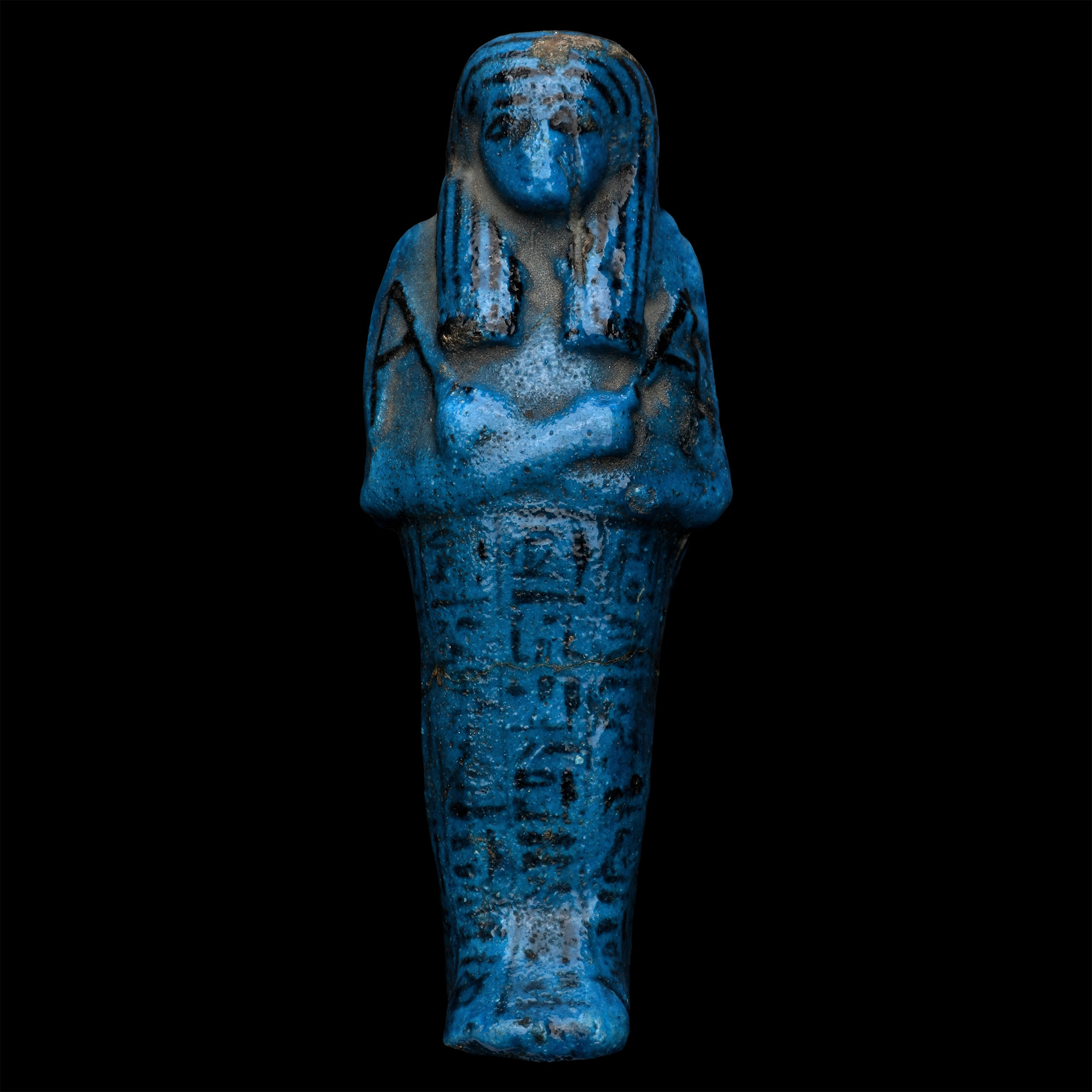
Her Book of the Dead is the Greenfield Papyrus in the British Museum, which at more than 37 metres is over twice as long as the next longest papyri of its time. Among the titles it gives her is priestess of Pakhet, the lioness goddess of the Speos Artemidos near Beni Hasan, and its version of the shabti spell tells her figures to answer for her "in order to plant the field, in order to flood the shores, in order to row sand of the West to the East".
Clayton's 1972 paper goes on to say that, among the thousands of shabtis that survive, bronze ones made for private persons are rare. His collection has one, 78 mm tall and inscribed "The Osiris, the General Wendjebauendjed, true of voice" (lot 431, estimate £500-700), made for a general who was buried at Tanis in the royal tomb of Psusennes I.
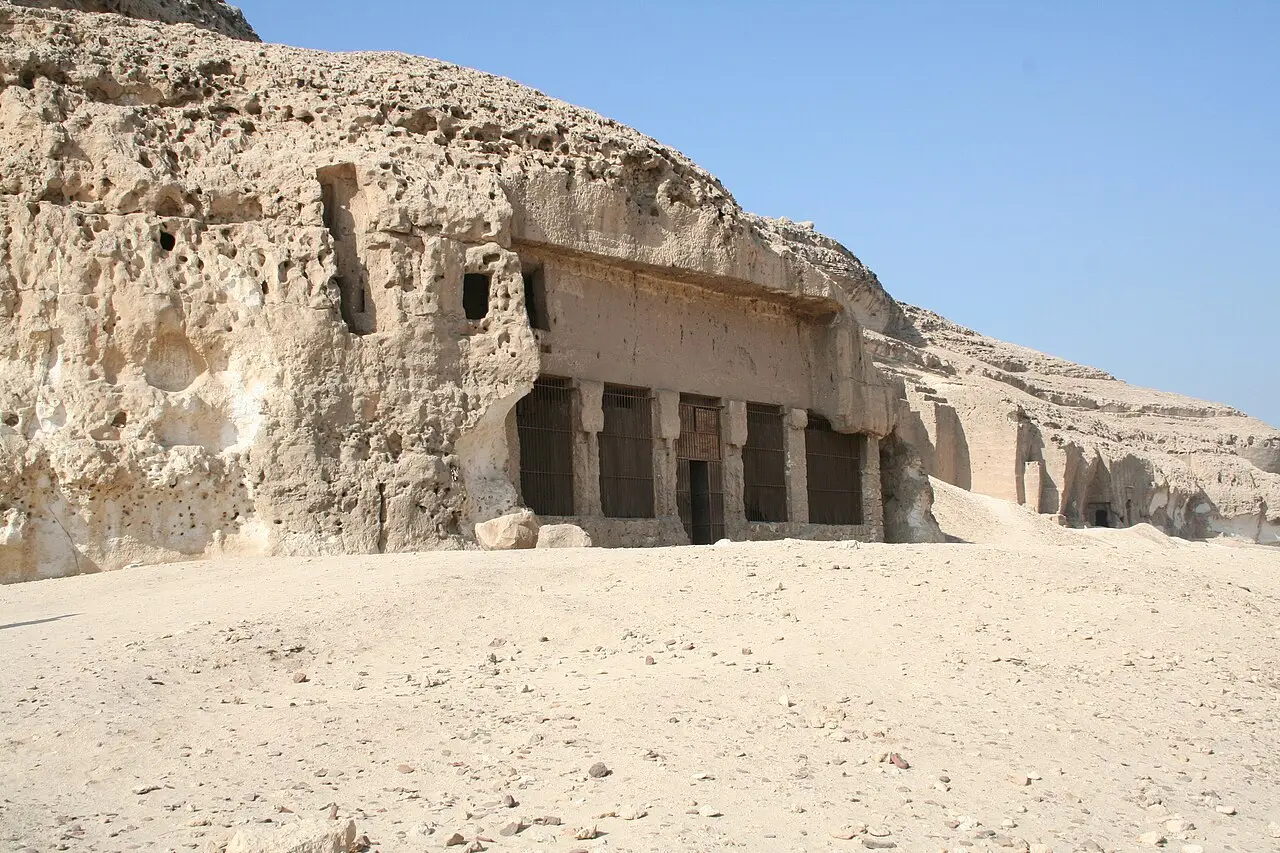 The rock-cut temple of Pakhet at the Speos Artemidos, south of Beni Hasan, made in the reign of Hatshepsut in the 18th Dynasty, some five centuries before Nesitanebisheru held the title of priestess of its goddess. Photo: Einsamer Schütze, CC BY-SA 3.0, via Wikimedia Commons.
Funerary cones from the West Bank at Luxor
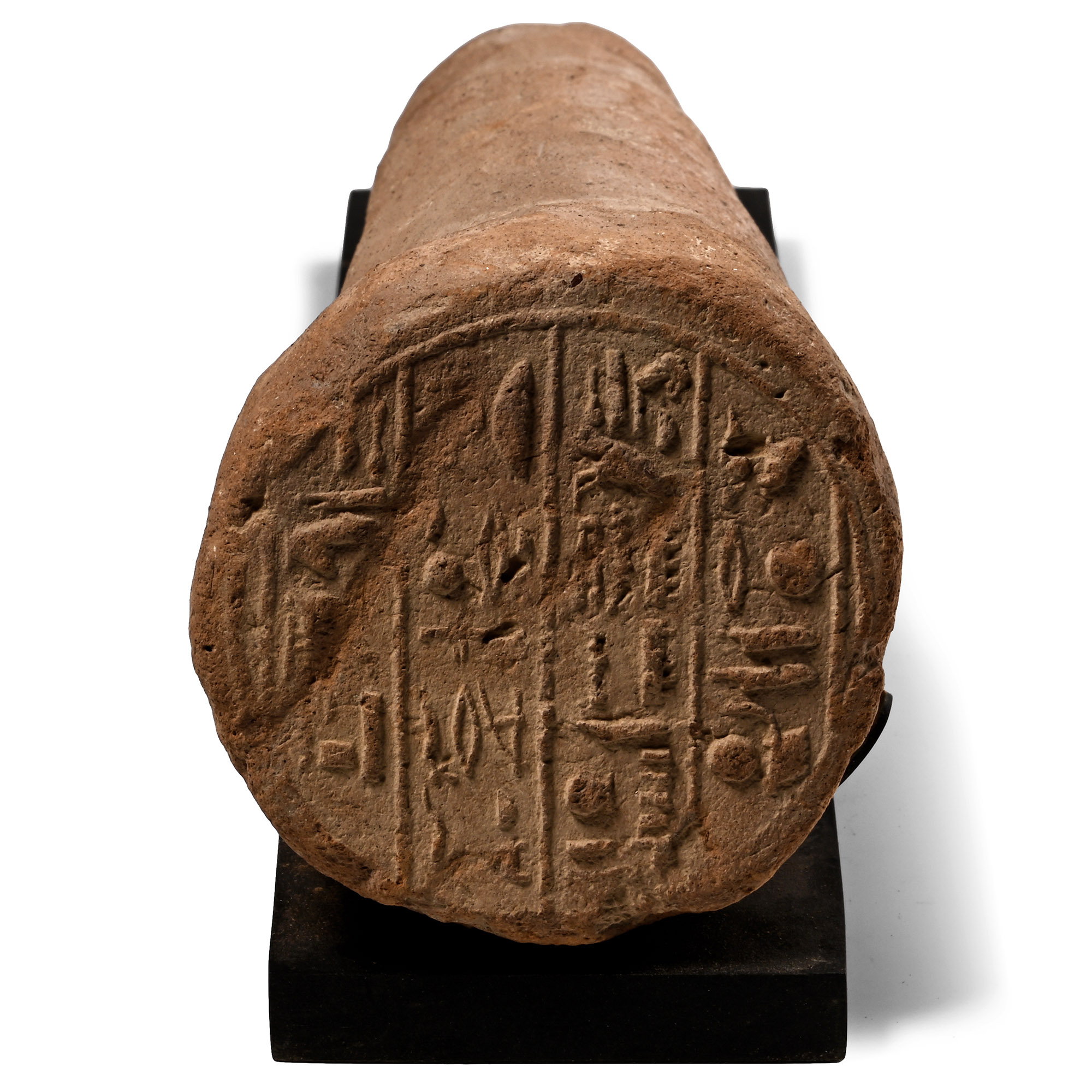
Clayton went out to Egypt as a guest lecturer several times a year, and between 1974 and 1980, on the West Bank at Luxor, he bought eighteen funerary cones from Abdoul Rassoul, in the last years before Egypt closed its antiquities trade in 1983. Funerary cones are pegs of baked clay that were set in rows in the mortar above the doors of Theban tomb-chapels, flat ends outward, each end stamped with the name and titles of the tomb's owner.
Four of the eighteen were stamped for Montuemhat, Mayor of Thebes and Governor of Upper Egypt, who was possibly the most powerful official of his day in the south and whose tomb still dominates the Asasif. Lot 28 is complete, a long tapering cone whose end carries four rows of text: "Honoured before Osiris, fourth god's servant (of) Amun, Montuemhat, true of voice, his wife, his beloved, king's acquaintance, lady of the house, Shepenmut, true of voice."
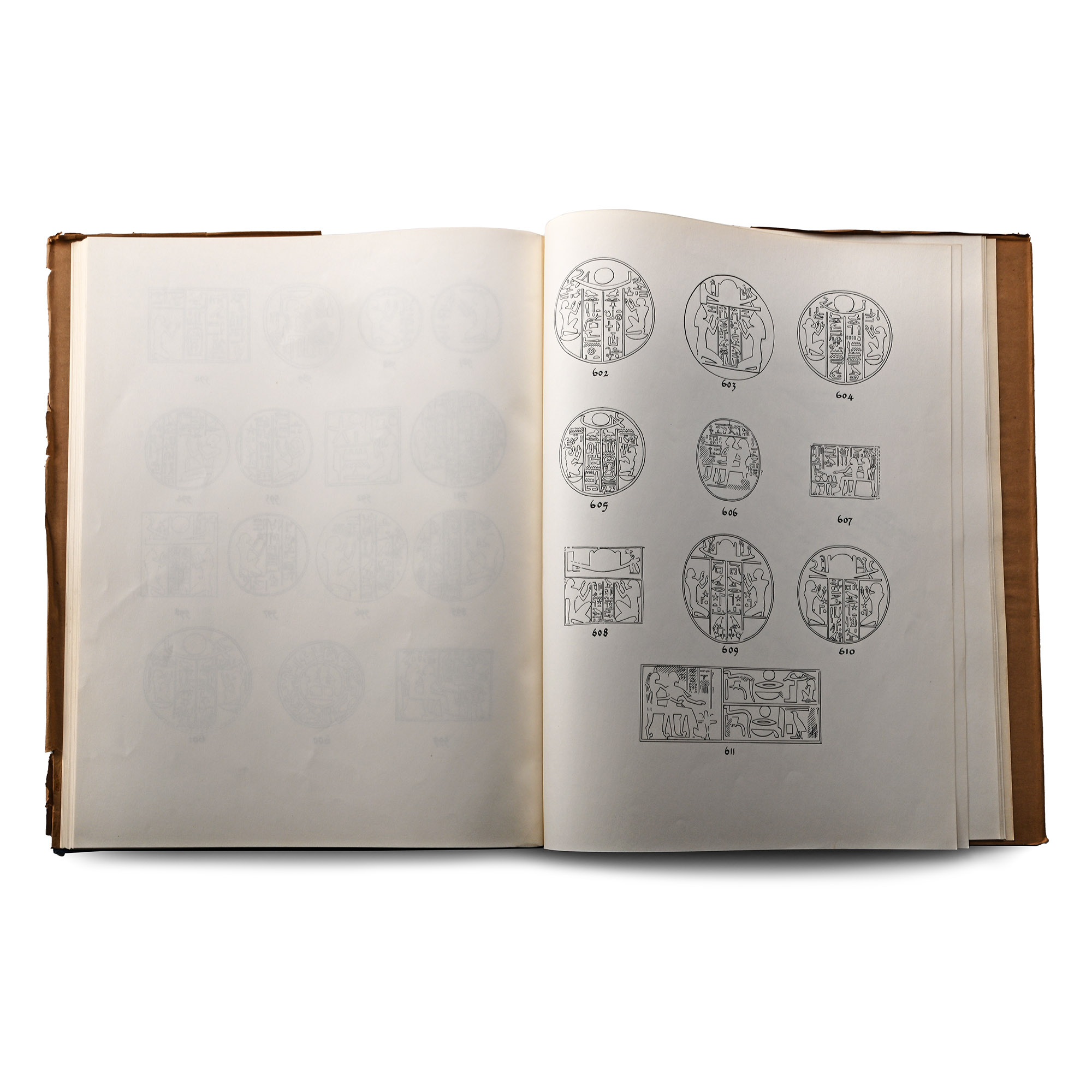
The standard reference for cones like Montuemhat's is A Corpus of Inscribed Egyptian Funerary Cones by N. de Garis Davies and M. F. L. Macadam, a folio of 611 drawings of cone stamps. It came out at Oxford in 1957, the year Clayton paid half a crown for Aahmes in Herne Bay High Street, and his own copy is in the sale with the cones.
What were Egyptian bronze cat statues for?
Montuemhat's cones, of about 700-650 BC, bring the collection to the edge of the 26th Dynasty, 664-525 BC, when the cat was made. In the Late Period the cult of Bastet spread through Egypt from her chief temple at Bubastis in the Delta, and votive bronzes were made in quantity. Herodotus was told that 700,000 people came to her festival there. She had begun as a fierce lioness, like Pakhet, and softened over the centuries into a cat goddess of protection and motherhood.
Some bronze cats were set up in Bastet's temples as offerings, and others, cast hollow, were coffins for mummified cats. A cache of temple bronzes found at Saqqara in 1976 held several seated cats, among them two tiny ones on a single base inscribed for Hathor Bastet. The two goddesses meet in the same way on the Clayton cat, whose chest pendant is an emblem of Hathor, a protector of mothers and children.
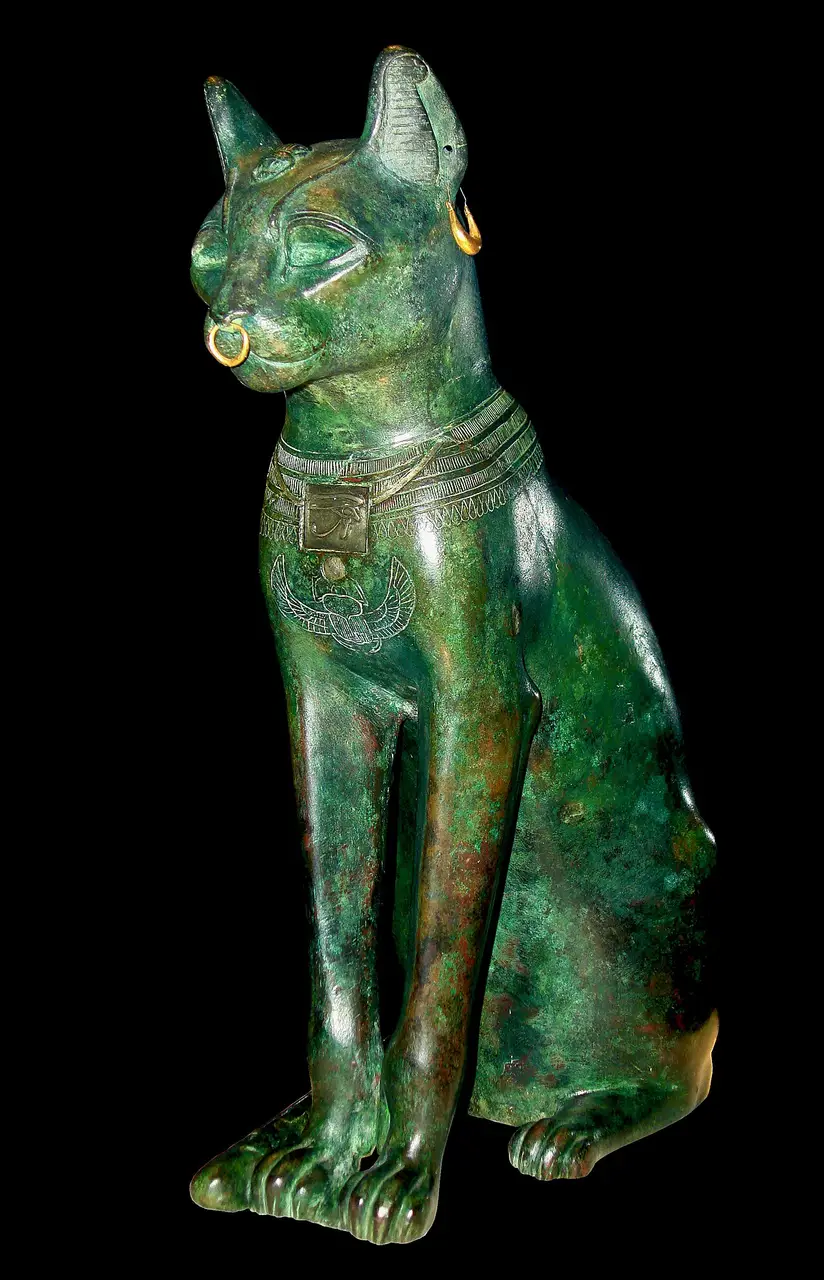 The Gayer-Anderson cat in the British Museum, Late Period, with a silver plaque bearing the wedjat eye at its collar and a winged scarab incised on its chest. Photo: Peter D. Tillman, CC BY-SA 2.0, via Wikimedia Commons.
Like the Gayer-Anderson cat in the British Museum, which stands 42 cm high, the Clayton cat wears gold: it still has one of the two rings its ears were pierced for. At 16 cm it is large for a seated bronze cat, since most that come to auction stand between about 5 and 15 cm. Cats of about its size have sold in recent years for between £23,750 in 2020 and £81,250 in 2018, and a 13 cm cat wearing gold earrings made £40,000 in 2017, against an estimate of £15,000-20,000. The Clayton cat has had two owners since Spink sold it seventy years ago, Norman Davis and then Peter Clayton, and it is lot 32 on 1 December.
