
Loading, please wait...
LOT 0019
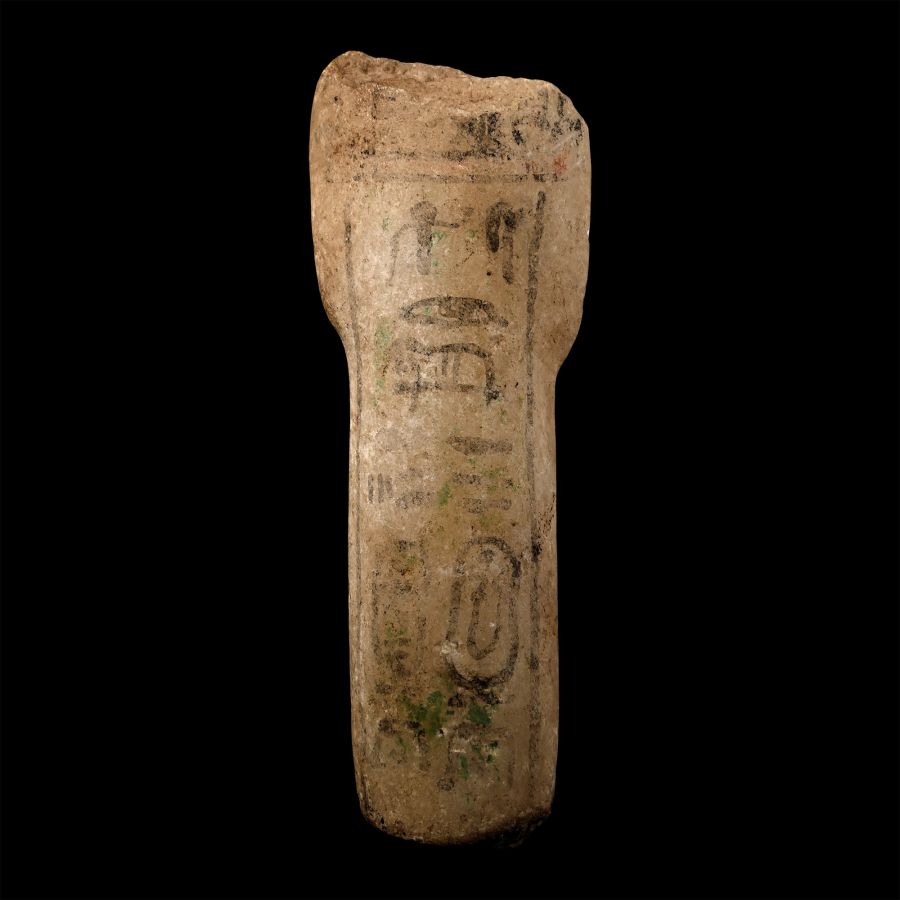
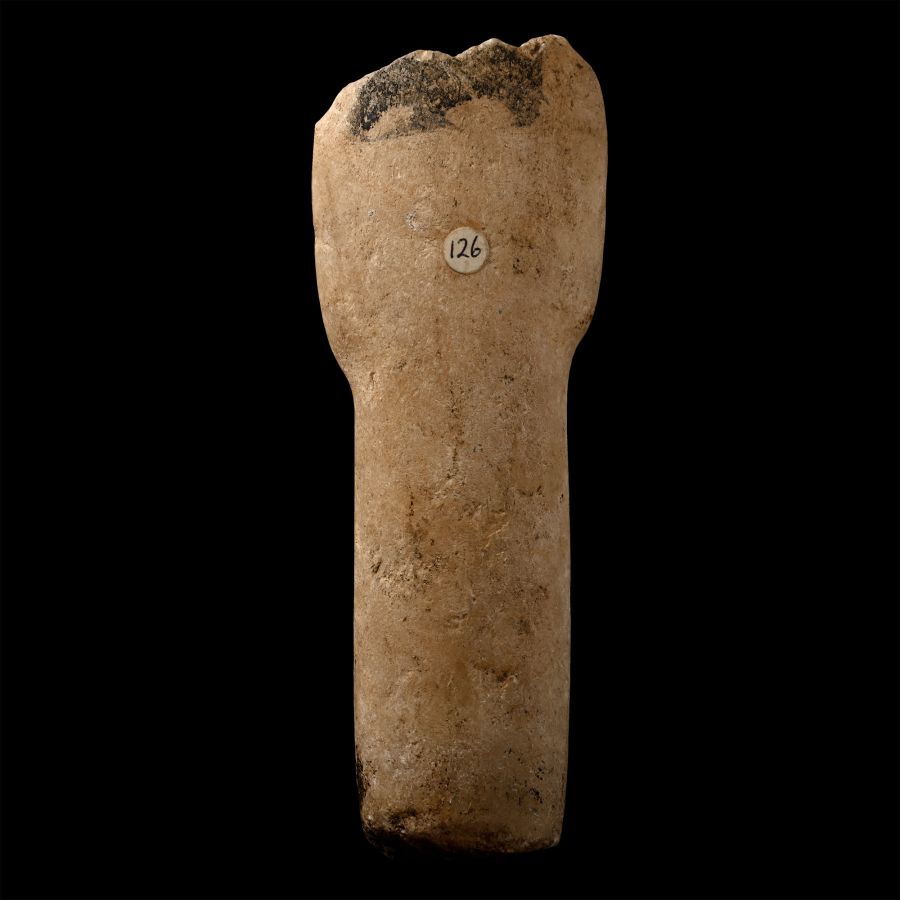
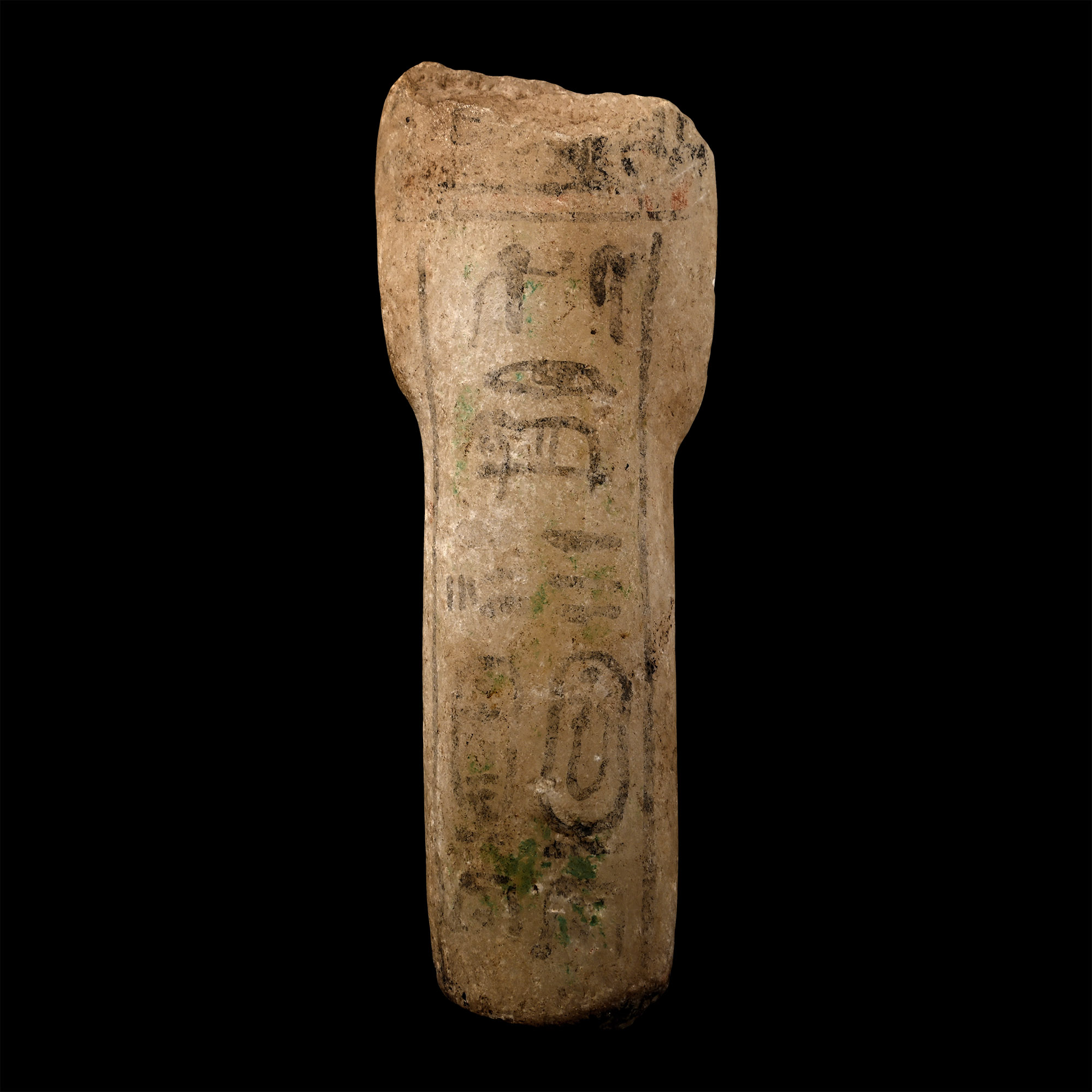
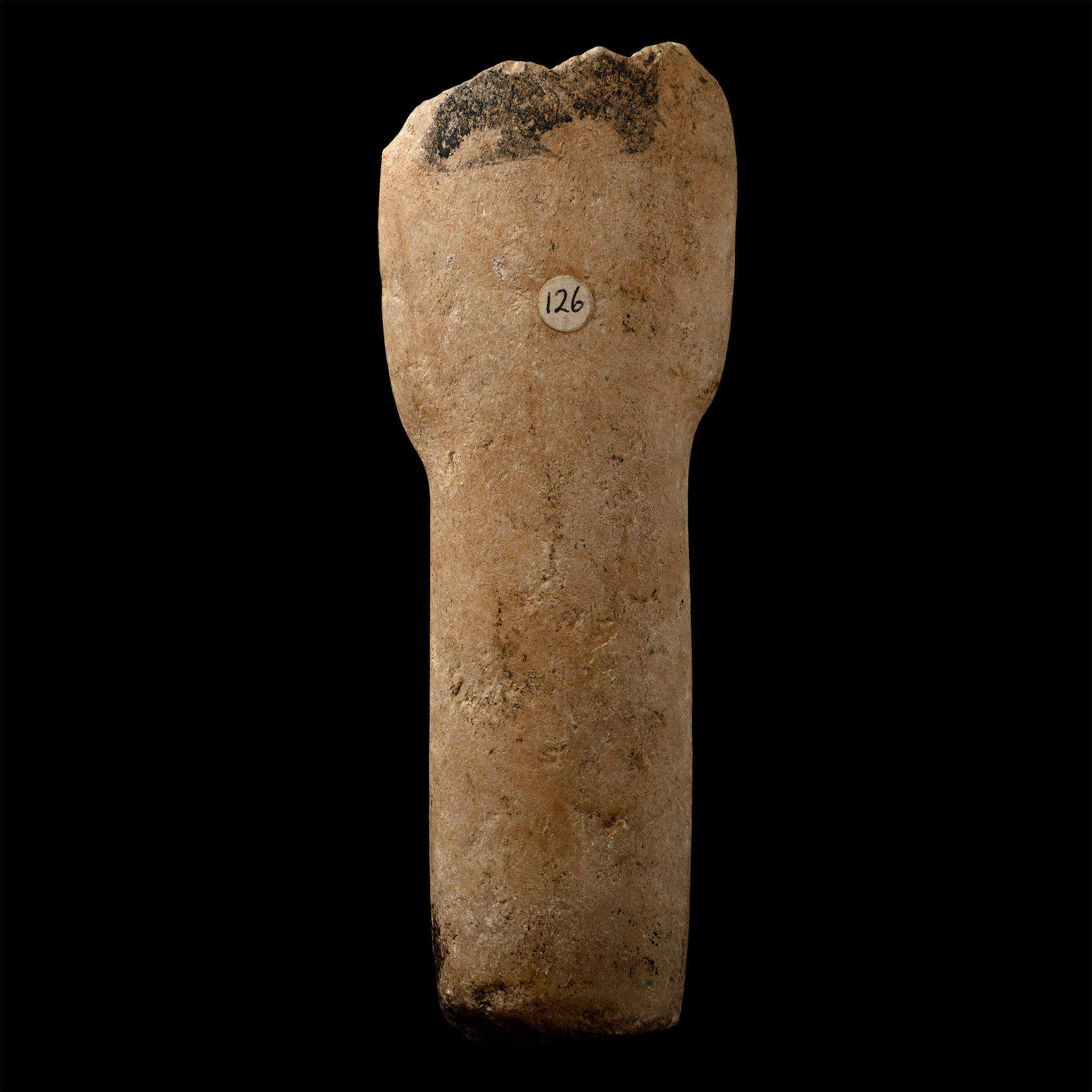
Egyptian Alabaster Shabti of Pharaoh Ramesses VI
NEW KINGDOM, 20TH DYNASTY, CIRCA 1140-1132 B.C.
5 3/4 in. (431 grams, 14.7 cm).
Formless mummiform shape (head missing), with the lower portions of a lappet wig, schematically represented arms and hands, a collar, and an inscription added in black, with traces of green pigment; the inscription, including two cartouches, reads: 'The illuminated one, the Osiris, Lord of the Two Lands Neb-Maat-Re, beloved of Amun, Master of Appearances, Ramesses', sḥḏ wsı͗r nb tꜢwy (nb-mꜢꜤt-rꜤ mry ı͗mn) nb ḫꜤw (rꜤ-ms.sw). [No Reserve]
ProvenanceAcquired March 1977.
From the private collection of Peter Clayton, FCILIP, Dip, Arch, FSA, FRNS, Hemel Hempstead, Hertfordshire, UK; formed since the late 1950s.
Accompanied by an old handwritten information card by Peter Clayton, collection no.126.
Cf. Loffet, H.C., La Collection Emmacha: Antiquités Égyptiennes 2 – Objets divers, Paris, 2013, pp. 59-61, no. 18, for a similar Ramesses VI shabti with two cartouches and text layout.
FootnotesThis rather rudimentary, peg-like shabti is characteristic of those for Ramesses IV, VI, and VII, as well as of non-royal figurines of the 20th Dynasty. Because of their virtually featureless appearance, which relies entirely on painted details, this shabti type has been referred to as 'à contours perdus' ('with lost outlines').
CONDITIONTimeLine Auctions follows a vetting process to ensure the authenticity and legality of all items, reinforcing our commitment to integrity and responsible trading. Each antiquity, antique, and coin lot undergoes thorough examination by a vetting committee of at least ten external specialists, professional trade association members, scientists, and archaeologists: Our Vetting Process
AUCTIONS:
TimeLine is a leading auction house specialising in antiquities, ancient art, collectables, natural history, coins, medals, and books. Our auctions offer museums, collectors, historians, and enthusiasts the opportunity to acquire unique and historically significant pieces.
LOT 0019
Egyptian Alabaster Shabti of Pharaoh Ramesses VI
Estimate £1,000 - 1,400€1,160 - 1,620 (for guidance only)$1,350 - 1,890 (for guidance only)
Opening Bid
£5 (EUR 6; USD 7) +BP*
-
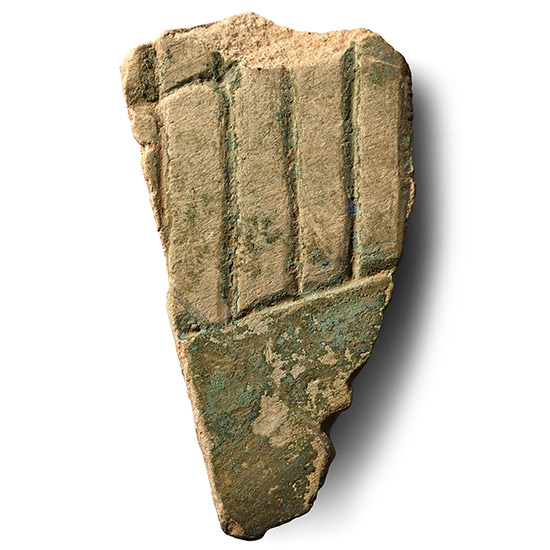
Egyptian Limestone Painted Relief Fragment from a Tomb
Middle Kingdom, circa 2030-1640 B.C.Estimate: £80 - 100 (+bp*)
Opening Bid: £5
Triangular in section with one decorated face including a band of vertical panels within a border, possibly wing feathers. 91 grams, 10.3 cm
with a privately curated collection, 1980s-early 2000s. From the private collection and estate of Christine Simons (1943-2025), West Midlands, UK. -
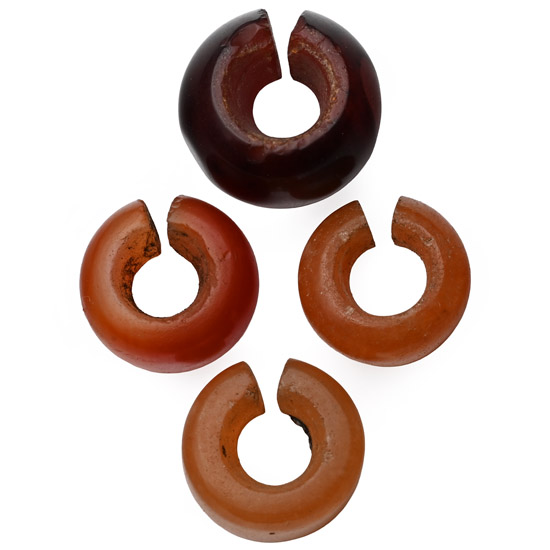
Egyptian Carnelian Hair Ring Collection
New Kingdom, circa 1400–1292 B.C.Estimate: £200 - 300 (+bp*)
Opening Bid: £100
Each a penannular lentoid-section type with narrow slot. 17 grams total, 16-20 mm
London gentleman's collection, 1970-1990s, by descent. -
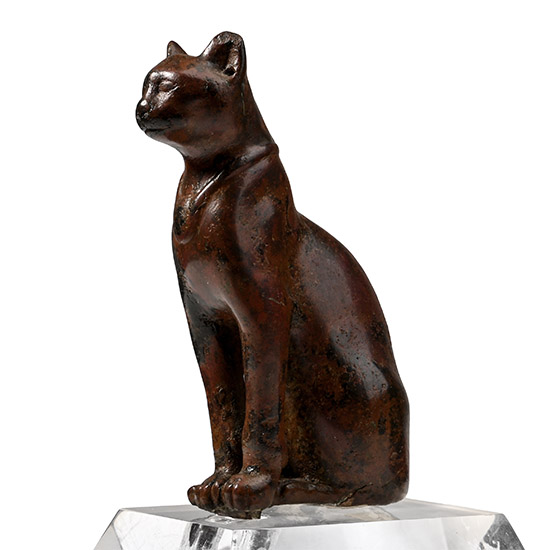
'The Fitzgerald' Egyptian Bronze Statue of the Seated Cat Goddess Bastet
Late Period, 26th-30th Dynasty, circa 664-332 B.C.Estimate: £3,000 - 4,000 (+bp*)
Bids: 1 | Current Bid: £5
Modelled seated, its tail wrapped around one side of its body and resting on a front paw, both ears pierced, wearing a collar featuring a large amuletic pendant, a rectangular tang for attachment to a separate element below; mounted on a 1970s custom-made perspex display stand. 470 grams total including stand, cat: 11.2 cm high
Dr Desmond Fitzgerald collection, no.28. Ex Nick Wright, 1990. From the collection of Charlie Watts (Rolling Stones drummer). This lot has been checked against the Interpol Database of stolen works of art and is accompanied by search certificate no.13462-261733.
The cat was the most sacred animal in ancient Egypt and associated with the cat-headed goddess Bastet, daughter of Re. When represented in human form as a cat-headed female, she usually holds a sistrum (a musical rattle) in her right hand with a supine cat on its top, and an aegis in her left. Small kittens are often shown at her feet. Her most important cult centre was at Bubastis (Tell Basta) in the north-east Delta. The site today is heavily ruined and the temple destroyed. Sir Flinders Petrie excavated at Bubastis and other nearby Delta sites in the 1880s. Tombs of some of the temple officials have been found nearby, and vast cemeteries of mummified cat burials left as votive offerings; so many thousands were found that they were used locally as fuel. Since Petrie’s investigations, the site has been abandoned and only in recent years have excavations begun to be undertaken. In painted nobles’ tombs at Thebes, a cat is often represented seated beneath the chair of the noble’s wife. In the 5th century BC, the Greek historian Herodotus wrote that the festival of Bastet at Bubastis was the most elaborate of all those in Egypt. The Roman geographer Strabo wrote that the cat was so revered in Egypt that an Egyptian dashed into his burning house to save the cat, then returned to rescue his family.
