
Loading, please wait...
LOT 0005
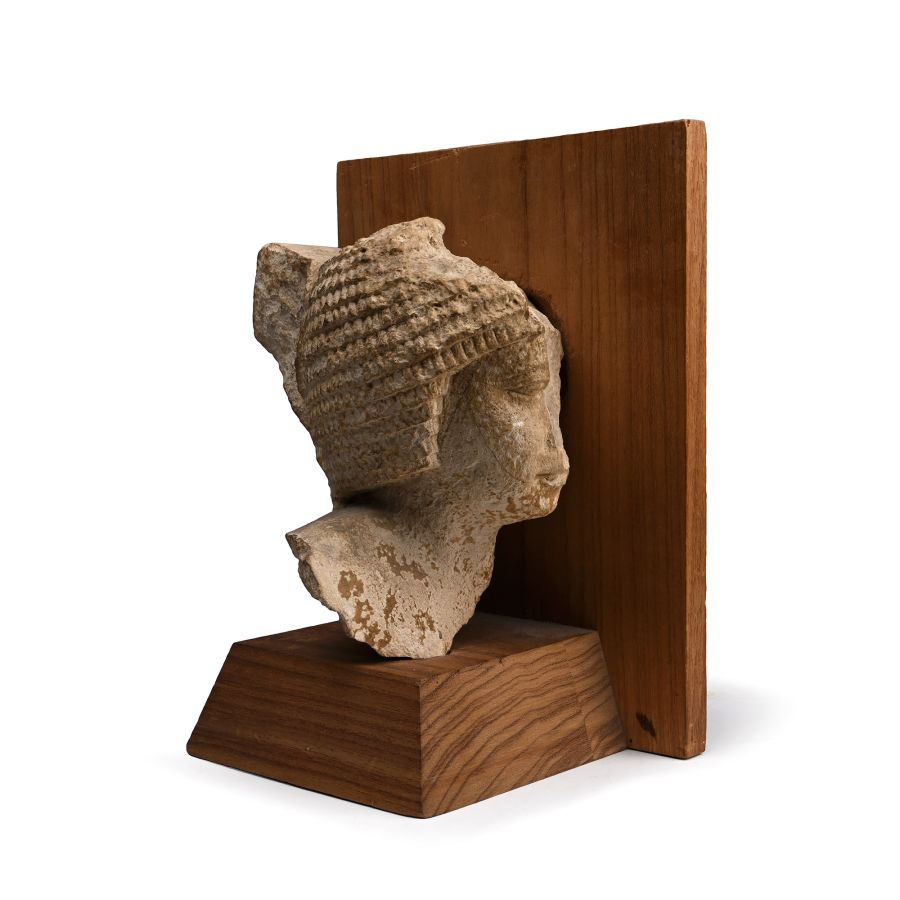
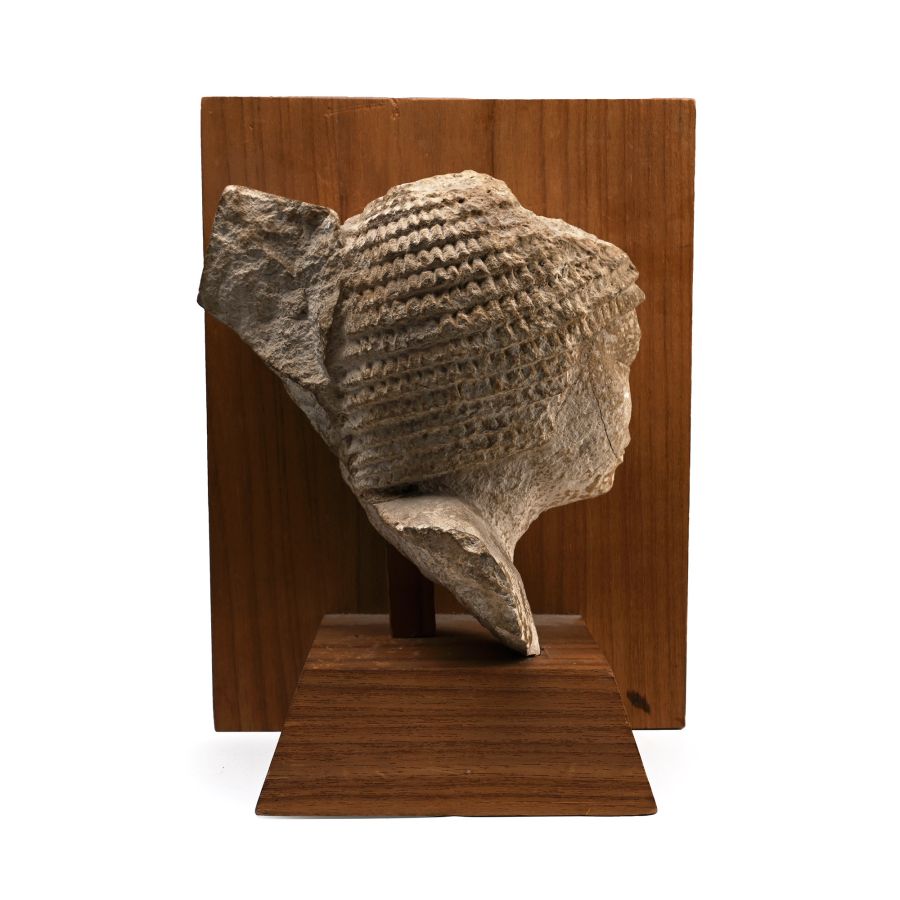
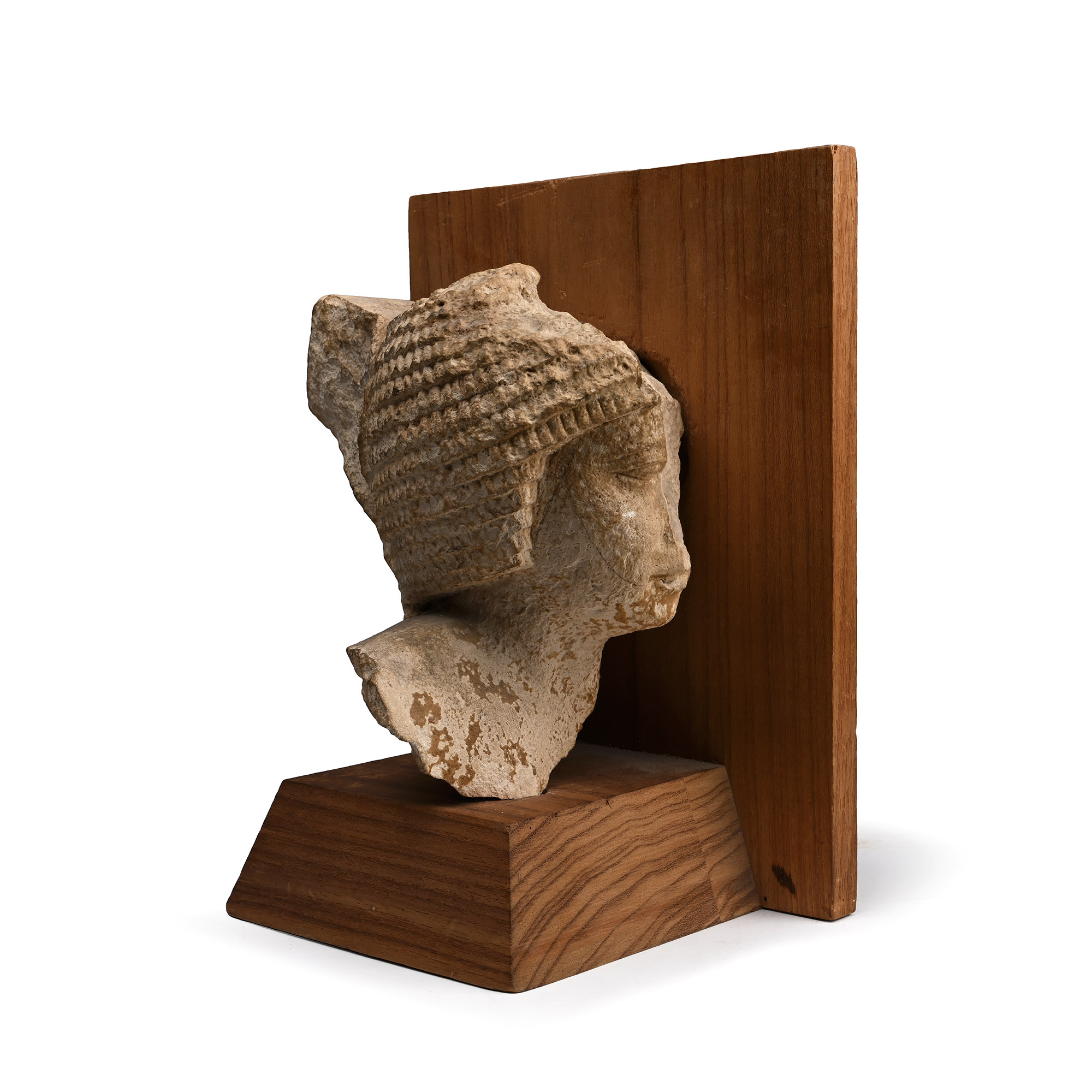
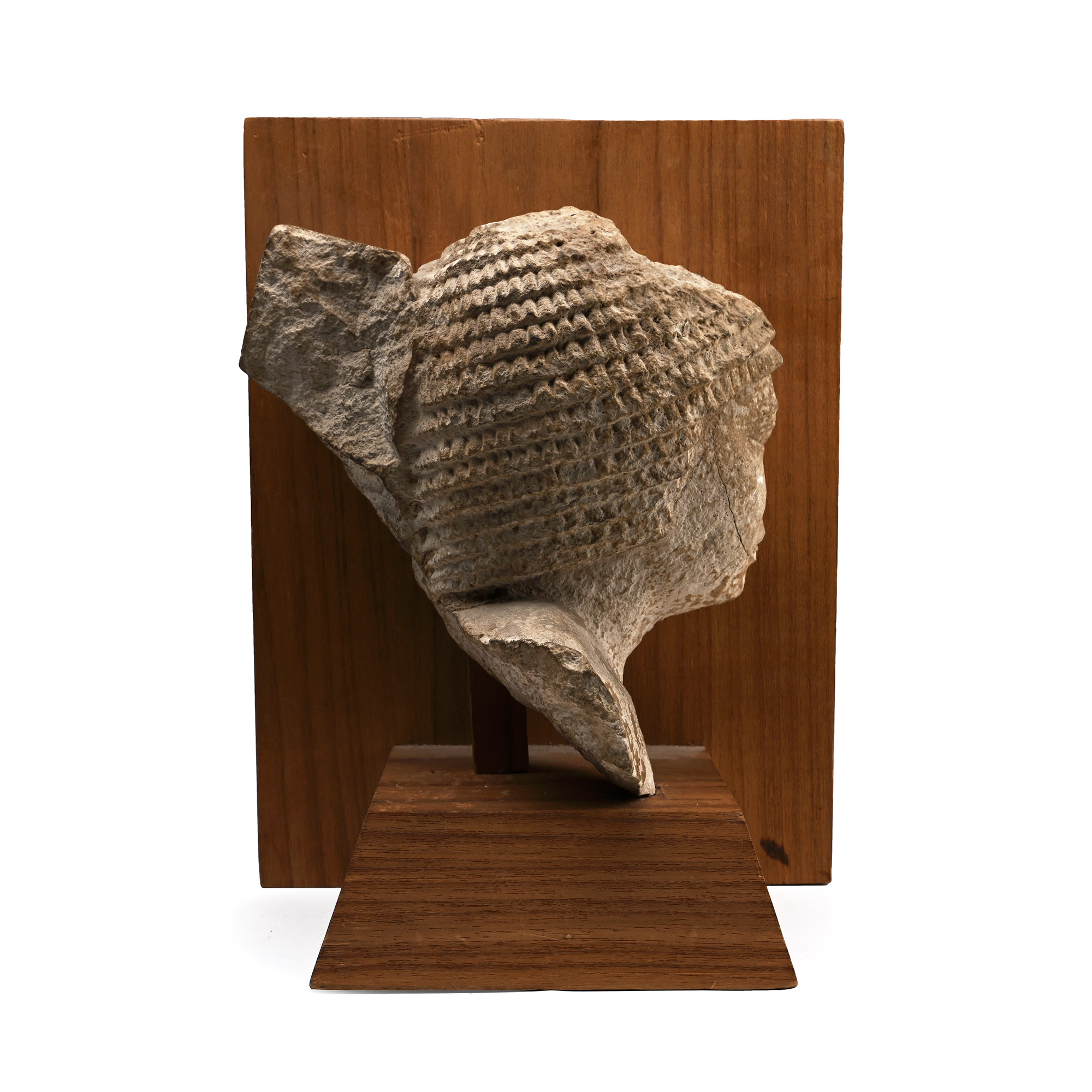
Egyptian Limestone Head of a Noble Wearing a Curled Wig
OLD KINGDOM, 5TH-6TH DYNASTY, CIRCA 2498-2181 B.C.
9 5/8 in. (2.91 kg total, 25.4 cm high including stand).
Fragmentary limestone head of an elite official carved in the round, wearing a characteristic short wig composed of rows of small, tight concentric curls that completely cover the ears and terminate evenly at the brow; the rounded right side of the face preserves a carefully rendered almond-shaped eye, a raised relief eyebrow, and small yet prominent lips, with a custom wooden mount. [No Reserve]
ProvenanceFrom the private collection of Norman Davis, Seattle, U.S.A.
Received as a gift from Norman Davis in 1973.
From the private collection of Peter Clayton, FCILIP, Dip, Arch, FSA, FRNS, Hemel Hempstead, Hertfordshire, UK; formed since the late 1950s.
This lot has been checked against the Interpol Database of stolen works of art and is accompanied by search certificate no.13519-262983.
TimeLine Auctions follows a vetting process to ensure the authenticity and legality of all items, reinforcing our commitment to integrity and responsible trading. Each antiquity, antique, and coin lot undergoes thorough examination by a vetting committee of at least ten external specialists, professional trade association members, scientists, and archaeologists: Our Vetting Process
AUCTIONS:
TimeLine is a leading auction house specialising in antiquities, ancient art, collectables, natural history, coins, medals, and books. Our auctions offer museums, collectors, historians, and enthusiasts the opportunity to acquire unique and historically significant pieces.
LOT 0005
Egyptian Limestone Head of a Noble Wearing a Curled Wig
Estimate £2,000 - 3,000€2,320 - 3,480 (for guidance only)$2,700 - 4,050 (for guidance only)
-
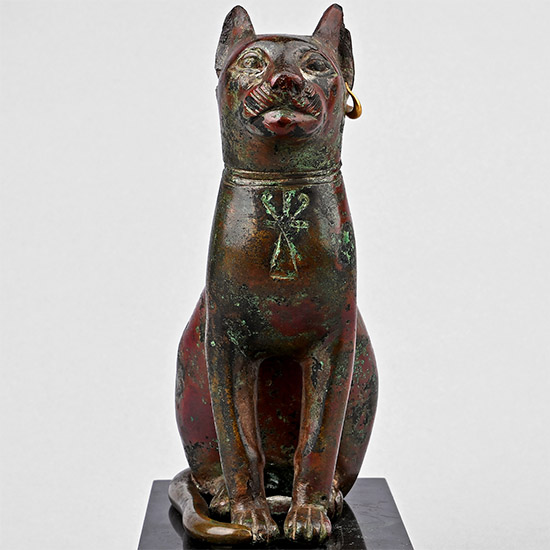
'The Clayton' Large Egyptian Bronze Seated Cat Statue of the Goddess Bastet
Late Period, 26th Dynasty, circa 664-525 B.C.Estimate: £20,000 - 30,000 (+bp*)
Opening Bid: £10,000
Naturalistically modelled in the round, hollow-formed in a seated pose with an incuse collar and Hathor-symbol pendant on its chest, both ears pierced to accept gold earrings (one absent); with a custom-made stand adapted to accommodate the sizeable tang on the statue's underside. 932 grams, 16 cm (1.99 kg total, 19.5 cm high including stand)
Acquired by Norman Davis from Spinks in 1956. Received as a gift from an American friend, Norman Davis of Seattle, circa 1972. From the private collection of Peter Clayton, FCILIP, Dip, Arch, FSA, FRNS, Hemel Hempstead, Hertfordshire, UK; formed since the late 1950s. This lot has been checked against the Interpol Database of stolen works of art and is accompanied by search certificate no.13471-262917.
In ancient times, the cat was revered as the sacred animal of the goddess Bastet, whose principal cult centre was at Bubastis in the Nile Delta. Her cult expanded throughout Egypt during the Late Period, when many votive bronze statuettes were produced. To the Egyptians, the cat symbolised protection, motherhood, and, later, gentleness and domesticity, qualities associated with Bastet, especially as she evolved from a fierce lioness into a more benevolent feline goddess. The symbol on the chest of the present statuette is associated with another protective goddess, Hathor. Standing figurines of Bastet are sometimes shown holding a Hathoric sistrum, a ritual musical instrument linked to joy, music, and divine protection, particularly for mothers and children. The symbol on this bronze statuette would have served the same purpose. -

Egyptian Banded Agate Kohl Pot
Late Period, 664-332 B.C.Estimate: £400 - 600 (+bp*)
Opening Bid: £5
Cone-shaped body with traces of lug handles on the upper third; narrow opening at the top with a thin, flattened rim. 94 grams, 75 mm
UK private collection before 2000. Acquired on the UK art market. Private collection, London, UK.
This vessel's unusual triangular shape is thought to be limited to the Late Period; other comparable examples are known (e.g. Barbotin, C., Collection égyptienne: Musée Granet - Aix-en-Provence, Aix-en-Provence, 1995, p. 166, no. 97). -
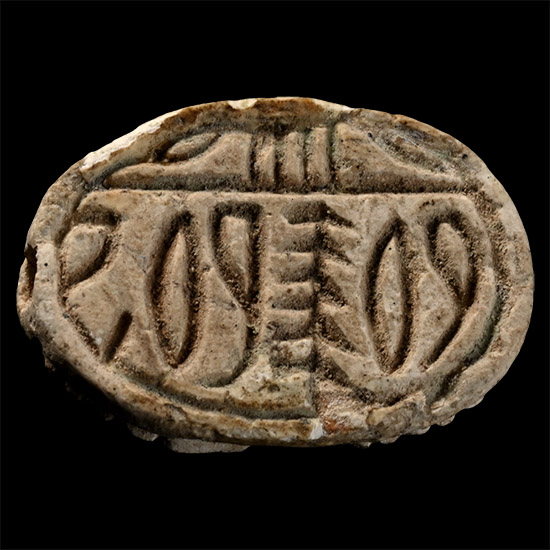
Egyptian Steatite Scarab with Hieroglyphs
Second Intermediate Period, circa 1782-1550 B.C.Estimate: £40 - 60 (+bp*)
Opening Bid: £5
With incised anatomical detailing on the body, the underside bears the hieroglyphs rꜤ-n-rꜤ. 2.04 grams, 17 mm
Acquired from various London-based, UK, antiquity dealers. From a Derbyshire gentleman's private museum formed from the late 1970s-early 1980s.
