
Loading, please wait...
LOT 0012
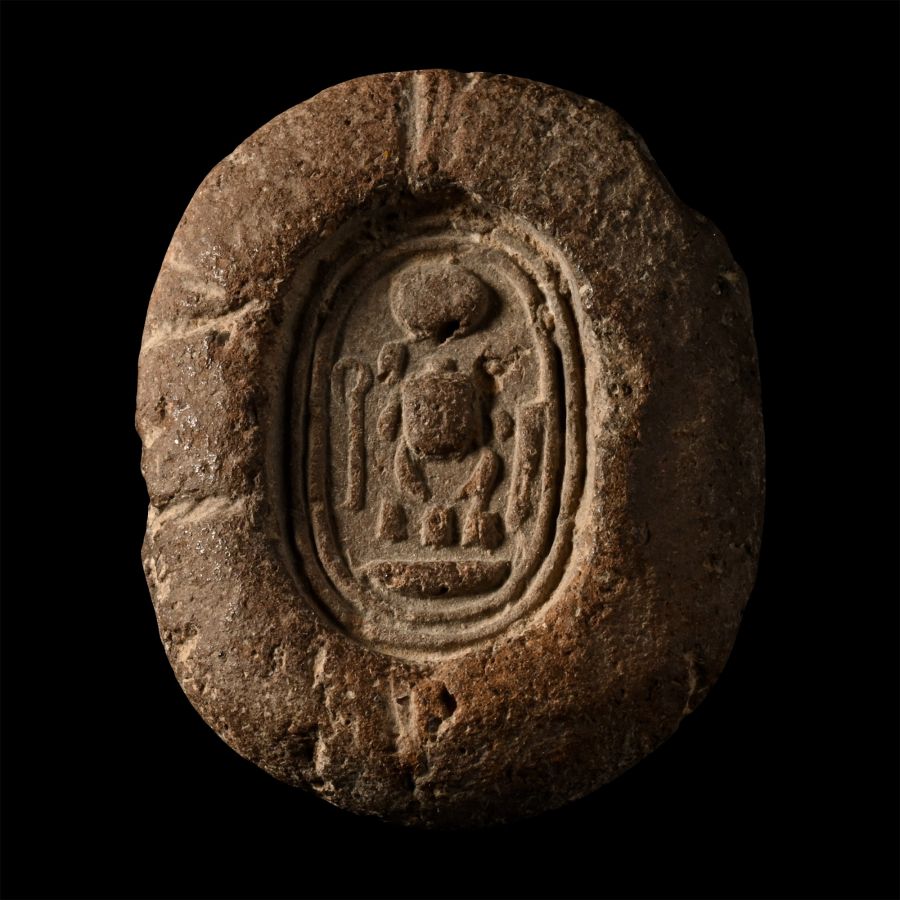
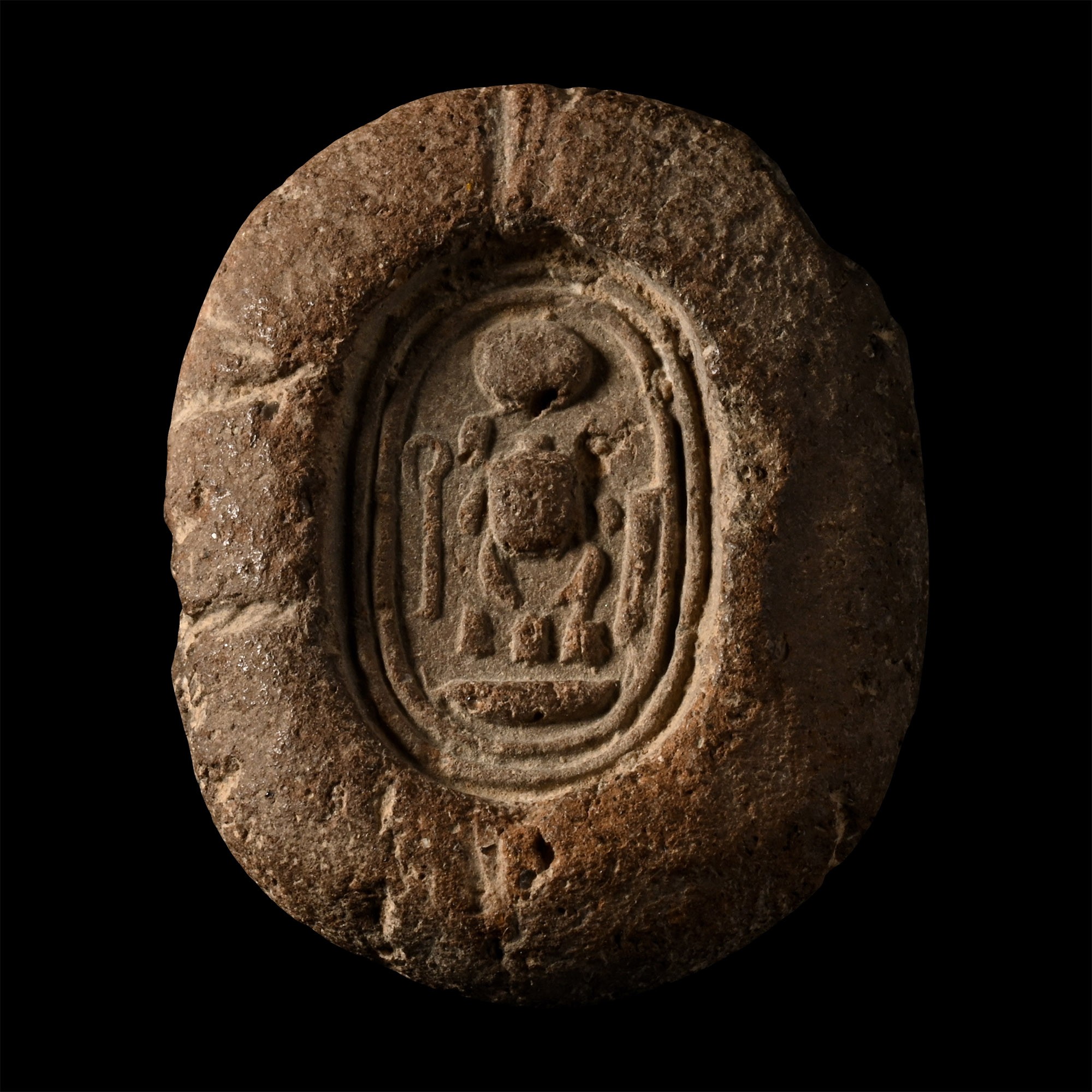
Egyptian Terracotta Mould with Impression of the Cartouche of Pharaoh Tutankhamun
NEW KINGDOM, 18TH DYNASTY, CIRCA 1342-1323 B.C.
1 1/8 in. (6.5 grams, 29 mm).
Ellipsoid in plan with an impressed cartouche for 'Tutankhamun, ruler of Hermonthis'. [No Reserve]
ProvenanceAcquired Caledonian market, November 1958, for 2 shillings and sixpence.
From the private collection of Peter Clayton, FCILIP, Dip, Arch, FSA, FRNS, Hemel Hempstead, Hertfordshire, UK; formed since the late 1950s.
Accompanied by an old handwritten information card by Peter Clayton, collection no.50.
Moulds like this were often used to produce faience ring bezels (cf. Seyfried, F. (ed.), In the Light of Amarna: 100 Years of the Nefertiti Discovery, Berlin, 2012, p. 100, fig. 2, for an example of a similar mould and a faience ring bezel for Akhenaten). Hermonthis, also known as Armant, was called ı͗wnu-šmꜤw by the ancient Egyptians and regarded as the southern counterpart to the solar temple complex at Heliopolis.
CONDITIONTimeLine Auctions follows a vetting process to ensure the authenticity and legality of all items, reinforcing our commitment to integrity and responsible trading. Each antiquity, antique, and coin lot undergoes thorough examination by a vetting committee of at least ten external specialists, professional trade association members, scientists, and archaeologists: Our Vetting Process
AUCTIONS:
TimeLine is a leading auction house specialising in antiquities, ancient art, collectables, natural history, coins, medals, and books. Our auctions offer museums, collectors, historians, and enthusiasts the opportunity to acquire unique and historically significant pieces.
LOT 0012
Egyptian Terracotta Mould with Impression of the Cartouche of Pharaoh Tutankhamun
Estimate £500 - 700€580 - 810 (for guidance only)$680 - 950 (for guidance only)
-
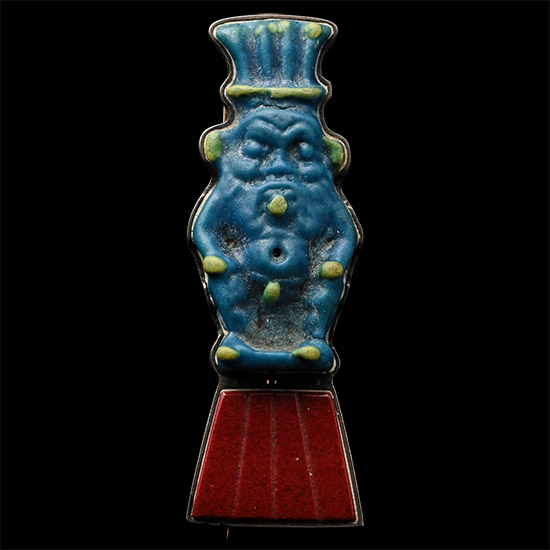
Egyptian Polychrome Faience Amulet of the God Bes Fashioned as a Dress Pin
Late-Ptolemaic Period, circa 664-30 B.C.Estimate: £300 - 400 (+bp*)
Opening Bid: £167
The dwarf god depicted in a characteristic bandy-legged stance, with his hands on his hips and a fearsome expression, wearing a plumed headdress; the deep blue glaze highlighted in yellow; set in a metal casing with hinged pins on the reverse and a red jasper insert depicting four plumes beneath his feet. 13.7 grams, 52 mm
Early 20th century UK collection. Ex A.H. collection, London, UK. Accompanied by a previous catalogue information page with provenance.
From the New Kingdom onwards, Bes became one of ancient Egypt's most popular apotropaic deities. Despite his somewhat fearsome appearance, Bes served as the patron and protector of pregnant women and children and was believed to shield them from snakes. The role of Bes as a guardian of women persisted at least until the third or fourth century A.D. -
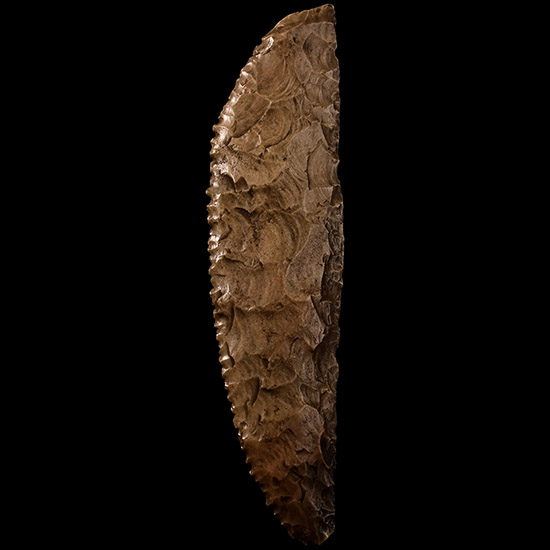
Large Egyptian Stone Age Knapped Curved Saw Blade from Thebes
Neolithic Period, 11,000-5,200 B.P.Estimate: £400 - 600 (+bp*)
Bids: 13 | Current Bid: £130
Large ripple-flaked blade with a curving, serrated cutting edge. 80.5 grams, 17 cm
Found Thebes. From the collection of A.D. Passmore (1879-1958); his collection of flints for the area of Stonehenge was donated to the Ashmolean Museum in the 1950s. From the private collection of Peter Clayton, FCILIP, Dip, Arch, FSA, FRNS, Hemel Hempstead, Hertfordshire, UK; formed since the late 1950s. Accompanied by a copy of an old handwritten information card by Peter Clayton. -
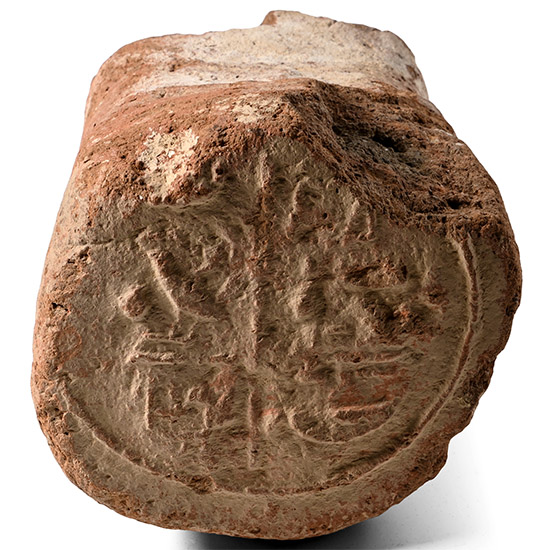
Egyptian Terracotta Funerary Cone of Amenemheb.
New Kingdom, 18th Dynasty, circa 1444-1400 B.C.Estimate: £200 - 300 (+bp*)
Bids: 4 | Current Bid: £80
Part of a tapering cone, with the circular flat end impressed with two columns of hieroglyphic text reading: 'Deputy of the great army, Amenemheb'. 333 grams, 90 mm
Acquired from Abdoul Rassoul on the West Bank at Luxor, 1974-1980 when a guest lecturer. From the private collection of Peter Clayton, FCILIP, Dip, Arch, FSA, FRNS, Hemel Hempstead, Hertfordshire, UK; formed since the late 1950s.
Amenemheb's tomb in the Theban necropolis at Sheikh Abd el-Qurna is numbered TT 85. Amenemhab (also known as Mahu), was an important military official who served under pharaohs Thutmose III and Amenhotep II.
