
Loading, please wait...
LOT 0009
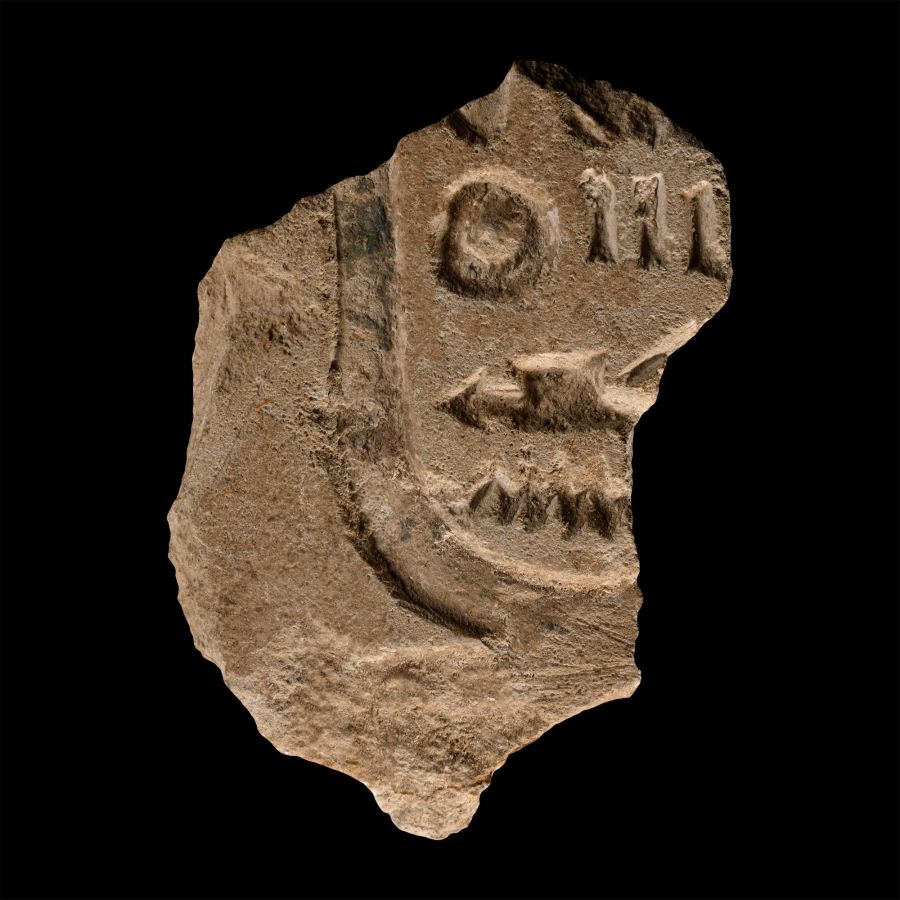
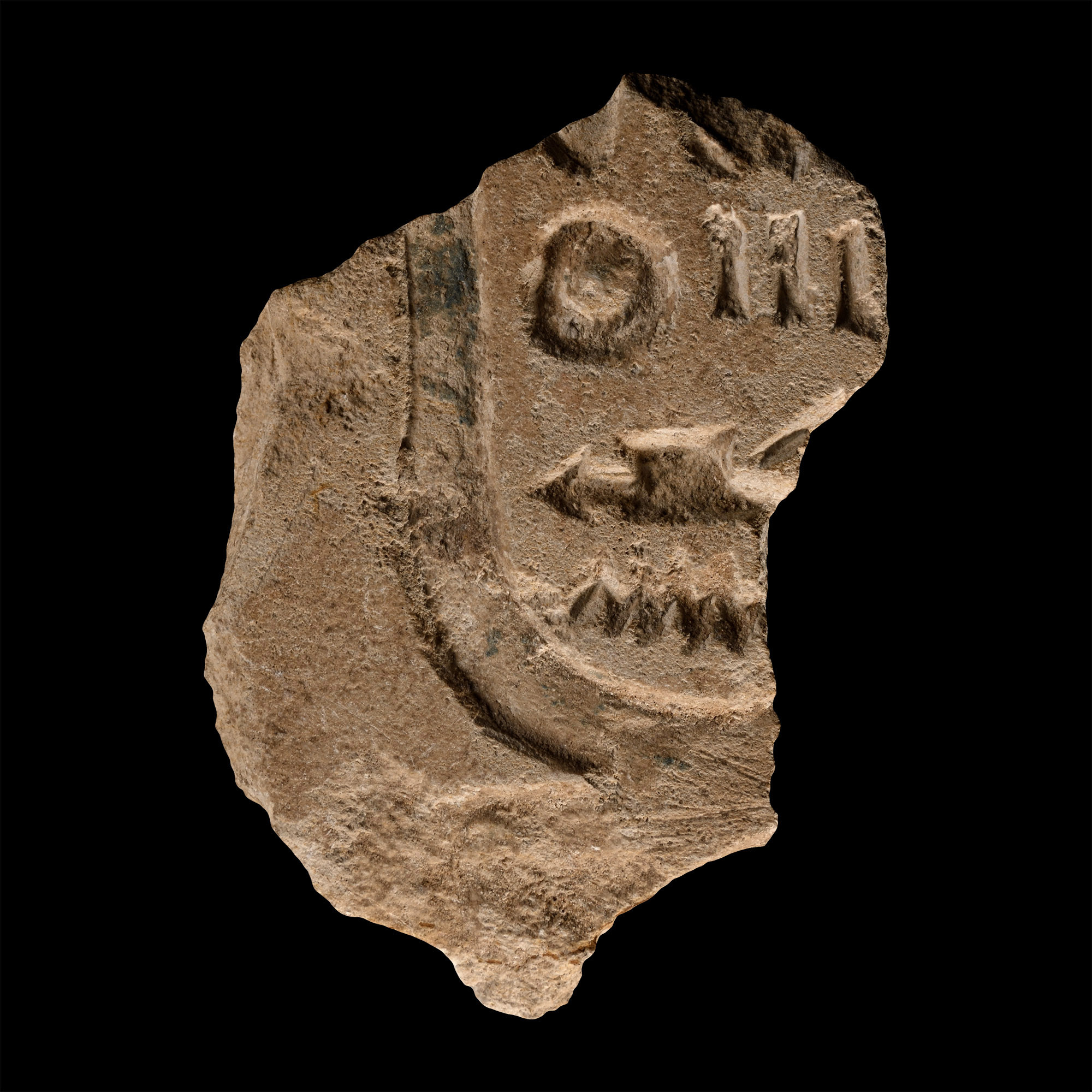
Egyptian Limestone Fragment with Cartouche of Pharaoh Akhenaten
NEW KINGDOM, 18TH DYNASTY, AMARNA PERIOD, 1353-1332 B.C.
4 1/8 in. (157 grams, 10.5 cm).
Irregular fragment with a partial cartouche in sunk relief, containing the final part of Akhenaten's throne name, Nefer-kheperu-Re (meaning 'Beautiful are the Manifestations of Re'), with traces of blue and white pigment. [No Reserve]
ProvenanceAcquired in March 1977.
From the private collection of Peter Clayton, FCILIP, Dip, Arch, FSA, FRNS, Hemel Hempstead, Hertfordshire, UK; formed since the late 1950s.
Accompanied by an old handwritten information card by Peter Clayton, collection no.128.
Due to the destruction of Akhenaten's royal city, Akhetaten, most monuments and statuary were recovered in fragmentary condition (for example, Peet, T.E., Woolley, C.L., The City of Akhenaten, Part I, Excavations of 1921 and 1922 at el-'Amarneh, London, 1923, pls. XXXII-XXXIV, for several fragmentary architectural elements bearing Akhenaten's cartouches).
CONDITIONTimeLine Auctions follows a vetting process to ensure the authenticity and legality of all items, reinforcing our commitment to integrity and responsible trading. Each antiquity, antique, and coin lot undergoes thorough examination by a vetting committee of at least ten external specialists, professional trade association members, scientists, and archaeologists: Our Vetting Process
AUCTIONS:
TimeLine is a leading auction house specialising in antiquities, ancient art, collectables, natural history, coins, medals, and books. Our auctions offer museums, collectors, historians, and enthusiasts the opportunity to acquire unique and historically significant pieces.
LOT 0009
Egyptian Limestone Fragment with Cartouche of Pharaoh Akhenaten
Estimate £800 - 1,000€930 - 1,160 (for guidance only)$1,080 - 1,350 (for guidance only)
-
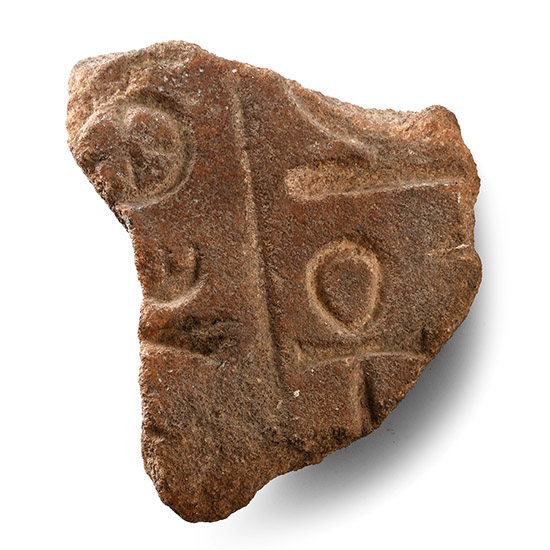
Egyptian Red Quartzite Granite Hieroglyphic Fragment with Part of Cartouche
New Kingdom, 18th Dynasty, Amarna Period, 1379-1362 B.C.Estimate: £100 - 140 (+bp*)
Bids: 2 | Current Bid: £25
Irregular fragment preserving portions of two vertical columns of hieroglyphic text, including the lower part of a royal cartouche with an ankh sign beneath. 74 grams, 64 mm
Acquired in March 1979. From the private collection of Peter Clayton, FCILIP, Dip, Arch, FSA, FRNS, Hemel Hempstead, Hertfordshire, UK; formed since the late 1950s. Accompanied by an old handwritten information card by Peter Clayton, collection no.144.
After Akhenaten's death, the pharaoh's monuments were systematically smashed or defaced. Numerous excavations at Amarna rarely recovered complete or near-complete statuary. -
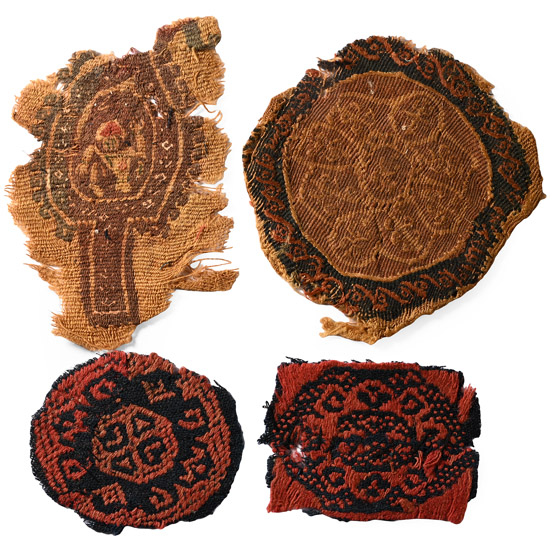
Egyptian Coptic Tunic Textile Fragments of Orbiculi with Vegetation, Figures and Geometric Ornament
Circa 6th-7th century A.D.Estimate: £80 - 100 (+bp*)
Opening Bid: £5
Comprising a tablion and an orbiculus featuring floral and geometric decoration in black and red wool (Z-twist); an orbiculus with floral and geometric decoration in yellow, brown, red, and black wool; and a heart-shaped bud in green, red, and yellow wool featuring a human figure at the centre. 11.1 grams total, 8.1-12.5 cm
Acquired 1970s-1996. Property of a North American collector. London collection, 2016.
The fragments are decorative parts of tunics. These are fabrics of great decorative finesse, with some elements displaying an unusual and extremely well-preserved colour palette. -
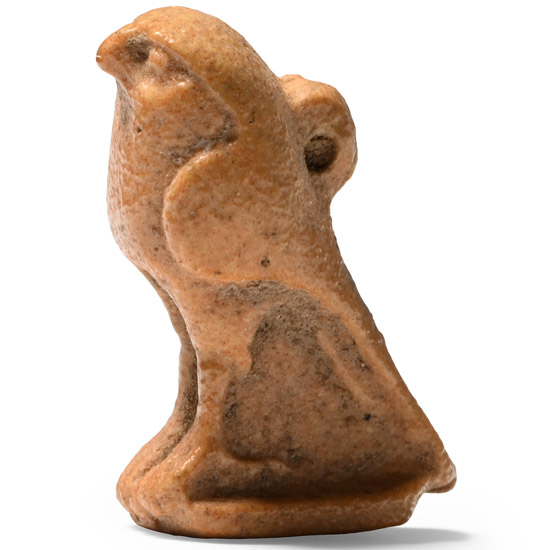
Egyptian Horus Amulet
Late Period, 664-332 B.C.Estimate: £150 - 200 (+bp*)
Bids: 2 | Current Bid: £100
Perching Horus falcon with talons gripping the front edge of the integral plinth; detailed wings and head and a suspension loop on the back. 1.24 grams, 19 mm
Ex London gentleman's collection, by descent 1980s.
Horus is one of the most significant and widely worshipped gods in ancient Egyptian mythology. His importance spans many aspects of Egyptian religion, including serving as a symbol of the living king, offering protection, representing the sky, and symbolising the sun.
