
Wearing an Ancient Ring: One for the Finger, One for the Cabinet
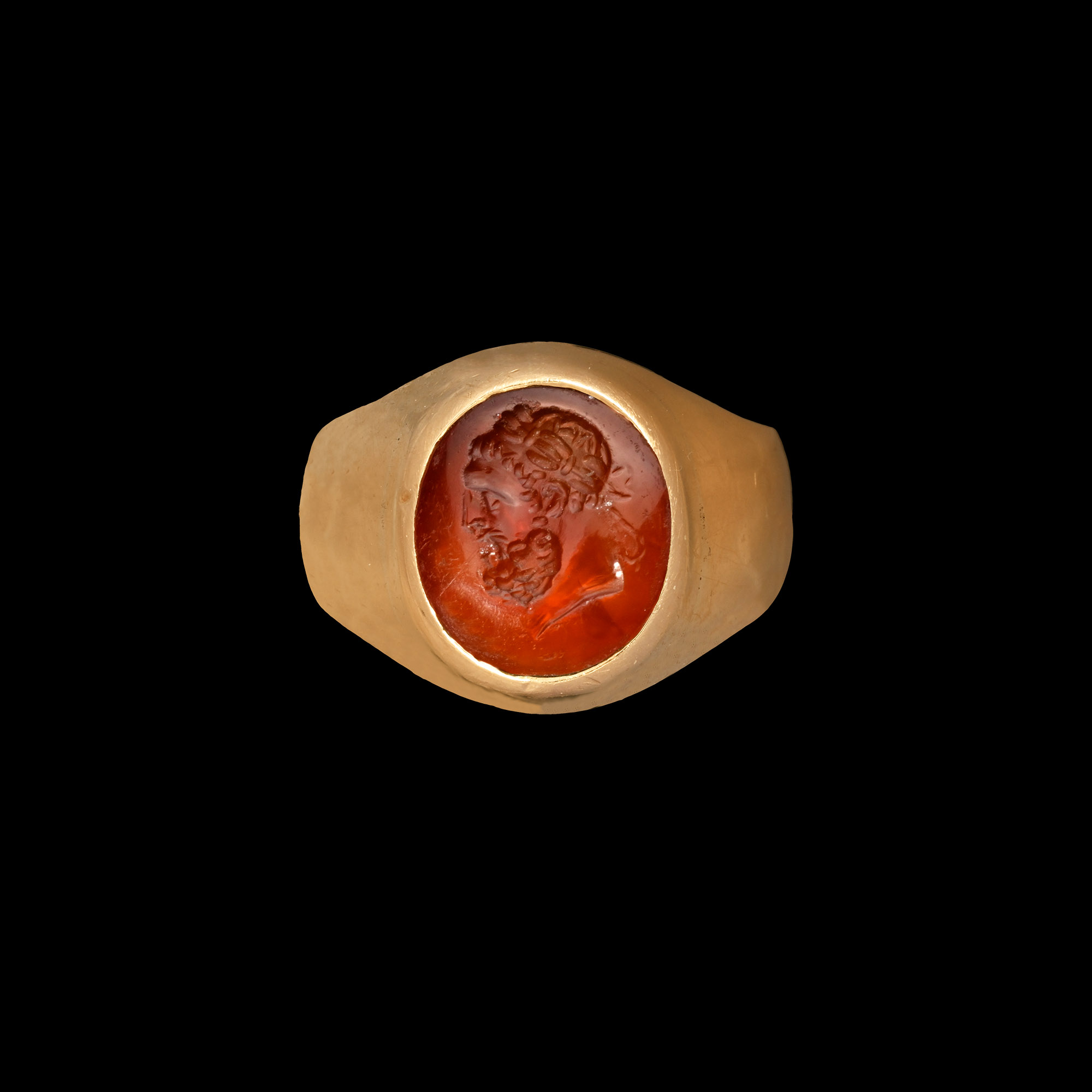
An impression taken from the carnelian of lot 152 in TimeLine's December sale shows the bald, bearded head of Silenus standing up in relief, as it would have in a Roman's sealing wax. The stone was cut in the first century AD and set in its gold hoop in the third, so it was already an antique when a Roman had it mounted to wear.
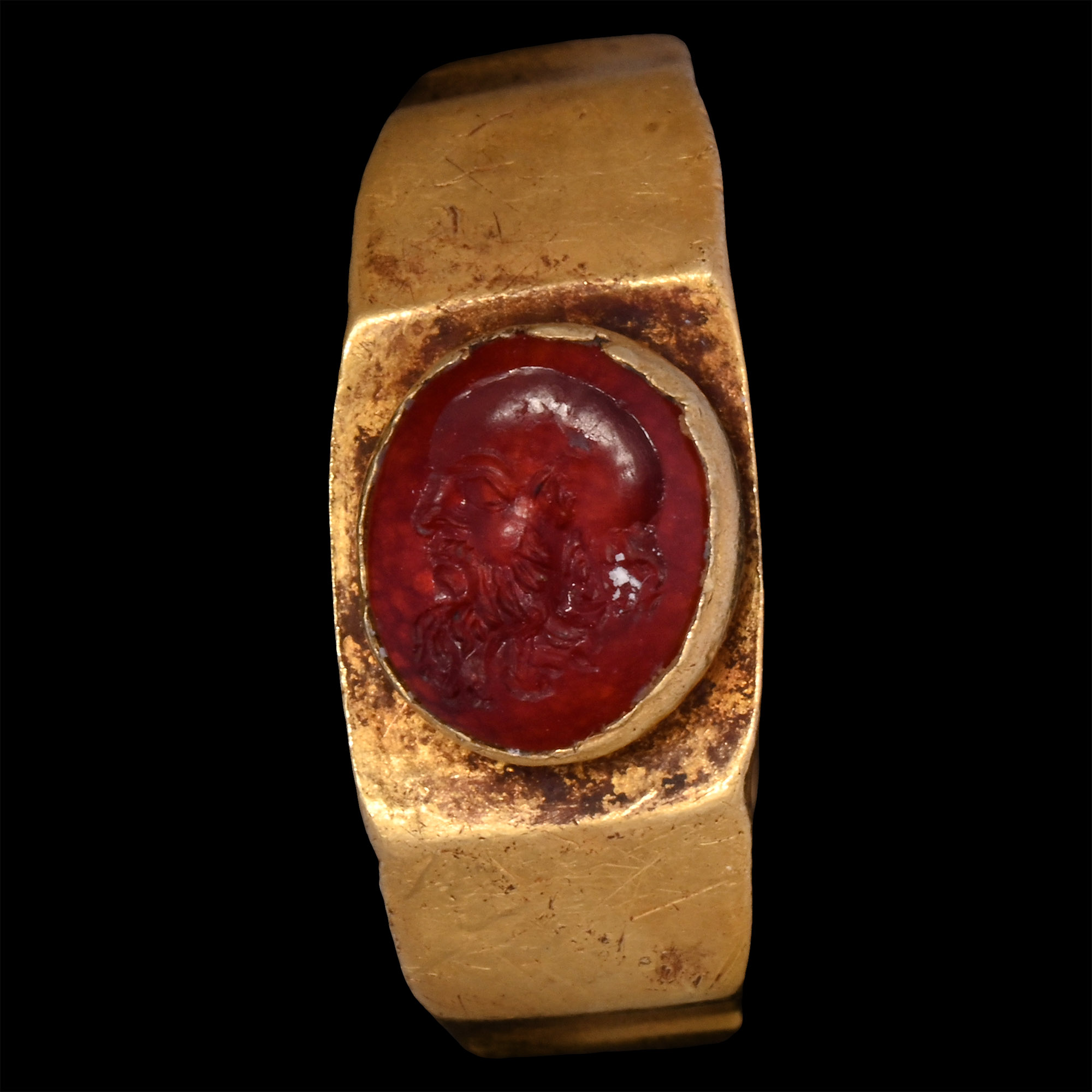
Wearing an ancient ring comes down mostly to the metal, and solid gold like this is the place to start: gold wears well, silver wants care, bronze is for an occasional evening and iron belongs in the cabinet. The Romans worried about their rings in much the same way, and Ateius Capito, a jurist of Augustus's day, explained that once gems came to be engraved the ring moved from the right hand to the left, "which is idler, lest the right hand's frequent movement and duties smash the precious stones".
What was a Roman ring for?
Pressed into wax or clay on a letter or a jar, an impression like the Silenus head was its owner's signature and his lock at once. Pliny the Elder, writing in the 70s AD, grumbled that "nowadays even articles of food and drink have to be protected against theft by means of a ring".
Some rings carried the key itself, a small bit standing up from the hoop that probably opened a box of jewellery or coin. The December sale has one in lot 1084, a Roman bronze key ring whose key hinges from the hoop, estimated at £30-40.
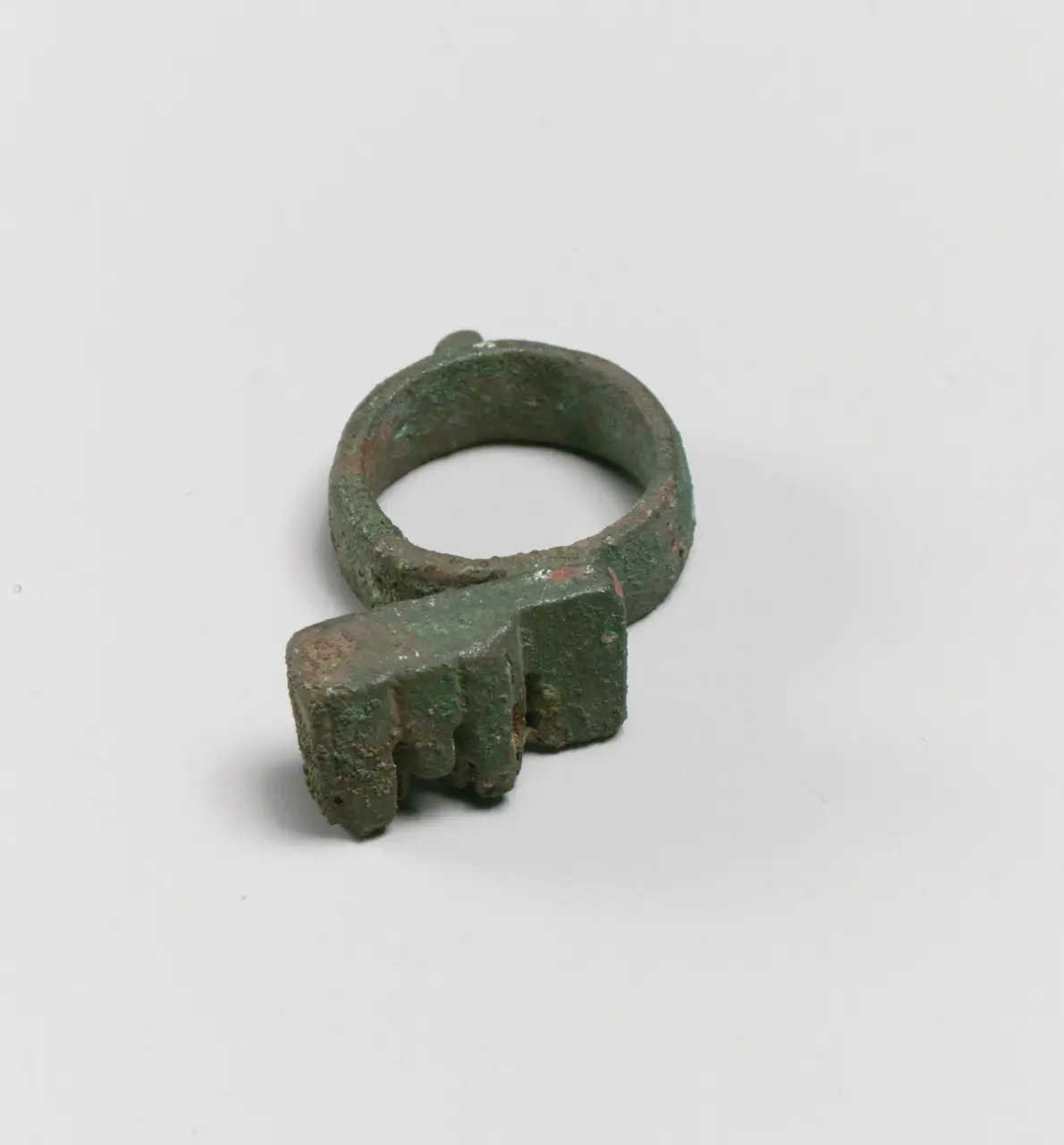 A Roman bronze ring key of the third or fourth century AD. Metropolitan Museum of Art, New York (98.11.2), public domain (CC0), Met Open Access.
A key or a seal could be bronze, but a gold ring was the badge of the knights, the second rank of Roman society. Under a rule made in AD 23 nobody could wear one unless he, his father and his grandfather were all free-born and he was rated at 400,000 sesterces. Pliny even traces the quarrel that he says set off the Social War of 91 BC to "a ring put up for sale by auction".
Before gold there was iron, which Pliny thought the properly Roman metal, worn "as an emblem of warlike valour". Generals rode in their triumphs wearing iron rings, and within his grandfathers' memory many former praetors wore one to the end of their lives.
Why Roman iron rings stay in the cabinet
Very few of those iron rings exist now. Frederick Marshall, who catalogued the British Museum's rings in 1907, thought that the engraved stones of the Republic, which turn up often, were probably set in iron hoops that have since rusted away.
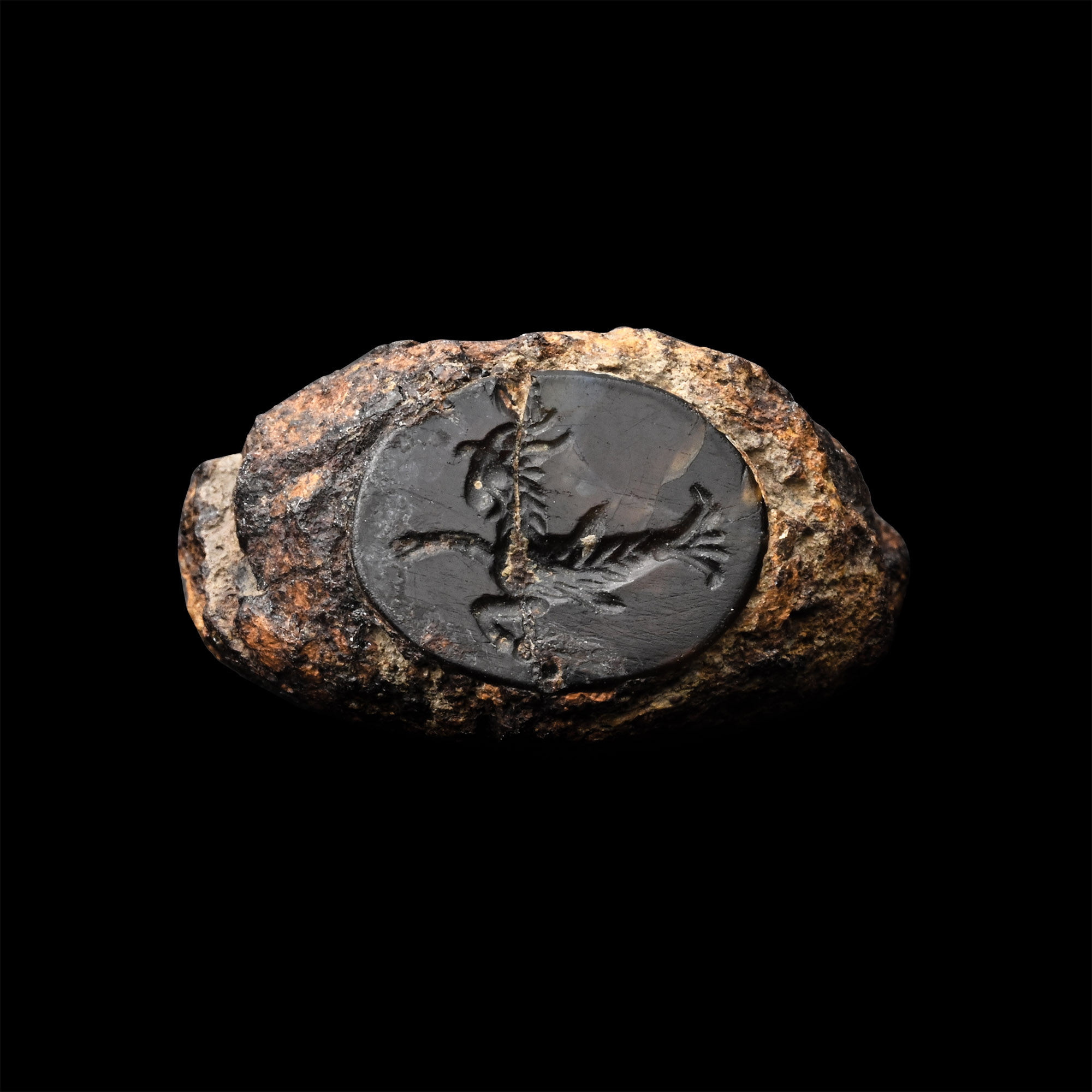
Lot 979 is one of the survivors, a brown stone cut in the early Augustan period with a hippocampus, the sea-horse with a fish's tail, and still held in a fragment of its iron bezel.
Is ancient gold safe to wear?
Jack Ogden, in the British Museum's handbook Ancient Jewellery, finds most ancient goldwork over 85 per cent pure, which is more than 20 carat, against the 9 carat usual in Britain and the 14 carat of the United States. Gold that pure does not rust or tarnish, but it is soft and scratches easily, it should never meet an abrasive polish.
Many Roman gold rings were also hollow, made of sheet so thin that it had to be filled with sulphur to stop it crushing. Lot 152 is the solid kind, a third-century type with flat planes cut on the outside of a massive hoop that widens and thickens towards the shoulders. It can be worn with the care any good gold ring gets, taken off for the gym and the garden.
Can you wear an ancient silver ring?
Silver suffers far more from burial than gold, because corrosion can work between the grains deep inside the metal and leave it more brittle than it looks. Ogden warns that "an apparently solid and pristine-looking silver ring can shatter into fragments if dropped".
Lot 154 is a second-century silver ring with angled shoulders and a bezel that flares at the rim, and its carnelian keeps company with the Silenus of lot 152. Silenus was the old companion of Bacchus, and this stone is engraved with the god's krater, the bowl for mixing wine, hung with vine tendrils.
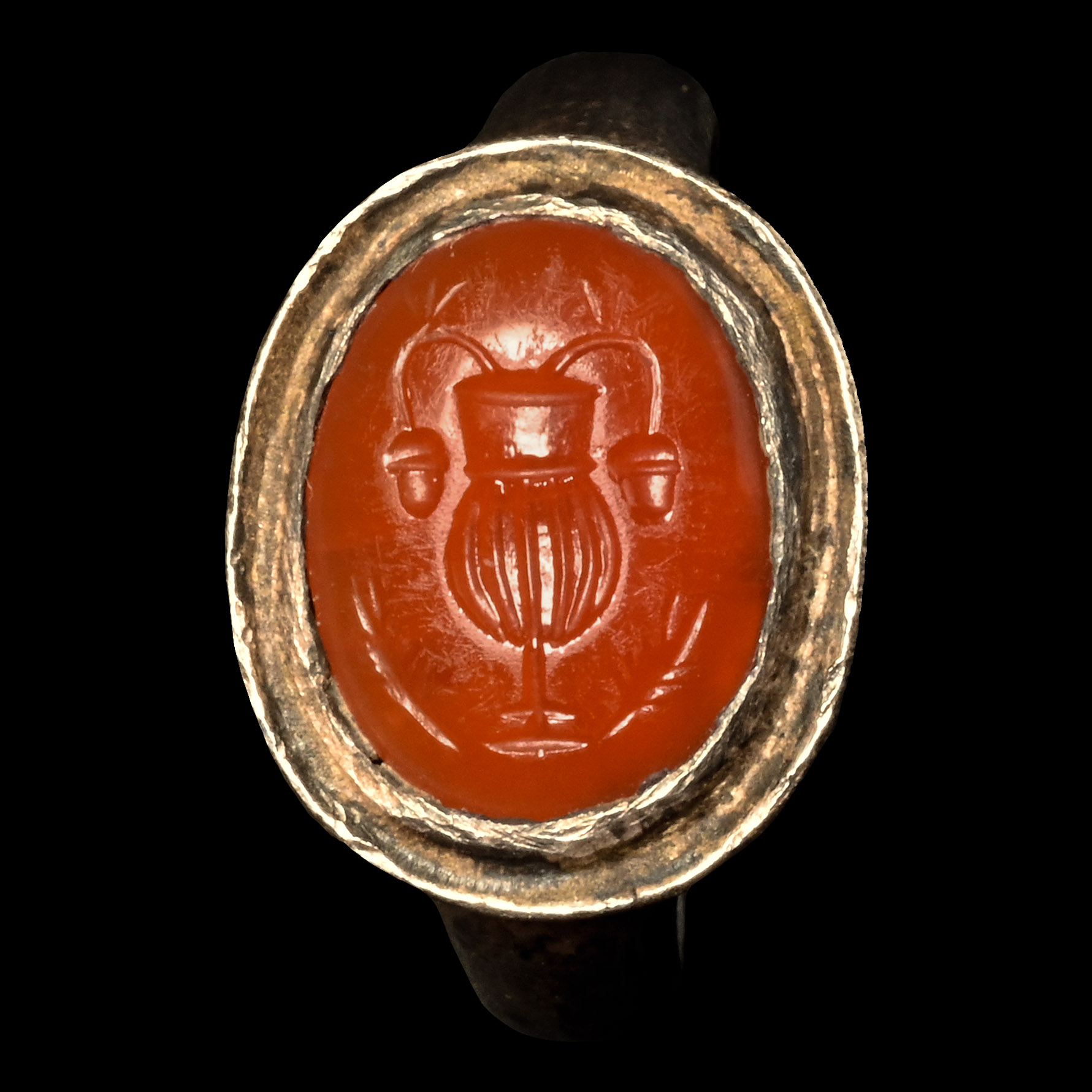
Wear a silver ring like this for an evening, take it off before anything wet or heavy, and put it on over a towel or a bed rather than a tiled floor. Skin leaves oils and salts on polished silver, so wipe the ring before it goes back in its box, and keep the box dry.
A Roman gem in a later gold ring
The carnelians of lots 152 and 154 are quartz, like most Roman ring stones, and hard enough to survive ordinary wear, though a knock of the kind Capito feared, or a drop onto a hard floor, can still chip or crack one. There is however a simple answer for anyone who wants to wear an ancient gem all the time, which is to buy one set in a modern gold ring, where the stone is protected.
Lot 194 takes that route with gold of the nineteenth century, and of the eight rings here it is the one for every day. Its second-century carnelian is engraved with the bearded head of Hercules, and the substantial gold ring around it weighs 13.21 grams, five times as much as lot 152. Resetting is an old habit, since lot 152's first-century gem went into a third-century hoop and many medieval signet rings were set with Roman stones.
A bishop was not supposed to follow that habit, since a seventh-century synod at Milan decreed that his ring should be of pure gold set with a gem that had not been engraved. Lot 329 is a gold ring of episcopal type, made in western Europe in the twelfth or thirteenth century. At its centre is a square sapphire polished smooth, a stone that could seal nothing, with four smaller settings of emerald and amethyst round it.
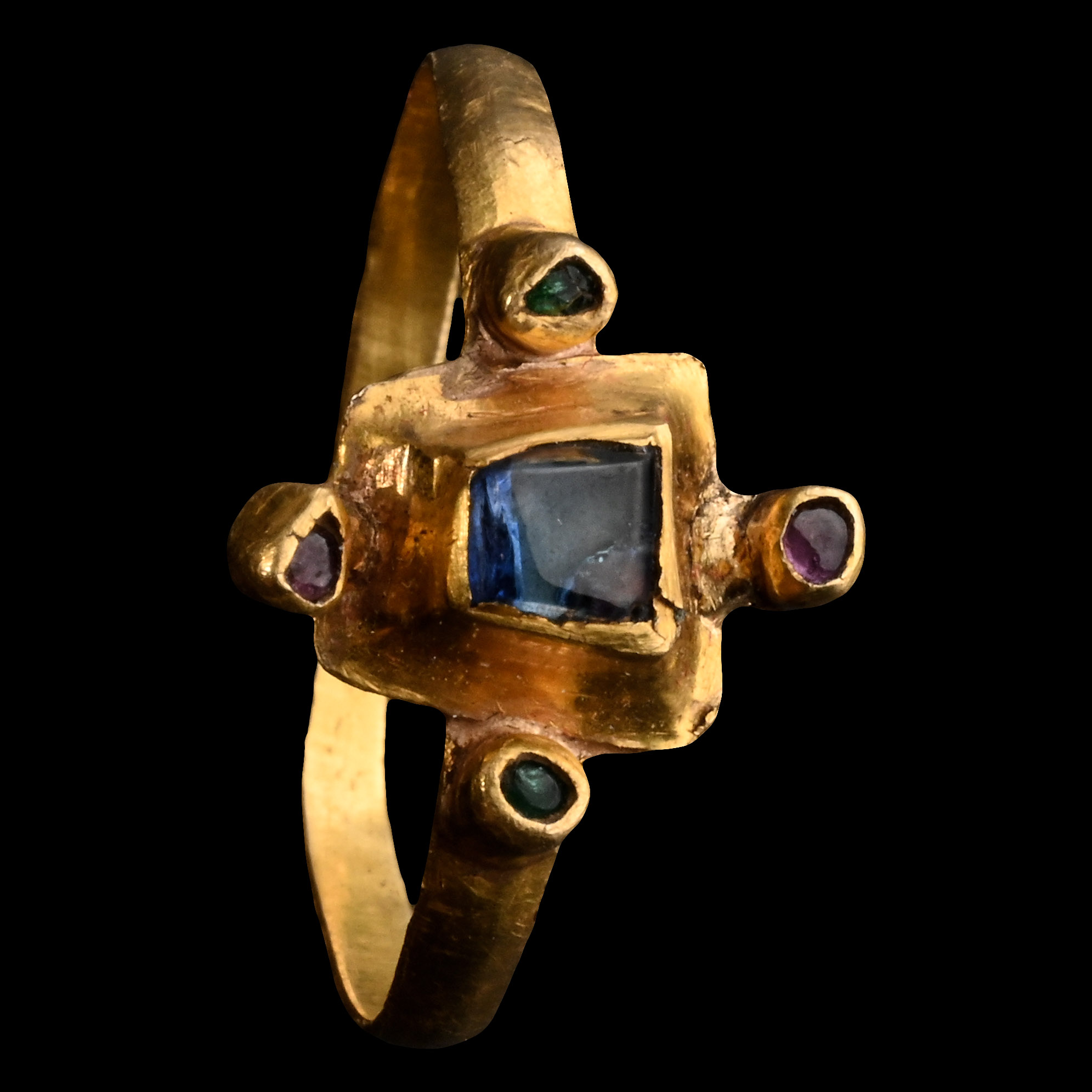
Rings very like it have come out of English bishops' graves, and Charles Oman, who catalogued the Victoria and Albert Museum's rings in 1930, lists the unengraved sapphire buried with Ralph Flambard of Durham in 1128 and, from Chichester, a sapphire with four small emeralds at its angles, the closest match to lot 329. Such a ring was given at a bishop's consecration and, in England at least, does not seem to have been worn every day, so lot 329 was a ring for occasions from the start.
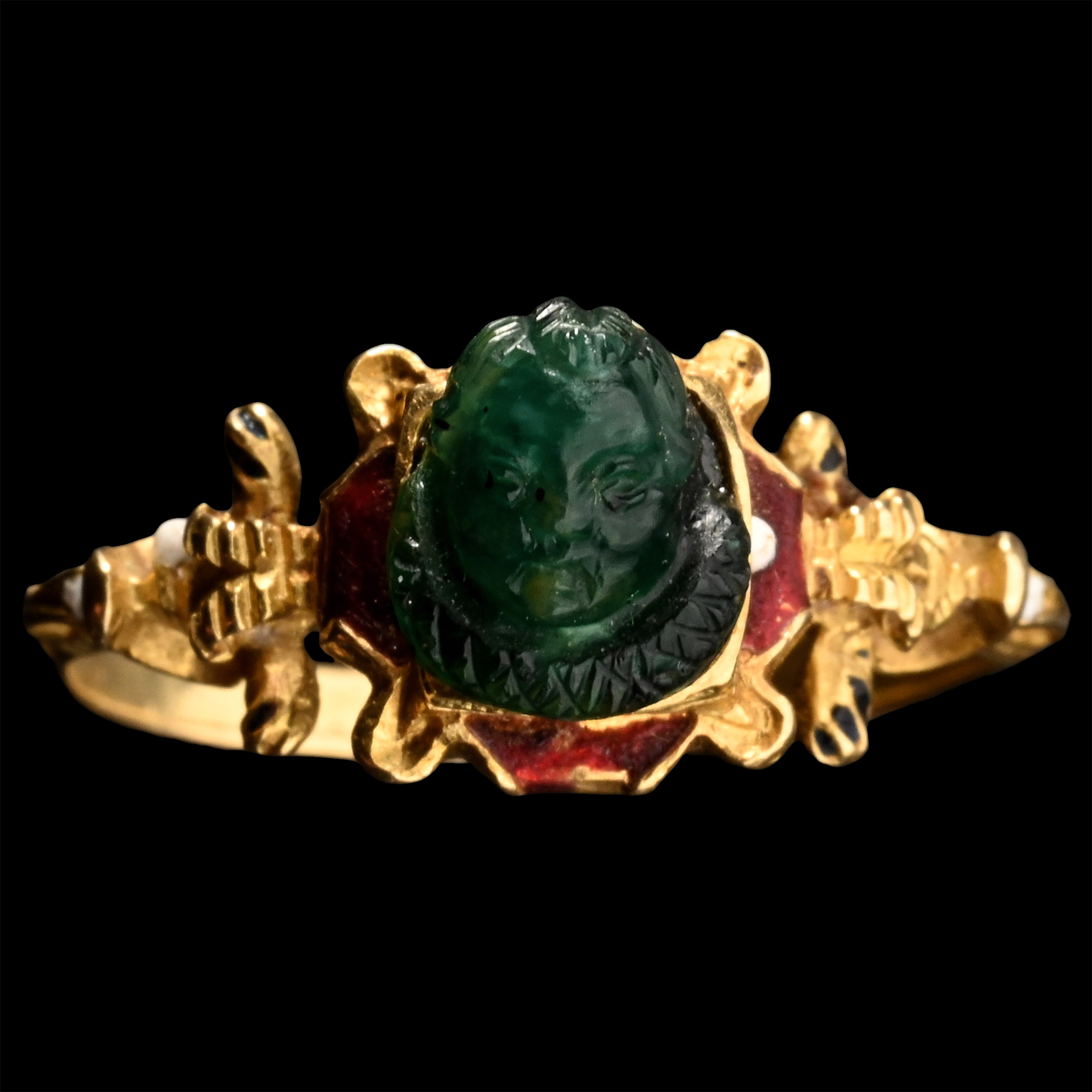
Lot 157 is a ring for occasions too, the kind of piece Solomon has in mind for the buyer who wants something to wear at a cocktail party once a year. Its Roman cameo, of the first or second century AD, is chrome chalcedony carved in high relief with the head of a child, probably Eros, a cameo being raised from the stone where an intaglio is cut into it. Around 1570-80 a goldsmith set it in a gold ring enamelled white, red and black, on a setting that projects to lift the stone up and show it off, and the child's neck was reworked into a ruff-like collar, the fashion of those years. Eros was a fitting token to give to a lover, and this one, with the highest estimate of the eight, spends the time between occasions in the cabinet.
The ring finger and the heart
Aulus Gellius, in the second century AD, reported that when the Egyptians opened human bodies they found "a very fine nerve" running to the heart from the finger next to the little finger of the left hand. Macrobius later explained that this was why the ancients surrounded that finger "with a ring, as though with a crown". The belief outlasted Rome, and in the ninth century Pope Gregory IV had to rule that a bishop's ring be worn on the right hand, the hand that gives blessings, whatever people believed about a vein in the left.
Romans gave rings at betrothal, the first step towards a Roman marriage. Pliny says that in his day the ring sent to a betrothed woman was still iron, with no stone in it, but gold served too: the sarcophagus of a young girl at Rome, Creperia Tryphaena, held a gold ring with two clasped hands that Marshall took for her betrothal ring. The clasped right hands stood for a contract as well as for affection, and lot 1138, a bronze betrothal ring of the second or third century, has them on its flat round bezel.
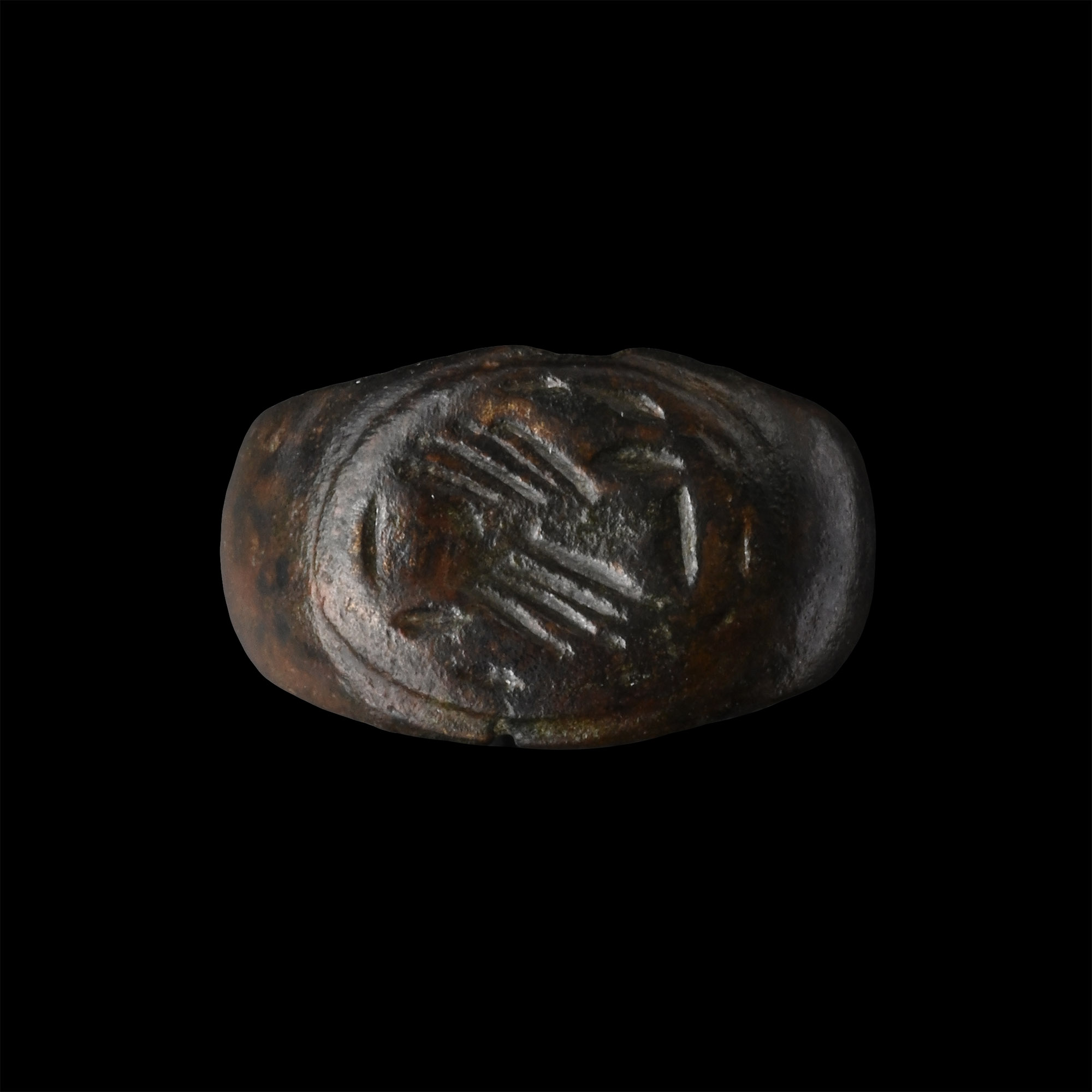
The oils and salts of skin work on bronze as they do on silver, and buried bronze can carry chlorides that, in damp air, start the pale green powdery corrosion known as bronze disease. A bronze ring like lot 1138 is for the occasional evening and a dry box between wearings, and if that green powder ever appears on one, it comes off the finger and goes to a conservator.
The clasped-hands ring, the "fede", went on to have the longest history of any love ring, and Oman found it popular without a break until the nineteenth century. Alongside it ran the posy ring, which carried a motto instead, and most posy rings of the seventeenth and eighteenth centuries were almost certainly wedding rings.
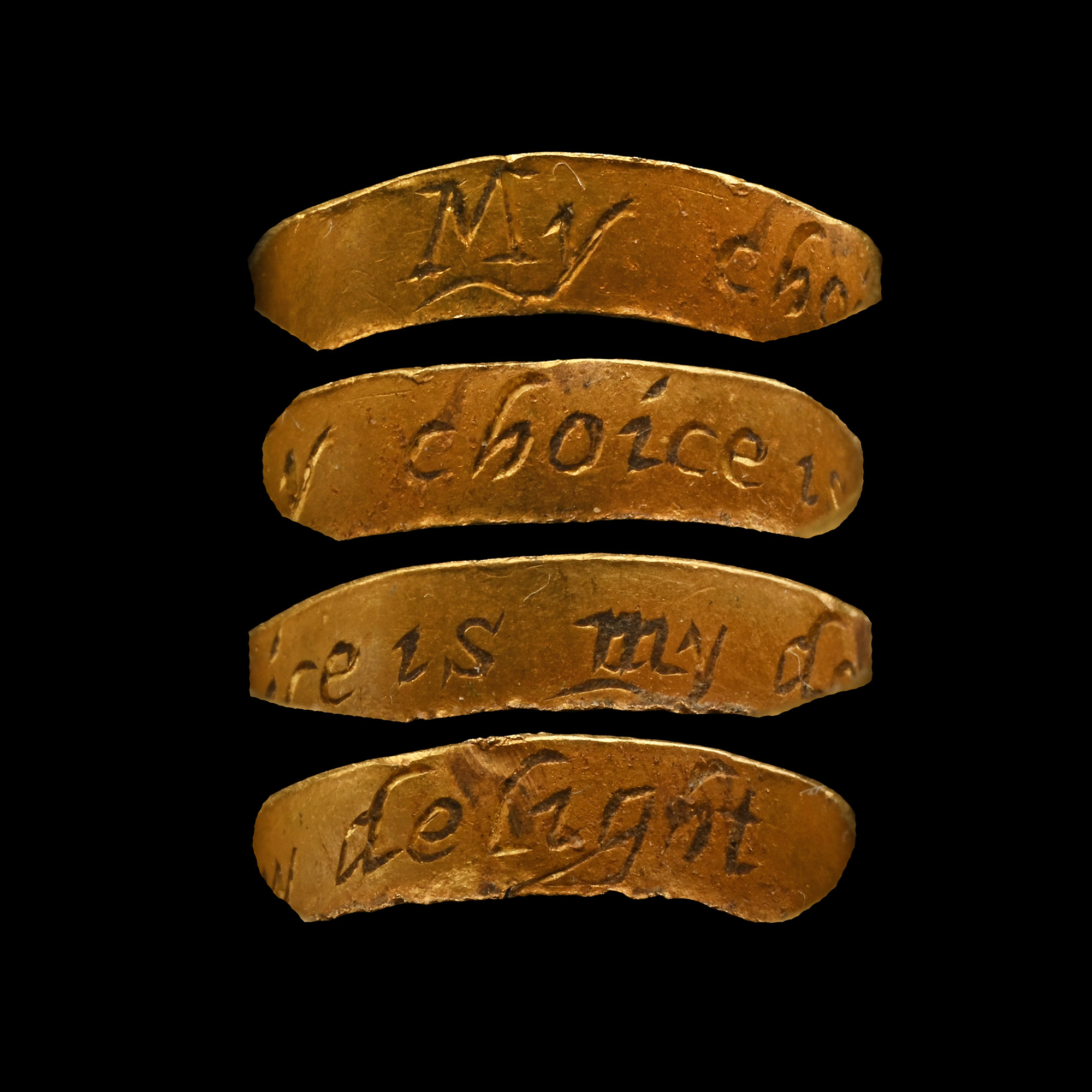
"My choice is my delight" runs in lower-case italic inside lot 368, a gold posy ring of the late seventeenth or early eighteenth century. It was found with a metal detector near Wood Norton in Norfolk in 2024, recorded with the Portable Antiquities Scheme and disclaimed by the Crown. The Scheme had no other record of the motto and thought the bands of ornament on the outside very unusual for a posy ring. The hoop has been straightened, so the words that once sat against the skin now read from end to end like a line of handwriting.
Will an ancient ring fit?
Two studies of several hundred excavated Roman rings found women's most often about 17 to 17.5 mm across inside, men's about 19 to 20 mm and children's about 14 mm. A 17.5 mm ring is roughly a modern British O or a US 7.
Every ring in the December sale is listed with its internal diameter in millimetres, both ways where the hoop is oval, and that is the figure to set against a jeweller's measurement of your finger. Lot 1138 is 16.24 by 15.00 mm inside, lot 152 18.29 by 17.68, and lot 194's nineteenth-century shank 20.34 by 20.81, in the range found most often for Roman men. Children wore rings too, and lot 1125, a Roman gold child's ring that passed through the hands of Herbert A. Cahn in Basel in the 1990s, is 11.07 mm across.
A small ring was not always a child's, because the upper joints of the finger were used as well. Pliny says that in Rome only the middle finger was left bare, "while all the others bear the burden, and even each finger-joint has another smaller ring of its own", and painted shrouds from Roman Egypt show hands with rings on several fingers at once.
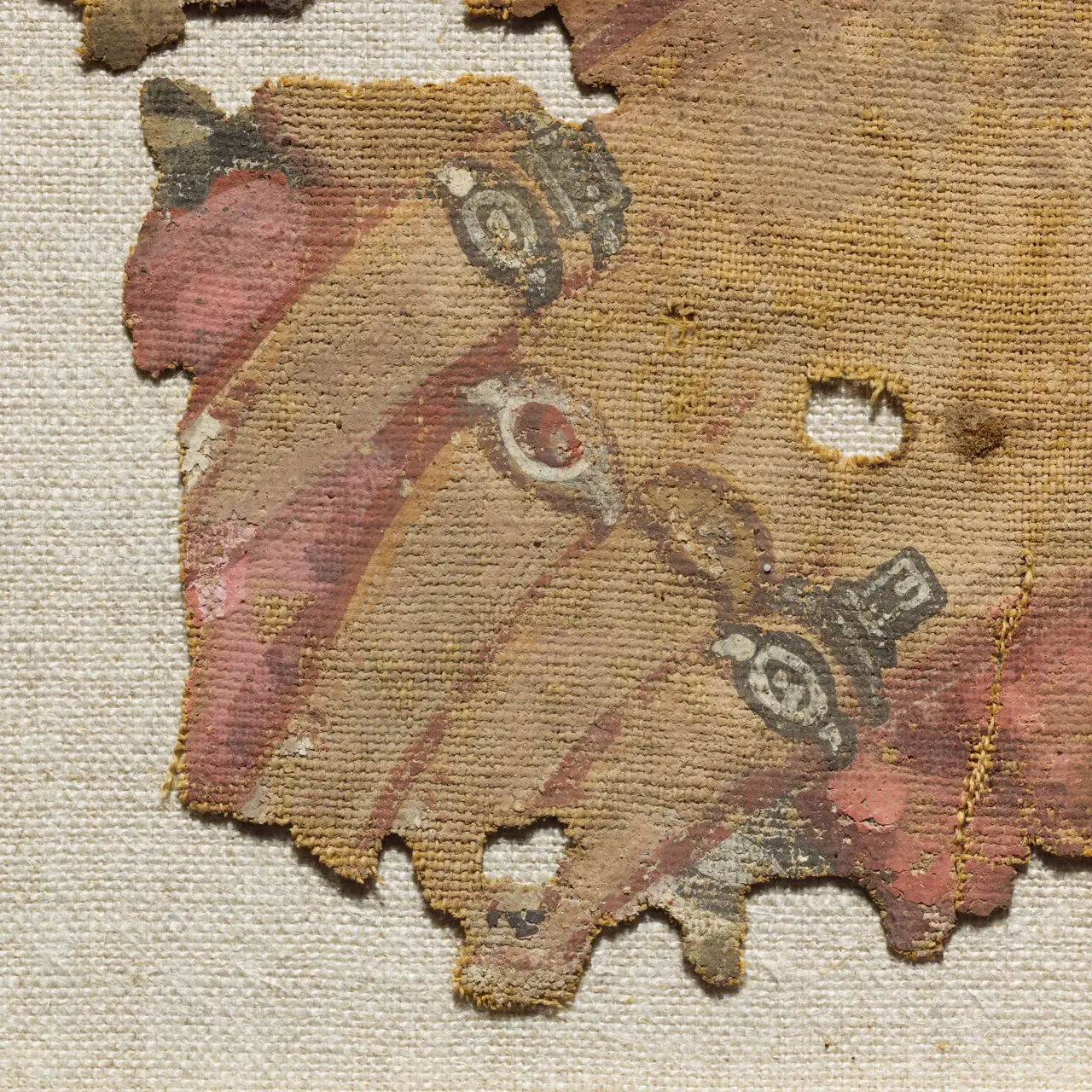 Rings on three fingers of a painted hand, a detail of a linen mummy shroud fragment made in Roman Egypt in the late second or third century AD. Metropolitan Museum of Art, New York (X.390), public domain (CC0), Met Open Access.
Ancient stones in an ancient gold setting cannot be resized, because the gold is so soft, and cutting any old hoop takes away metal and the wear on it. The alternatives leave the ring as it is: one too small for the base of a finger can go on the little finger or above the middle joint, as Pliny's Romans wore theirs, and one too large can take a removable sizer inside the hoop.
Insuring and storing a ring you wear
The December sale has close to three hundred finger rings, and across TimeLine's past sales the median hammer price has been about £1,000 for a Roman gold ring, about £180 for a Roman silver one and about £75 for Roman bronze.
The Roman poet Martial mocked a man named Charinus who wore six rings on every finger, day and night and even in the bath, because he had no ring case. A ring worn now and then wants a lined box, one ring to a compartment so that the stones cannot scratch one another, kept somewhere dry for the sake of silver and bronze. The rings that never leave home can go on display.
Pliny describes Romans who wore one plain ring on the little finger and used it to seal up their signet, which was "kept stored away as a rarity not deserving the insult of common use, and is brought out from its cabinet as from a sanctuary". Among these eight the Eros cameo of lot 157 is the ring for that cabinet, and the Hercules of lot 194, heavy in its nineteenth-century gold, is the one to wear while it stays there.
TimeLine Auctions
