
Loading, please wait...
LOT 0157
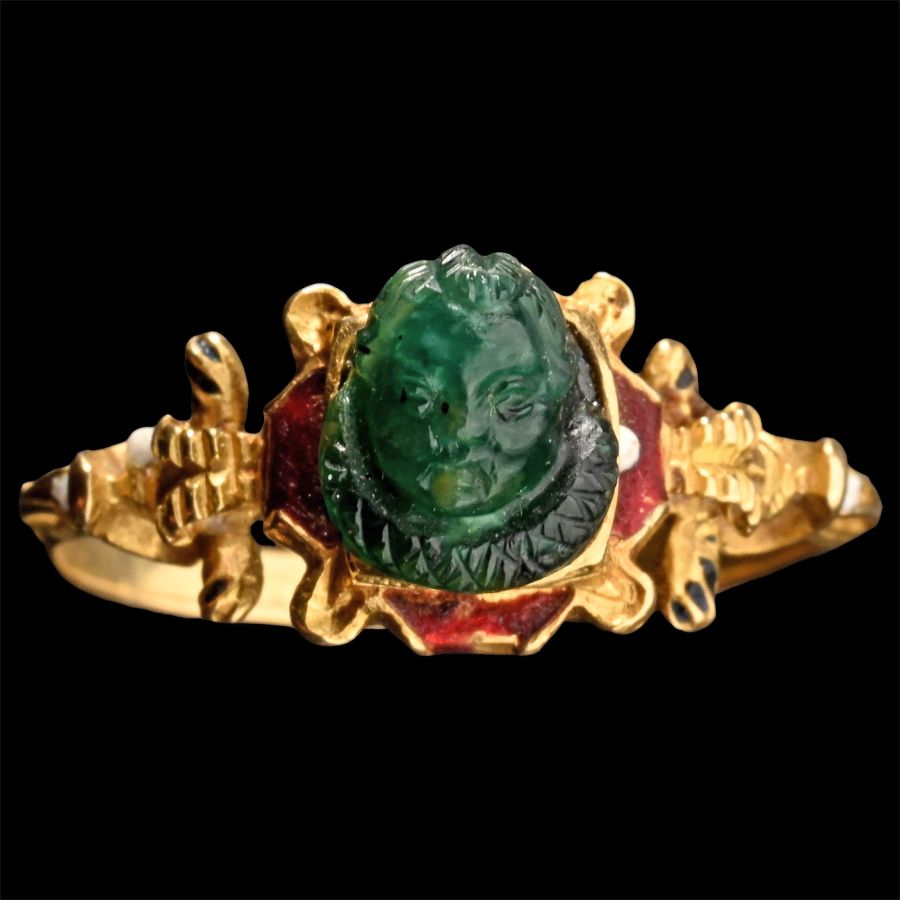
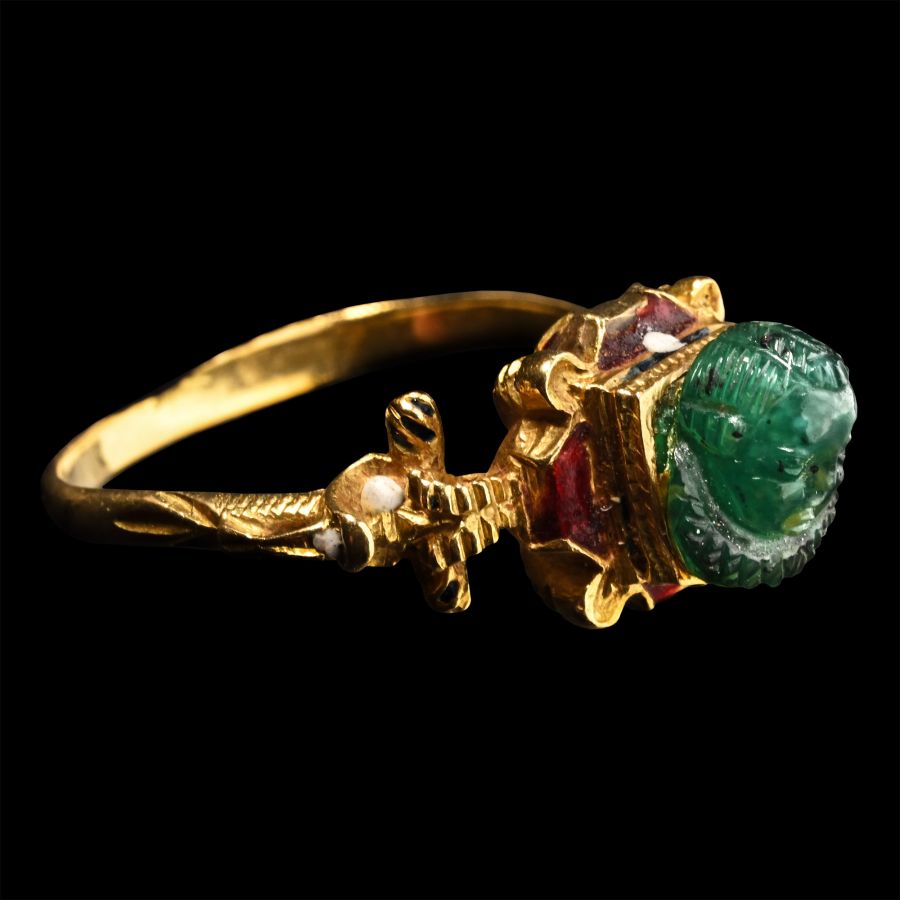
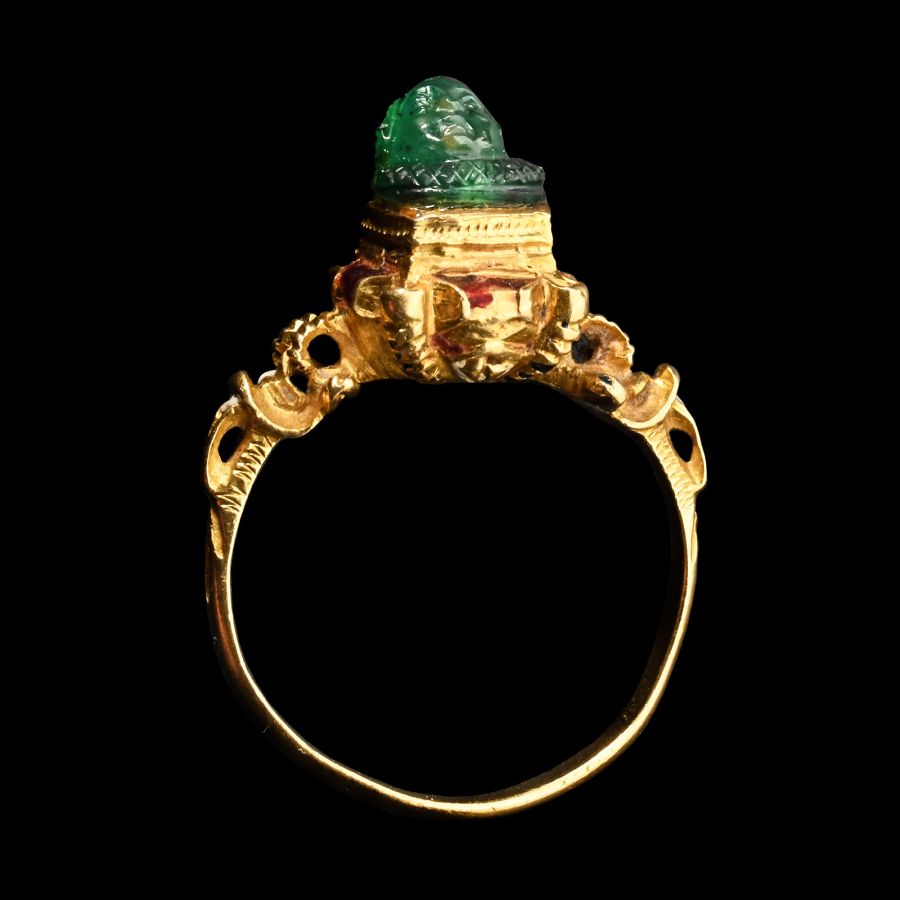
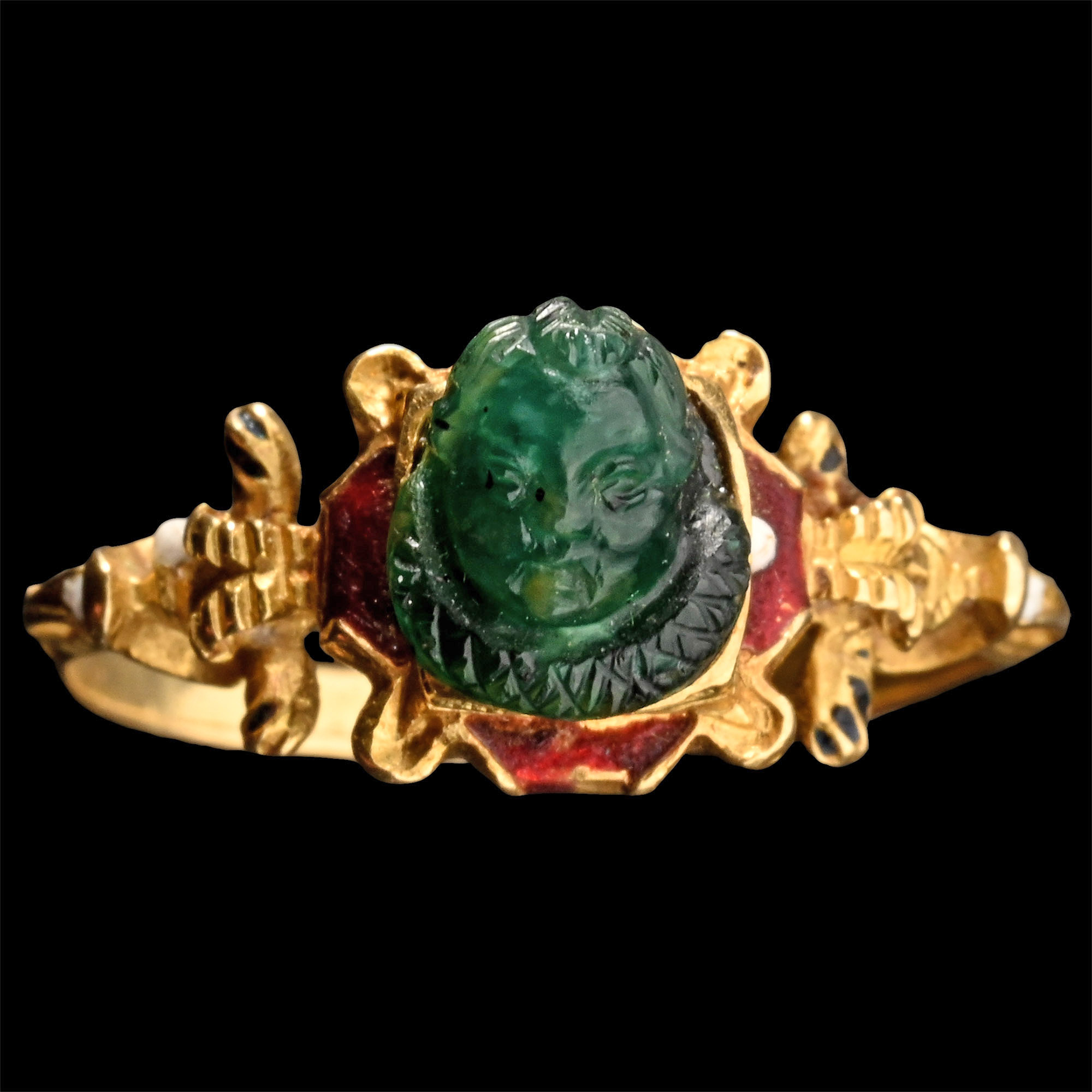
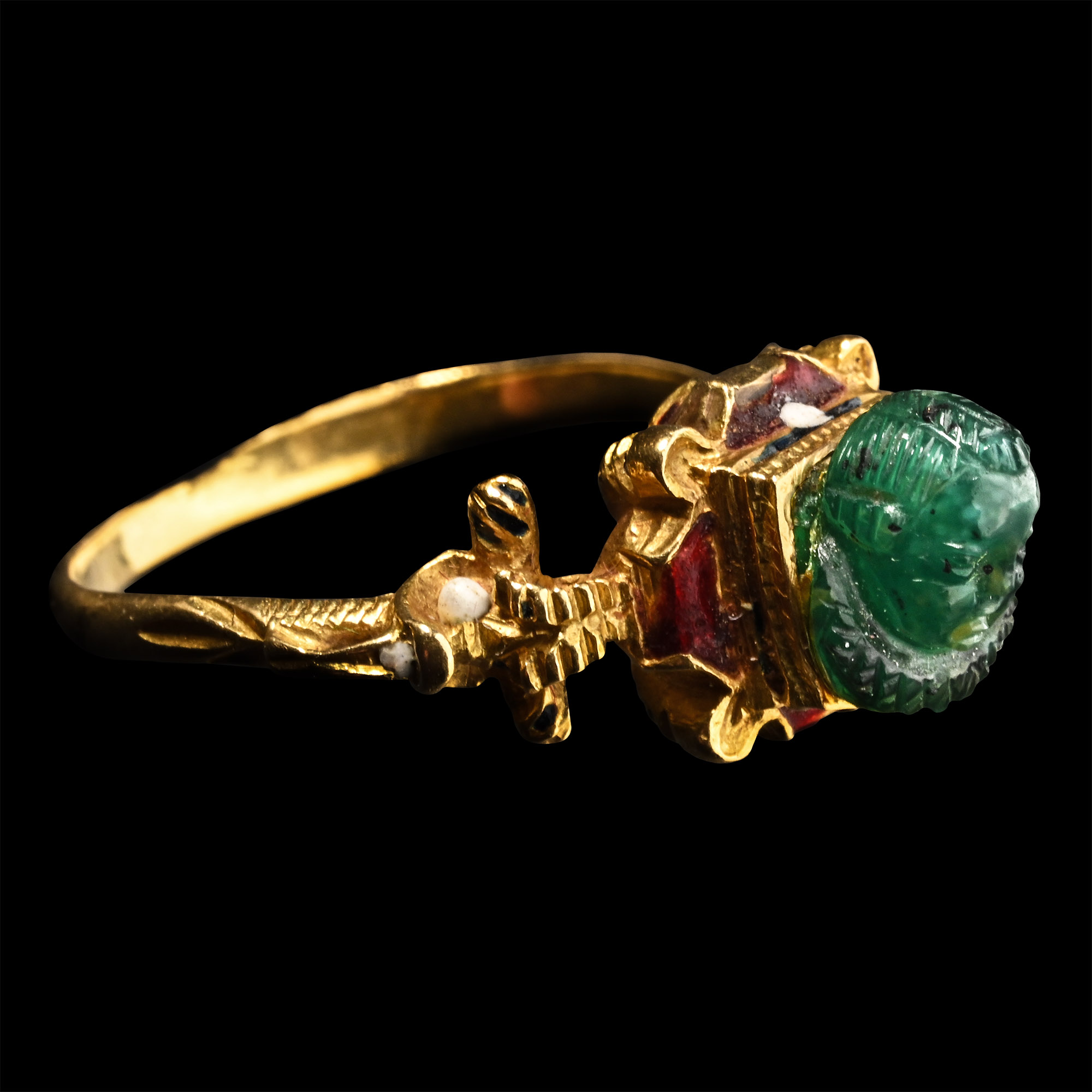
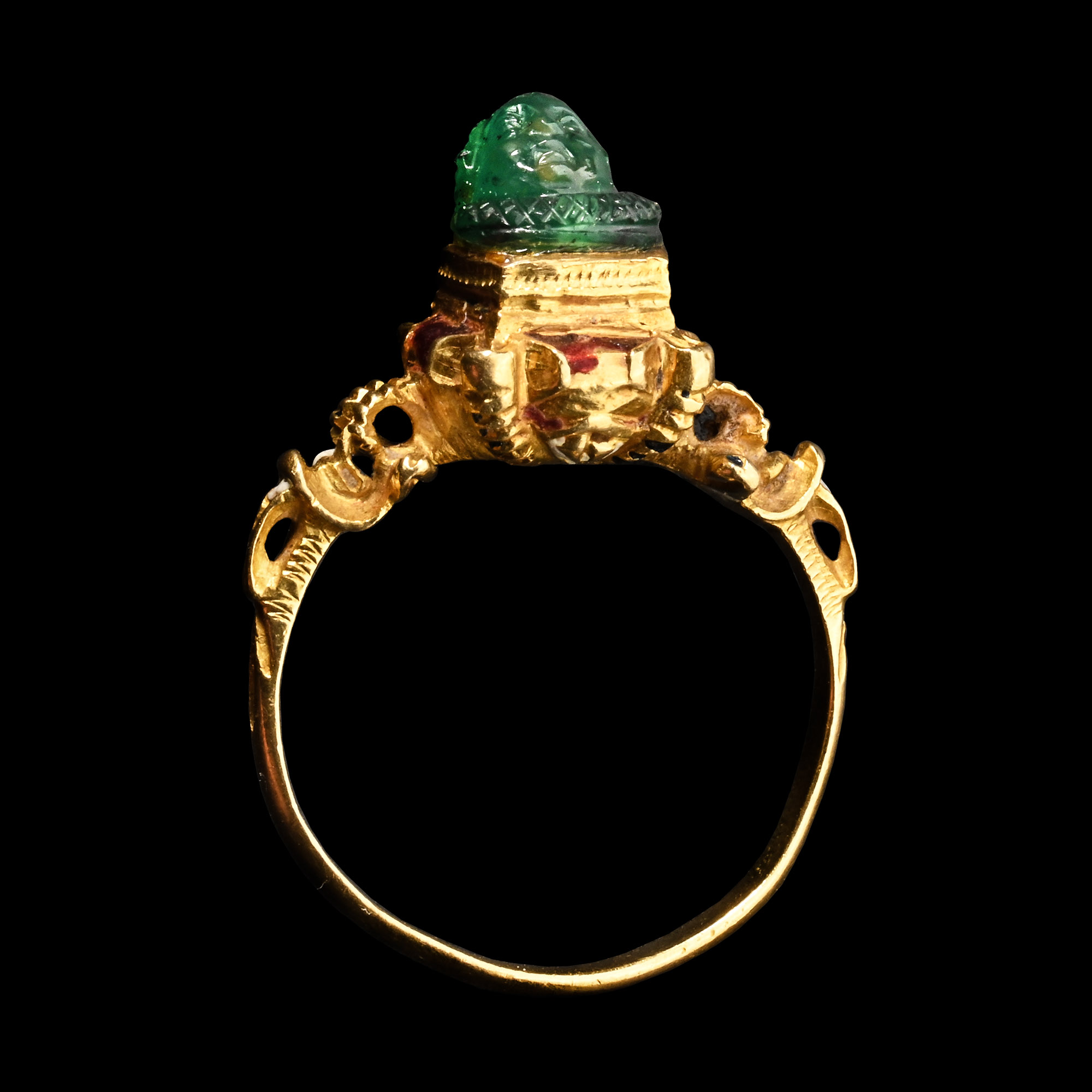
Roman Chrome Chalcedony Cameo of Eros in Renaissance Gold and Enamel Ring
CIRCA 1ST-2ND CENTURY A.D., RING CIRCA 1570-1580 A.D.
1 1/8 in. (3.70 grams, 29.54 mm overall, 18.55 x 16.53 mm internal diameter (approximate size British O, USA 7, Europe 14.98, Japan 14)).
The cameo carved in high relief with the head of a child, probably Eros, with a later adaptation of a ruff-like collar around the neck, set in an ornate gold mount decorated with white, red and black enamel, the shoulders pierced with side lugs, while the underside of the setting incorporates X-shaped ribs, fine striations enriching the sides of the projecting collet.
ProvenanceAcquired on the European art market.
UK, private collection.
This lot has been checked against the Interpol Database of stolen works of art and is accompanied by search certificate no.13504-263463.
See Chadour A.B., Rings. The Alice and Luis Koch Collection, Part I, 1994, pp. 212-213, items 694, 696, for similar ring construction.
FootnotesEros was the god of love, and his image was an appropriate token to give to one's beloved, though he could be a symbol of much more, especially in Dionysiac context where he stood for the young Bacchus and was a symbol of salvation.
CONDITIONTimeLine Auctions follows a vetting process to ensure the authenticity and legality of all items, reinforcing our commitment to integrity and responsible trading. Each antiquity, antique, and coin lot undergoes thorough examination by a vetting committee of at least ten external specialists, professional trade association members, scientists, and archaeologists: Our Vetting Process
AUCTIONS:
TimeLine is a leading auction house specialising in antiquities, ancient art, collectables, natural history, coins, medals, and books. Our auctions offer museums, collectors, historians, and enthusiasts the opportunity to acquire unique and historically significant pieces.
LOT 0157
Roman Chrome Chalcedony Cameo of Eros in Renaissance Gold and Enamel Ring
Estimate £18,000 - 24,000€20,880 - 27,840 (for guidance only)$24,300 - 32,400 (for guidance only)
Opening Bid
£9,000 (EUR 10,440; USD 12,150) +BP*
-
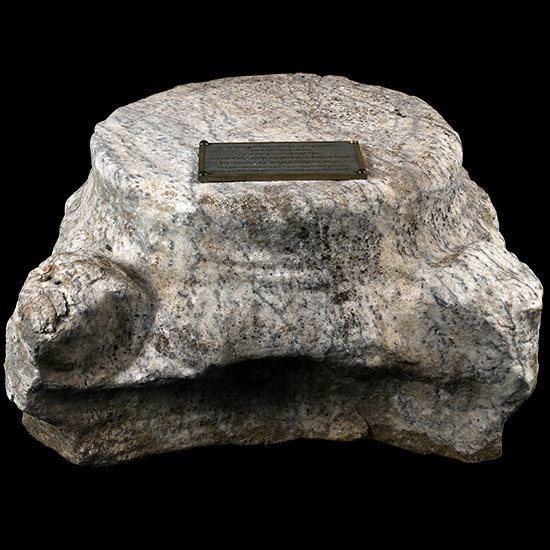
'The Earl of St. Vincent's' Marble Capital from the Provincia Phoenicia
Circa 2nd century A.D.Estimate: £2,000 - 3,000 (+bp*)
Bids: 1 | Current Bid: £5
White marble capital of Ionic order, with slightly curved abacus, supporting the visible traces of the epistyle, and shallow volutes; in the lower part, between the volutes, the foliate base showing an egg-and-dart decoration on the cymation, supported by two further concentric ornamented strips (astragals), again decorated by shallow egg-shaped forms; three of the four volutes preserved, one of them with three holes for the fixing of the metal fastening staples; over the reversed part of the abacus, a bronze plate with an inscription: 'A white marble capital from the top of a Phoenician Column brought in England in 1733 by Admiral of the Fleet John Jervis 1st Earl of St.Vincent GCB, PC. The Phoenicians were a very early trading nation. Origins 2300-1200 BC. High point 1200-800 BC.' approximately 400+ kg, 70 cm wide
Brought to England in 1788 by Admiral of the Fleet John Jervis, 1st Earl of St Vincent, GCB, PC. From the private collection of Admiral of the Fleet John Jervis, Rochetts, South Weald, Essex, UK. Accompanied by an academic report by Dr Raffaele D'Amato. This lot has been checked against the Interpol Database of stolen works of art and is accompanied by a search certificate number no.13411-259626.
The features of this capital are consistent with a particular type of Ionic style, which seems to have characterised the temples of Roman Phoenicia under Hadrian; the capital decoration is very similar to the capitals of the temple of Mercury, Hardine, and to the Roman temple at Bziza. -
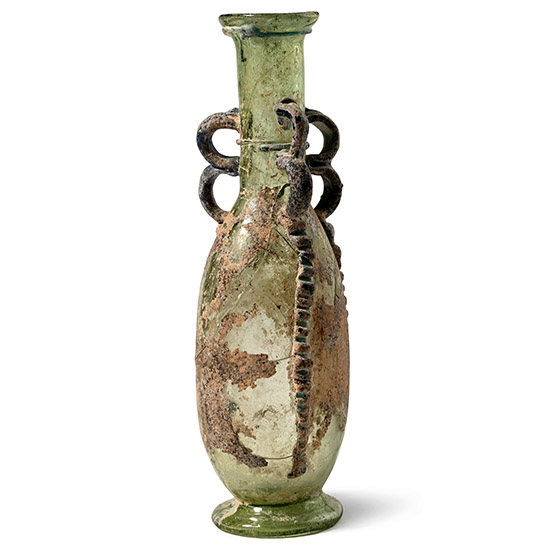
Late Roman Tall Green Glass Vessel with Three Applied Blue Glass Double-Looped Handles
Circa 4th-6th century A.D.Estimate: £500 - 700 (+bp*)
Opening Bid: £250
With cylindrical body on an integral basal ring, three crimped trails formed into double-looped handles, slender tubular neck with everted rim and applied two lines; repaired. 108 grams, 18 cm
From the private collection of Lloyd and Jeanne Raport, Washinton D.C. and Florida, formed between 1972-2000. -
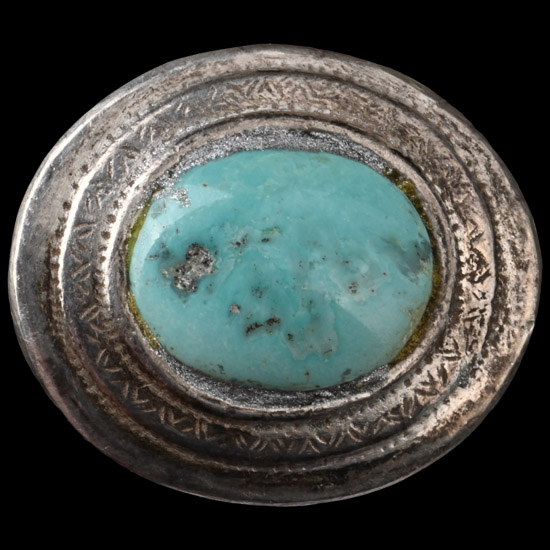
Eastern Roman Silver Ring with Cabochon
Circa 3rd-5th century A.D.Estimate: £120 - 170 (+bp*)
Opening Bid: £5
Comprising a wide D-section hoop and a large oval bezel, later set with a turquoise-coloured cabochon. 21.17 grams, 27.07 mm overall, 19.70 x 16.15 mm internal diameter (approximate size British N 1/2, USA 6 3/4, Europe 14.35, Japan 13)
From the private collection of a European gentleman (1942-2024), formed since the 1970s.
