
Loading, please wait...
LOT 0092
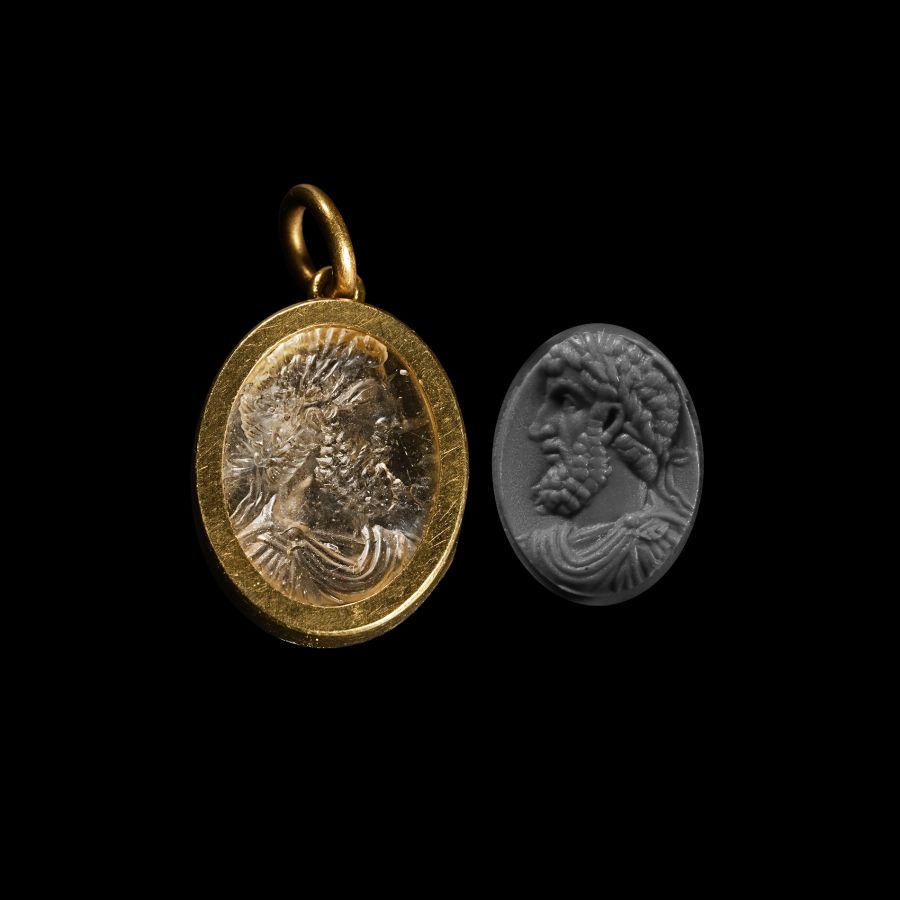
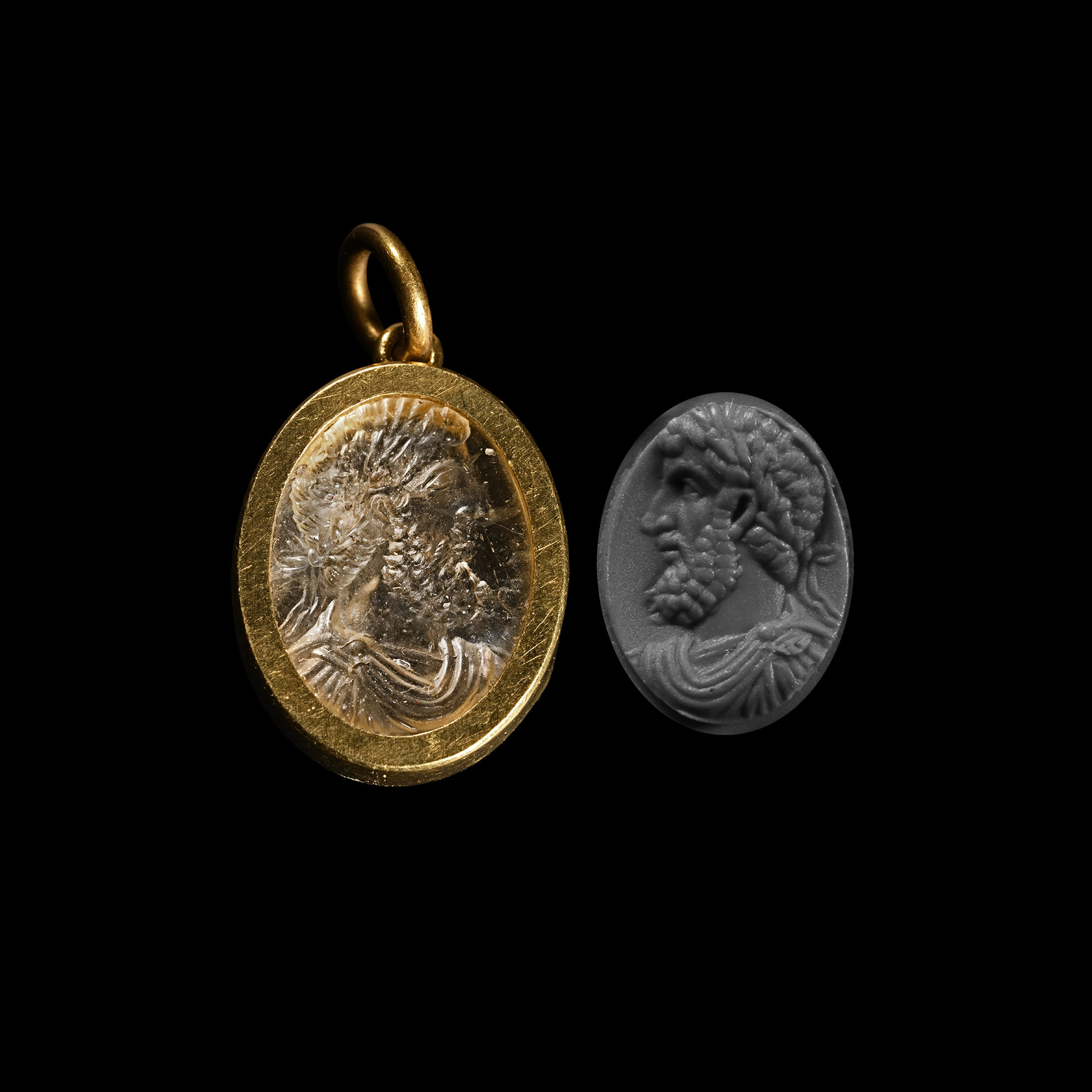
Yellow Sapphire Gemstone of Commodus in Later Gold Mount
ROMAN, 2ND CENTURY A.D. OR LATER
1 in. (4.93 grams, 24 mm).
The naturalistic pale yellow sapphire engraved with the bust of the emperor in profile right.
ProvenanceAcquired in the 1980s.
Ex European collection.
Private collection of a London antiquarian.
The reign of Commodus (177-192 A.D.) is typically associated with the end of the period in Roman history, the golden era of peace. He initially reigned jointly with his father Marcus Aurelius (177-180 A.D.), and later alone. Commodus cultivated a personality cult which culminated in his performance as a gladiator in the Colosseum. He was eventually assassinated by a wrestler in the baths, marking the end of the Nerva-Antonine Dynasty. He was succeeded by Pertinax.
CONDITIONTimeLine Auctions follows a vetting process to ensure the authenticity and legality of all items, reinforcing our commitment to integrity and responsible trading. Each antiquity, antique, and coin lot undergoes thorough examination by a vetting committee of at least ten external specialists, professional trade association members, scientists, and archaeologists: Our Vetting Process
AUCTIONS:
TimeLine is a leading auction house specialising in antiquities, ancient art, collectables, natural history, coins, medals, and books. Our auctions offer museums, collectors, historians, and enthusiasts the opportunity to acquire unique and historically significant pieces.
LOT 0092
Yellow Sapphire Gemstone of Commodus in Later Gold Mount
Sold for (Inc. bp): £1,430
-

Roman Tinned Bronze Decorated Casket Key
1st-3rd century A.D.Sold for (Inc. bp): £85
With broad circular bow, barrel-type shank with pierced bit, mandrel to the upper bow. 4.49 grams, 41 mm
Fine condition.
Found Cambridgeshire, UK. -

Roman Bronze Sitting Dog
1st-4th century A.D.Estimate: £400 - 600 (+bp*)
Opening Bid: £222
Modelled seated on its rump with forepaws before the body, head erect with gaping mouth exposing sharp teeth; detailing to the coat and face. 31.5 grams, 39 mm
‘The Ancient Menagerie Collection’ formerly the property of a Cambridgeshire lady, collected since the 1990s and acquired from auctions and dealers throughout Europe and the USA, now ex London collection. -
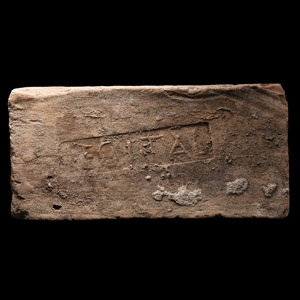
Roman Ceramic Brick with Military Stamp for Legio I Italica
1st-4th century A.D.Sold for (Inc. bp): £494
Of rectangular form, a recessed stamp to one face bearing letters in relief 'LEG I ITAL' for First Italic Legion. 2.5 kg, 27.5 x 13 cm
Acquired 1960s-1990s. Late Alison Barker collection, a retired London barrister.
The Legio I Italica ('of Italy') was a Roman legion formed by Nero on September 20, 66 or 67 A.D. and it was active until the 5th-6th century AD. The emblems of the legion were a running boar and sometimes a bull. Troops of this legion appear on Trajan's Column bridging a river. The main camp of the Legio was Novae, modern Bulgaria, but it operated in most of the imperial provinces, including Britain, where a vexillatio fought in the wars of Septimius Severus between 202 and 204 A.D.
