
Loading, please wait...
LOT 1104
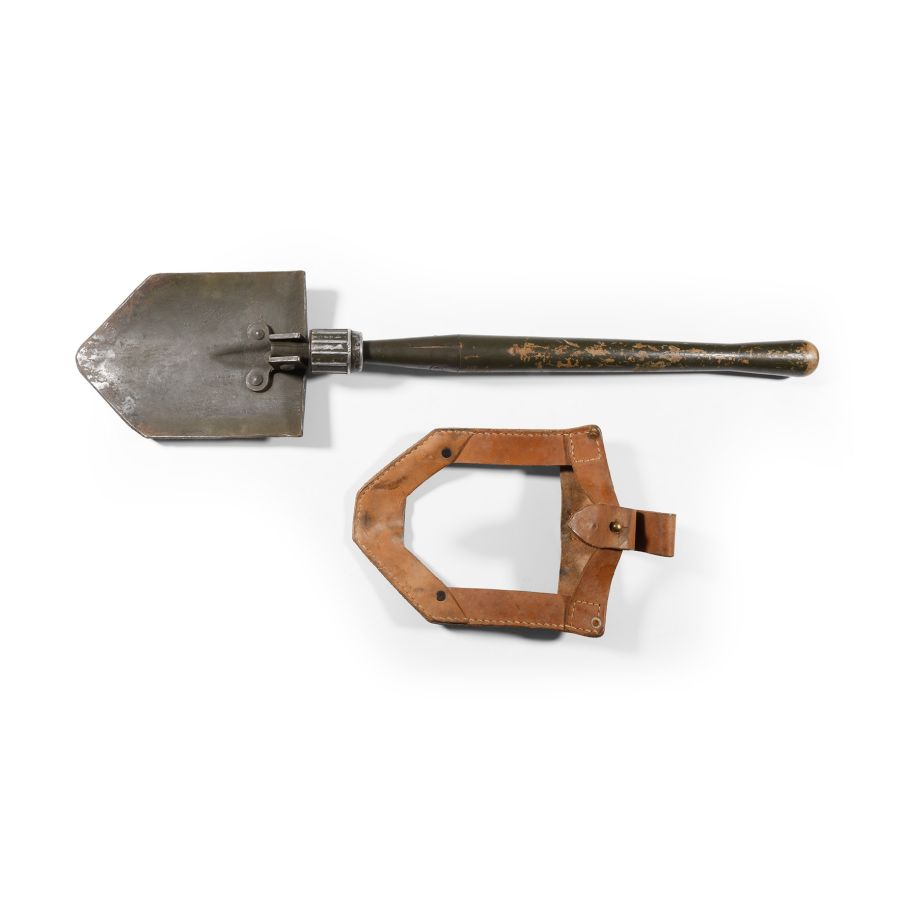
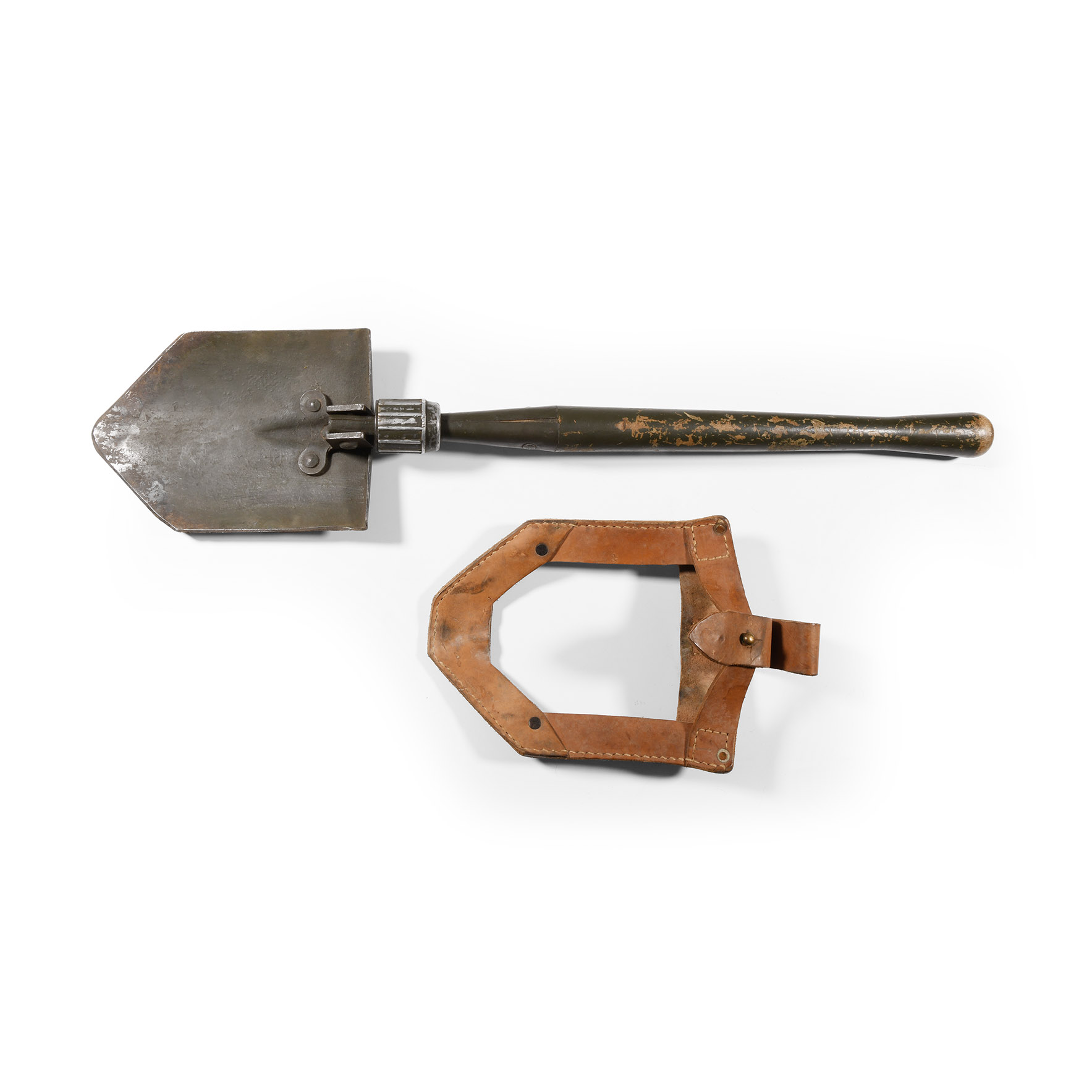
WWII Entrenching Spade
1939-1945 A.D.
22 7/8 in. (1.23 kg, 58 cm).
Of folding type, composed of a wooden shaft, steel head; with leather sheath with loop. [No Reserve]
ProvenanceThe Kusmirek Collection, UK.
CONDITIONTimeLine Auctions follows a vetting process to ensure the authenticity and legality of all items, reinforcing our commitment to integrity and responsible trading. Each antiquity, antique, and coin lot undergoes thorough examination by a vetting committee of at least ten external specialists, professional trade association members, scientists, and archaeologists: Our Vetting Process
AUCTIONS:
TimeLine is a leading auction house specialising in antiquities, ancient art, collectables, natural history, coins, medals, and books. Our auctions offer museums, collectors, historians, and enthusiasts the opportunity to acquire unique and historically significant pieces.
-
Newland Pattern Percussion Tower Pistol
19th century A.D.Sold for (Inc. bp): £234
About 5/8" bore pistol with 19cm (7½") barrel, the percussion lockplate marked 'TOWER' fitted with captive ramrod, full wood stock and butt (cracked) with brass butt cap, fore-end, ferrule and trigger guard and steel belt hook; action working. 1.17 kg, 35.5 cm
Acquired from Mostly Boxes, Northern Ireland. The Kusmirek Collection, UK. Accompanied by a Mostly Boxes invoice.
Sold as an exempt item under Section 58 (2) of the Firearms Act, 1968, to be held as a curiosity or ornament. No license required but buyer must be over 18 years of age. Overseas bidders should note that, due to UK regulations governing export of all firearms, overseas buyers will need to make arrangements for shipping this lot out of the UK directly, by air freight, with a specialist company or agent. -
.jpg)
Luristan Bronze Butted Axe
3rd-2nd millennium B.C.Sold for (Inc. bp): £312
The cylindrical shaft decorated with three bosses, blade with diverging edges, the upper sides of the hole and part of the blade decorated with a dotted pattern. 375 grams, 17.5 cm
Fine condition.
Acquired 1980-2015. Ex Abelita family collection.
The earliest Luristan bronze weapons, particularly daggers, axes, and adzes, share many similarities in form with Mesopotamian artefacts of the 3rd millennium BC. The unadorned weapons, especially the axes, adzes and picks, were made using simple clay or stone bivalve moulds with a core inserted into them to form the socket for the shaft. -
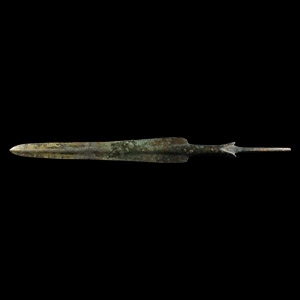
Amlash Type Spearhead
12th-11th century B.C.Sold for (Inc. bp): £182
Long, parallel-sided with deep midrib, broad tip, round-section neck with V-shaped recess to each face and thick square-section tang. 468 grams, 47 cm
Ex German collection, Cologne, 1980-1990s.
This weapon belongs to the type 1 of the spear-head classification of Khorasani, mainly from Marlik or Amlash areas. Similar pieces have been dated by Stutzinger to 1200-1100 BC.
