
Loading, please wait...

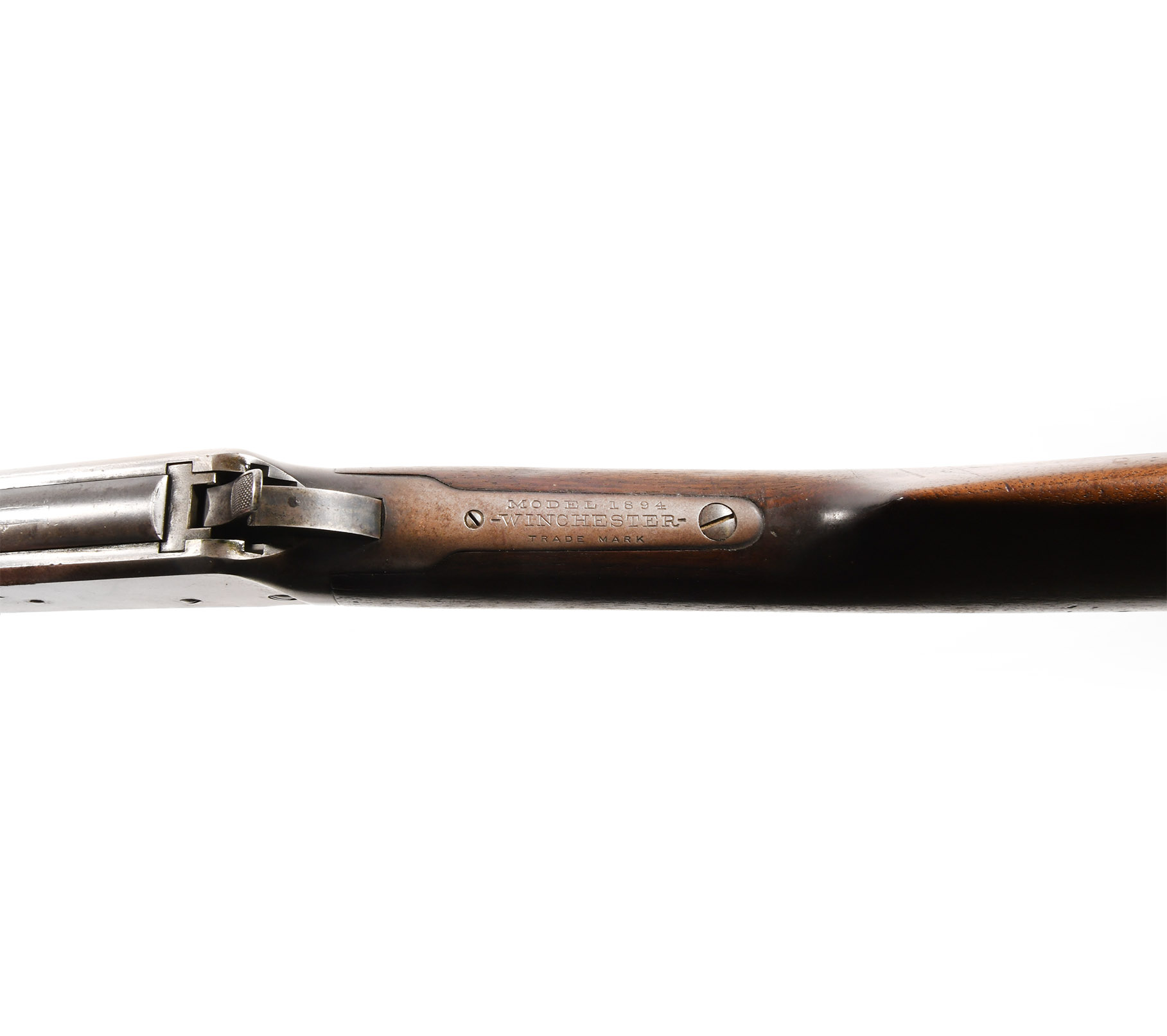
LOT 0295
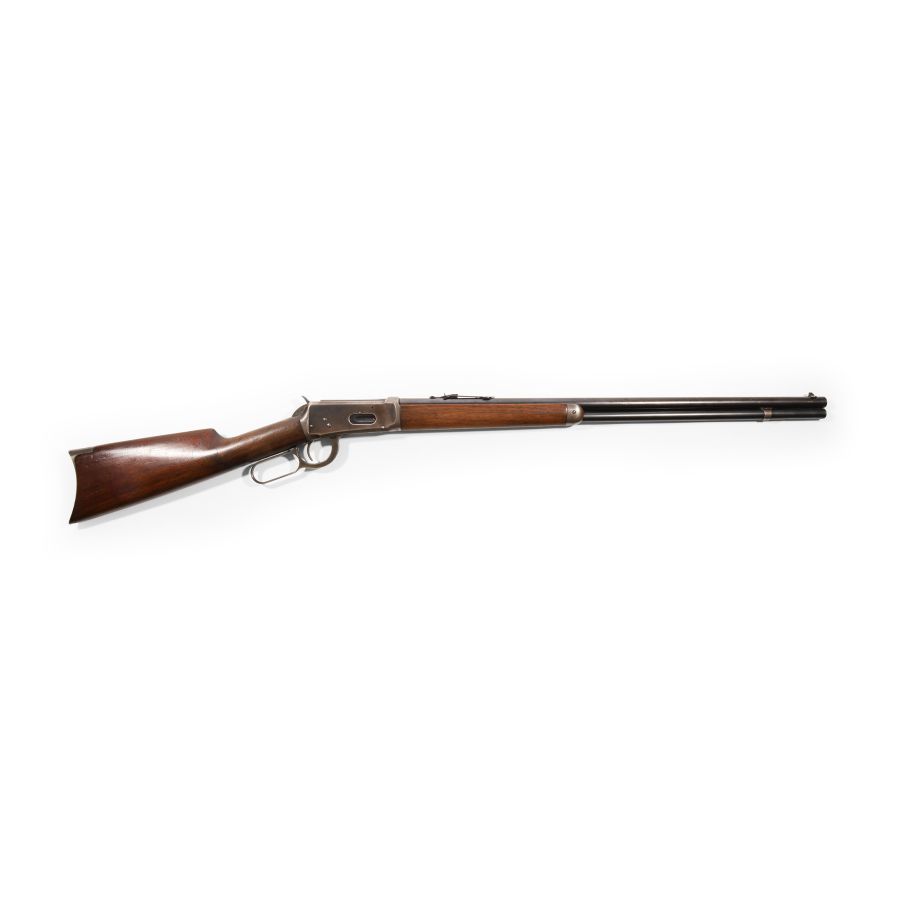
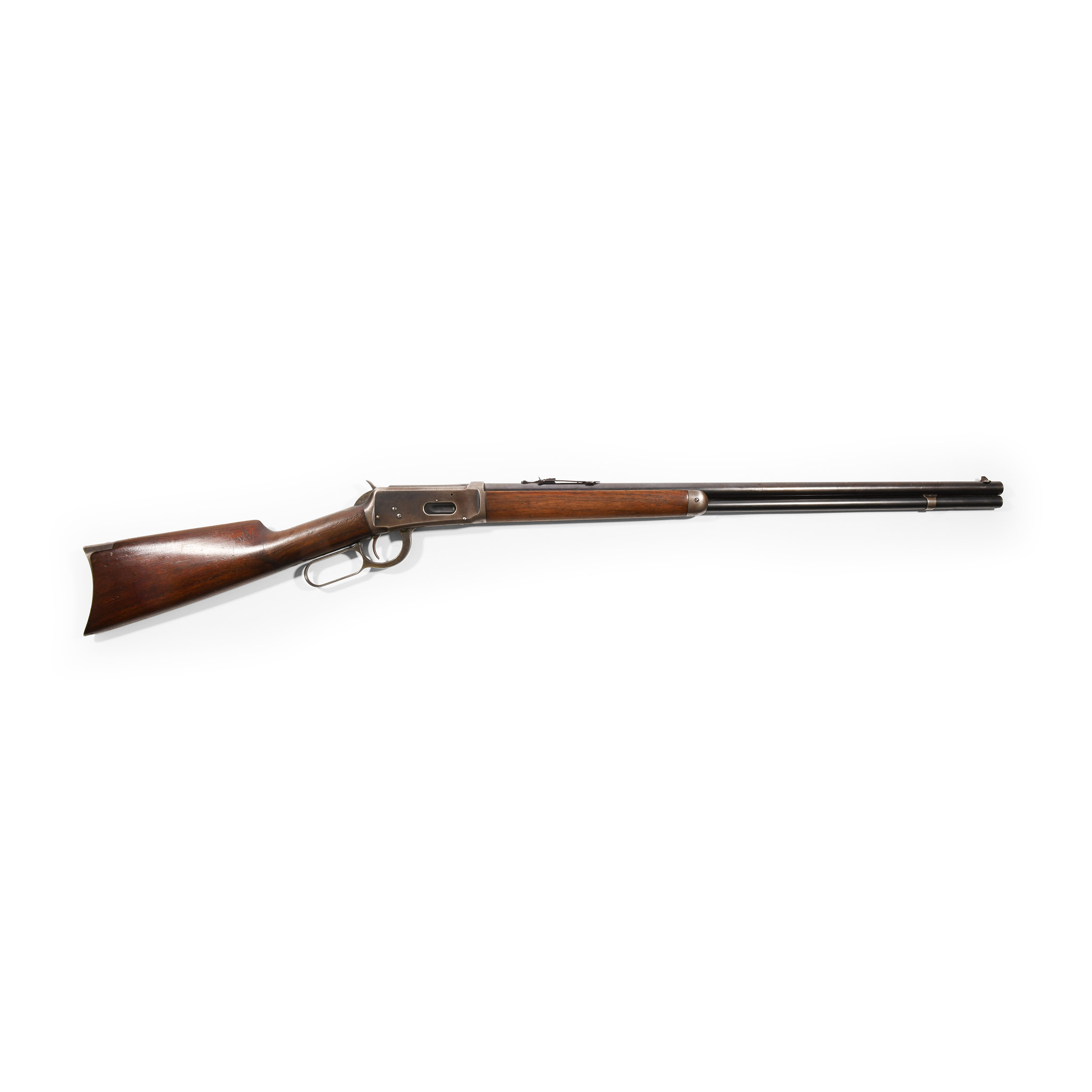
Winchester Repeating Rifle
19TH CENTURY A.D.
44 1/2 in. (3.55 kg, 113 cm).
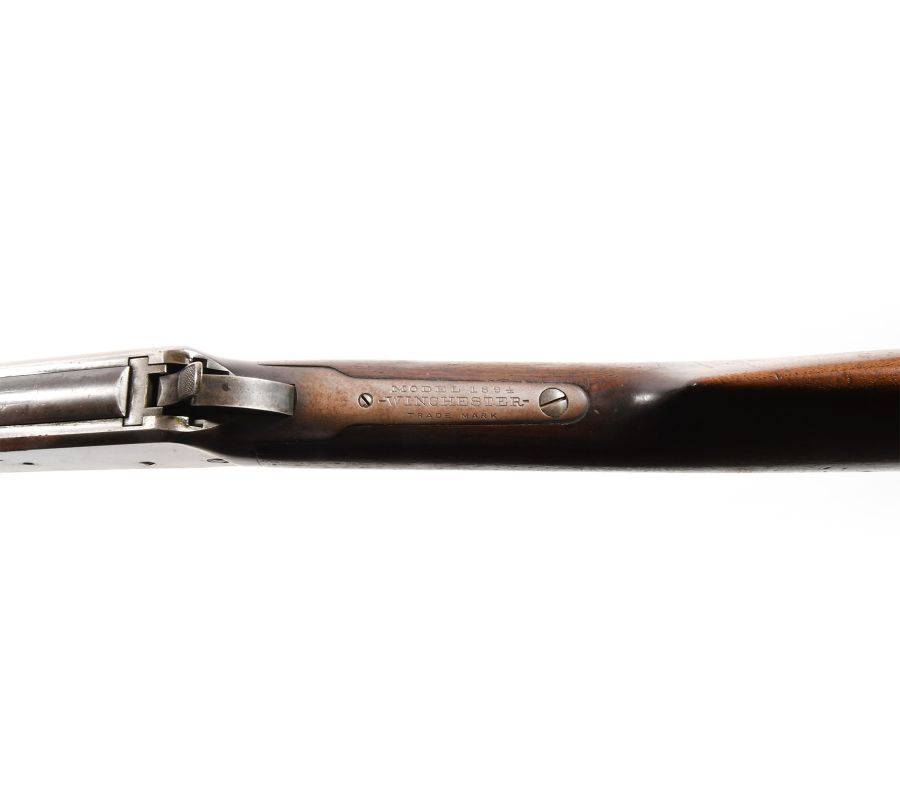
Lever action 32/40 calibre Model 1894 with 66cm (26") round rifled barrel with buckhorn sights and full length tubular magazine; two piece wood stock with steel butt plate and fore-end; serial No. 446786 to underside of action, model, calibre and other details stamped; action working crisply.
ProvenanceAcquired from M J Noble Ltd, UK, 2015.
The Kusmirek Collection, UK.
Accompanied by copies of invoice and listing and original NI Police Service Certificate.
Sold as an exempt item under Section 58 (2) of the Firearms Act, 1968, to be held as a curiosity or ornament. No license required but buyer must be over 18 years of age. Overseas bidders should note that, due to UK regulations governing export of all firearms, overseas buyers will need to make arrangements for shipping this lot out of the UK directly, by air freight, with a specialist company or agent.
CONDITIONTimeLine Auctions follows a vetting process to ensure the authenticity and legality of all items, reinforcing our commitment to integrity and responsible trading. Each antiquity, antique, and coin lot undergoes thorough examination by a vetting committee of at least ten external specialists, professional trade association members, scientists, and archaeologists: Our Vetting Process
AUCTIONS:
TimeLine is a leading auction house specialising in antiquities, ancient art, collectables, natural history, coins, medals, and books. Our auctions offer museums, collectors, historians, and enthusiasts the opportunity to acquire unique and historically significant pieces.
-
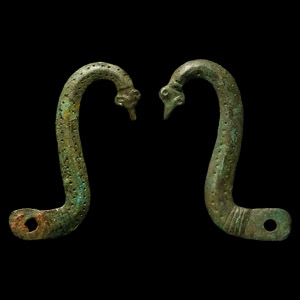
Roman Bronze Armour Double Fastening Hooks
1st century A.D.Sold for (Inc. bp): £221
Each a scrolled bar with gently carinated upper face, formed as serpents or other animals with stylised geometric detailing; attachment perforations to one terminal. 16.5 grams total, 65 mm each
Acquired on the London art market, 1980s-1990s.
In the 1st century B.C.-1st century A.D., the Celtic fastening system of the ring mail armour (gallica, lorica ferro aspera) became the standard in the Imperial Roman army, with a pivot attached to the breast and hinged to the edges of the humeralia (shoulder guards). The chest fastener had various different designs. The double hooks, S-shaped and usually with snake-head terminals, were secured by a central rivet on the chest. The system allowed excellent freedom of movement, giving greater protection to the shoulders and the arms. Similar fasteners for infantry mail have been found on the Kalkriese battlefield, some of them also decorated with niello and inscribed with the name of the soldier. -
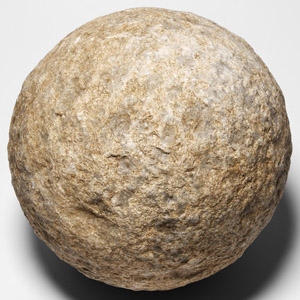
Roman Marble Ballista Catapult Shot
1st-3rd century A.D.Sold for (Inc. bp): £208
Suitable for use with an onager or other catapult-type siege weapon; with smooth finished surface. 3 kg, 13 cm
Acquired 1971-1972. From the collection of the vendor's father. Property of a London, UK, collector.
The operation of the onager (Latin for 'wild ass') is first mentioned in 353 A.D. by Ammianus Marcellinus in his Res Gestae and more fully in Vegetius's Epitoma Rei Militaris probably written in the reign of Emperor Theodosius I (378-395 A.D.). -
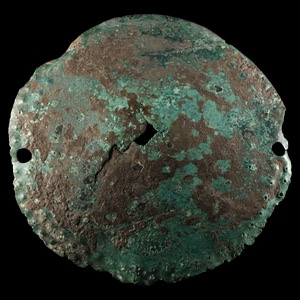
Bronze Age European Boss
2nd-1st millennium B.C.Estimate: £150 - 200 (+bp*)
Opening Bid: £42
Of repoussé form, slightly convex in profile with two concentric bands of pierced ornament and two attachment holes at edge. 36 grams, 95 cm
Ex English collection, pre-2000. The Kusmirek Collection, UK. Accompanied by a previous dealer's certificate of authenticity.
