
Loading, please wait...
LOT 1440
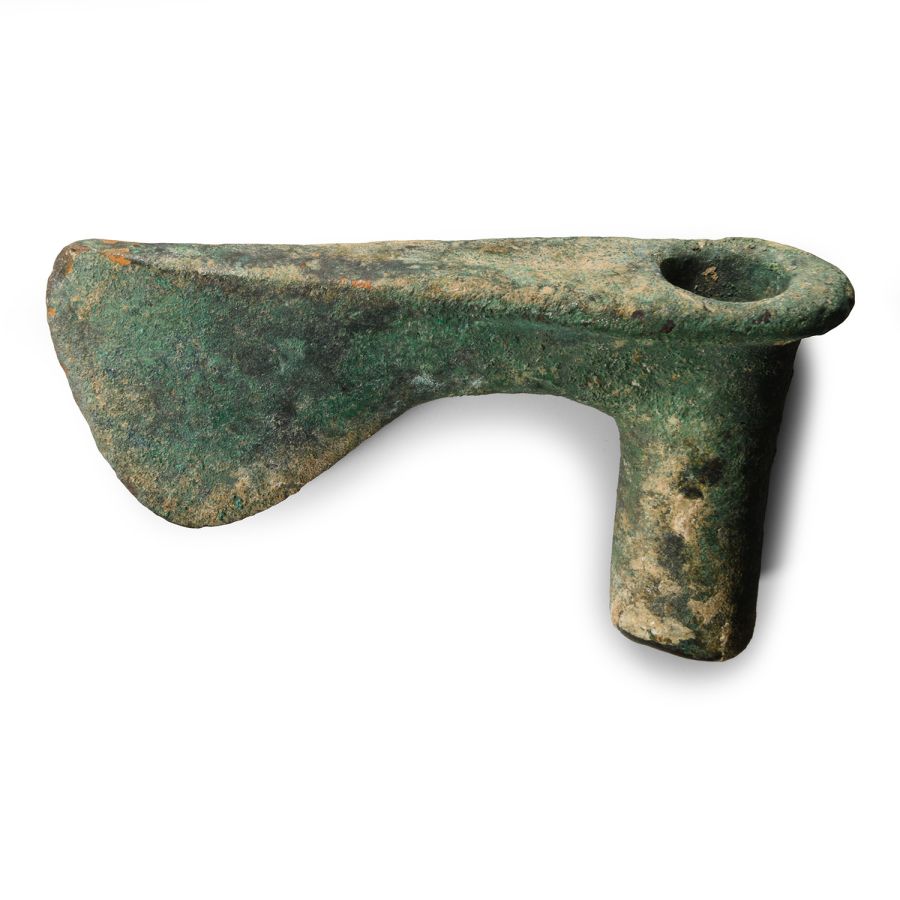
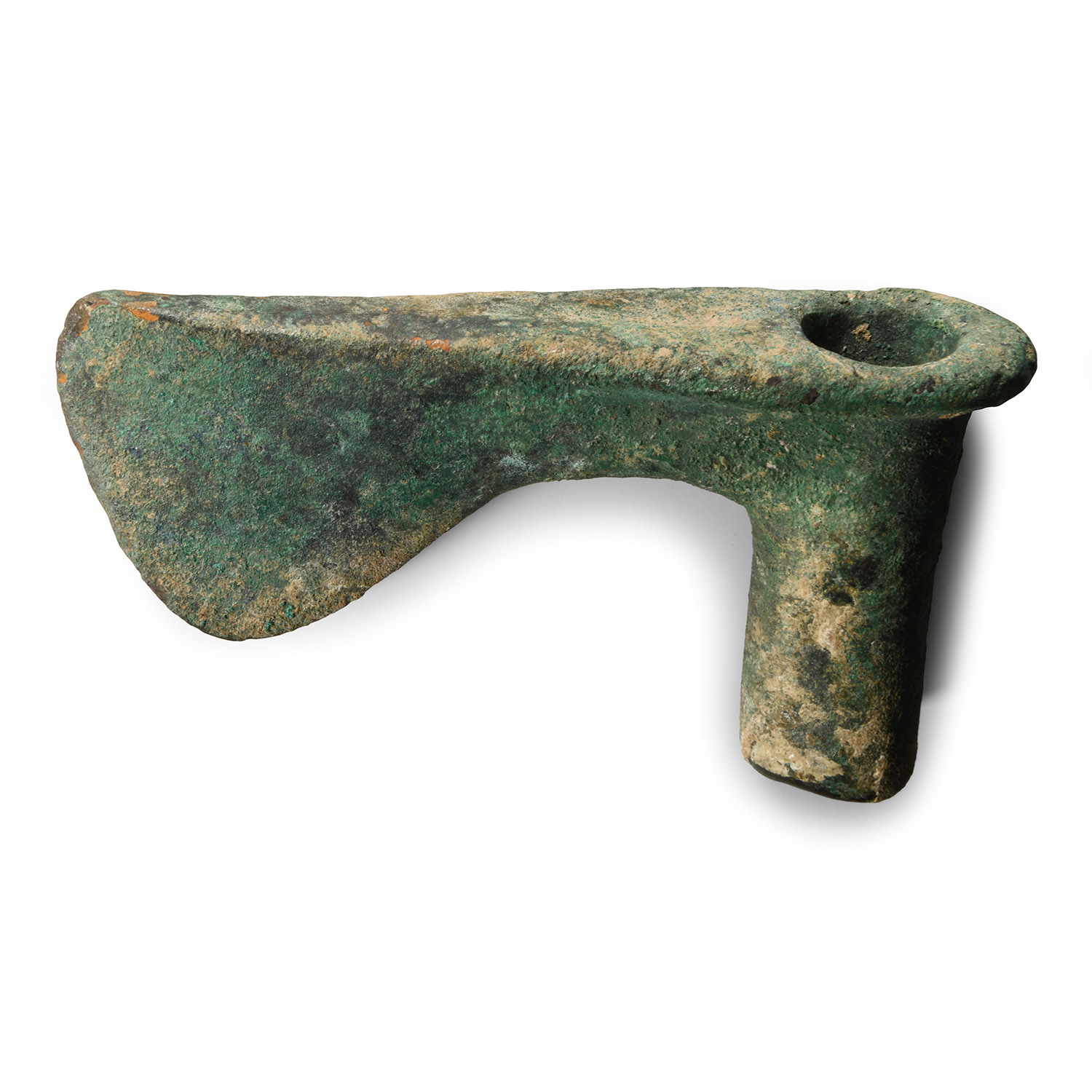
Western Persian Bronze Socketted Axehead
CIRCA 2ND MILLENNIUM B.C.
4 3/4 in. (362 grams, 11.9 cm).
With tubular socket, expanding blade with flanges to the long sides, curved edge. [No Reserve]
ProvenanceAcquired on the German art market before 1990.
From a German collection.
TimeLine Auctions follows a vetting process to ensure the authenticity and legality of all items, reinforcing our commitment to integrity and responsible trading. Each antiquity, antique, and coin lot undergoes thorough examination by a vetting committee of at least ten external specialists, professional trade association members, scientists, and archaeologists: Our Vetting Process
AUCTIONS:
TimeLine is a leading auction house specialising in antiquities, ancient art, collectables, natural history, coins, medals, and books. Our auctions offer museums, collectors, historians, and enthusiasts the opportunity to acquire unique and historically significant pieces.
-

Luristan Socketted Bronze Cudgel
13th-7th century B.C.Sold for (Inc. bp): £260
A cudgel or handle of an axe or mace reinforced at both ends by raised moulding, the handle adorned with a double spiral in relief. 473 grams, 15.5 cm wide
Fine condition.
Private family collection formed in London, mid 1980s to early 1990s. -
.jpg)
Belgian Rimfire Pistol
Late 19th century A.D.Sold for (Inc. bp): £195
An antique Belgian manufactured single-shot rimfire pocket pistol, the action with separately hinged loading gate and single action hammer with spur trigger; Liege proof marks. 127 grams, 12.5 cm
Fine condition, mechanism does not hold cock.
Acquired on UK art market; previously in a Nottinghamshire, UK, collection. Ex property of a Nottinghamshire gentleman.
These small calibre, cheap and often quite crudely made pocket pistols (sometimes known as 'Saturday Night Specials') were popular in the later 19th century as weapons for personal defence; large numbers were made in Europe. Sold as an exempt item under Section 58 (2) of the Firearms Act, 1968, to be held as a curiosity or ornament. No license required but buyer must be over 18 years of age. -
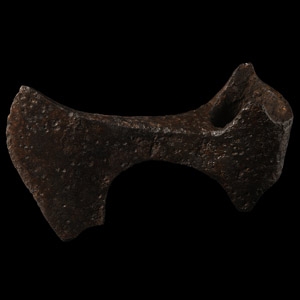
Viking Iron Bearded Axehead
Circa 9th-11th century A.D.Sold for (Inc. bp): £208
With scooped socket flanked by lateral wings, broad blade with chin and spur to the lower edge; possibly Baltic workmanship. 470 grams, 15 cm
From the private collection of a London gentleman, from his grandfather's collection formed before the early 1970s.
