
Loading, please wait...
LOT 1394
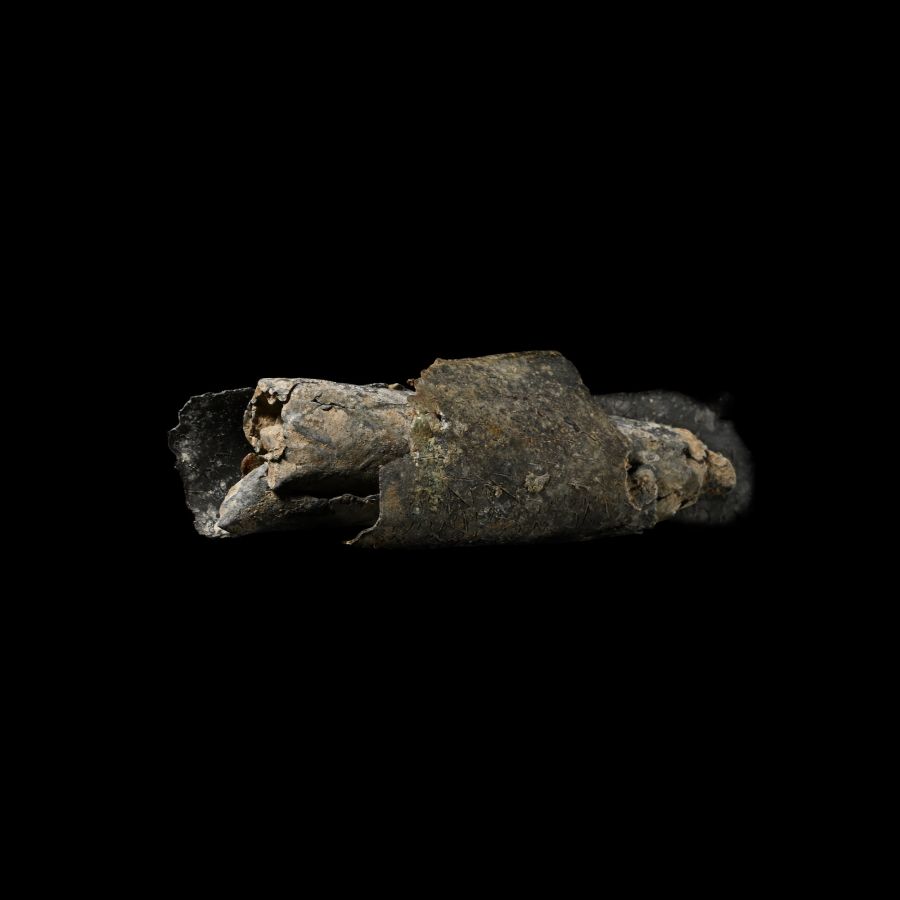
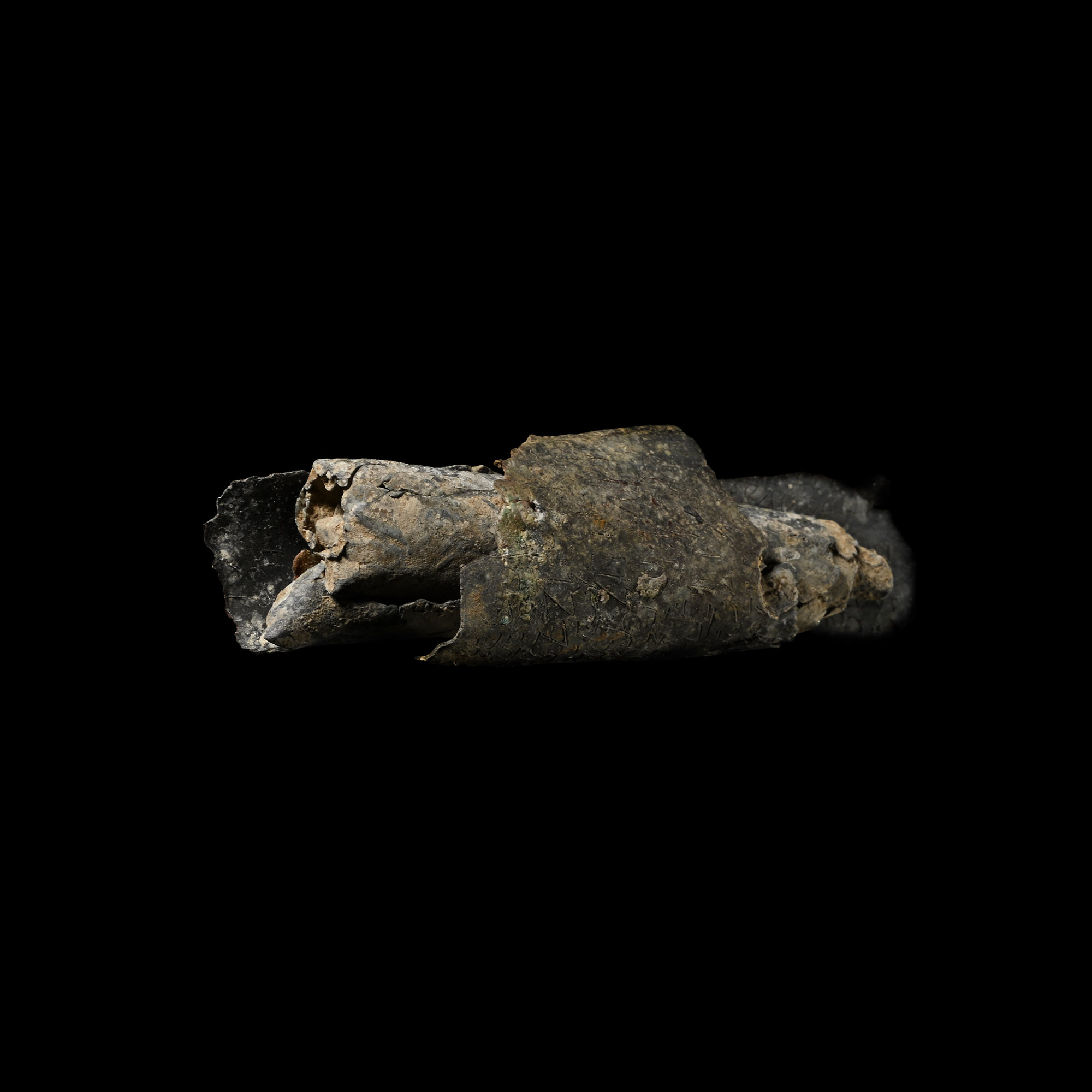
Western Asiatic Unopened Lead Scroll with Case Fragments
2ND-8TH CENTURY A.D.
2 3/4 in. (41 grams total, scroll: 70 mm long).
Tightly coiled sheet-lead panel with neat inscription in an alphabetic script or abjad.
ProvenanceEx S.M. London collection, UK, 1970-1990s.
This lot has been cleared against the Art Loss Register database, and is accompanied by an illustrated lot declaration signed by the Head of the Antiquities Department, Dr Raffaele D'Amato.
The item was possibly meant to be what the Romans called a defixio or 'curse tablet', on which the magical malediction was recorded and then shut away (by being tightly rolled up) so that the victim could not find it or change it.
CONDITIONTimeLine Auctions follows a vetting process to ensure the authenticity and legality of all items, reinforcing our commitment to integrity and responsible trading. Each antiquity, antique, and coin lot undergoes thorough examination by a vetting committee of at least ten external specialists, professional trade association members, scientists, and archaeologists: Our Vetting Process
AUCTIONS:
TimeLine is a leading auction house specialising in antiquities, ancient art, collectables, natural history, coins, medals, and books. Our auctions offer museums, collectors, historians, and enthusiasts the opportunity to acquire unique and historically significant pieces.
LOT 1394
Western Asiatic Unopened Lead Scroll with Case Fragments
Sold for (Inc. bp): £286
-
Sumerian Shell Disc Bangle
3rd-2nd millennium B.C.Sold for (Inc. bp): £52
Carved as a domed band from a large shell plate. 48 grams, 11.5 cm
Ex London, UK, collection, 1990s. This lot has been cleared against the Art Loss Register database, and is accompanied by an illustrated lot declaration signed by the Head of the Antiquities Department, Dr Raffaele D'Amato. -
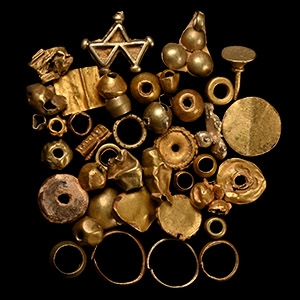
Western Asiatic Mixed Gold Bead Group
1st millennium B.C. and laterSold for (Inc. bp): £468
A mixed group of small beads, pendants, and mounts. 5.78 grams total, 2-9 mm
Ex property of a late Japanese collector, 1970-2000s. This lot has been cleared against the Art Loss Register database, and is accompanied by an illustrated lot declaration signed by the Head of the Antiquities Department, Dr Raffaele D'Amato. -
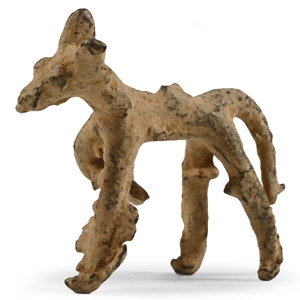
Western Asiatic Bronze Animal Figure
2nd-1st millennium B.C.Sold for (Inc. bp): £98
Modelled in the round with one foreleg raised. 26.8 grams, 52 mm
Acquired in the 1990s. Ex Abelita family collection. This lot has been cleared against the Art Loss Register database, and is accompanied by an illustrated lot declaration signed by the Head of the Antiquities Department, Dr Raffaele D'Amato.
