
Loading, please wait...
LOT 1151
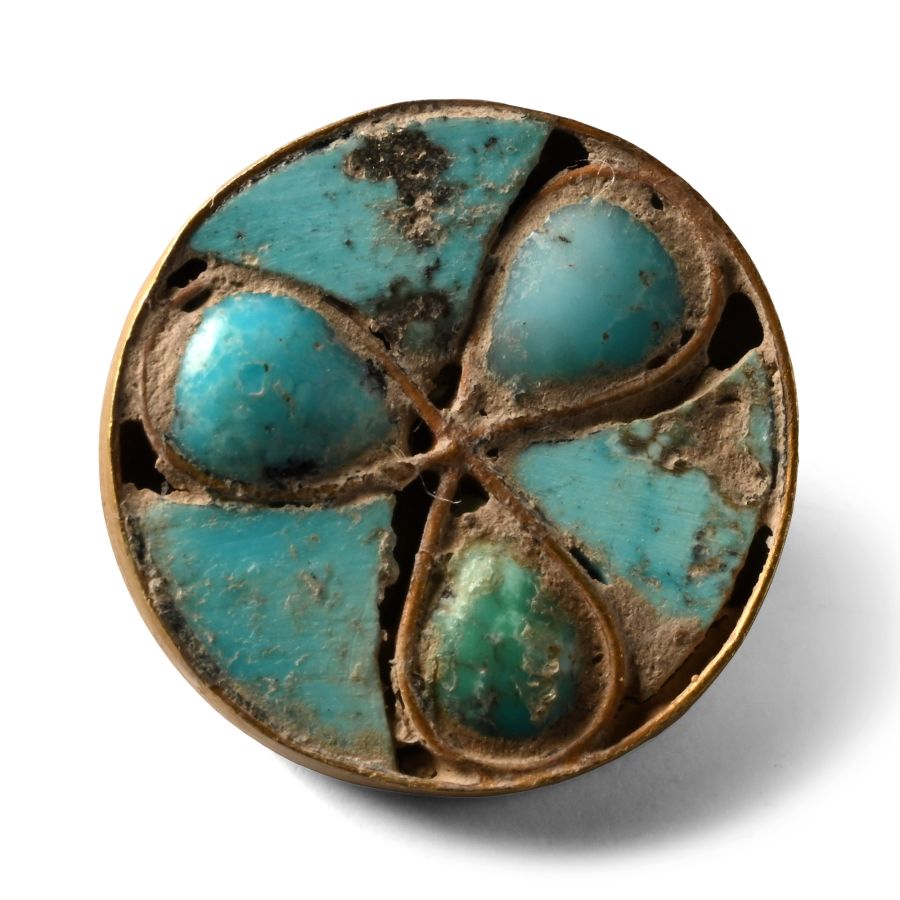
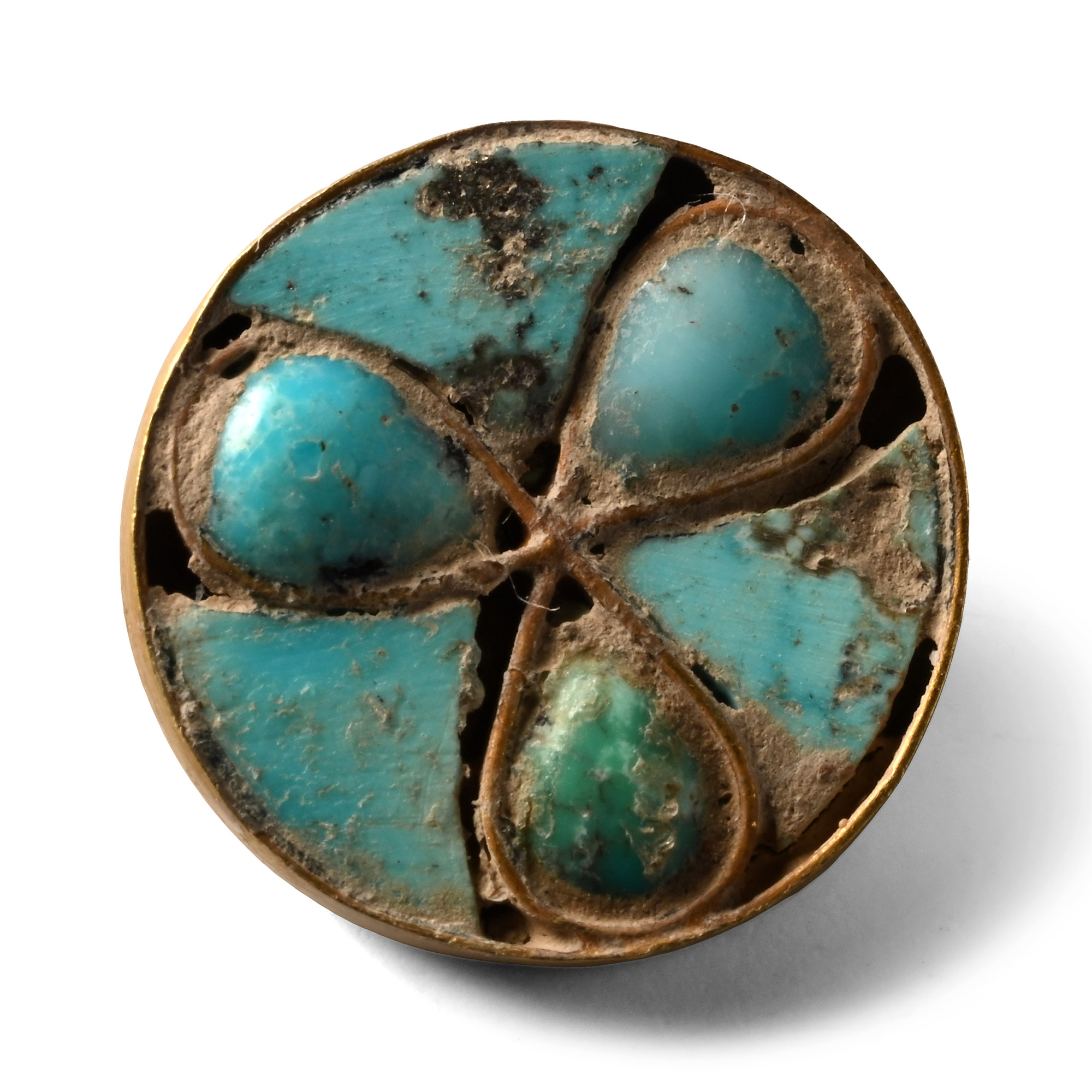
Western Asiatic Turquoise Inlaid Gold Stud
1ST MILLENNIUM B.C.
1/2 in. (1.38 grams, 12 mm).
Discoid stud with low sidewall, two loops to underside, three cabochons to the upper face with interstitial cloisons.
ProvenanceFrom the collection of a late Japanese gentleman, 1970s onwards.
CONDITIONTimeLine Auctions follows a vetting process to ensure the authenticity and legality of all items, reinforcing our commitment to integrity and responsible trading. Each antiquity, antique, and coin lot undergoes thorough examination by a vetting committee of at least ten external specialists, professional trade association members, scientists, and archaeologists: Our Vetting Process
AUCTIONS:
TimeLine is a leading auction house specialising in antiquities, ancient art, collectables, natural history, coins, medals, and books. Our auctions offer museums, collectors, historians, and enthusiasts the opportunity to acquire unique and historically significant pieces.
-
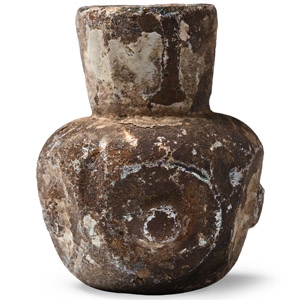
Western Asiatic Mould-Blown Glass Perfume Bottle
9th-10th century A.D.Estimate: £100 - 140 (+bp*)
Opening Bid: £40
In iridescent glass with squat body and hexagonal-section mouth; facetted body with impressed ring detailing. 13.2 grams, 33 mm
Ex collection of the late Mr S. M., London, UK, 1970-1990s. This lot has been cleared against the Art Loss Register database, and is accompanied by an illustrated lot declaration signed by the Head of the Antiquities Department, Dr Raffaele D'Amato. -
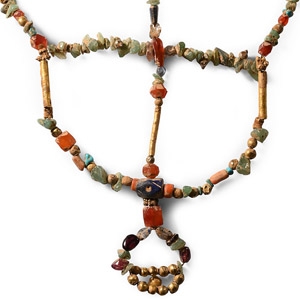
Western Asiatic Gold and Other Bead Necklace
1st millennium B.C.Estimate: £1,500 - 2,000 (‡+bp*)
Opening Bid: £750
Restrung designer necklace of three strands connected by a median vertical column; comprising mainly gold tubular beads with ribbing to the outer face, polyhedral carnelian beads, irregular green glass beads, square-section lapis lazuli beads and other types; the lower node a larger polyhedral lapis lazuli bead with a loop of barrel-shaped gold beads and other types. 78 grams, 57 cm
Acquired in the 1980s. Private collection, Switzerland, thence by descent. Private collection, since the late 1990s. -
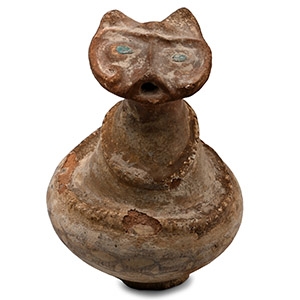
Western Asiatic Terracotta Vessel with Lion-Head with Glass Eyes
8th-9th century A.D.Estimate: £600 - 800 (+bp*)
Opening Bid: £300
With biconical profile and flared foot, cable-twist strap handle, applied raised band to the shoulder and neck; discoid feline head with filler hole and spout, inset turquoise-coloured scaphoid eyes. 739 grams, 19.7 cm
UK collection, 1990s. Acquired on the UK art market, before 2000. Private collection, Mr M.V., a London-based businessman.
