
Loading, please wait...
LOT 1268
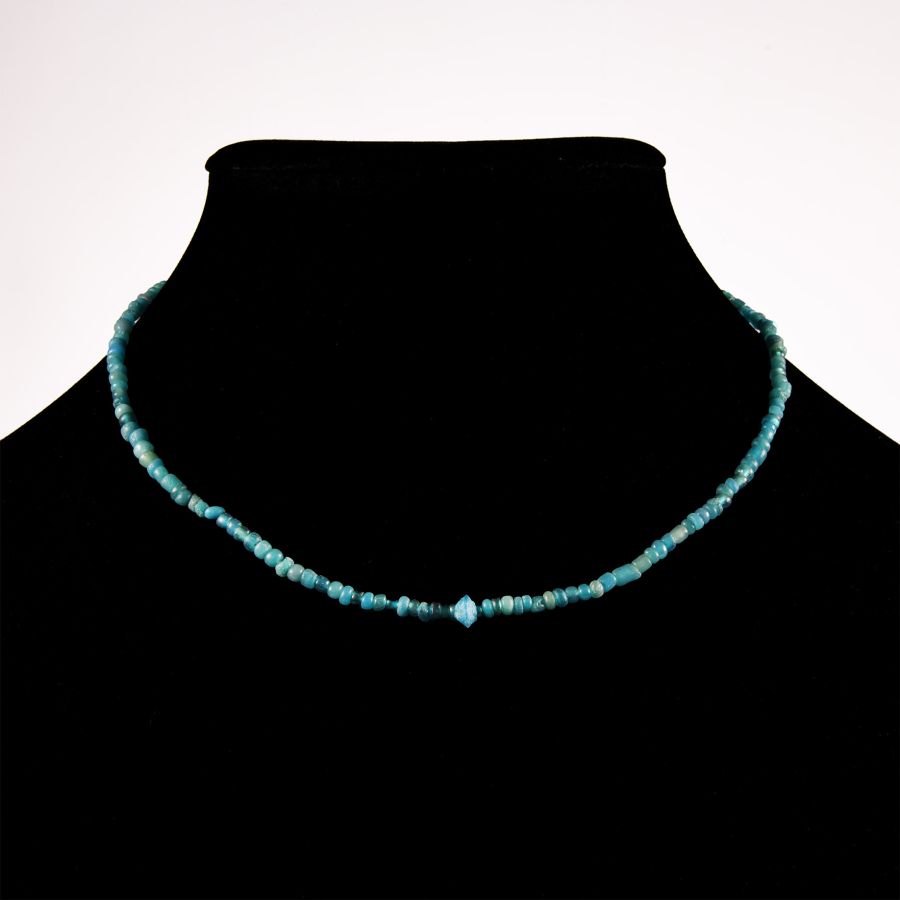
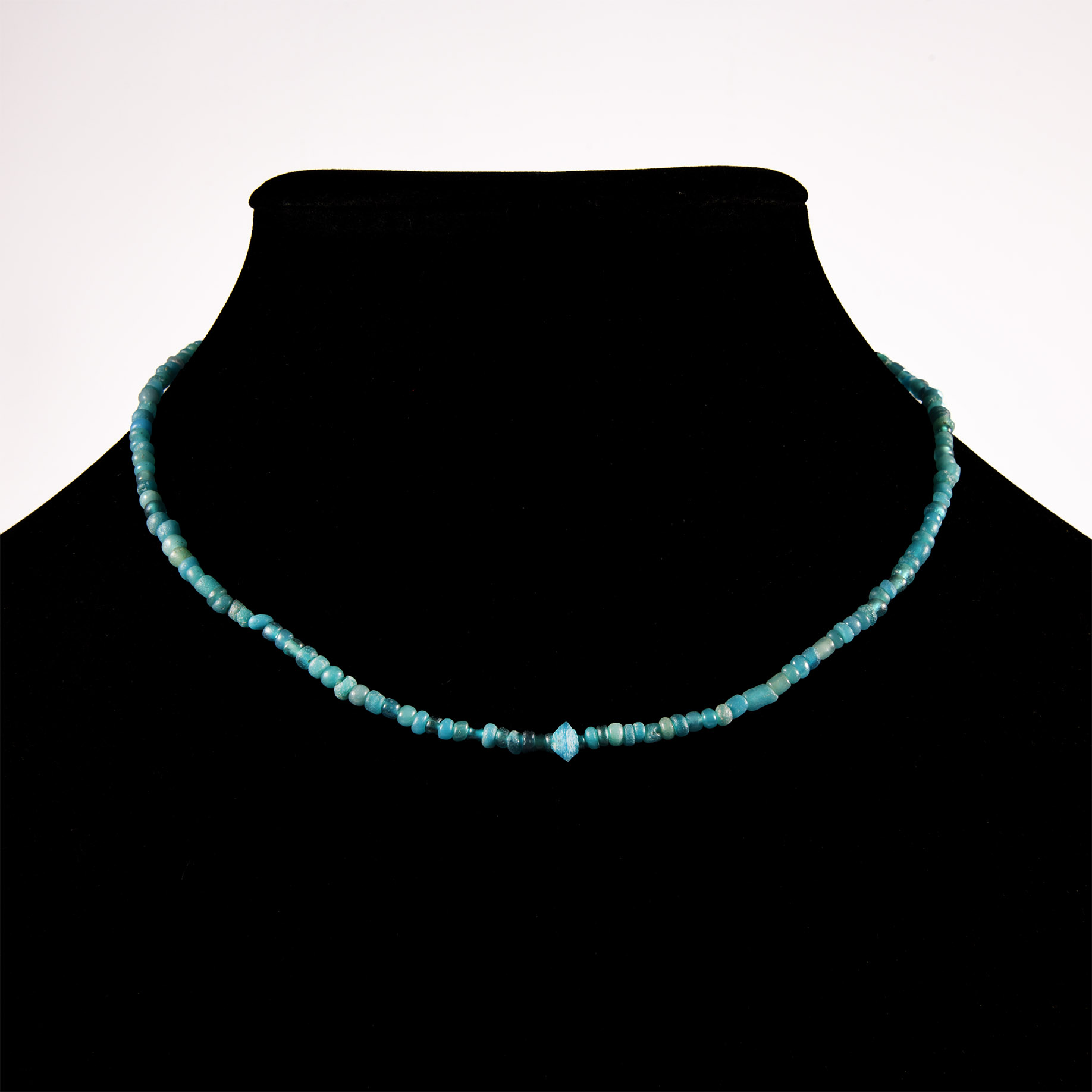
Western Asiatic Turquoise Blue Glass Bead Necklace String
1ST MILLENNIUM B.C. AND LATER
17 3/8 in. (5.16 grams, 44 cm long).
Restrung using mainly oblate beads. [No Reserve]
ProvenanceUK gallery, early 2000s.
LiteratureCf. Shirdam, B., Mokhtari, S., Shen, A.H., ‘Persian Turquoise: The Ancient Treasure of Nwyshabur’ in Gems & Gemology, December 2021, pp.240-257, fig.31.
FootnotesTurquoise has been known since prehistoric times, and it is widely used in jewellery in the Middle East (Egypt and Persia), the Far East (Tibet, Mongolia and China) and even by native North Americans. Turquoise was very fashionable also in Europe, especially during the 18th and 19th centuries.
CONDITIONTimeLine Auctions follows a vetting process to ensure the authenticity and legality of all items, reinforcing our commitment to integrity and responsible trading. Each antiquity, antique, and coin lot undergoes thorough examination by a vetting committee of at least ten external specialists, professional trade association members, scientists, and archaeologists: Our Vetting Process
AUCTIONS:
TimeLine is a leading auction house specialising in antiquities, ancient art, collectables, natural history, coins, medals, and books. Our auctions offer museums, collectors, historians, and enthusiasts the opportunity to acquire unique and historically significant pieces.
LOT 1268
Western Asiatic Turquoise Blue Glass Bead Necklace String
Sold for (Inc. bp): £52
-
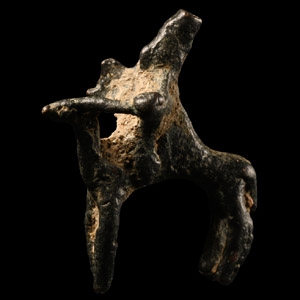
Western Asiatic Bronze Camel with Rider in Hasanlu Style
Circa 9th-7th century B.C.Estimate: £100 - 140 (+bp*)
Opening Bid: £50
Depicting a rider holding the reins of a camel, the rider featuring a large head and hands while the camel is modelled with small head and slender body and legs 13.5 grams, 40 mm
Collected from 1969-1999. From the collection of the late Mr S.M., London, UK. Accompanied by a copy of a previous catalogue information card.
Such a figurine might have been worn as part of a necklace or bracelet for decorative purposes, Due to the tribal and sometimes nomadic nature of many of these populations, many Luristan bronzes were not of great size. Statuettes of local fauna have been largely recovered from North-Western Persian burials. -
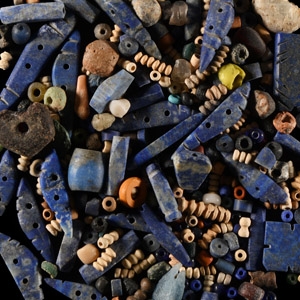
Western Asiatic Mixed Stone and Faience Bead Group
1st millennium B.C. and laterSold for (Inc. bp): £130
Mixed shapes comprising mainly lapis lazuli beads and spacers mixed with terracotta beads from Africa. 44 grams total, 2-35 mm
Ex Hong Kong collection, 1980-1990. -
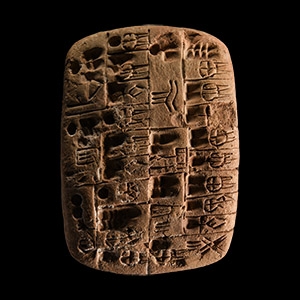
Sumerian Pictographic Tablet
4th millennium B.C.Sold for (Inc. bp): £11,050
Of lentoid cross-section with impressed grid and characters or ideograms, an economic text relating to farm produce written over two faces. 113 grams, 89 mm
Specialised collection of cuneiform texts, the property of a London gentleman and housed in London before 1992. Thence by descent to family members. Examined by Professor Wilfrid George Lambert FBA (1926-2011), historian, archaeologist, and specialist in Assyriology and Near Eastern archaeology, in the late 1980s and early 1990s. The collection is exceptional for the variety of types, including some very rare and well preserved examples. This lot has been checked against the Interpol Database of stolen works of art and is accompanied by search certificate no.12093-213020.
