
Loading, please wait...
LOT 1191
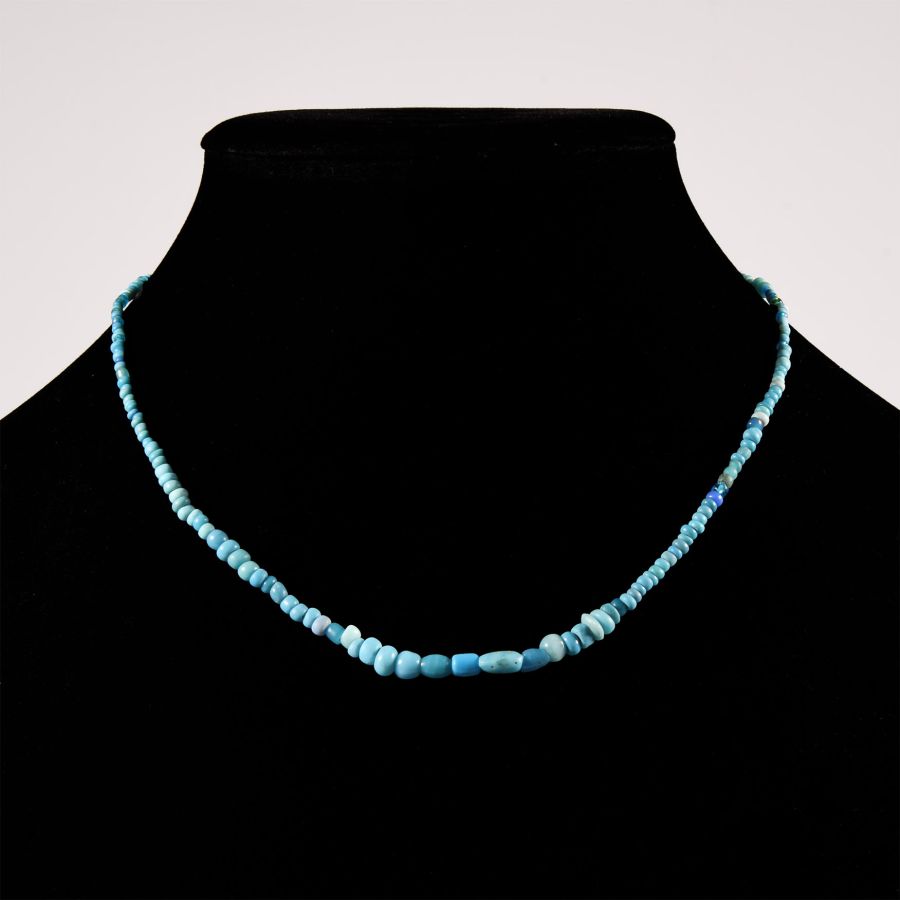
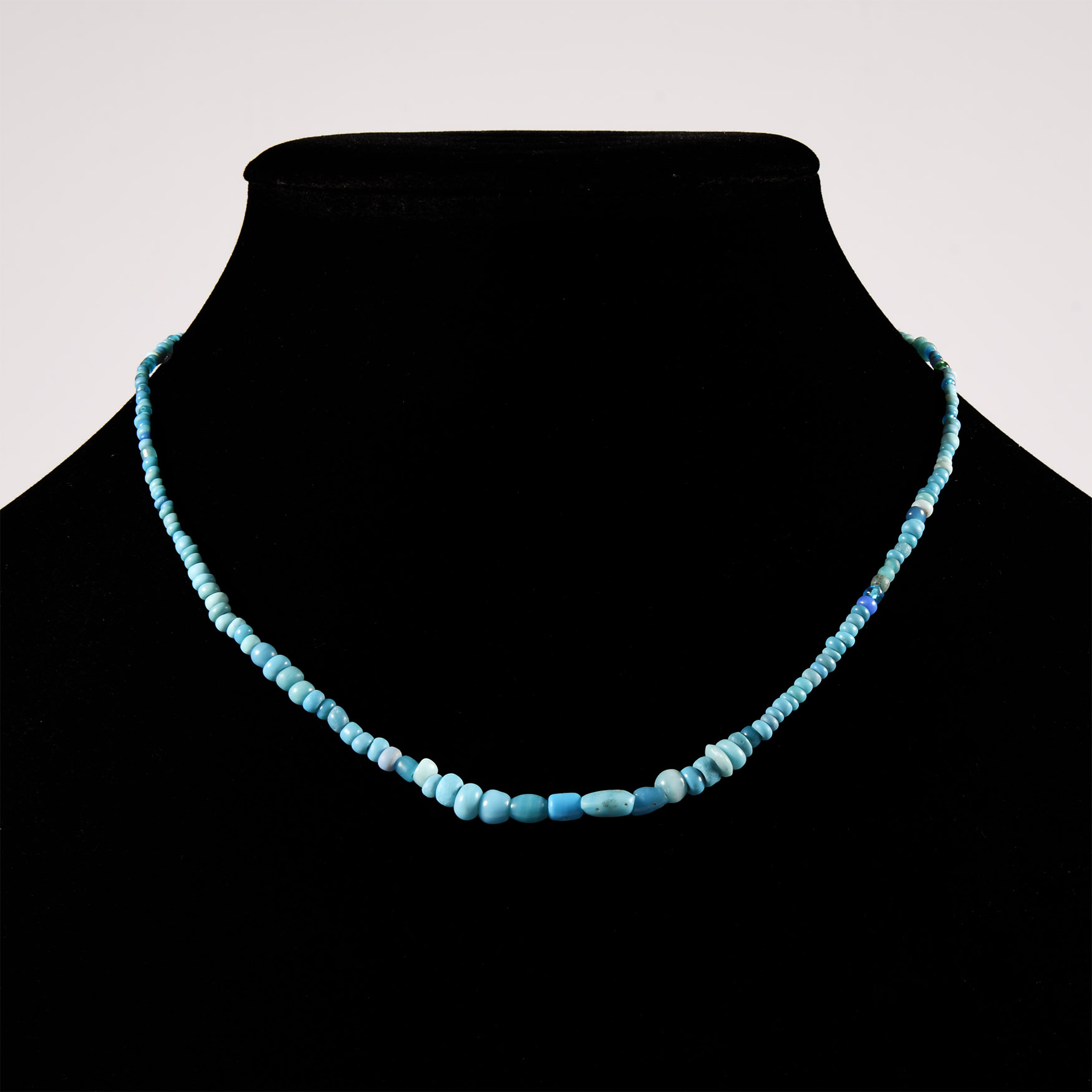
Western Asiatic Turquoise Blue Glass Bead Necklace String
1ST MILLENNIUM B.C. AND LATER
18 1/8 in. (5.6 grams, 46 cm long).
Restrung using graduated oblate and other beads, central feature with larger oblate and barrel-shaped beads. [No Reserve]
ProvenanceUK gallery, early 2000s.
LiteratureCf. Shirdam, B., Mokhtari, S., Shen, A.H., ‘Persian Turquoise: The Ancient Treasure of Nwyshabur’ in Gems & Gemmology, December 2021, pp.240-257, fig.31.
FootnotesTurquoise has been known since prehistoric times, and it is widely used in jewellery in the Middle East (Egypt and Persia), the Far East (Tibet, Mongolia and China) and even by native North Americans. Turquoise was very fashionable also in Europe, especially during the 18th and 19th centuries.
CONDITIONTimeLine Auctions follows a vetting process to ensure the authenticity and legality of all items, reinforcing our commitment to integrity and responsible trading. Each antiquity, antique, and coin lot undergoes thorough examination by a vetting committee of at least ten external specialists, professional trade association members, scientists, and archaeologists: Our Vetting Process
AUCTIONS:
TimeLine is a leading auction house specialising in antiquities, ancient art, collectables, natural history, coins, medals, and books. Our auctions offer museums, collectors, historians, and enthusiasts the opportunity to acquire unique and historically significant pieces.
LOT 1191
Western Asiatic Turquoise Blue Glass Bead Necklace String
Sold for (Inc. bp): £59
-
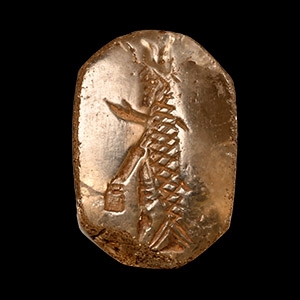
Neo-Bablyonian Rock Crystal Stamp Seal with Fish God
Circa 4th-3rd century B.C.Sold for (Inc. bp): £416
Octagonal in section with intaglio to the underside of a creature with the tail and scales of a fish, a man's bearded and crowned head, carrying a basket; supplied with a museum-quality impression. 11 grams, 26 mm
Acquired 1970-1999. London collection of the late Mr S.M., thence by descent. -
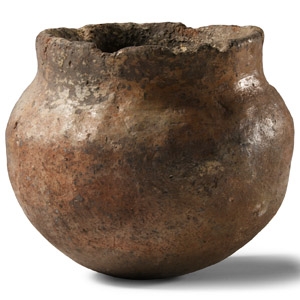
Holy Land Pottery Cup
Bronze Age, 16th-14th century B.C.Sold for (Inc. bp): £46
With rounded bottom and carinated profile, thick rim. 398 grams, 99 mm
From a collection acquired on the UK art market from various auction houses and collections mostly before 2000. From an important Cambridgeshire estate; thence by descent. -
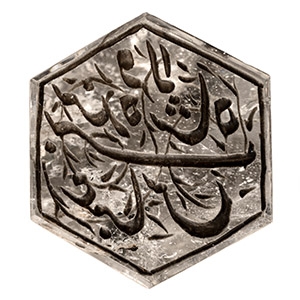
Western Asiatic Rock Crystal Stamp Seal
19th-20th century A.D.Estimate: £200 - 300 (+bp*)
Opening Bid: £80
Tapering, hexagonal in plan with incuse calligraphic inscription; pierced at the narrow end. 21.1 grams, 35 mm
Ex London, UK, gallery, 1971.
