
Loading, please wait...
LOT 0995
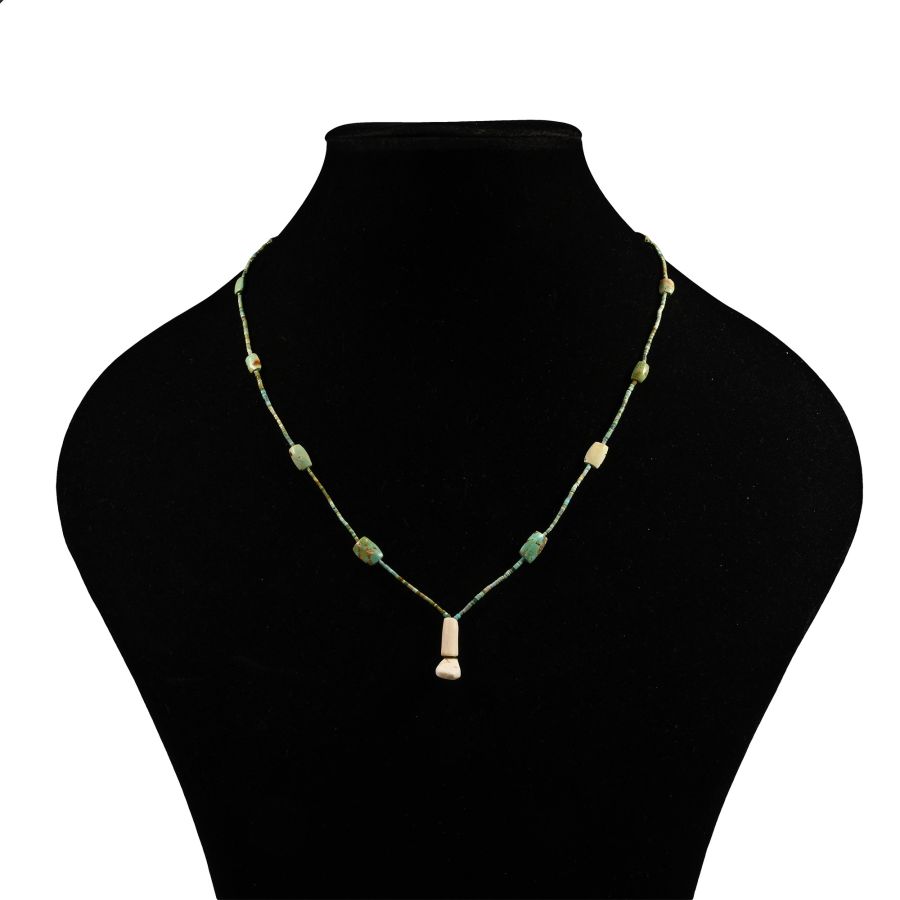
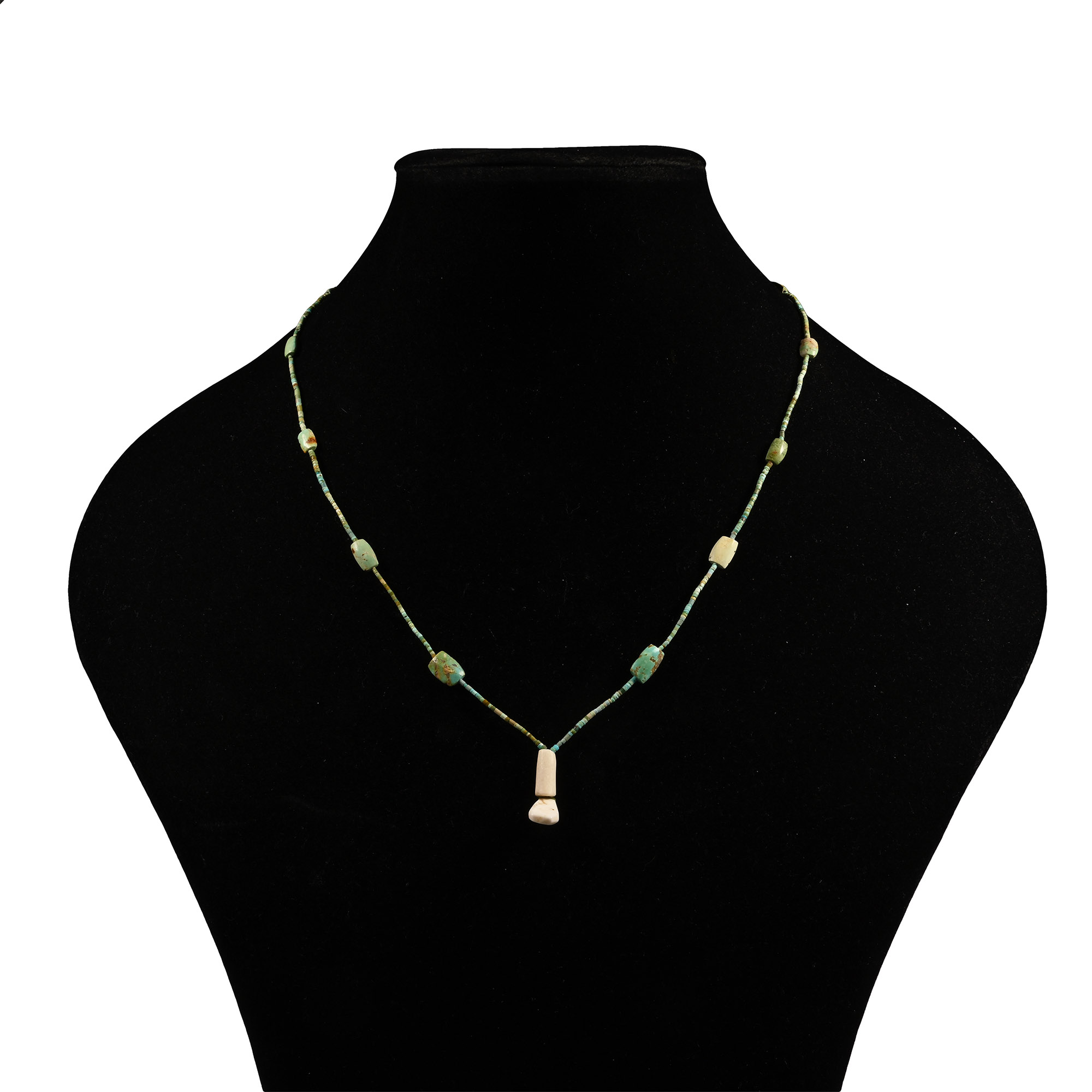
Western Asiatic Turquoise Bead Necklace
1ST MILLENNIUM B.C. AND LATER
21 5/8 in. (5.44 grams, 55 cm).
Restrung group of lentoid-section and other beads.
ProvenanceEx Susan Hadida, Faustus Art and Jack Ogden, 1970-1980.
This lot has been cleared against the Art Loss Register database, and is accompanied by an illustrated lot declaration signed by the Head of the Antiquities Department, Dr Raffaele D'Amato.
TimeLine Auctions follows a vetting process to ensure the authenticity and legality of all items, reinforcing our commitment to integrity and responsible trading. Each antiquity, antique, and coin lot undergoes thorough examination by a vetting committee of at least ten external specialists, professional trade association members, scientists, and archaeologists: Our Vetting Process
AUCTIONS:
TimeLine is a leading auction house specialising in antiquities, ancient art, collectables, natural history, coins, medals, and books. Our auctions offer museums, collectors, historians, and enthusiasts the opportunity to acquire unique and historically significant pieces.
-
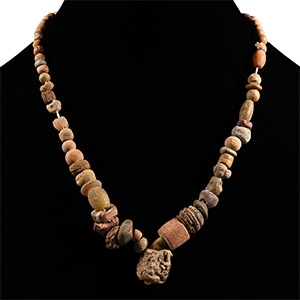
Western Asiatic Mixed Bead Necklace String
1st millennium B.C. and laterSold for (Inc. bp): £7
Restrung group of tubular, drum-shaped, annular and other beads in ceramic, stone and bauxite(?). 46.8 grams, 38.5 cm
Ex London, UK, collection, 1990s. This lot has been cleared against the Art Loss Register database, and is accompanied by an illustrated lot declaration signed by the Head of the Antiquities Department, Dr Raffaele D'Amato. -
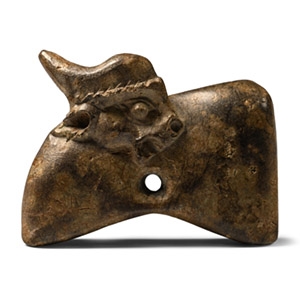
Elamite Stone Recumbent Bull Pendant
2nd-1st millennium B.C.Sold for (Inc. bp): £257
Carved with detailed regardant head; pierced for suspension. 37.3 grams, 50 mm
with a London, UK gallery 1971-early 2000s. Private collection, London, UK. This lot has been cleared against the Art Loss Register database, and is accompanied by an illustrated lot declaration signed by the Head of the Antiquities Department, Dr Raffaele D'Amato. -
.jpg)
Mitanni Brown Hematite Cylinder Seal with Winged Birds
Circa 1500-1250 B.C.Sold for (Inc. bp): £390
Cylinder with cord and bead handles; accompanied by a copy of an old scholarly note, typed by W.G. Lambert, late Professor of Assyriology, University of Birmingham, 1970-1993, which states: 'Description of Cylinder Seal of brown Hematitite (sic), 29 x 15.5 mm. Standing composite figure with human legs and body, but a bird's wings and head, is placed between a large recumbent horned quadruped with long neck and a smaller horned quadruped with short neck; other items; scorpion, hand, fish, star. The whole of the design in enclosed within upper and lower rules. This is a good example of the Mitanni "Elaborate Style", from anywhere between north-western Iran and the eastern Mediterranean. As is normal for such Mitanni seals, the cutting was done entirely with three semi-mechanical tools: the drill, the tubular drill and the cutting wheel. The date will be c. 1500-1250 B.C. The ancient name of the composite figure is not so far known. Save for a gash on the standing figure, the condition is fine.'; supplied with a museum-quality impression. 14.4 grams, 23 mm
UK private collection, acquired 1980-1983. Accompanied by a copy of a scholarly note typed by Professor Wilfrid George Lambert in October 1987. This lot has been cleared against the Art Loss Register database, and is accompanied by an illustrated lot declaration signed by the Head of the Antiquities Department, Dr Raffaele D'Amato.
