
Loading, please wait...
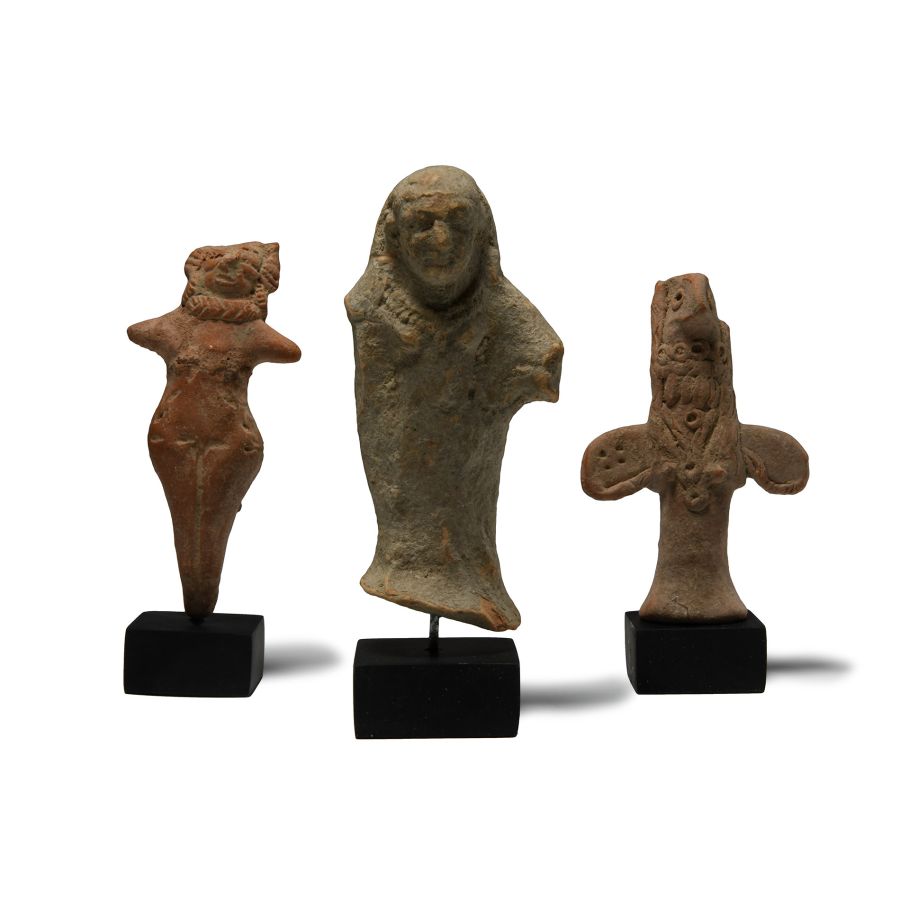
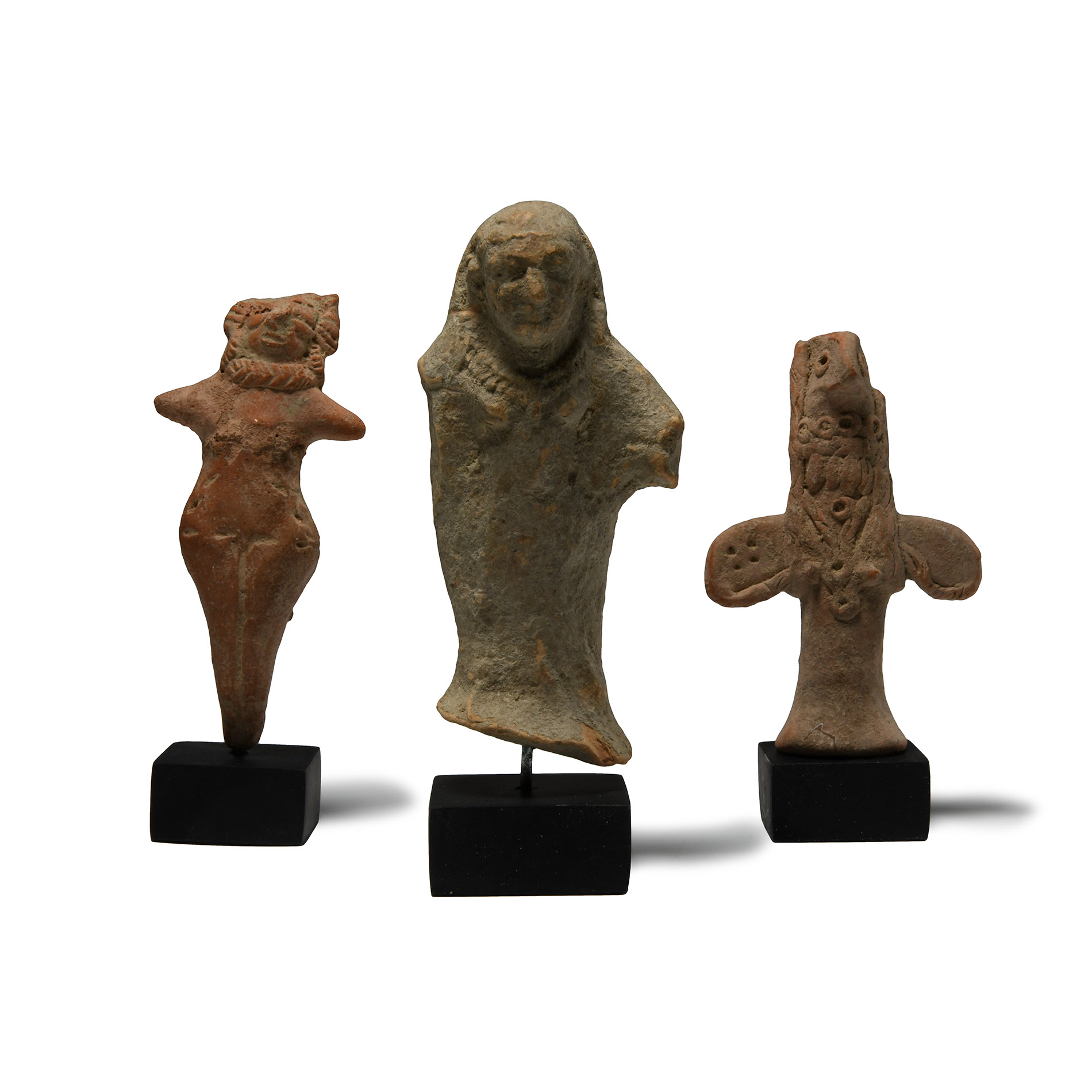
LOT 1101
Western Asiatic Terracotta Votive Idol Group
2ND MILLENNIUM B.C.
4 1/8 - 4 5/8 in. (210 grams total, 10.5-11.8 cm including stand).
Comprising: columnar figure with arms raised; similar with stub arms and applied mouth and ears; tabular figure with hands held before the chest gripping a disc, perhaps a patera; each mounted on a custom-made display stand. [3, No Reserve]
ProvenanceFrom a collection acquired on the UK art market from various auction houses and collections mostly before 2000.
From an important Cambridgeshire estate; thence by descent.
TimeLine Auctions follows a vetting process to ensure the authenticity and legality of all items, reinforcing our commitment to integrity and responsible trading. Each antiquity, antique, and coin lot undergoes thorough examination by a vetting committee of at least ten external specialists, professional trade association members, scientists, and archaeologists: Our Vetting Process
AUCTIONS:
TimeLine is a leading auction house specialising in antiquities, ancient art, collectables, natural history, coins, medals, and books. Our auctions offer museums, collectors, historians, and enthusiasts the opportunity to acquire unique and historically significant pieces.
-
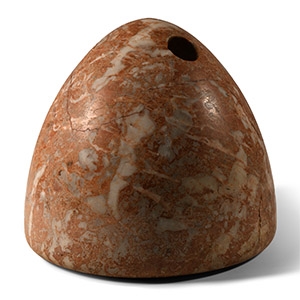
Bactrian Veined Marble Weight
2nd millennium B.C.Estimate: £800 - 1,000 (+bp*)
Opening Bid: £400
Conical in profile with flat base and U-shaped channel through the apex. 9.35 kg, 18 cm
Ex London, UK, gallery, 1971-early 2000s. -
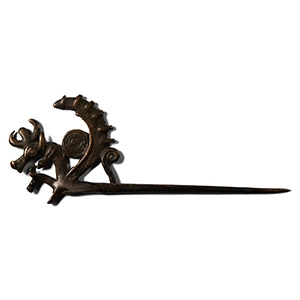
Luristan Zoomorphic Pin Finial
8th-7th century B.C.Sold for (Inc. bp): £650
With complex finial incorporating the foreparts of an ibex surmounted by a winged gryphon with cow-horns and coiled disc between the neck and arched wing. 118 grams, 21.5 cm
Acquired in 1967. Property of a London, UK, gentleman. -
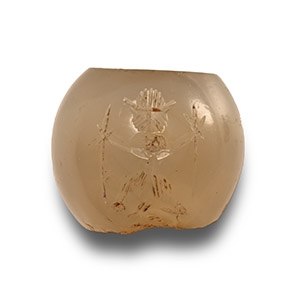
Sassanian Chalcedony Hair Ring with Gayomard Figure
4th-5th century A.D.Sold for (Inc. bp): £416
Barrel-shaped with broad central hole; engraved to the outer face with a 'Gayomard' figure holding spears in his extended hands; supplied with a museum-quality impression. 23.5 grams, 30 mm
with Christie's, London, 21 April 1999, no.11. From the 'Empire' collection, an important UK private collection of seals, no.19 Accompanied by a copy of an old typed cataloguing page signed by A D H Bivar. This lot has been checked against the Interpol Database of stolen works of art and is accompanied by a search certificate number no.12127-217086.
