
Loading, please wait...
LOT 1349
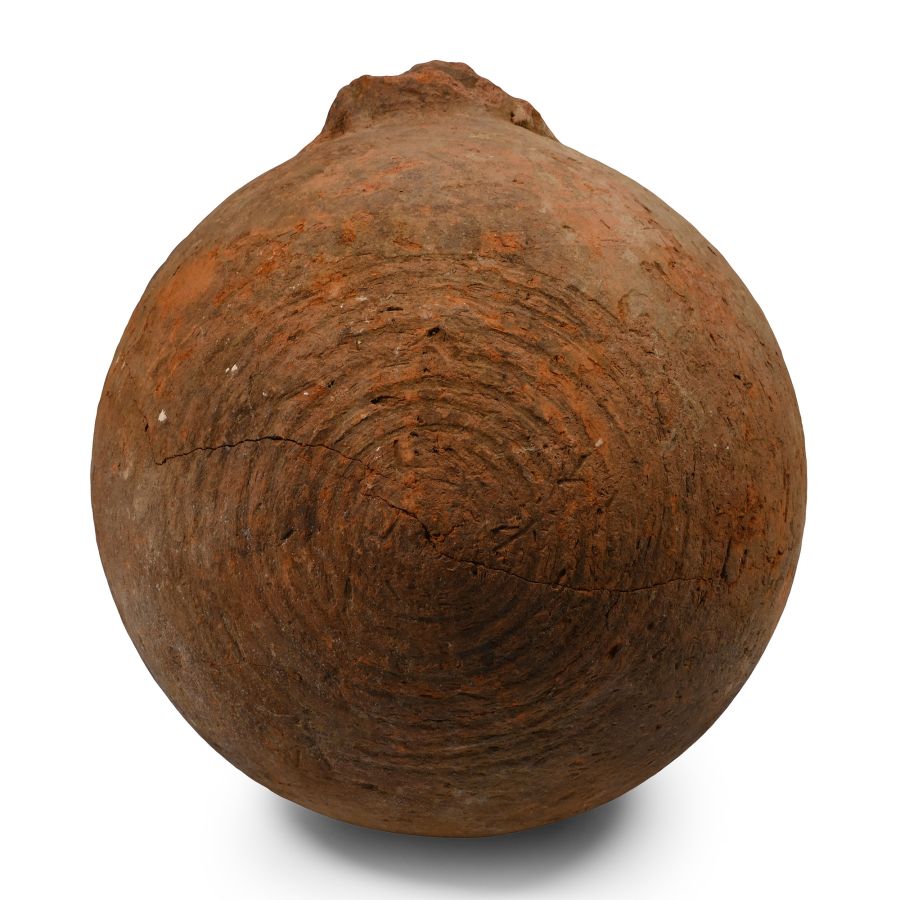
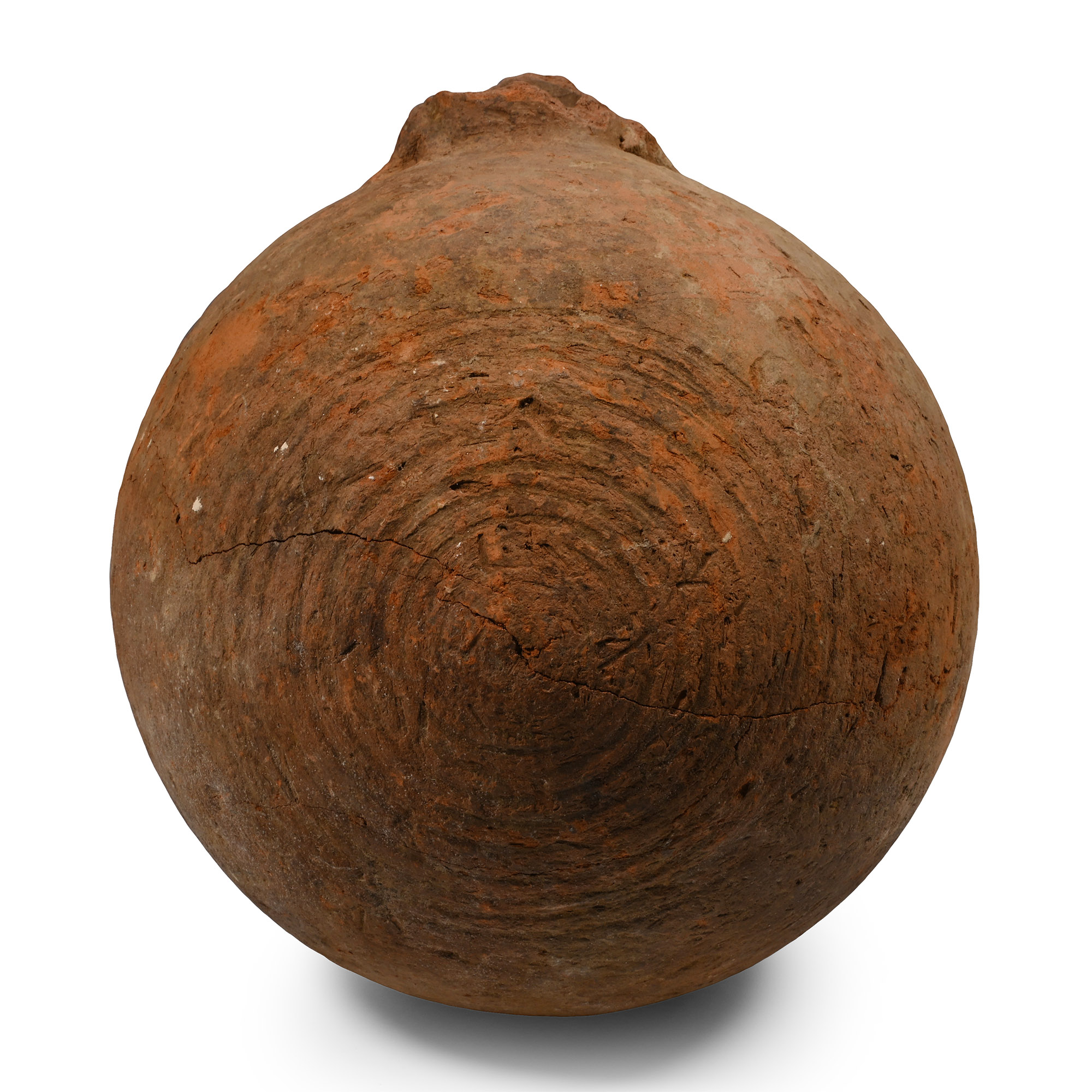
Western Asiatic Terracotta Storage Vessel
3RD-1ST MILLENNIUM B.C.
10 in. (3 kg, 25.5 cm).
Globular in profile with stub neck; two panels of incised concentric rings to the equator. [No Reserve]
ProvenanceFrom a West London, UK, collection, 1990s.
This lot has been cleared against the Art Loss Register database, and is accompanied by an illustrated lot declaration signed by the Head of the Antiquities Department, Dr Raffaele D'Amato.
TimeLine Auctions follows a vetting process to ensure the authenticity and legality of all items, reinforcing our commitment to integrity and responsible trading. Each antiquity, antique, and coin lot undergoes thorough examination by a vetting committee of at least ten external specialists, professional trade association members, scientists, and archaeologists: Our Vetting Process
AUCTIONS:
TimeLine is a leading auction house specialising in antiquities, ancient art, collectables, natural history, coins, medals, and books. Our auctions offer museums, collectors, historians, and enthusiasts the opportunity to acquire unique and historically significant pieces.
-
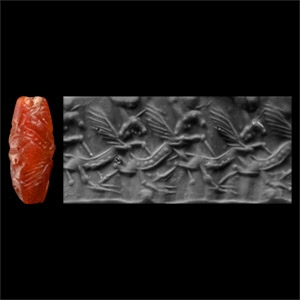
Neo-Babylonian Carnelian Cylinder Seal with Two Winged Quadrupeds
Circa 900-750 B.C.Sold for (Inc. bp): £520
Cylinder with cord and bead handles; accompanied by a copy of an old scholarly note, typed and signed by W.G. Lambert, late Professor of Assyriology, University of Birmingham, 1970-1993, which states: 'Cylinder Seal of Carnelian 19 x 8.5 mm, The scene shows two winged quadrupeds in a frieze. Each has the body of a bull, but with wings. Each is running and the front part of the body is reared up, overlapping the one in front. It is meant as a scene of one animal chasing the other. The seal is engraved mainly with the cutting wheel, but there are dots along the animals' bodies and at other points down with the drill. The seal is convex in shape, like a bead. This is a seal in the Neo-Babylonian style, c. 900-750 B.C., though examples have been found both in Babylonia and in south-west Iran. It is in very good condition and is an attractive piece.'; supplied with a museum-quality impression. 3.18 grams, 19 mm
UK private collection, acquired 1980-1983. Accompanied by a copy of a scholarly note, typed and signed by Professor Wilfrid George Lambert in May 1992. This lot has been cleared against the Art Loss Register database, and is accompanied by an illustrated lot declaration signed by the Head of the Antiquities Department, Dr Raffaele D'Amato. -
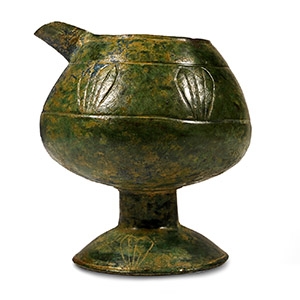
Elamite Bronze Vessel with Spout
Late 2nd-early 1st millennium B.C.Estimate: £2,000 - 3,000 (+bp*)
Opening Bid: £1,000
With squat bowl, narrow stem and flared base, incised band to the shoulder with tulip motifs; narrow spout to the rim. 369 grams, 14 cm high
Acquired before 1983. Ex London gallery, 1990s. This lot has been checked against the Interpol Database of stolen works of art and is accompanied by a search certificate number no.12694-236253. This lot has been cleared against the Art Loss Register database, and is accompanied by an illustrated lot declaration signed by the Head of the Antiquities Department, Dr Raffaele D'Amato. -
.jpg)
Babylonian Head and Egyptian Shabti Group
Mid 1st millennium B.C. and laterSold for (Inc. bp): £65
Comprising of a male head from a figurine, and a possible Grand Tour fragment of a shabti with tripartite wig and arms crossed at the chest, mounted on a custom-made stand. 268 grams total, 4.3-16.5 cm including stand
From an old English deceased estate. Property of a London, UK, collector. This lot has been cleared against the Art Loss Register database, and is accompanied by an illustrated lot declaration signed by the Head of the Antiquities Department, Dr Raffaele D'Amato.
