
Loading, please wait...
LOT 1330
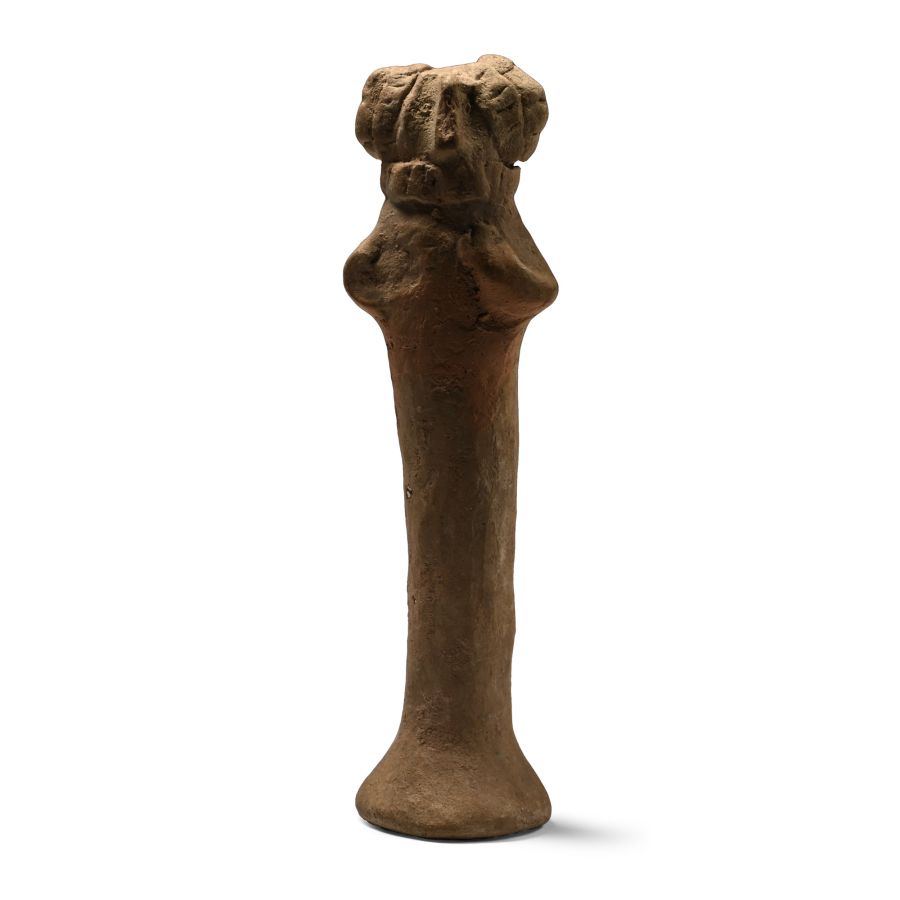
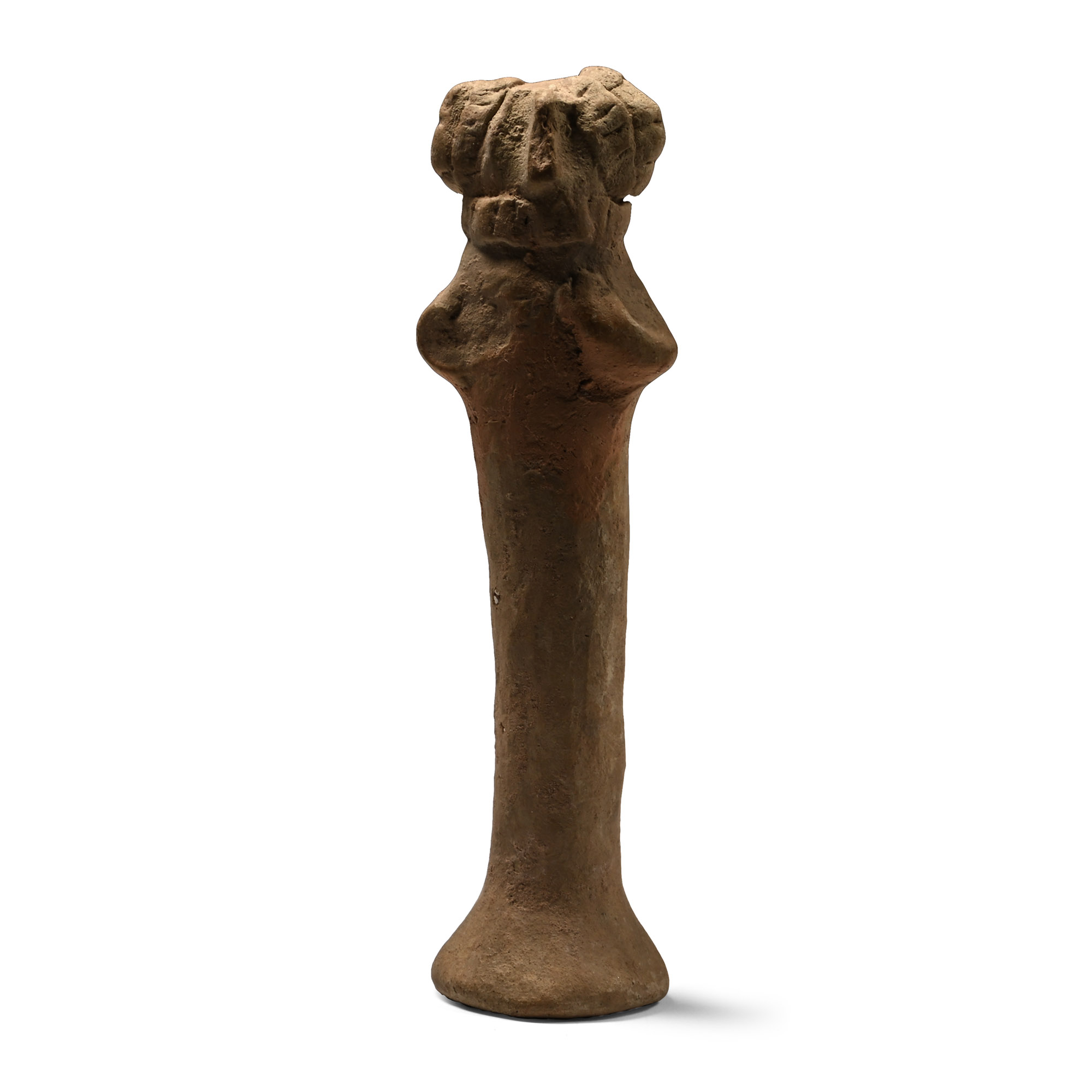
Western Asiatic Terracotta Idol
1ST MILLENNIUM B.C.
4 7/8 in. (66 grams, 12.4 cm).
Columnar in form with flared dimple base, arms placed on the chest, applied collar and hair.
ProvenanceAcquired on the German art market, 1989-1995.
with The Museum Gallery, 19 Bury Place, London, WC1, UK, 1998-2003.
Property of a London based academic, 2003-present.
This lot has been cleared against the Art Loss Register database, and is accompanied by an illustrated lot declaration signed by the Head of the Antiquities Department, Dr Raffaele D'Amato.
TimeLine Auctions follows a vetting process to ensure the authenticity and legality of all items, reinforcing our commitment to integrity and responsible trading. Each antiquity, antique, and coin lot undergoes thorough examination by a vetting committee of at least ten external specialists, professional trade association members, scientists, and archaeologists: Our Vetting Process
AUCTIONS:
TimeLine is a leading auction house specialising in antiquities, ancient art, collectables, natural history, coins, medals, and books. Our auctions offer museums, collectors, historians, and enthusiasts the opportunity to acquire unique and historically significant pieces.
LOT 1330
Western Asiatic Terracotta Idol
Estimate £180 - 240€210 - 280 (for guidance only)$240 - 320 (for guidance only)
-
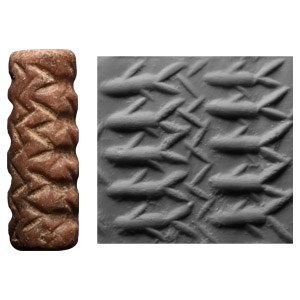
Sumerian Cylinder Seal with Fish
3rd millennium B.C.Sold for (Inc. bp): £468
With frieze of fish in profile within a field of zigzag lines; supplied with a museum-quality impression. 11.5 grams, 37 mm
From the 'S' collection, acquired 1970-1990s. The collection was seen and studied by W.G.Lambert, late Professor of Assyriology at the University of Birmingham, 1970-1993. This lot has been cleared against the Art Loss Register database, and is accompanied by an illustrated lot declaration signed by the Head of the Antiquities Department, Dr Raffaele D'Amato. -
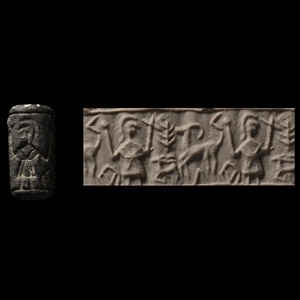
Anatolian Black Stone Cylinder Seal with Standing Figure
Circa 1000-800 B.C.Sold for (Inc. bp): £312
Cylinder with cord and bead handles; accompanied by a copy of an old scholarly note, typed and signed by W.G. Lambert, late Professor of Assyriology, University of Birmingham, 1970-1993, which states: 'Description of Cylinder Seal of soft black stone, 29 x 12 mm. A standing human-looking figure with short kilt and mane of hair (or helmet with mane) holds a spear in one hand, a stone(?) in the other. He is facing a horned quadruped with raised tail, and between them there is a tree and smaller, distinct quadruped. There are two linear devices on the base-line, and a rule above encloses the engraving. This is a rare type of seal, probably from Syria or Anatolia, and c. 1000-800 B.C. The plume is the most significant point, but knowledge is not yet so far advanced that this seal can be confidently attributed to a particular culture. As such, it is extremely interesting. The condition is fine.'; supplied with a museum-quality impression. 7.65 grams, 23 mm
UK private collection, acquired 1980-1983. Accompanied by a copy of a scholarly note, typed and signed by Professor Wilfrid George Lambert in October 1987. This lot has been cleared against the Art Loss Register database, and is accompanied by an illustrated lot declaration signed by the Head of the Antiquities Department, Dr Raffaele D'Amato. -
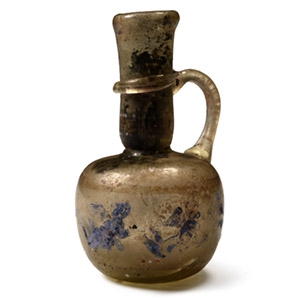
Western Asiatic Single-Handled Flask
12th-14th century A.D.Estimate: £300 - 400 (+bp*)
Opening Bid: £150
With wheel-cut frieze of animals to the body, traces of pigment remaining. 33.59 grams, 72 mm
Ex Parisian gallery, France, 1980s. This lot has been cleared against the Art Loss Register database, and is accompanied by an illustrated lot declaration signed by the Head of the Antiquities Department, Dr Raffaele D'Amato.
