
Loading, please wait...
LOT 1116
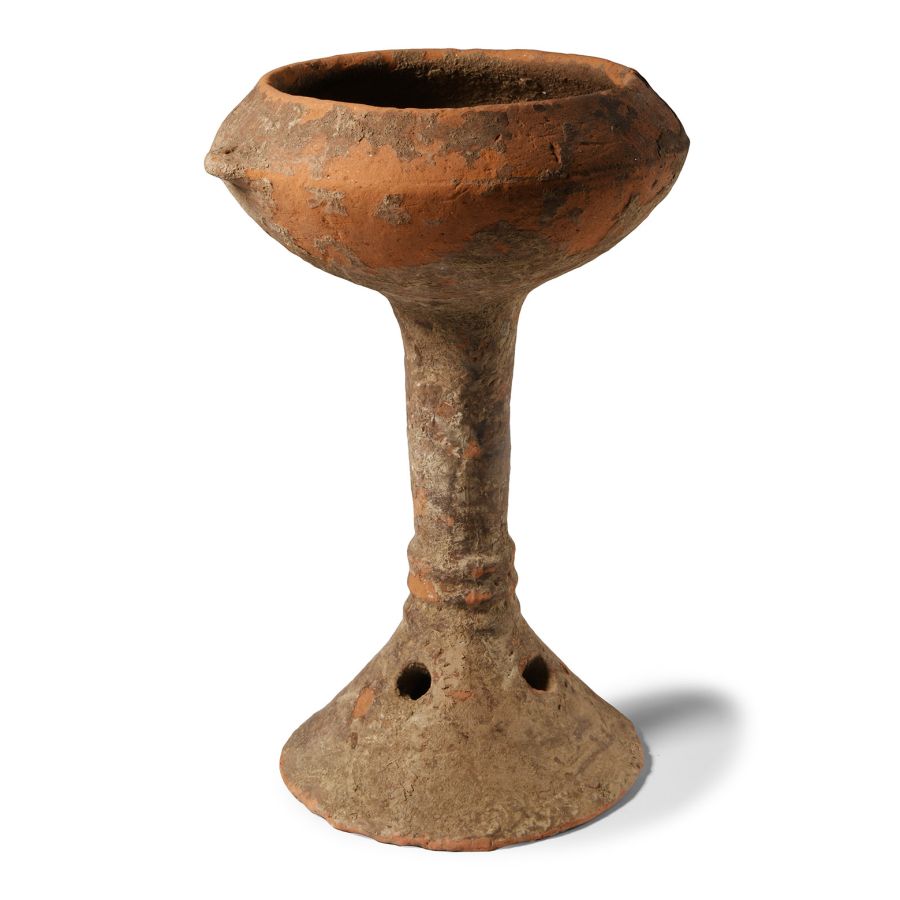
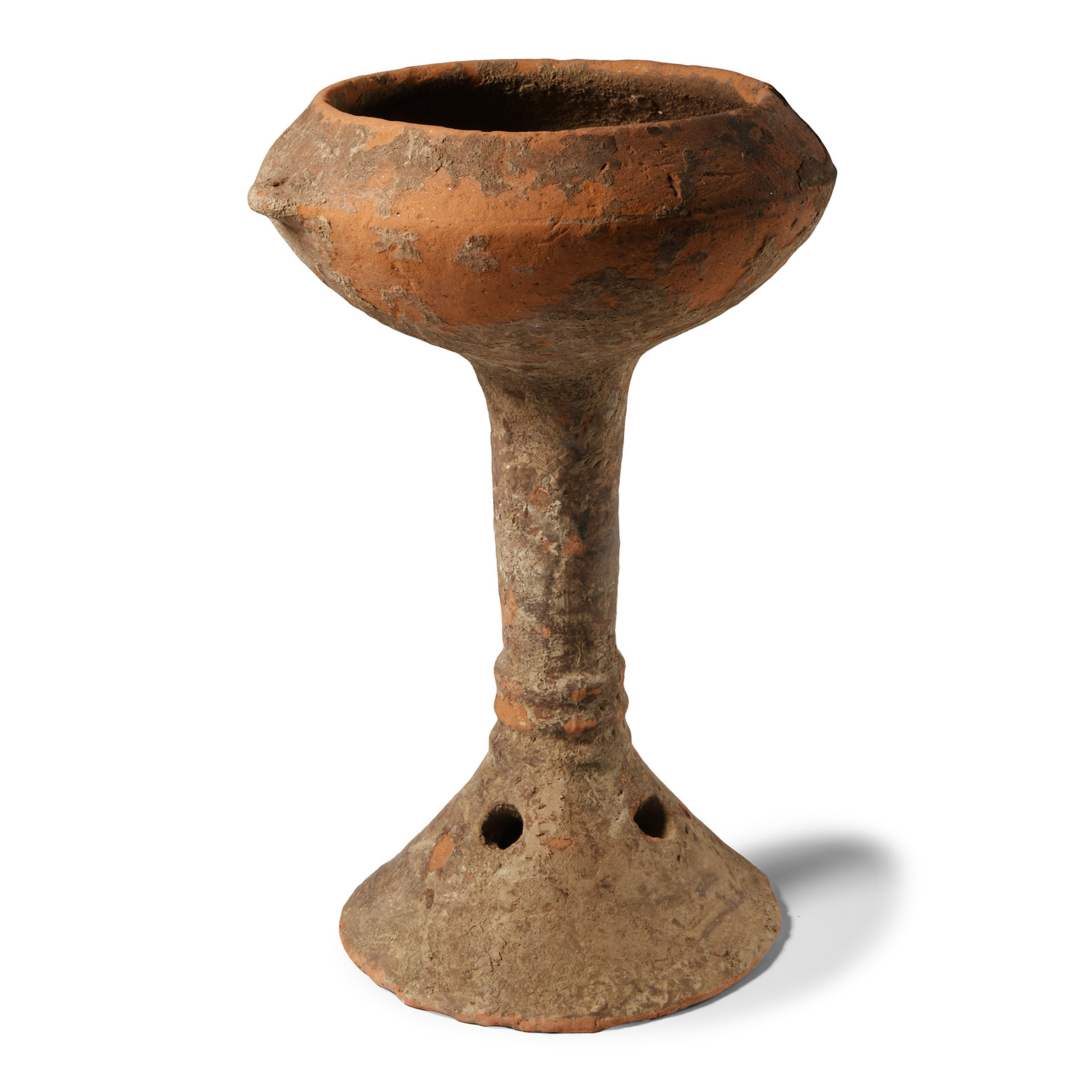
Western Asiatic Terracotta Chalice
2ND-1ST MILLENNIUM B.C.
8 3/8 in. (530 grams, 21.2 cm).
With conical base and stepped stem, broad bowl with carination, two lateral pierced lugs at the equator, holes to the base. [No Reserve]
ProvenanceFrom a collection acquired on the UK art market from various auction houses and collections mostly before 2000.
From an important Cambridgeshire estate; thence by descent.
TimeLine Auctions follows a vetting process to ensure the authenticity and legality of all items, reinforcing our commitment to integrity and responsible trading. Each antiquity, antique, and coin lot undergoes thorough examination by a vetting committee of at least ten external specialists, professional trade association members, scientists, and archaeologists: Our Vetting Process
AUCTIONS:
TimeLine is a leading auction house specialising in antiquities, ancient art, collectables, natural history, coins, medals, and books. Our auctions offer museums, collectors, historians, and enthusiasts the opportunity to acquire unique and historically significant pieces.
-
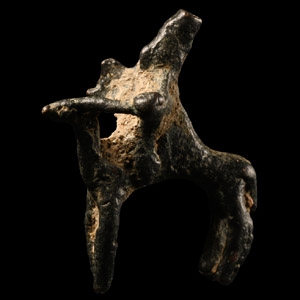
Western Asiatic Bronze Camel with Rider in Hasanlu Style
Circa 9th-7th century B.C.Estimate: £100 - 140 (+bp*)
Opening Bid: £50
Depicting a rider holding the reins of a camel, the rider featuring a large head and hands while the camel is modelled with small head and slender body and legs 13.5 grams, 40 mm
Collected from 1969-1999. From the collection of the late Mr S.M., London, UK. Accompanied by a copy of a previous catalogue information card.
Such a figurine might have been worn as part of a necklace or bracelet for decorative purposes, Due to the tribal and sometimes nomadic nature of many of these populations, many Luristan bronzes were not of great size. Statuettes of local fauna have been largely recovered from North-Western Persian burials. -
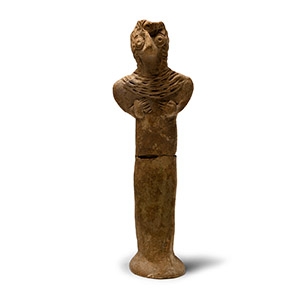
Western Asiatic Terracotta Idol
3rd-2nd millennium B.C.Estimate: £400 - 600 (‡+bp*)
Opening Bid: £200
Freestanding, with a pinched face, elaborate applied hairstyle, circular eyes and prick-decorated collar, hand clasped with palms to chest; repaired. 69 grams, 15 cm high
Acquired in the 1970s. Ex European private collection. -
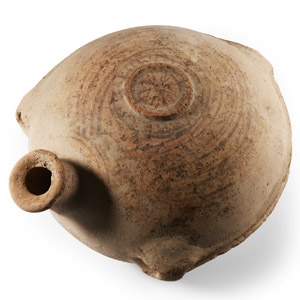
Western Asiatic Terracotta Flask with Star Design
1st millennium B.C.Sold for (Inc. bp): £117
Of lentoid form with u-section medial channel incorporating three suspension lugs, short spout with rounded rim, central raised ring to the upper face decorated with a stylised star, the body with concentric roundels. 1.4 kg, 26 cm wide
Acquired 1980-2015. Ex Abelita family collection.
