
Loading, please wait...
LOT 1407
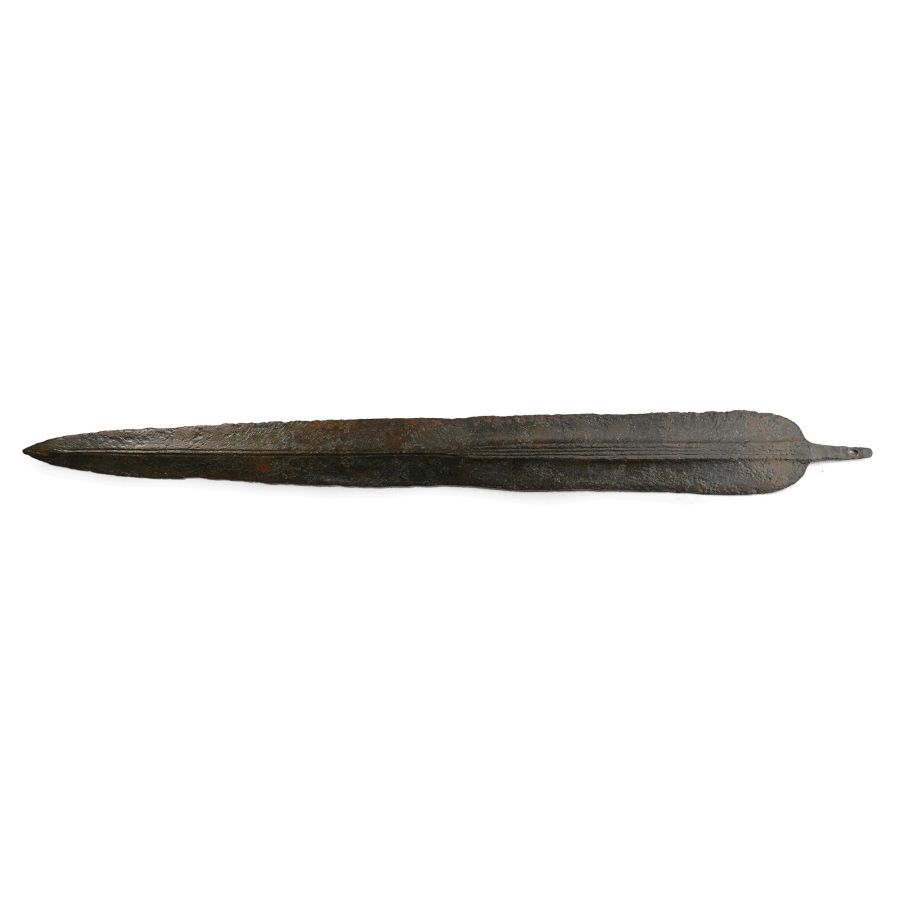
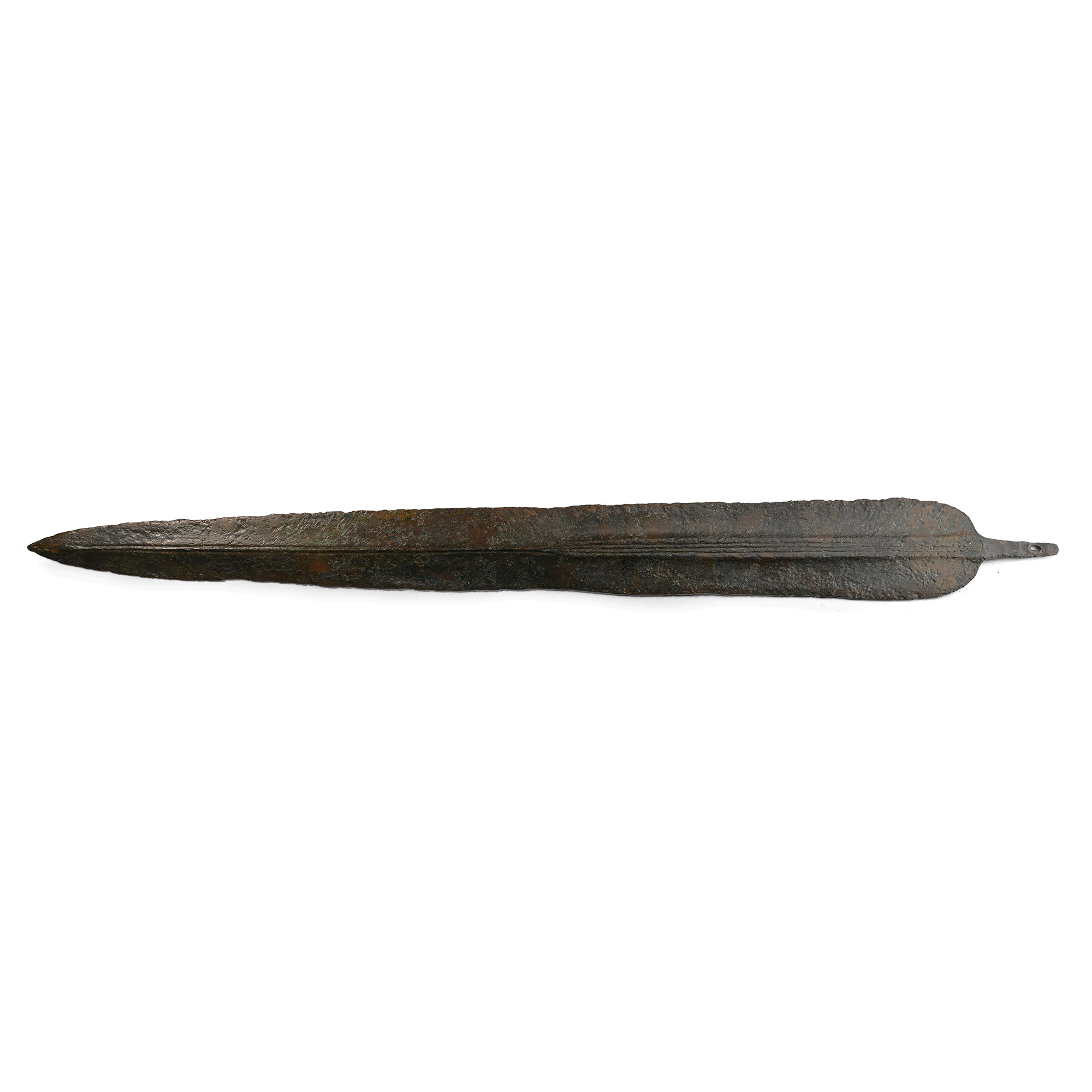
Western Asiatic Sword Blade with Blood Channels
2ND-1ST MILLENNIUM B.C.
18 3/4 in. (345 grams, 47.5 cm).
With corrugated raised midrib extending to a short tang, fullers with curved ends extending to the shoulders.
ProvenanceEx Abelita family collection, 1990s.
LiteratureCf. for a similar blade Christie's, The Axel Guttmann Collection of Ancient Arms and Armour, part 1, London, 2002, p.34, no.31.
CONDITIONTimeLine Auctions follows a vetting process to ensure the authenticity and legality of all items, reinforcing our commitment to integrity and responsible trading. Each antiquity, antique, and coin lot undergoes thorough examination by a vetting committee of at least ten external specialists, professional trade association members, scientists, and archaeologists: Our Vetting Process
AUCTIONS:
TimeLine is a leading auction house specialising in antiquities, ancient art, collectables, natural history, coins, medals, and books. Our auctions offer museums, collectors, historians, and enthusiasts the opportunity to acquire unique and historically significant pieces.
LOT 1407
Western Asiatic Sword Blade with Blood Channels
Estimate £300 - 400€350 - 460 (for guidance only)$410 - 540 (for guidance only)
-
Hellenistic Rhodian Lead Slingshot with Bee
3rd century B.C.Sold for (Inc. bp): £208
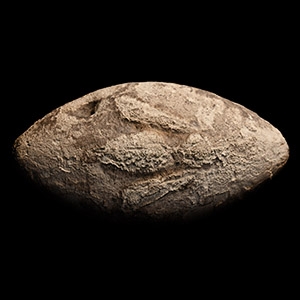
Lentoid-section and depicting a bee to one side and inscription 'ΚΑΛΑ' on the other. 27.2 grams, 31 mm
Ex Norri collection, Milton Keynes, UK, 1980s-1990s.
The slingshots with an inscription ΚΑΛΑ are believed to originate from the island of Rhodes. On these sling bullets ΚΑΛΑ should be translated as “nice things.” Together with the Balearic slingers, Rhodian slingers were considered to be the best of the Hellenistic world, and they were also used in the Roman army. -
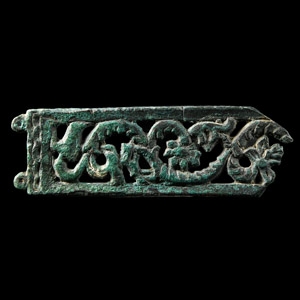
Eastern Roman Tinned Bronze Composite Belt Mount
8th century A.D.Estimate: £100 - 140 (‡+bp*)
Opening Bid: £50
Displaying openwork floriate decoration within a tongue-shaped frame; two pierced attachment lugs to the rear. 27.9 grams, 93 mm
From the collection of a North American gentleman, formed in the 1990s.
The belt is of composite type, decorated with scrollwork in Byzantine style. Many authors discuss the possibility that these belts were produced in the Eastern Roman capital or that they were made in the workshops of the Avar Khaganate, maybe with Roman matrices for producing sheet ornaments. -
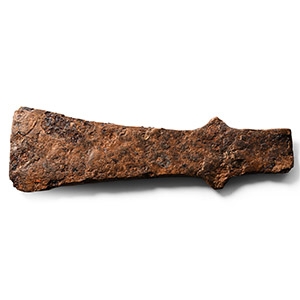
Graeco-Scythian Iron Flat Axehead
5th-3rd century B.C.Sold for (Inc. bp): £46
Flat in section and trapezoidal in plan with two lateral spurs, straight edge. 175 grams, 15.7 cm
From a private East European collection. From the property of a late Lincolnshire, UK, gentleman.
