
Loading, please wait...
LOT 1153
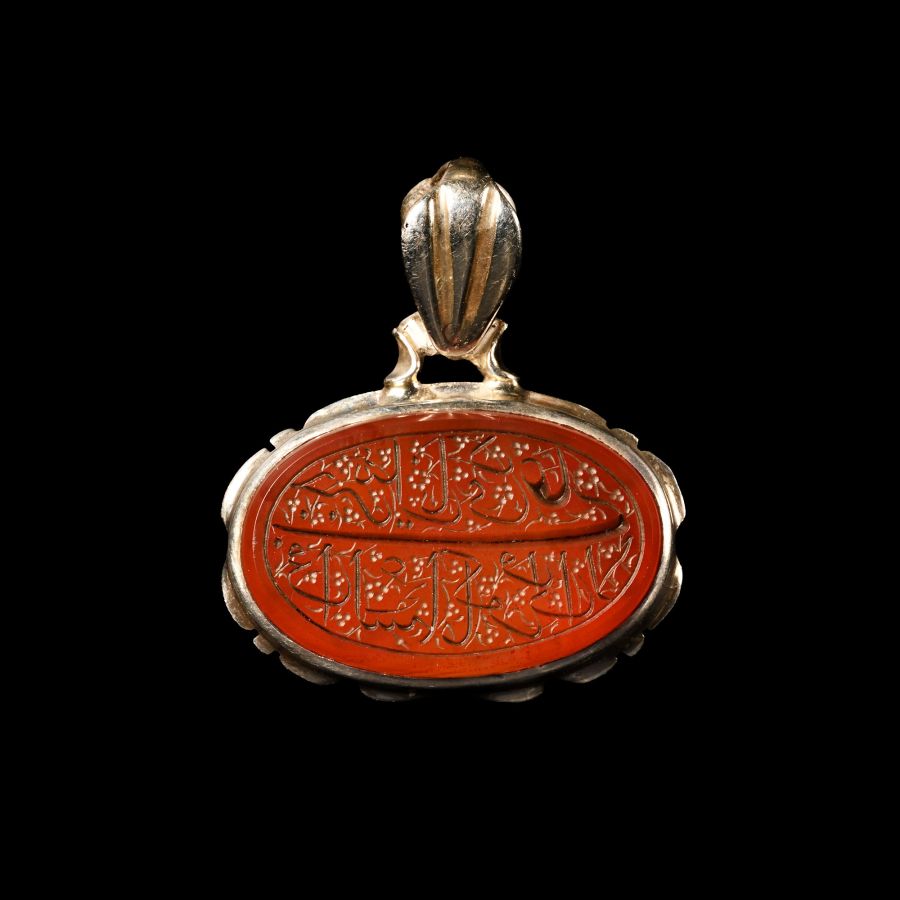
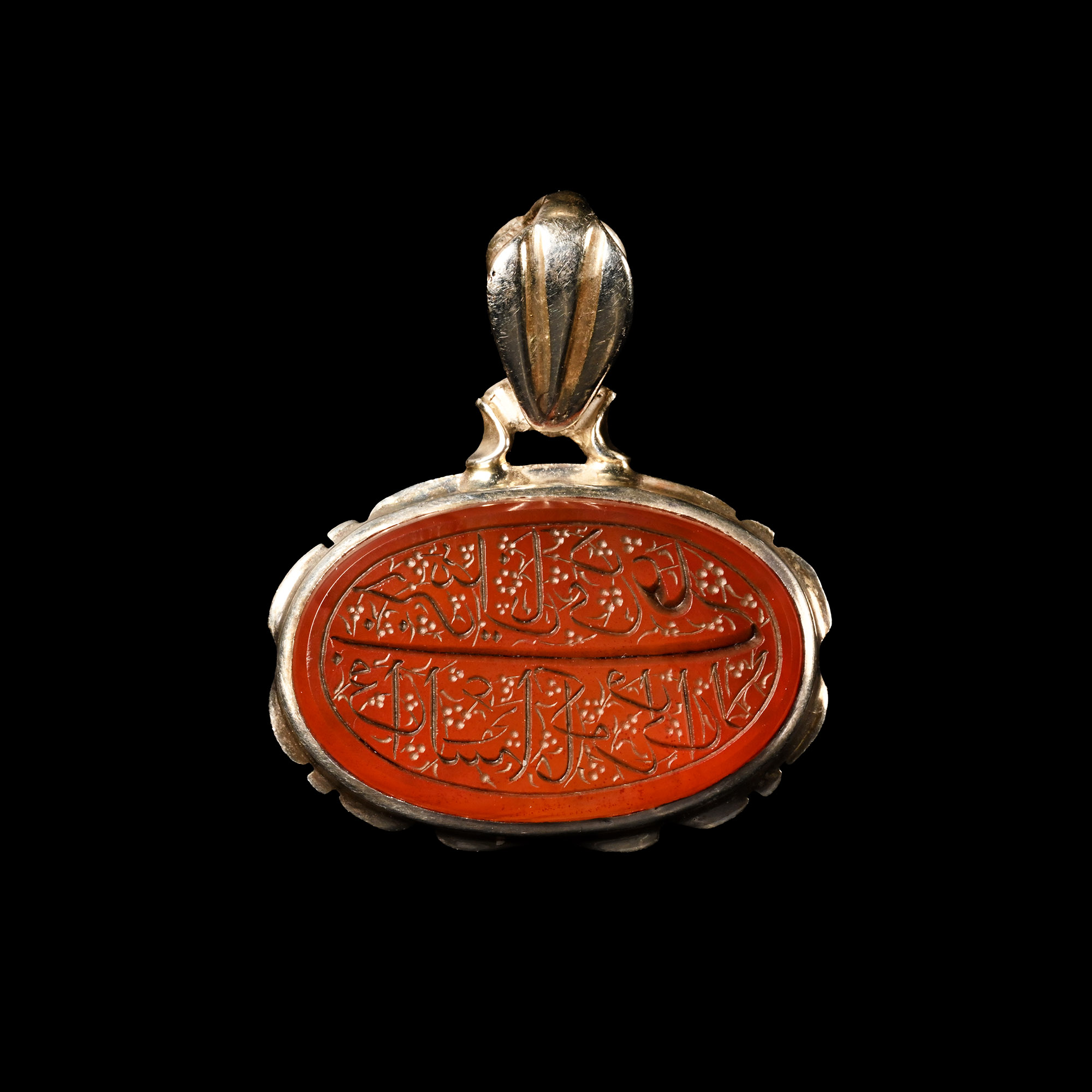
Western Asiatic Style White Metal Pendant with Carnelian Calligraphic Gemstone
20TH CENTURY A.D.
1 1/4 in. (13.4 grams, 30 mm).
An openwork pendant set with a carnelian gemstone, engraved calligraphic text in two lines, scallop-shaped suspension loop above. [No Reserve]
ProvenanceFrom the family collection of a Hampstead gentleman; formerly acquired in the 1980s.
This lot has been cleared against the Art Loss Register database, and is accompanied by an illustrated lot declaration signed by the Head of the Antiquities Department, Dr Raffaele D'Amato.
TimeLine Auctions follows a vetting process to ensure the authenticity and legality of all items, reinforcing our commitment to integrity and responsible trading. Each antiquity, antique, and coin lot undergoes thorough examination by a vetting committee of at least ten external specialists, professional trade association members, scientists, and archaeologists: Our Vetting Process
AUCTIONS:
TimeLine is a leading auction house specialising in antiquities, ancient art, collectables, natural history, coins, medals, and books. Our auctions offer museums, collectors, historians, and enthusiasts the opportunity to acquire unique and historically significant pieces.
LOT 1153
Western Asiatic Style White Metal Pendant with Carnelian Calligraphic Gemstone
Sold for (Inc. bp): £52
-
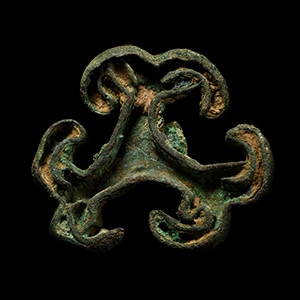
West Central Asian Bronze Stamp Seal Matrix with Triskele
Circa 2300-2000 B.C.Estimate: £180 - 240 (+bp*)
Opening Bid: £90
Trilobate in design with strap handle to the reverse, accompanied by typed and signed note by the late W.G. Lambert, Professor of Assyriology at the University of Birmingham, 1970-1993, which states: 'Stamp Seal of Bronze, 52 x 51 x 48 x 17mm. This bears the shape of the design, with flat face and flat back, on which is mounted a handle of inverted V-shape. The design, which is compartmented, consists of three similar parts meeting in the middle. Each part consists of a supporting arm which divides into two joined rough scallops at its end. This comes from west central Asia and dates to c. 2300-2000 B.C. The edges are dented and the piece somewhat bent, but generally it is in good condition. The arms may depict something, but they are difficult to interpret. It is a rare design.' 33 grams, 52 mm
Ex collection of a late London gentleman, 1990s. Accompanied by an original typed and signed scholarly note by the late W.G. Lambert, Professor of Assyriology at the University of Birmingham, 1970-1993. This lot has been cleared against the Art Loss Register database, and is accompanied by an illustrated lot declaration signed by the Head of the Antiquities Department, Dr Raffaele D'Amato. -
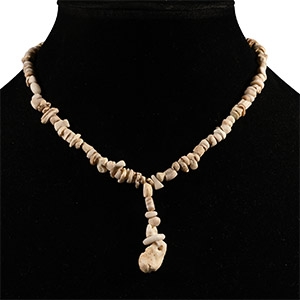
Western Asiatic White Stone and Shell Bead Necklace String
1st millennium B.C. and laterSold for (Inc. bp): £7
Restrung group of fusiform, cylindrical, rectangular and other beads. 15.4 grams, 31 cm
Ex London, UK, collection, 1990s. This lot has been cleared against the Art Loss Register database, and is accompanied by an illustrated lot declaration signed by the Head of the Antiquities Department, Dr Raffaele D'Amato. -
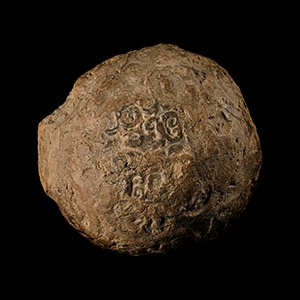
Large Sumerian Terracotta Bulla Envelope with Impressed Decoration
Uruk Period, 5500-3100 B.C.Sold for (Inc. bp): £702
Spherical and hollow-formed with moulded animal and other ornament to the outer face; clay tokens inside. 243 grams, 72 mm
Specialised collection of cuneiform texts, the property of a London gentleman and housed in London before 1988. Thence by descent to family members. Examined by Professor Wilfrid George Lambert FBA (1926-2011), historian, archaeologist, and specialist in Assyriology and Near Eastern archaeology, in the late 1980s and early 1990s. The collection is exceptional for the variety of types, including some very rare and well preserved examples. Accompanied by a copy of a previous two page illustrated cataloguing note, collection no.23. This lot has been cleared against the Art Loss Register database, and is accompanied by an illustrated lot declaration signed by the Head of the Antiquities Department, Dr Raffaele D'Amato.
