Loading, please wait...
Details
LOT 2118
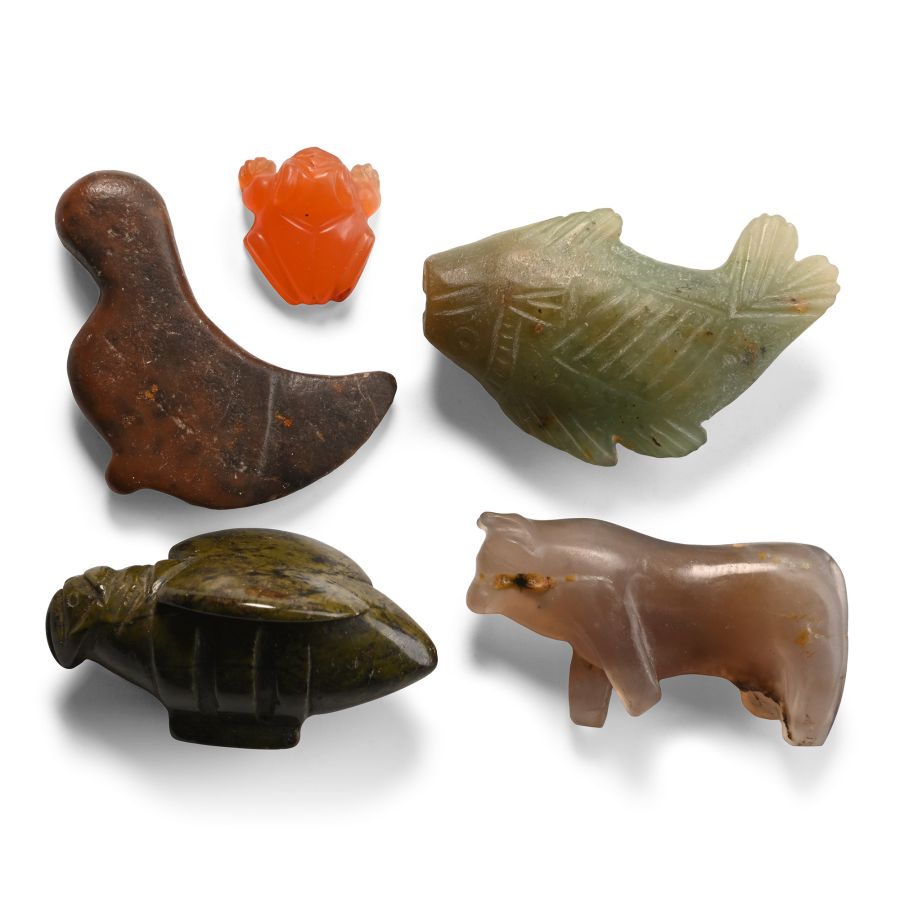
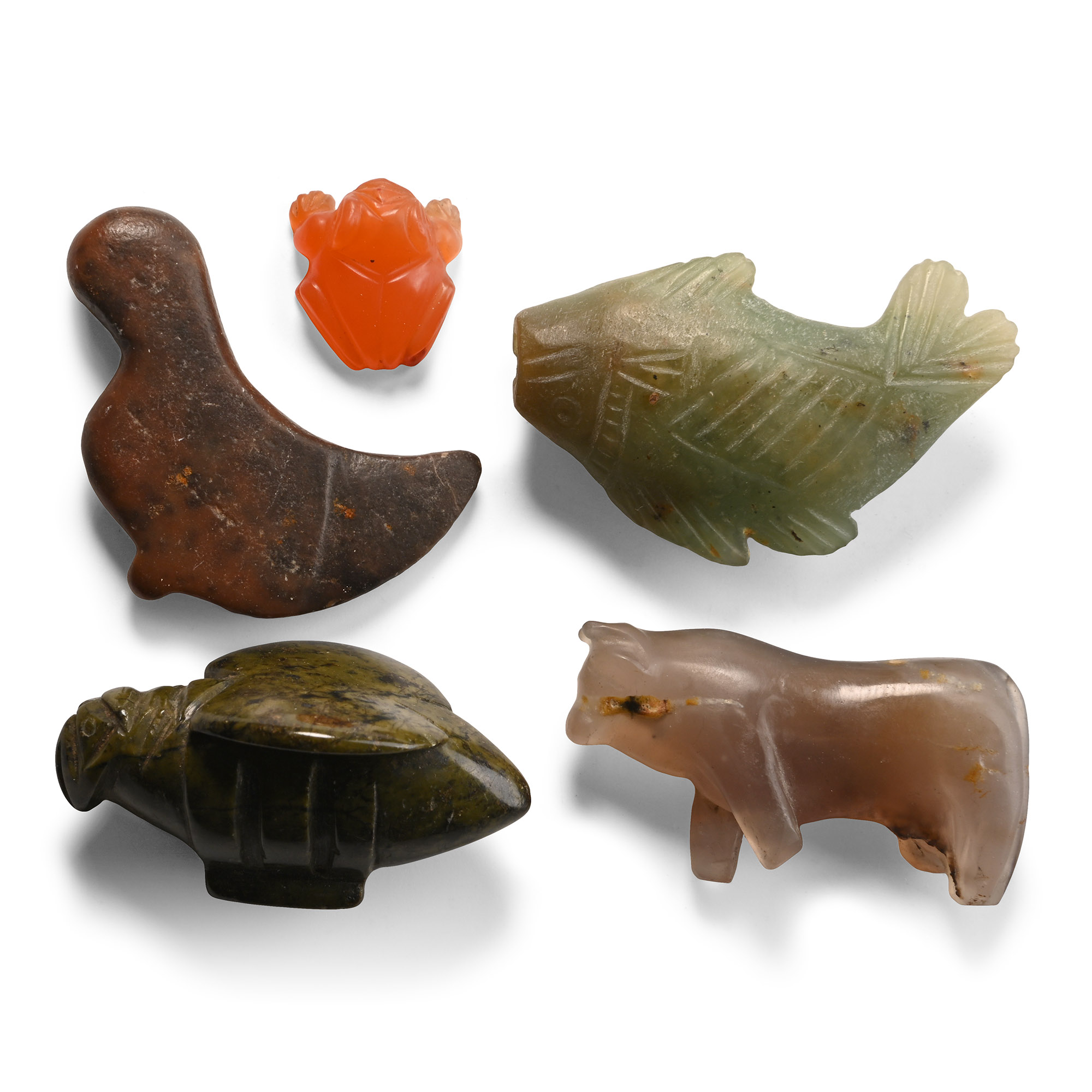
Western Asiatic Style Stone Artefact Group
20TH CENTURY A.D.
5/8 - 1 5/8 in. (40 grams total, 15-40 mm).
Carved in the round fish, bird, ox and other animals in carnelian, onyx and other materials. [5, No Reserve]
Provenance
Acquired on the UK art market.
Private collection, London, UK.
VETTING:
TimeLine Auctions follows a vetting process to ensure the authenticity and legality of all items, reinforcing our commitment to integrity and responsible trading. Each antiquity, antique, and coin lot undergoes thorough examination by a vetting committee of at least ten external specialists, professional trade association members, scientists, and archaeologists: Our Vetting Process
AUCTIONS:
TimeLine is a leading auction house specialising in antiquities, ancient art, collectables, natural history, coins, medals, and books. Our auctions offer museums, collectors, historians, and enthusiasts the opportunity to acquire unique and historically significant pieces.
RELATED LOTS
-
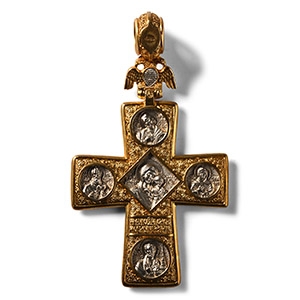
Orthodox Enamelled Bronze Cross Pendant
Circa 1750 A.D.Sold for (Inc. bp): £14
Cross pommy pendant with pierced lug for suspension; recessed cells for cloisonné enamel ornament to the obverse. 2.81 grams, 32 mm
Acquired from Chris Martin-Zakheim, Iconastas, 5 Piccadilly Arcade, London SW1. From the private collection of a West London, UK, gentleman, formed since the early 2000s. -
Large Cretan Wooden Icon Fragment of Deesis with Christ Pantocrator and Saint John the Prodromos
Circa 1670 A.D.Sold for (Inc. bp): £1,300
Depicting Christ Pantocrator and Saint John on his side, hand of Mary visible on the left; the Lord of the Universe represented seated upon a cushioned throne, the right hand in blessing gesture, the left hand holding a Gospel decorated with precious stones; wearing a blue chlamys and red sticharion; Saint John in proskynesis in front of Christ, dressed in a brown vestis talaris; the head of both surrounded by a red halo; later wire for hanging to the reverse with an information sheet in German. 1.8 kg, 57 cm
Ex Hargesheimen Auction House, Dusseldorf, Germany. Property of a London, UK, gentleman collector.
The icon represents a middle section from a Deesis of a church iconostasis. Although preserved as a fragment, it is designed in the high style of the late 16th century. -
Post Medieval Gilt Enamelled Mirror Case Depicting Mercury
Limoges, early 17th century A.D.Estimate: £3,500 - 4,500 (+bp*)
Opening Bid: £1,750
Finely wrought oval mirror case featuring a vivid polychrome enamel scene on a black ground, enclosed within a gilt-copper frame; the front adorned with a depiction of Mercury, identifiable by his winged helmet and caduceus, standing beneath a classical arch flanked by stylised columns and vases of flowers; above the entablature, a canopy held aloft by two snails, while twin pouring ewers crown the upper corners, issuing stylised streams; the architectural and ornamental elements highlighted with translucent and opaque enamel, highlighted with gilding and intricate punchwork; the frame with a guilloche border, surmounted by a pierced rocaille loop with a scallop motif, and terminating below in a turned pendant finial; the sides of the frame engraved with a delicate foliate frieze, the reverse flat-chased with three vases of stylised flowers issuing from scrolled supports, framed above by draped swags, butterflies, and a winged cherubic mask; the case hinges open at the top, the interior, originally fitted with mirrored glass, now partially oxidised but retaining areas of reflection. 168 grams, 14.4 cm
Private collection, France. Private collection, UK. This lot has been checked against the Interpol Database of stolen works of art and is accompanied by search certificate number no.12998-246011.
The enamel composition is directly derived from a print by Étienne Delaune (1518/19-1583), from his series Grotesques à Fond Noir, Dieux et Déesses, created in France c.1550–1572 prior to his departure for Strasbourg. Delaune’s engravings were a principal source for Limoges enamellers of the late 16th and early 17th centuries, particularly in the production of oval mirror plaques for personal toilette or cabinet display.