
Loading, please wait...
LOT 1850
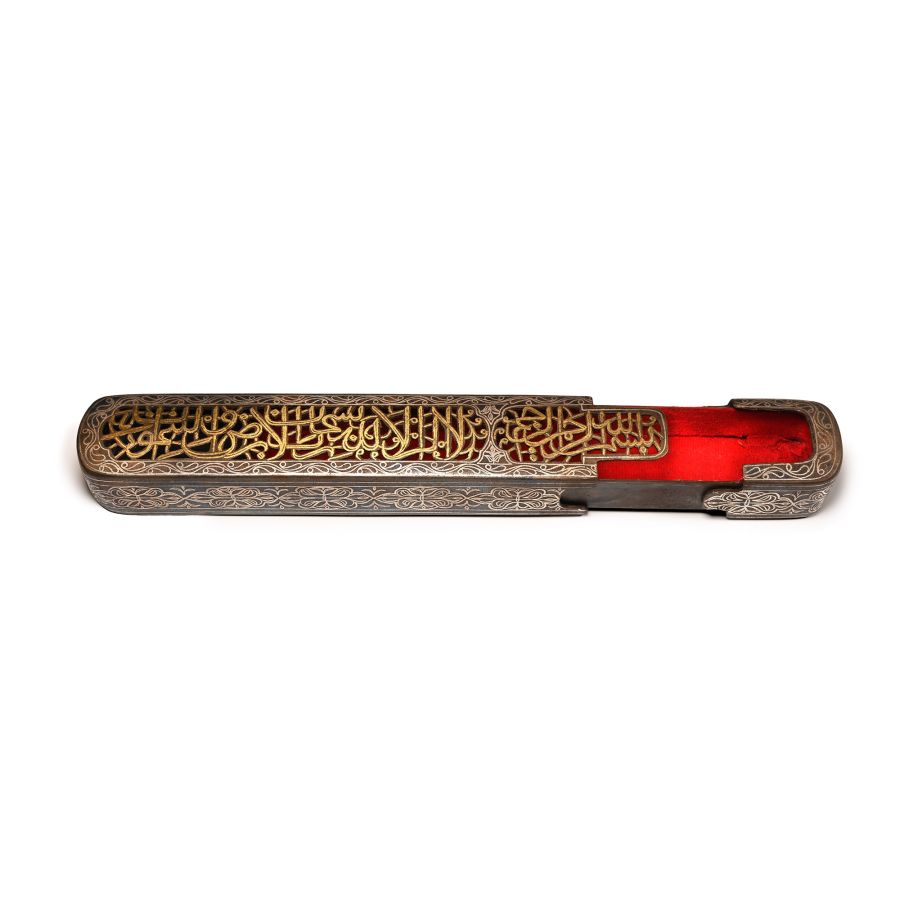
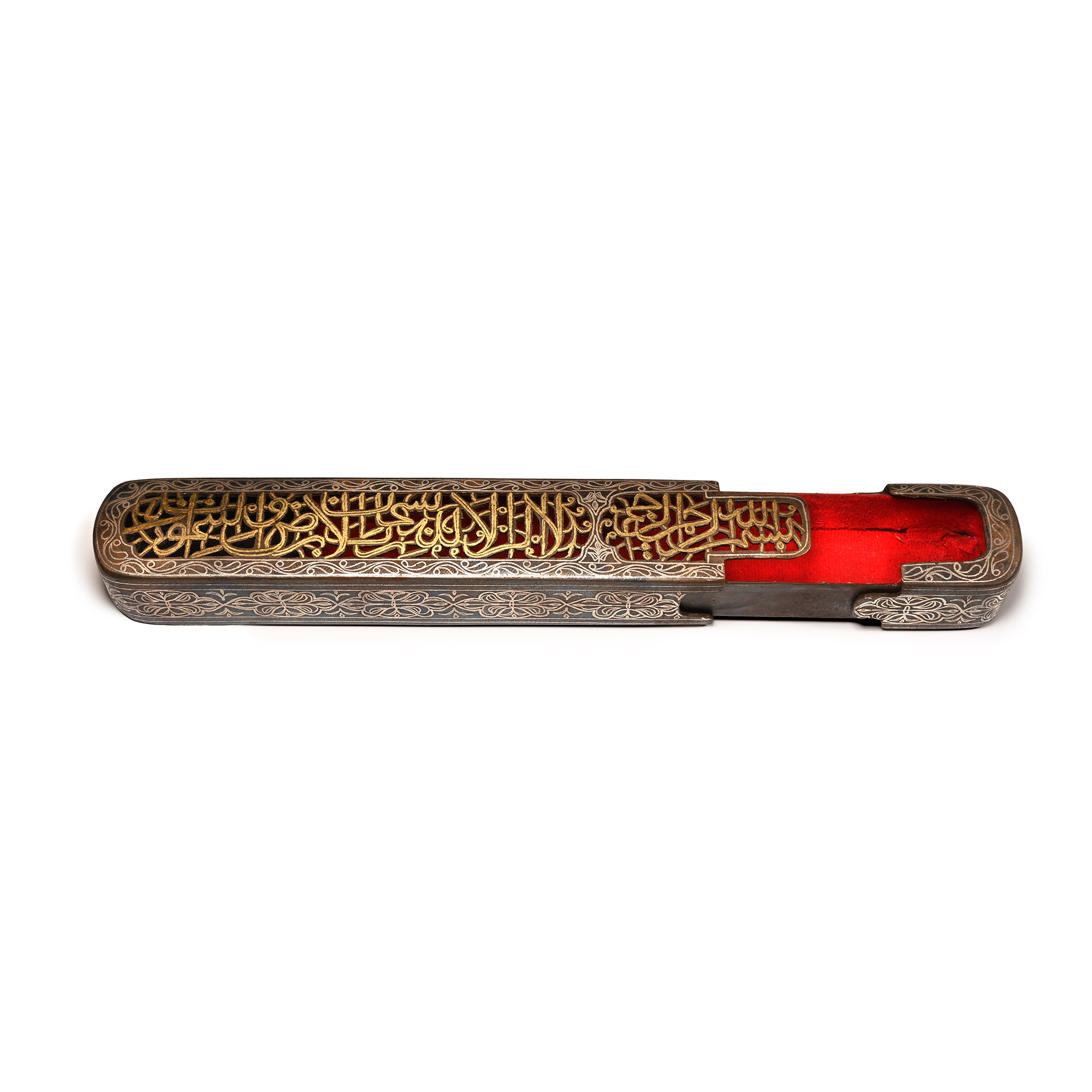
Western Asiatic Style Inlaid Bronze Calligraphic Brush or Pen Box
20TH CENTURY A.D.
8 1/4 in. (353 grams, 20.8 cm).
A narrow openwork box with sliding mechanism, the inside lined with red velvet. [No Reserve]
ProvenanceFrom the family collection of a Hampstead gentleman; formerly acquired in the 1980s.
This lot is accompanied by an illustrated lot declaration signed by the Head of the Antiquities Department, Dr Raffaele D'Amato.
TimeLine Auctions follows a vetting process to ensure the authenticity and legality of all items, reinforcing our commitment to integrity and responsible trading. Each antiquity, antique, and coin lot undergoes thorough examination by a vetting committee of at least ten external specialists, professional trade association members, scientists, and archaeologists: Our Vetting Process
AUCTIONS:
TimeLine is a leading auction house specialising in antiquities, ancient art, collectables, natural history, coins, medals, and books. Our auctions offer museums, collectors, historians, and enthusiasts the opportunity to acquire unique and historically significant pieces.
LOT 1850
Western Asiatic Style Inlaid Bronze Calligraphic Brush or Pen Box
Sold for (Inc. bp): £117
-
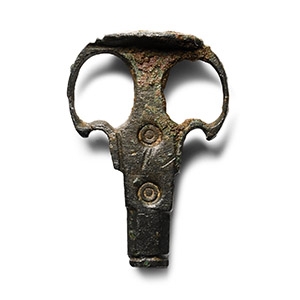
Tudor Bronze Winder Key
16th century A.D. or laterSold for (Inc. bp): £39
With tubular shank and flared lateral arms, ellipsoid panel above. 3.72 grams, 24 mm
Found near Skirpenbeck, Yorkshire, UK, in 1997. From an old Yorkshire, UK, collection. Accompanied by a copy of the British Museum's Portable Antiquities Scheme (PAS) report no.FAKL-404206. This lot is accompanied by an illustrated lot declaration signed by the Head of the Antiquities Department, Dr Raffaele D'Amato.
The item is described by the PAS report as 'probably a watch winding key' although these are very rare until the late 17th century since mechanical timepieces were not portable until then. An alternative use for the item would be for the tuning of a musical instrument: hollow keys for this purpose have been in use since at least the 7th century. -
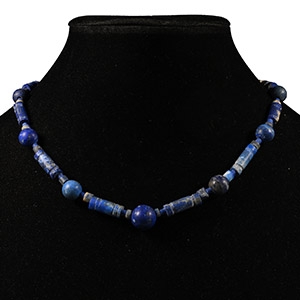
Bactrian Style Lapis Lazuli Bead Necklace String
20th century A.D.Sold for (Inc. bp): £13
Composed of alternating grooved cylindrical and spherical beads, interspersed with small cylindrical beads; restrung. 34.95 grams, 41 cm
Ex London, UK, gentleman, 2000s. This lot is accompanied by an illustrated lot declaration signed by the Head of the Antiquities Department, Dr Raffaele D'Amato. -
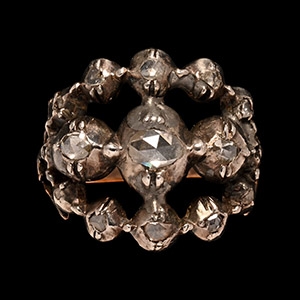
Georgian Gold Ring with Diamond Cross in Oval Cluster
18th century A.D.Sold for (Inc. bp): £455
Slender gold hoop with a leaf-topped column-type shoulders supporting an openwork silver bezel having old-cut diamonds in raised settings forming a cross motif with smaller diamonds on the sides. 3.95 grams, 19.43 mm overall, 16.71 mm internal diameter (approximate size British L, USA 5 3/4, Europe 11.24, Japan 10)
From a family collection, acquired 1930s-1980s. Property of K.P., a Cornish lady collector, UK. This lot is accompanied by an illustrated lot declaration signed by the Head of the Antiquities Department, Dr Raffaele D'Amato.
