
Loading, please wait...
LOT 1387
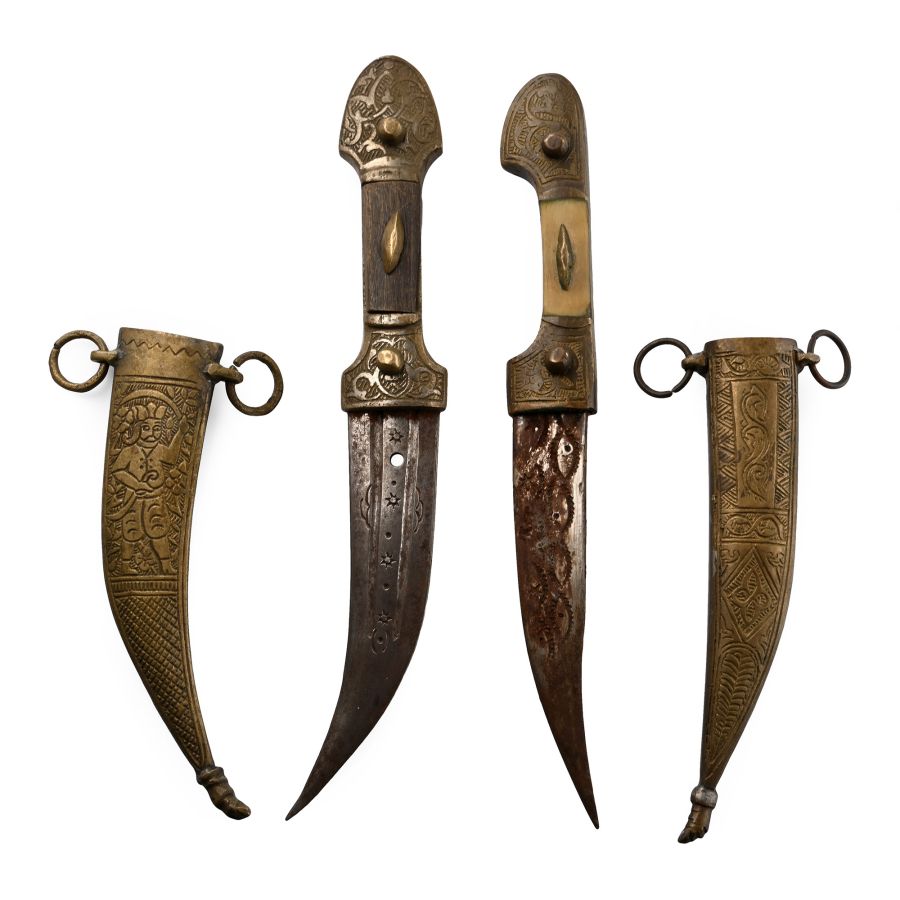
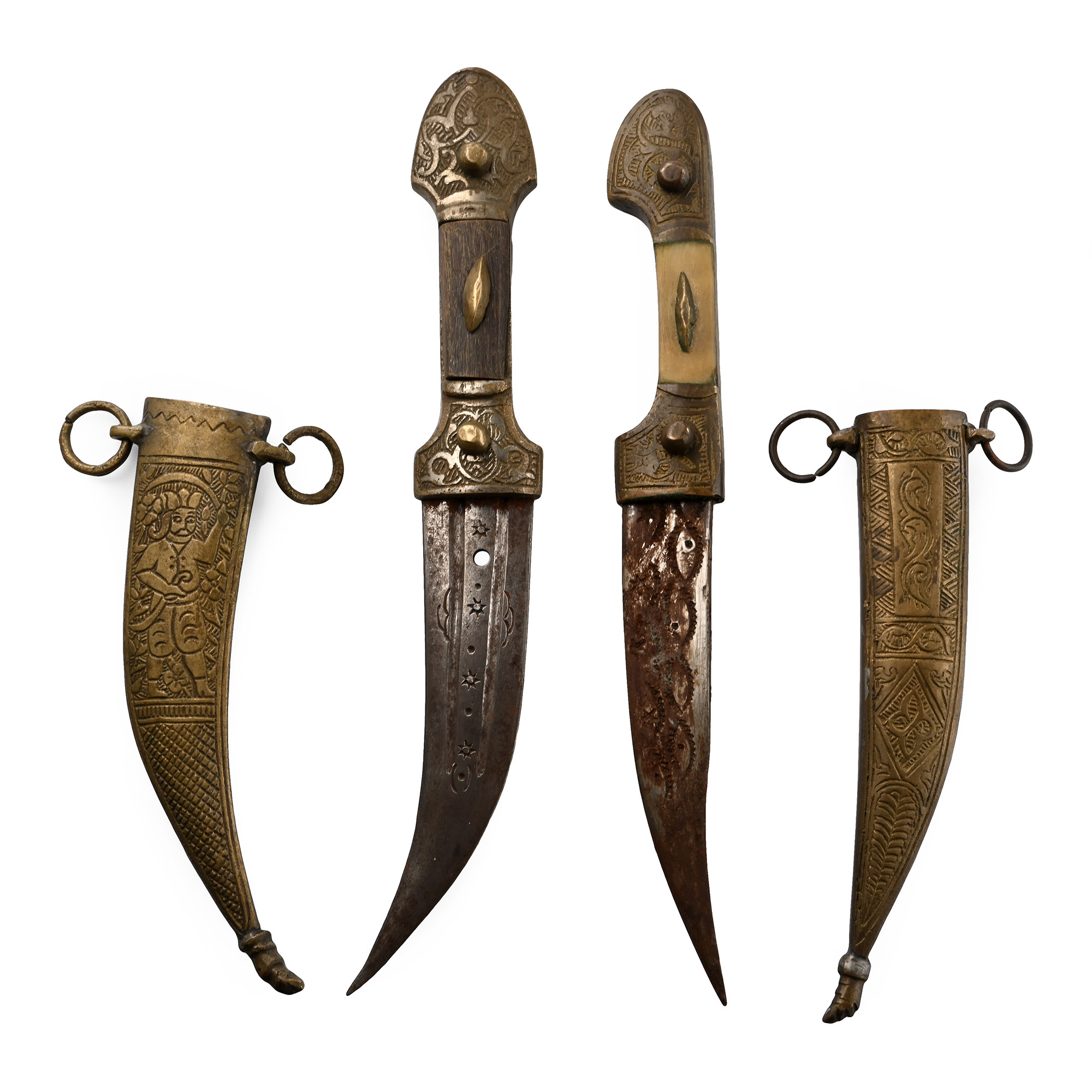
Western Asiatic Style Dagger Group
20TH CENTURY A.D.
9 1/8 - 9 1/4 in. (425 grams total, 23.2-23.7 cm).
Each a curved steel blade with two fullers, stamped ornament; waisted bronze grip with applied bone panels, tendril ornament; cast scabbard with suspension rings, advancing warrior with scimitar to each face. [2, No Reserve]
ProvenanceAcquired during the 1960s.
From an old North London oriental and ethnographical collection.
From the property of a late Lincolnshire, UK, gentleman.
TimeLine Auctions follows a vetting process to ensure the authenticity and legality of all items, reinforcing our commitment to integrity and responsible trading. Each antiquity, antique, and coin lot undergoes thorough examination by a vetting committee of at least ten external specialists, professional trade association members, scientists, and archaeologists: Our Vetting Process
AUCTIONS:
TimeLine is a leading auction house specialising in antiquities, ancient art, collectables, natural history, coins, medals, and books. Our auctions offer museums, collectors, historians, and enthusiasts the opportunity to acquire unique and historically significant pieces.
-
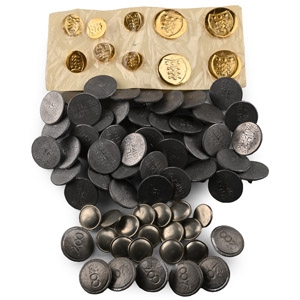
Reproduction Button Collection
20th century A.D.Estimate: £20 - 30 (+bp*)
Opening Bid: £5
Including reproductions of British Royal Artillery [10 pieces], 8th (The King's) Regiment Foot [7 pieces], Butler's Rangers [40 pieces] and others plain [15 pieces]. 561 grams total, 15-24 mm
From the private collection of author and historian Dr DeWitt Bailey, one of the global authorities on the confederate army in the US civil war; thence by descent to his grandson. -
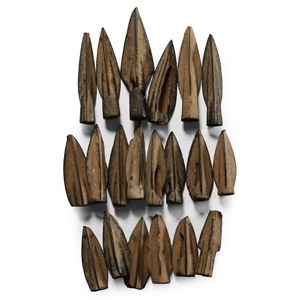
Greek and Other Bronze Arrowhead Collection
Circa 5th-3rd century B.C.Sold for (Inc. bp): £117
The group comprising triangular trilobate types, all socketted. 63.5 grams total, 24-42 mm
Ex London art market, 1980-1990s. This lot is accompanied by an illustrated lot declaration signed by the Head of the Antiquities Department, Dr Raffaele D'Amato.
In the Greek warfare, archers were mainly employed by Scythians and Cretans. Both used composite bows made of wood, horn, bone and sinew. This explains the great range of Scythian arrowheads found on the Greek sites. -
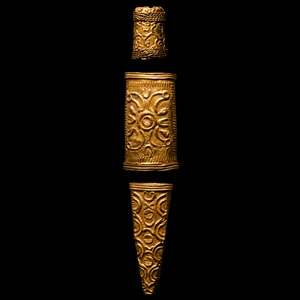
Indian Gold Dagger Scabbard Suite
17th-18th century A.D.Estimate: £2,500 - 3,500 (‡+bp*)
Opening Bid: £1,250
Belonging to a dagger and its scabbard, comprising: a tubular pommel cap with filigree ropework, repoussé floral motifs; an elliptical-section scabbard throat with billetted border, reeded edges and floral motif; a triangular chape with reeded strip to the mouth. 27 grams total, 29-64 mm
From the collection of a North American gentleman, formed in the 1990s.
