
Loading, please wait...
LOT 1301
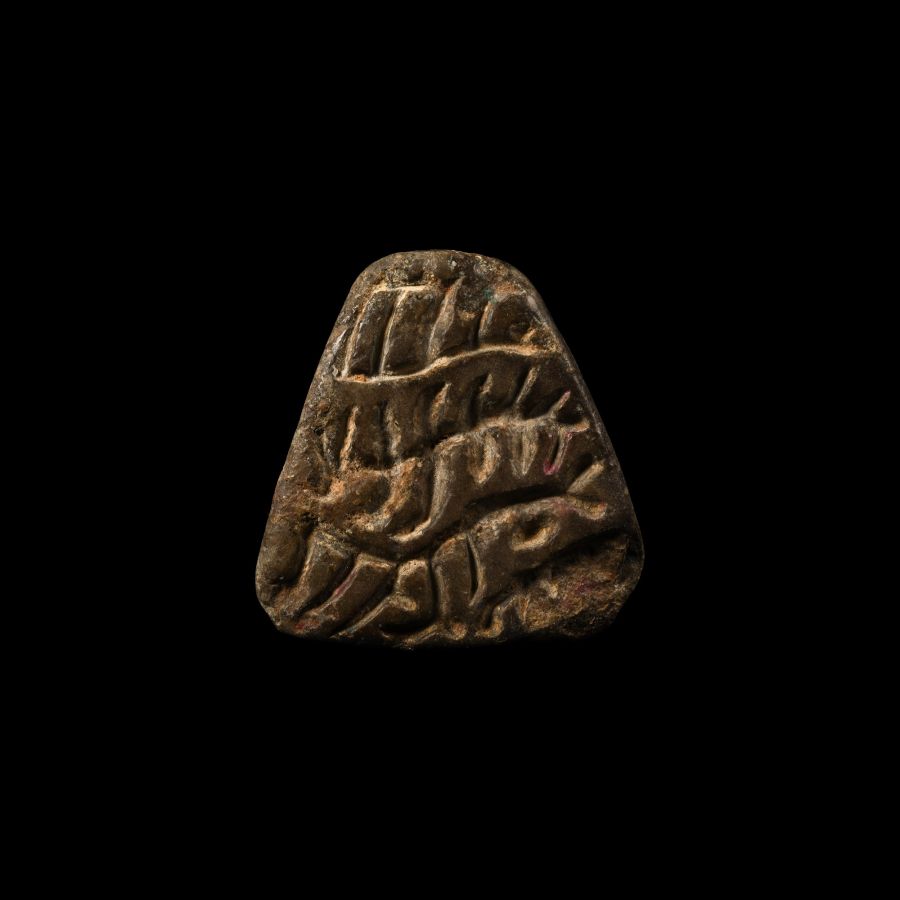
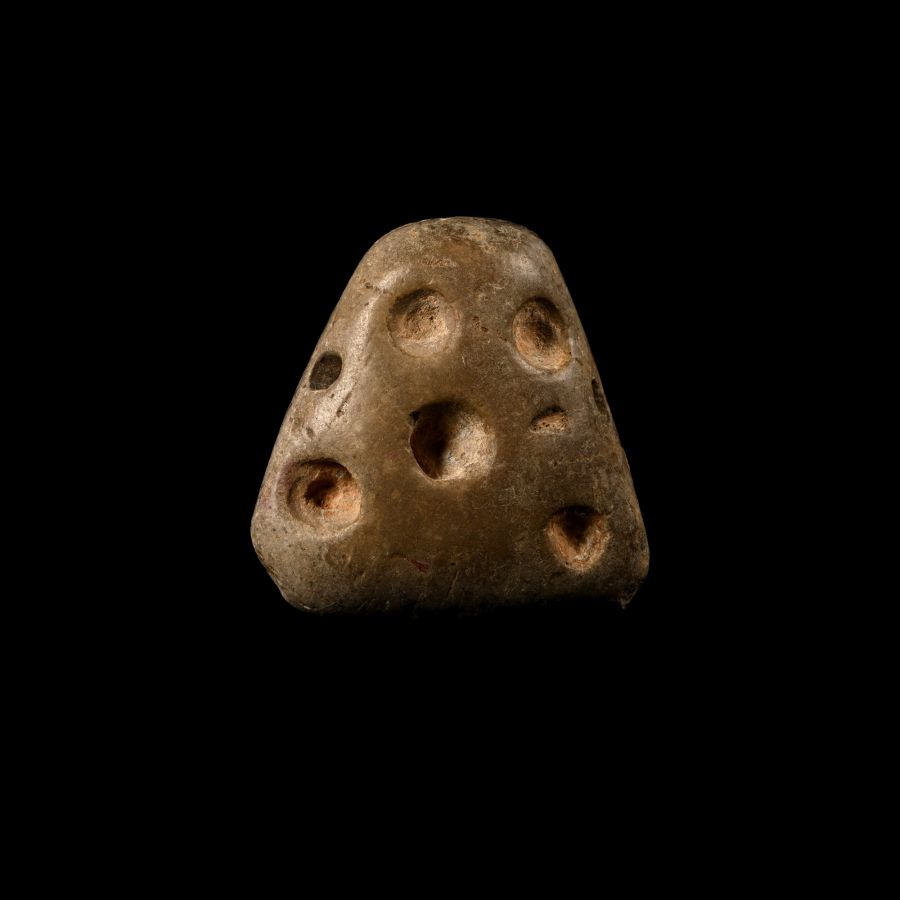
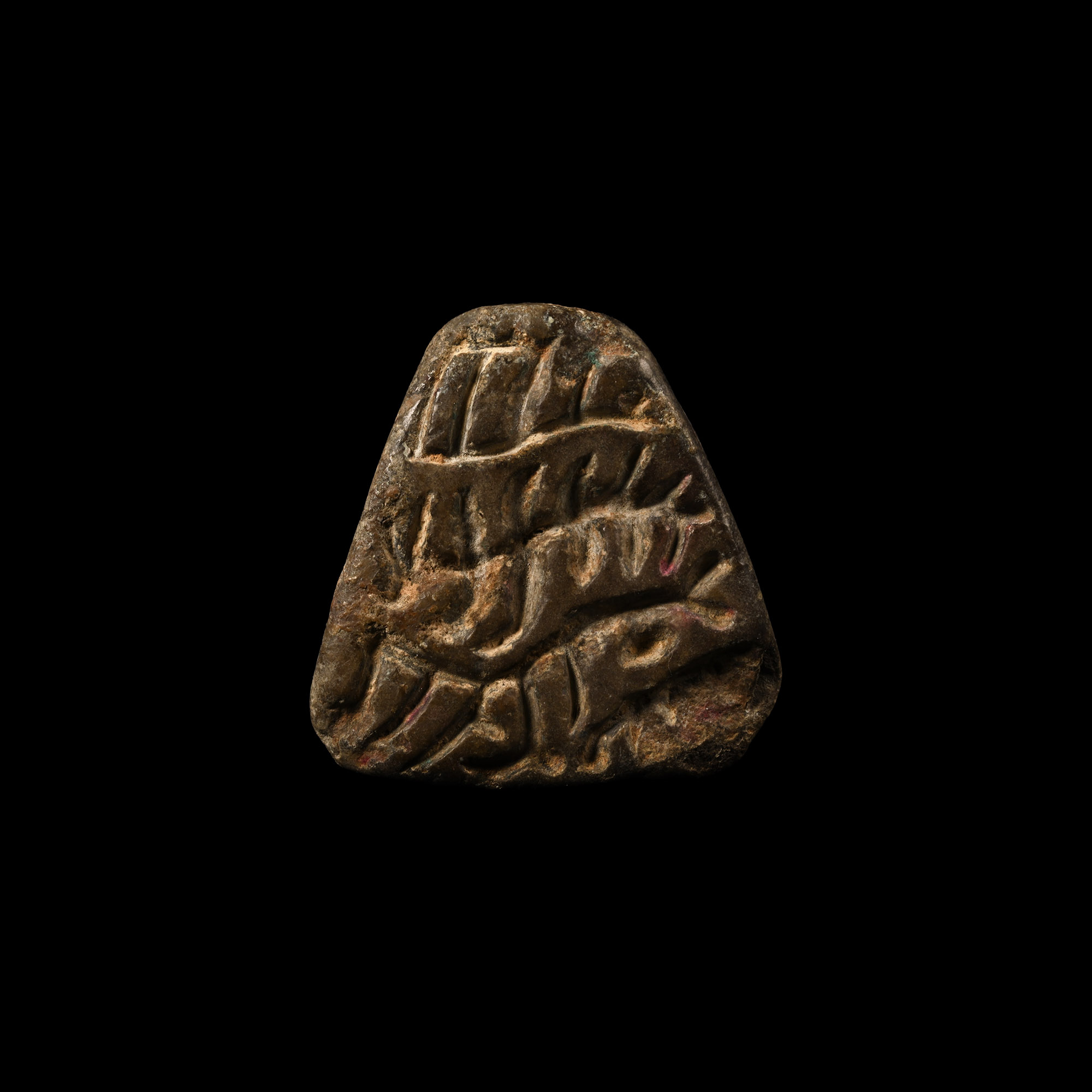
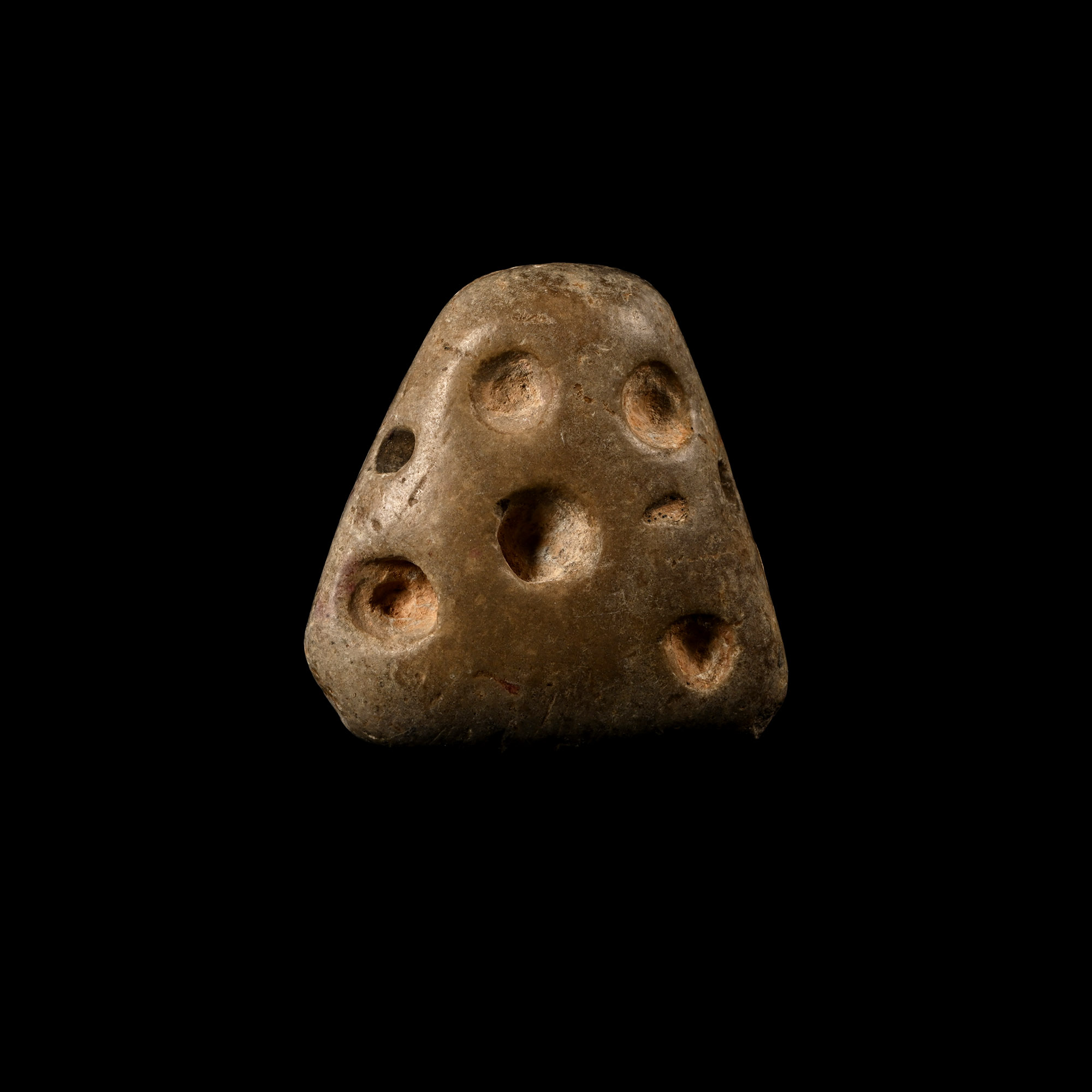
Western Asiatic Stone Seal with Engraved Design
3RD MILLENNIUM B.C.
1 3/8 in. (19 grams, 37 mm).
Triangular in plan and plano-convex in section with drilled upper face, geometric design to underside.
ProvenanceAcquired in the mid 1980s-1990s.
Private collection, Switzerland, thence by descent.
Private collection, since the late 1990s.
This lot has been cleared against the Art Loss Register database, and is accompanied by an illustrated lot declaration signed by the Head of the Antiquities Department, Dr Raffaele D'Amato.
TimeLine Auctions follows a vetting process to ensure the authenticity and legality of all items, reinforcing our commitment to integrity and responsible trading. Each antiquity, antique, and coin lot undergoes thorough examination by a vetting committee of at least ten external specialists, professional trade association members, scientists, and archaeologists: Our Vetting Process
AUCTIONS:
TimeLine is a leading auction house specialising in antiquities, ancient art, collectables, natural history, coins, medals, and books. Our auctions offer museums, collectors, historians, and enthusiasts the opportunity to acquire unique and historically significant pieces.
LOT 1301
Western Asiatic Stone Seal with Engraved Design
Estimate £180 - 240€210 - 280 (for guidance only)$240 - 320 (for guidance only)
-
Western Asiatic Mixed Gold Bead Group
1st millennium B.C. and laterSold for (Inc. bp): £468
A mixed group of small beads, pendants, and mounts. 5.78 grams total, 2-9 mm
Ex property of a late Japanese collector, 1970-2000s. This lot has been cleared against the Art Loss Register database, and is accompanied by an illustrated lot declaration signed by the Head of the Antiquities Department, Dr Raffaele D'Amato. -
Eastern Syrian Faience Cylinder Seal with Worship Scenes
Circa 800-600 B.C.Sold for (Inc. bp): £650
Accompanied by a copy of an old scholarly note, hand written and signed by W.G. Lambert, late Professor of Assyriology, University of Birmingham, 1970-1993, which states: 'Cylinder seal of Green faience, 36x15mm. The design shows a stylized sacred tree and a reared up kid on either side. A stylized solar disc serves as a terminal. This seal is to be dated c. 800-600 B.C. and comes from Mesopotamia or Eastern Syria. For faience it is a large seal in good condition.'; supplied with a museum-quality impression. 13.5 grams, 36 mm
From the private collection of a North American lady, formed 1970s-early 1990s, with collection reference no.P38. Accompanied by a copy of a scholarly note, hand written and signed by Professor Wilfrid George Lambert dated December 1990. This lot has been cleared against the Art Loss Register database, and is accompanied by an illustrated lot declaration signed by the Head of the Antiquities Department, Dr Raffaele D'Amato. -
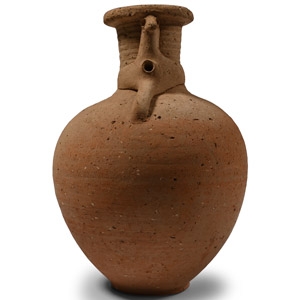
Western Asiatic Terracotta Jug with Zoomorphic Appliqué
Middle Bronze Age, circa 2000 B.C.Sold for (Inc. bp): £78
Piriform in profile with discoid foot, deep shoulder, tall neck with rolled and everted rim; applied aviform figure to the shoulders with splayed wings encircling the base of the neck; possibly Cypriot workmanship. 447 grams, 17.1 cm high
Ex Constable collection, UK, 1990s. Accompanied by an old photograph with description verso. This lot has been cleared against the Art Loss Register database, and is accompanied by an illustrated lot declaration signed by the Head of the Antiquities Department, Dr Raffaele D'Amato.
