
Loading, please wait...
LOT 1085
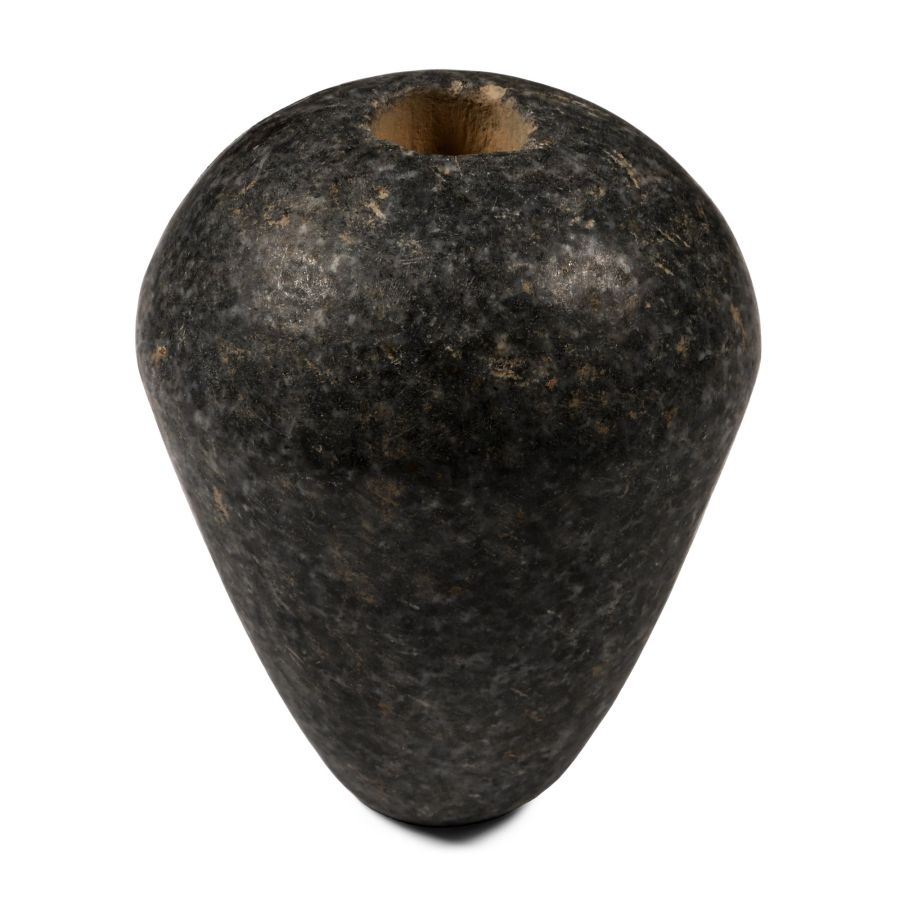
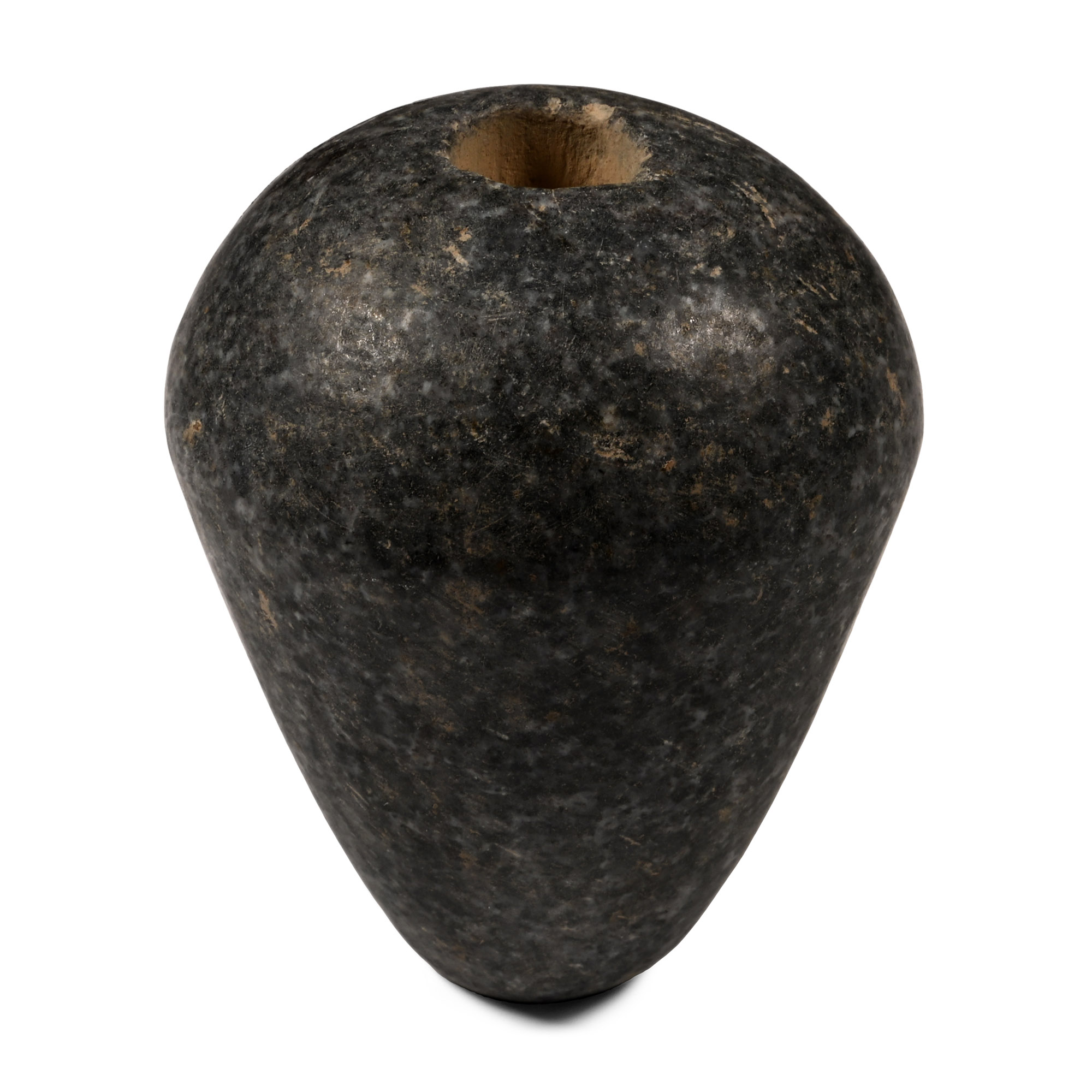
Western Asiatic Stone Macehead
3RD-2ND MILLENNIUM B.C.
3 1/8 in. (383 grams, 8 cm).
Piriform with vertical socket expanding towards the narrower end.
ProvenanceFrom the collection of a London, UK, gentleman, 1990s.
This lot has been cleared against the Art Loss Register database, and is accompanied by an illustrated lot declaration signed by the Head of the Antiquities Department, Dr Raffaele D'Amato.
Cf. Gorelik, M., Weapons of Ancient East, IV millennium BC-IV century BC, Saint Petersburg, 2003, in Russian, see pl.XXX, no.89, from Megiddo, for similar.
CONDITIONTimeLine Auctions follows a vetting process to ensure the authenticity and legality of all items, reinforcing our commitment to integrity and responsible trading. Each antiquity, antique, and coin lot undergoes thorough examination by a vetting committee of at least ten external specialists, professional trade association members, scientists, and archaeologists: Our Vetting Process
AUCTIONS:
TimeLine is a leading auction house specialising in antiquities, ancient art, collectables, natural history, coins, medals, and books. Our auctions offer museums, collectors, historians, and enthusiasts the opportunity to acquire unique and historically significant pieces.
LOT 1085
Western Asiatic Stone Macehead
Estimate £100 - 140€120 - 160 (for guidance only)$140 - 190 (for guidance only)
-
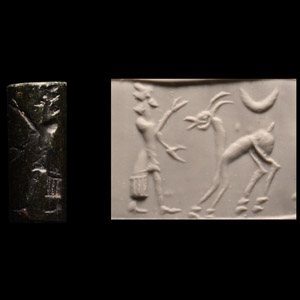
Iranian Black Stone Cylinder Seal with Figure Dressed in Robes
Circa 800-500 B.C.Sold for (Inc. bp): £442
Cylinder with cord and bead handles; accompanied by a copy of an old scholarly note, typed and signed by W.G. Lambert, late Professor of Assyriology, University of Birmingham, 1970-1993, which states: 'Cylinder Seal of Black Stone, 23.5 x 10.5 mm. The design shows a standing figure dressed on a long robe open at the front from which one leg projects while holding out both hands, one up the other more down. Before him is a standing quadruped with horns, and in the sky is the lunar crescent. This is a rare Iranian seal type from South West Iran, dating c. 800-500 B.C. So far none have some from excavations, but they have been known on the market for some time. They all share the characteristic pose of the hands and a certain crudity of execution. This one is in fine condition.'; supplied with a museum-quality impression. 5.9 grams, 23 mm
UK private collection, acquired 1980-1983. Accompanied by a copy of a scholarly note, typed and signed by Professor Wilfrid George Lambert in July 1991. This lot has been cleared against the Art Loss Register database, and is accompanied by an illustrated lot declaration signed by the Head of the Antiquities Department, Dr Raffaele D'Amato. -
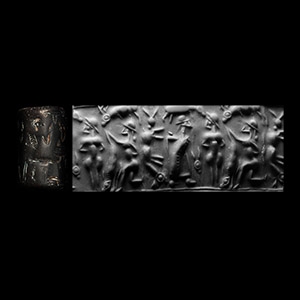
Syrian Haematite Cylinder Seal with Worshipping Figures
Circa 1900-1700 B.C.Sold for (Inc. bp): £390
Cylinder with cord and bead handles; accompanied by a copy of an old scholarly note, typed and signed by W.G. Lambert, late Professor of Assyriology, University of Birmingham, 1970-1993, which states: 'Cylinder Seal of Hematite, 19 x 11.5 mm. The major part of the design consist of a seated figure, no doubt a god, holding up one hand in greeting to a standing figure, meant as a human worshipper, who similarly hold up one hand. Between them is a table with elegant legs on which rests a pile of breads. Above this is a motif probably intended as a stylized bull's head. The minor part of the design consists of a row of five walking men, the first raising one hand, the last carrying a crook over his shoulder. This is a Syrian seal, c. 1900-1700 B.C. and though the stone is somewhat worn, the design is fully clear.'; supplied with a museum-quality impression. 7.5 grams, 18 mm
UK private collection, acquired 1980-1983. Accompanied by a copy of a scholarly note, typed and signed by Professor Wilfrid George Lambert in August 1991. This lot has been cleared against the Art Loss Register database, and is accompanied by an illustrated lot declaration signed by the Head of the Antiquities Department, Dr Raffaele D'Amato. -
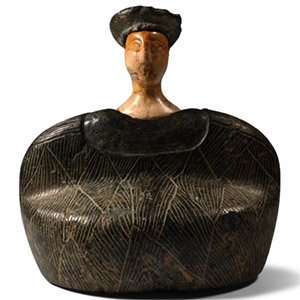
Bactrian Chlorite 'Princess' Idol
Late 3rd-early 2nd millennium B.C.Sold for (Inc. bp): £3,380
Carved as a human figure in three parts: body with rows of overlapping tufts of fur, shallow socket to accept the head and broad collar below; the bald head carved from marble with semi-naturalistic detailing to the face; headdress (or wig) with a flared outer flange. 1.54 kg total, 3.9-14 cm
Acquired from a gallery in France and brought to the United Kingdom in 1982; thence by descent. This lot has been checked against the Interpol Database of stolen works of art and is accompanied by a search certificate number no.12713-235197. This lot has been cleared against the Art Loss Register database, and is accompanied by an illustrated lot declaration signed by the Head of the Antiquities Department, Dr Raffaele D'Amato.
