
Loading, please wait...

LOT 0207
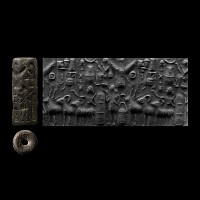
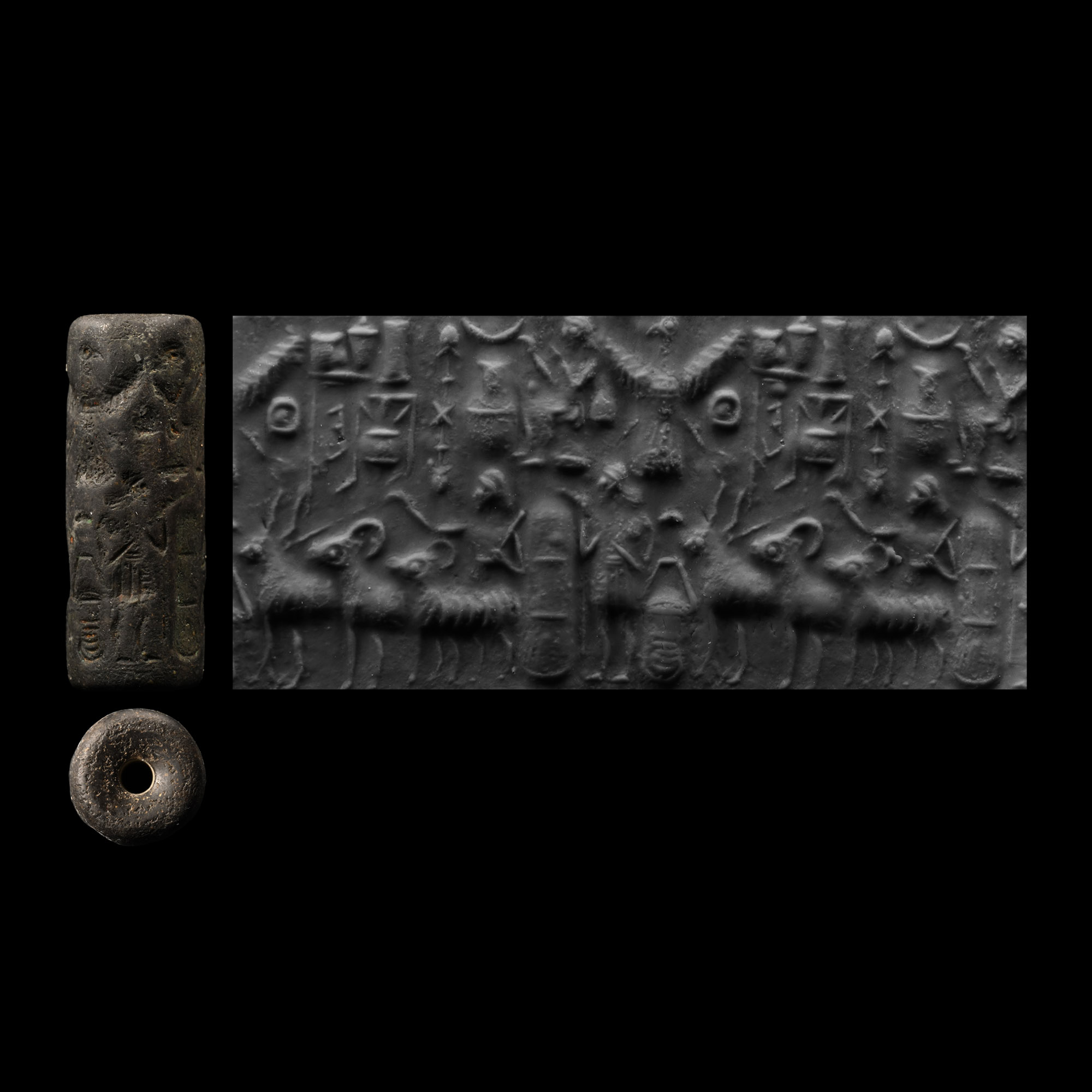
Western Asiatic Stone Cylinder Seal with Winged Figure
2ND-1ST MILLENNIUM B.C.
1 5/8 in. (17.5 grams, 40 mm).
With frieze in two registers including a winged figure, procession of goats, facing robed figure and various symbols.
ProvenanceEx S collection, London, UK, 1970-1990s.
CONDITIONTimeLine Auctions follows a vetting process to ensure the authenticity and legality of all items, reinforcing our commitment to integrity and responsible trading. Each antiquity, antique, and coin lot undergoes thorough examination by a vetting committee of at least ten external specialists, professional trade association members, scientists, and archaeologists: Our Vetting Process
AUCTIONS:
TimeLine is a leading auction house specialising in antiquities, ancient art, collectables, natural history, coins, medals, and books. Our auctions offer museums, collectors, historians, and enthusiasts the opportunity to acquire unique and historically significant pieces.
-
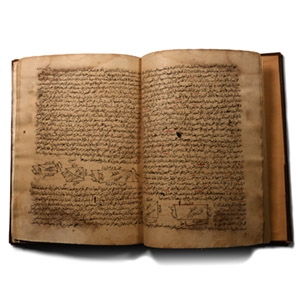
Islamic Leather-Bound Manuscript, Two Books on Mathematics
1095 A.H.Estimate: £1,200 - 1,700 (+bp*)
Opening Bid: £600
Rebound as a hardback with full leather binding, central arabesque foliage panel to each cover; title page with triangular block of naskh text with red marks; first set of text pages typically with 31 lines of cramped naskh script in black ink with red highlighting, hand-drawn geometric figures with numerical notation relating to angles, etc; second set with looser script typically in 23 lines with marginal notes and red underscoring, tables and perpendicular text blocks. 232 grams, 16 x 21.5 cm
From an important family collection started in the late 1950s. Property of a West London, UK, gentleman.
The texts are: (1) 'Ghaniat alhisab' (In Arithmetic) the classification by Judge Jamal al-Din Ahmad bin Ali Ibn Thabit (2) 'Alkaayib' (In Calculating Mathematical Copies) by the computer scientist Shihab al-Din Ahmad ibn Muhammad ibn al-Ha'im al-Magdisi, written out by Yusuf ibn Hussein Hamouda Al-Habibi in the year 1095 A.H. (1683 A.D.). -
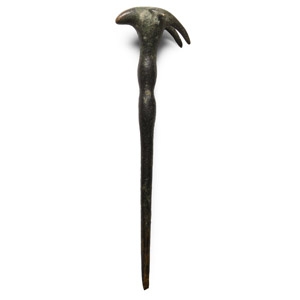
Hasanlu Bronze Pin with Ram's Head Finial
9th-8th century B.C.Sold for (Inc. bp): £130
With a tapering round-section shank, finial topped with a ram's head. 110 grams, 16.5 cm
From the collection of late George Withers, UK. Acquired from Dore and Rees, UK. Property of Mr A.B., an American collector.
The corpus of pins from Hasanlu includes simple plain pins, pins with lion's head and other zoomorphic pins. The zoomorphic pins were either cast onto a bronze shank or the pin was inserted into a hollow of the head. A third category was that of the pins cast in one piece, like our specimen, representing a goat or mouflon, an animal often depicted in the North-West Persian material culture. -
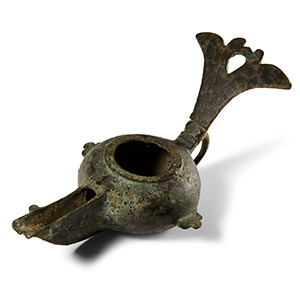
Western Asiatic Bronze Oil Lamp
12th-14th century A.D.Estimate: £200 - 300 (+bp*)
Opening Bid: £100
Comprising an oblate body with lateral trilobe ledge handles, raised rim to filler hole, long nozzle rectangular in plan with lip at forward edge, loop handle to rear and pierced leaf-shaped reflector. 143 grams, 15 cm
Private UK collection. Acquired in the 1980s. Property of a Cambridgeshire gentleman.
