
Loading, please wait...
LOT 0199
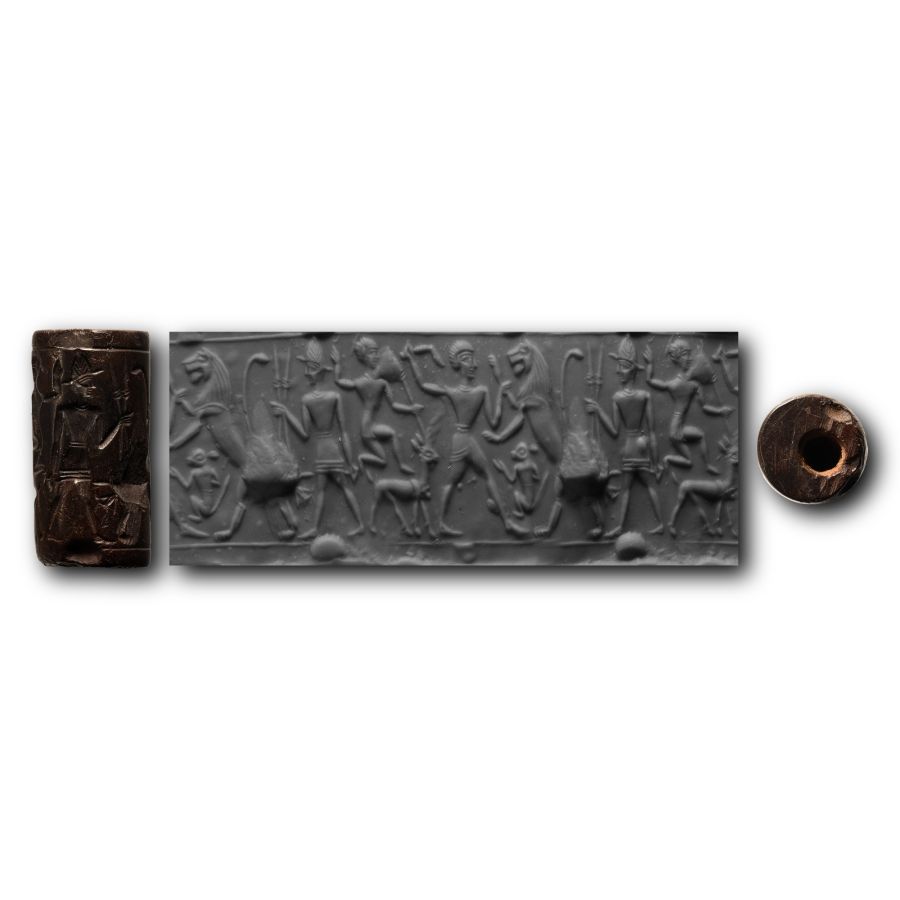
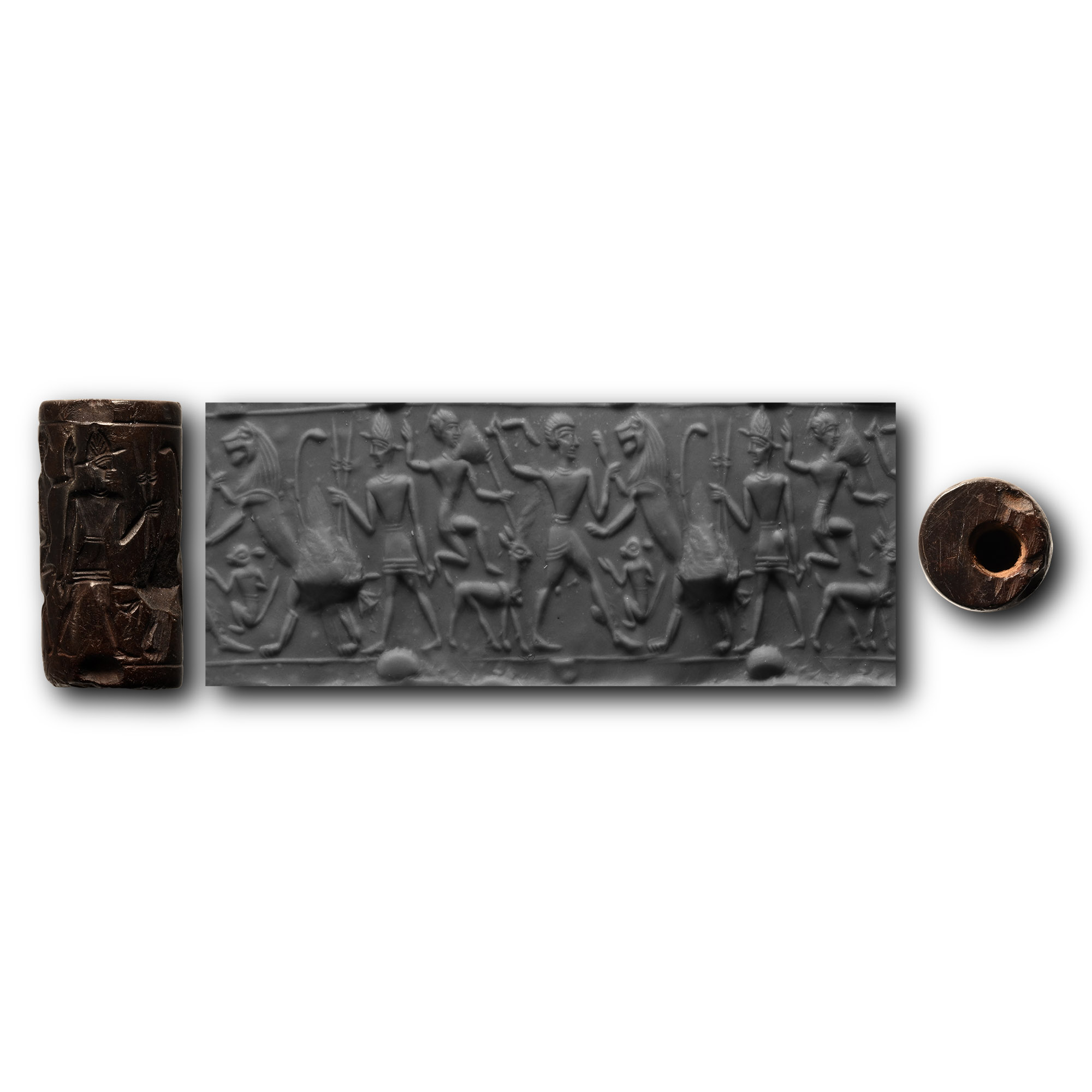
Western Asiatic Stone Cylinder Seal with Hunting Scene
LATE 2ND-1ST MILLENNIUM B.C.
1 in. (6.9 grams, 23 mm).
With frieze depicting a hunting scene with a lion leaping to attack a kilted hero with a kopis supported by a small figure holding an arrow, a stag and a standing kilted attendant with two javelins; animals and objects in the field; supplied with a museum-quality impression.
ProvenanceFrom the 'S' collection, acquired 1970-1990s.
The collection was seen and studied by W.G. Lambert, late Professor of Assyriology at the University of Birmingham, 1970-1993.
Cf. Teissier, B., Ancient Near Eastern Cylinder Seals in the Marcopoli Collection, Berkeley, 1984, item 426, for type.
CONDITIONTimeLine Auctions follows a vetting process to ensure the authenticity and legality of all items, reinforcing our commitment to integrity and responsible trading. Each antiquity, antique, and coin lot undergoes thorough examination by a vetting committee of at least ten external specialists, professional trade association members, scientists, and archaeologists: Our Vetting Process
AUCTIONS:
TimeLine is a leading auction house specialising in antiquities, ancient art, collectables, natural history, coins, medals, and books. Our auctions offer museums, collectors, historians, and enthusiasts the opportunity to acquire unique and historically significant pieces.
-
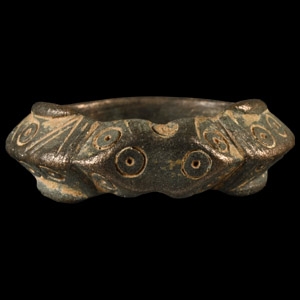
Ghaznavid Bronze Zoomorphic Ring with Annular Design
Circa 12th-13th century A.D.Sold for (Inc. bp): £156
With a keeled hoop decorated with ring-and-dot and linear designs, the shoulders formed as stylised beast heads supporting the bezel with punched ring-and-dot motifs. 9.52 grams, 26.94 mm overall, 19.21 mm internal diameter (approximate size British P, USA 7 1/2, Europe 16.23, Japan 15)
UK private collection before 2000. On the UK art market. Property of a London gentleman. -
.jpg)
Large Western Asiatic Alabaster Cylinder Seal with Procession
Circa 3rd millennium B.C.Sold for (Inc. bp): £416
With frieze of advancing figures. 26.3 grams, 32 mm
Acquired 1970s-1996. Property of a North American collector, collection number 063. London collection, 2016. -
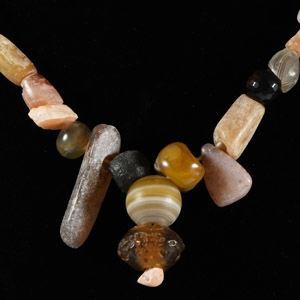
Western Asiatic Mixed Agate Bead Necklace
1st millennium B.C. and laterSold for (Inc. bp): £26
Restrung designer necklace comprising tubular, fusiform and irregular types in carnelian, banded agate and other materials. 47 grams, 36.5 cm
Acquired on the London, UK, art market in the 1990s. Ex London, UK, gallery.
