
Loading, please wait...
LOT 1123
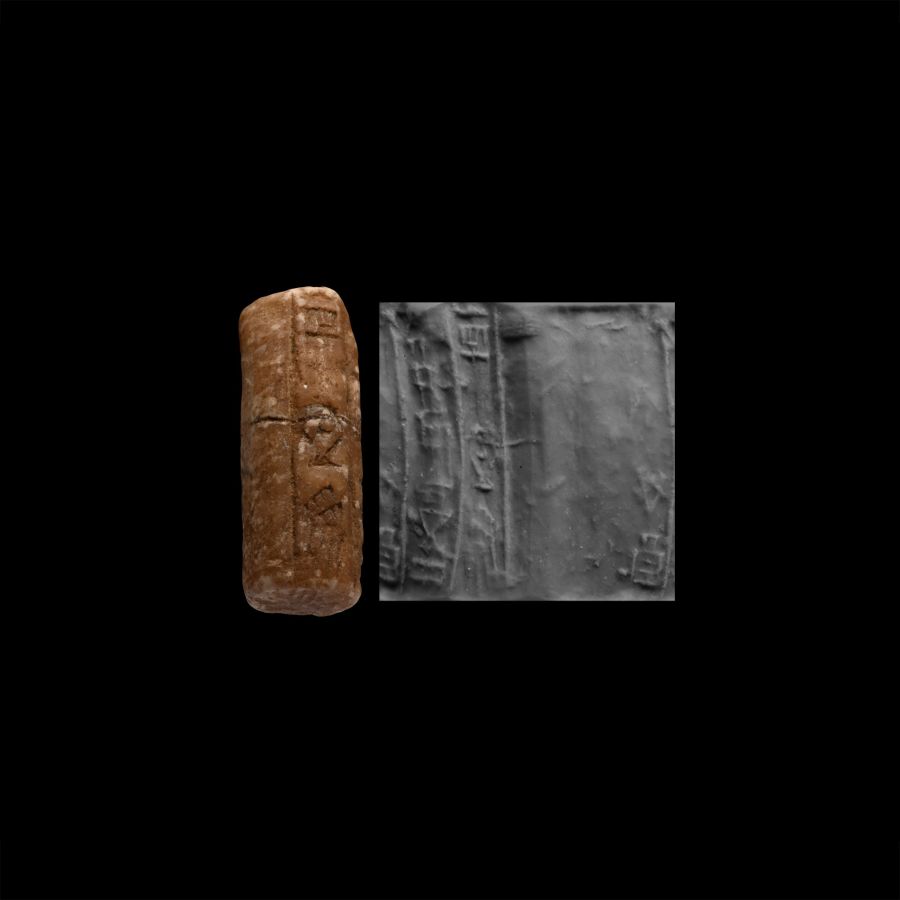
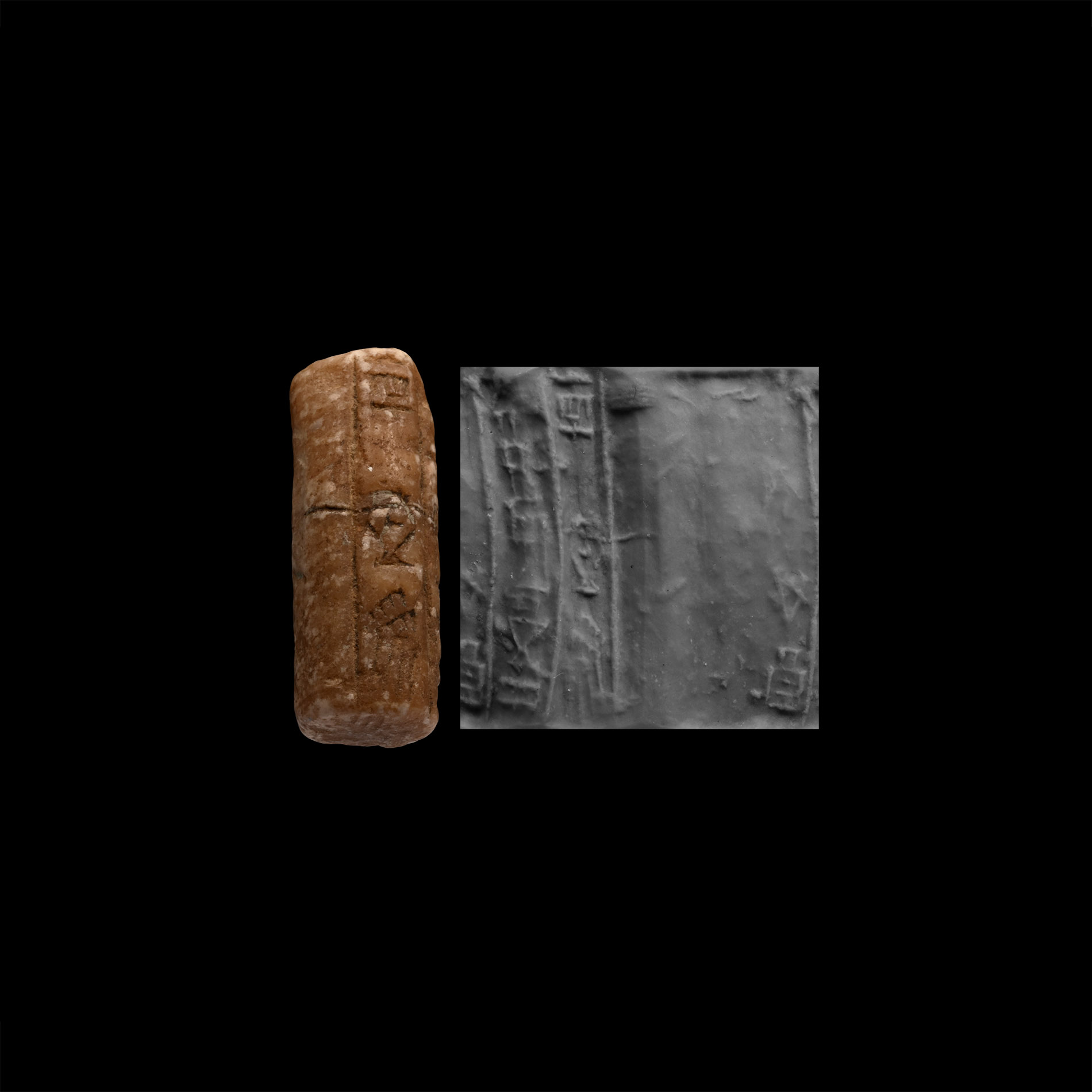
Western Asiatic Stone Cylinder Seal Trial Piece
2ND-1ST MILLENNIUM B.C. OR LATER
1 1/8 in. (6.06 grams, 30 mm).
Steatite or talc with two columns of cuneiform text, un-drilled: -num, son of Ad-da-al(?)-a/za(?); possibly unfinished. [No Reserve]
ProvenanceAcquired 1970s-1996.
Property of a North American collector, collection no.083.
London collection, 2016.
See Teissier, B., Ancient Near Eastern Cylinder Seals in the Marcopoli Collection, Berkeley, 1984, for discussion.
CONDITIONTimeLine Auctions follows a vetting process to ensure the authenticity and legality of all items, reinforcing our commitment to integrity and responsible trading. Each antiquity, antique, and coin lot undergoes thorough examination by a vetting committee of at least ten external specialists, professional trade association members, scientists, and archaeologists: Our Vetting Process
AUCTIONS:
TimeLine is a leading auction house specialising in antiquities, ancient art, collectables, natural history, coins, medals, and books. Our auctions offer museums, collectors, historians, and enthusiasts the opportunity to acquire unique and historically significant pieces.
-
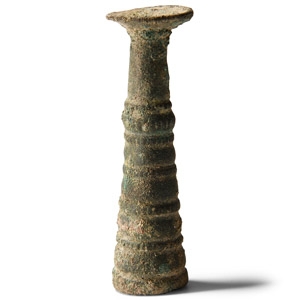
Luristan Bronze Kohl Pot
1st millennium B.C.Estimate: £180 - 240 (‡+bp*)
Opening Bid: £90
Of tapering cylindrical form with everted rim, decoratively notched ribs of alternating breadth to to body. 60 grams, 78 mm
Acquired in Europe before 1993. -
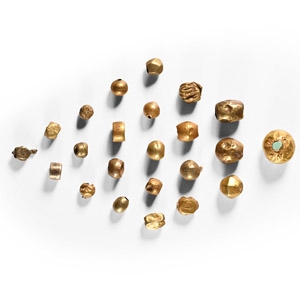
Western Asiatic Gold Bead Group
2nd-1st millennium B.C.Estimate: £500 - 700 (+bp*)
Opening Bid: £250
Including spherical, biconical, barrel-shaped and other types, 7.98 grams total, 5-12 mm
Ex property of a late Japanese collector, 1970s-2000s. -

Western Asiatic Stone and Shell Bead Necklace
Circa 1st millennium B.C. and laterSold for (Inc. bp): £20
Composed mainly of cream-coloured restrung stone and shell beads of amorphous, annular, spherical, barrel-shaped and other types. 19.3 grams, 48 cm long
UK gallery, early 2000s.
Similar beads were found during the excavations of the royal tombs of Nimrud. Thousands of beads were discovered in the sarcophagi, including those of Nimrud’s Queens; they probably originally formed part of wide collars with multiple strands.
