
Loading, please wait...
LOT 0271
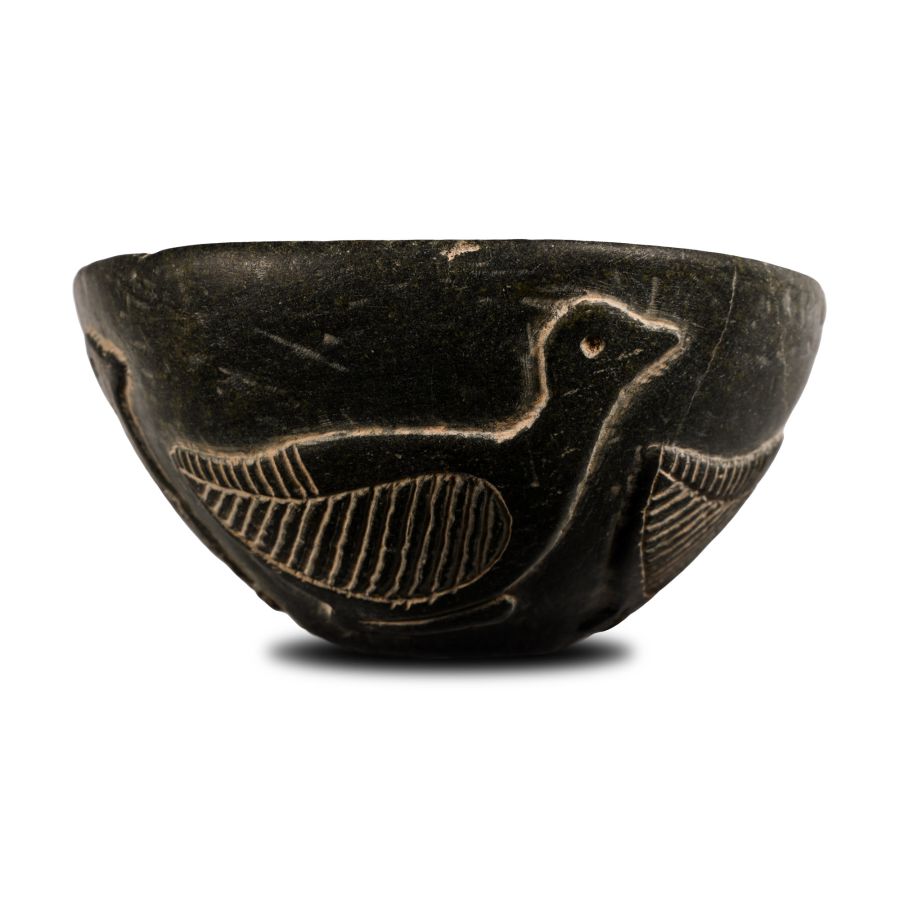
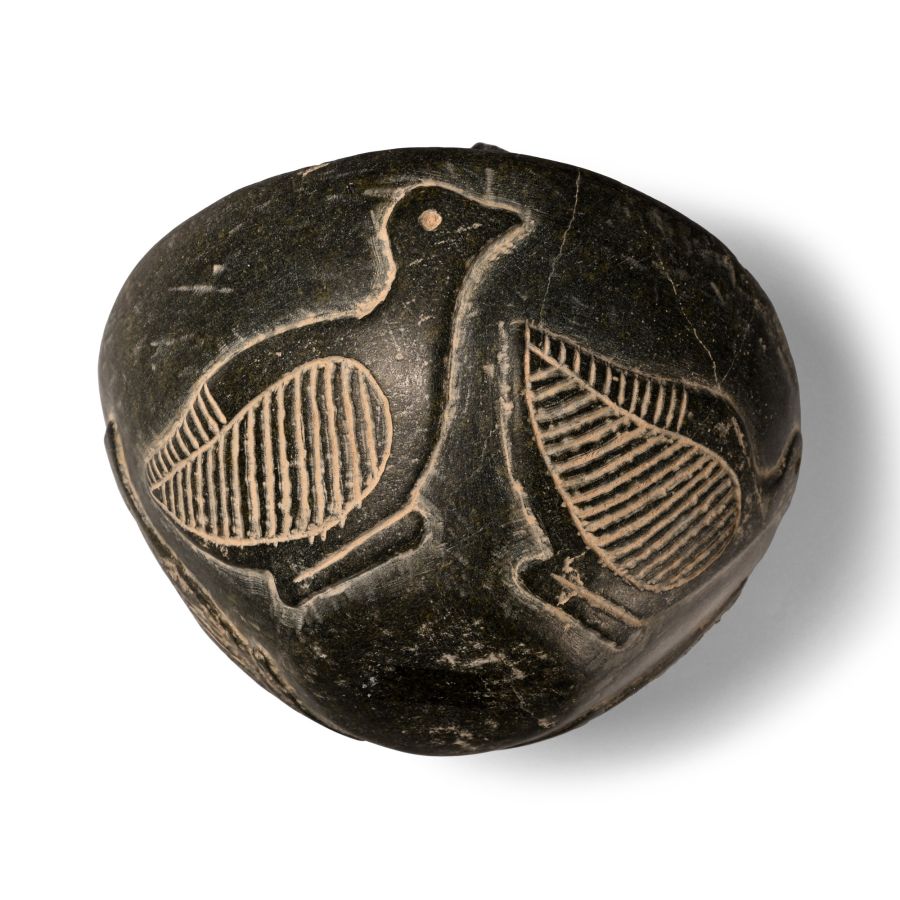
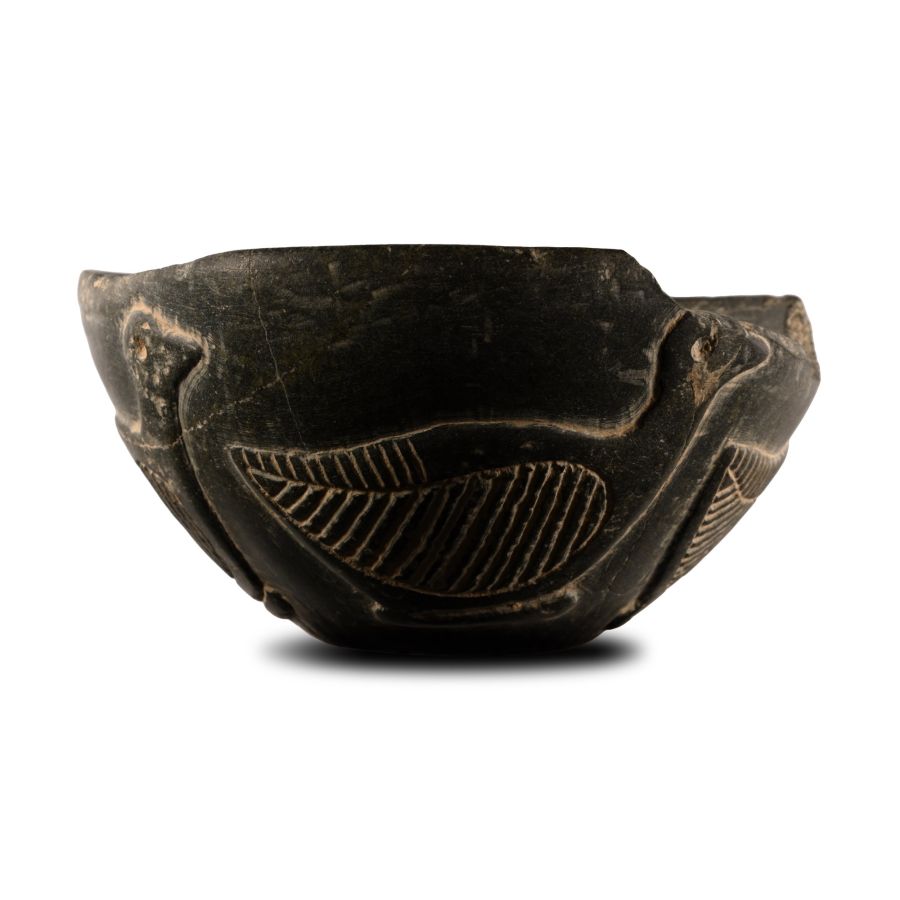
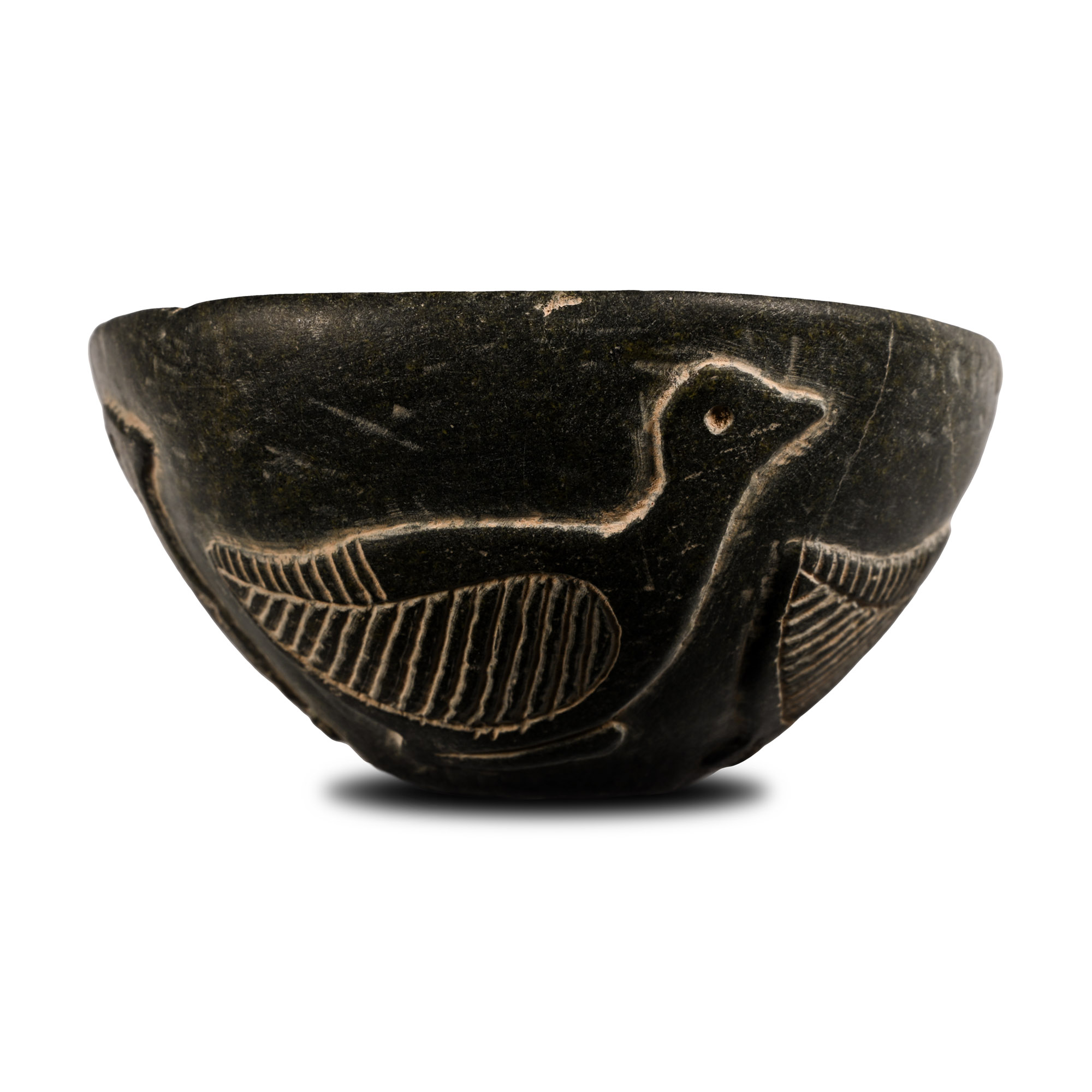
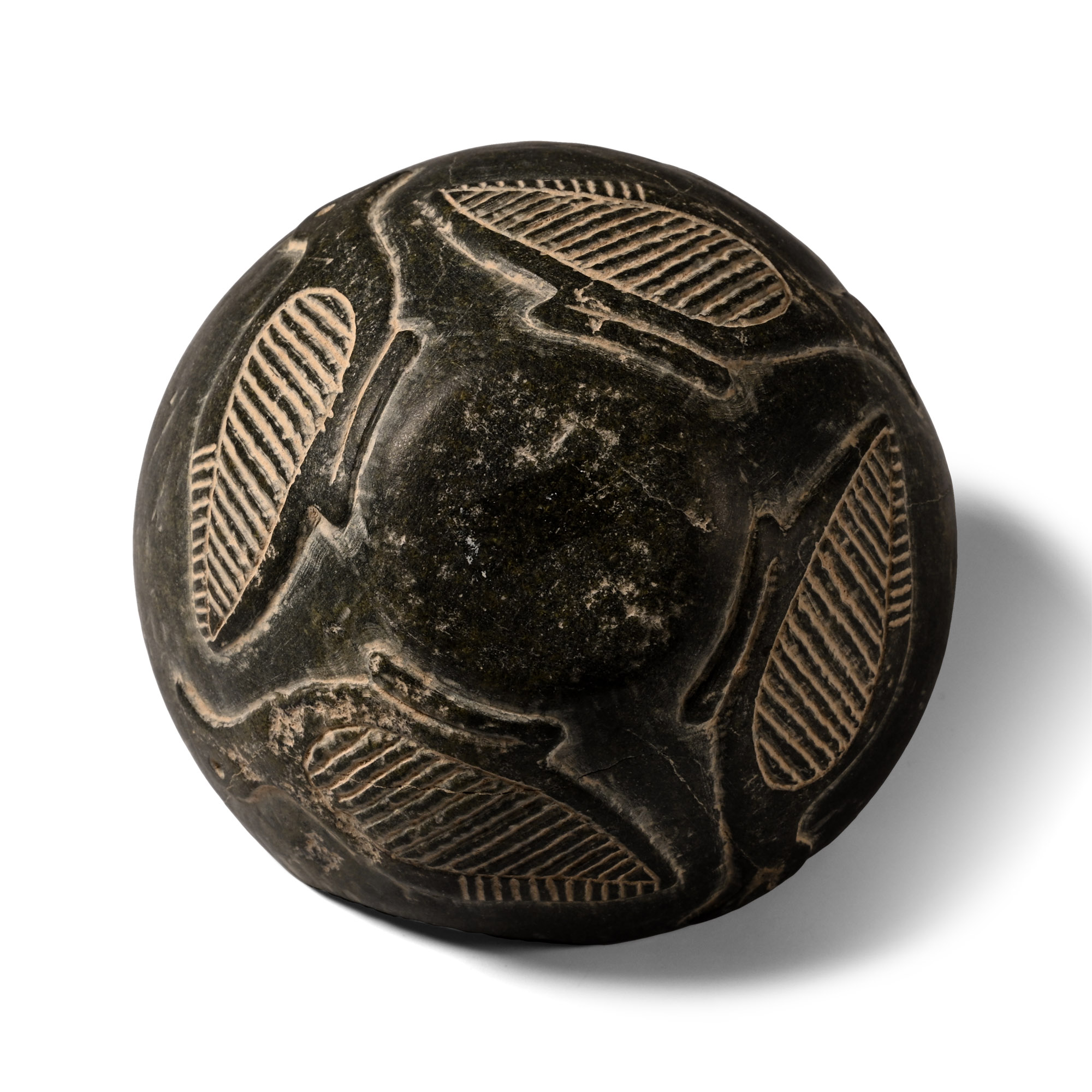
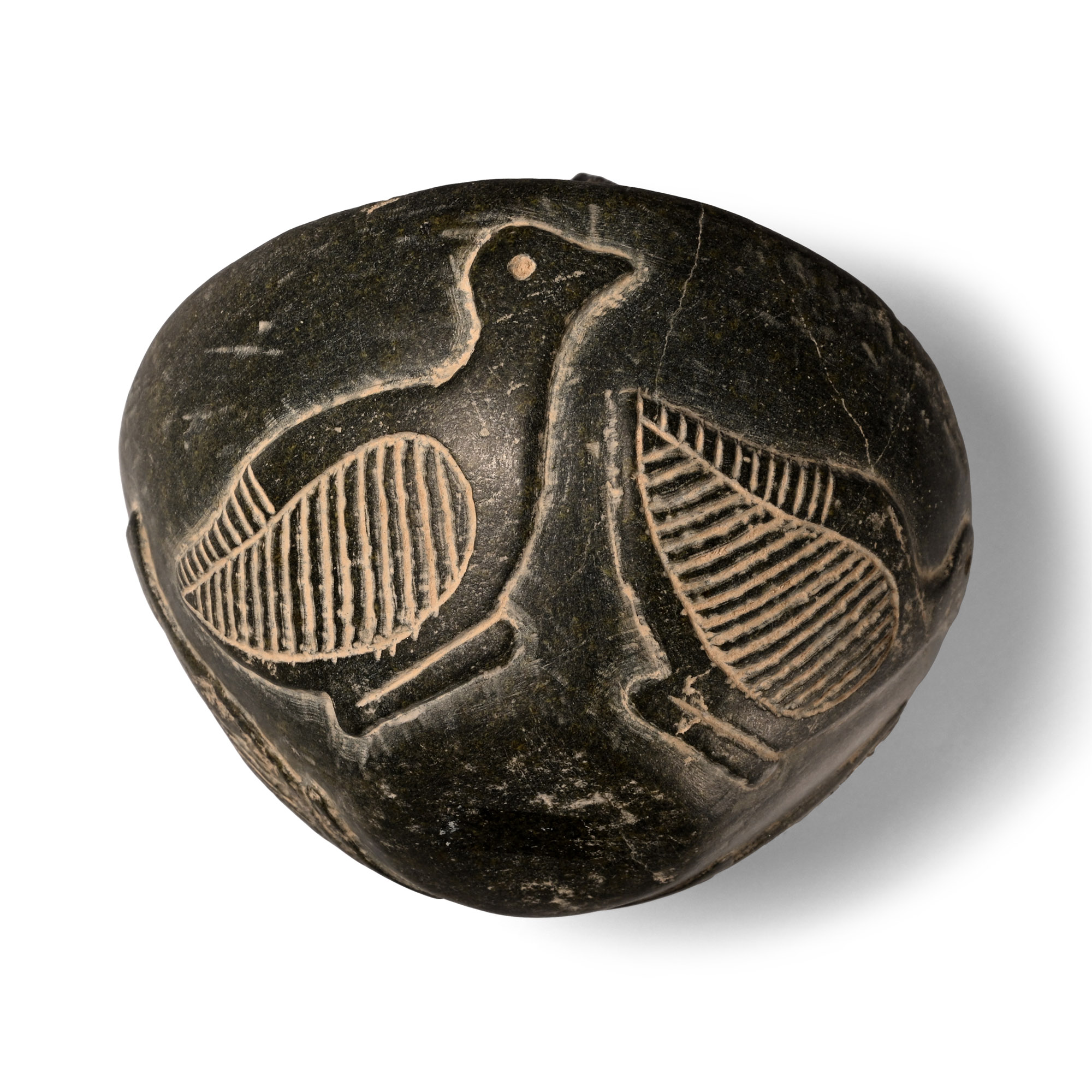
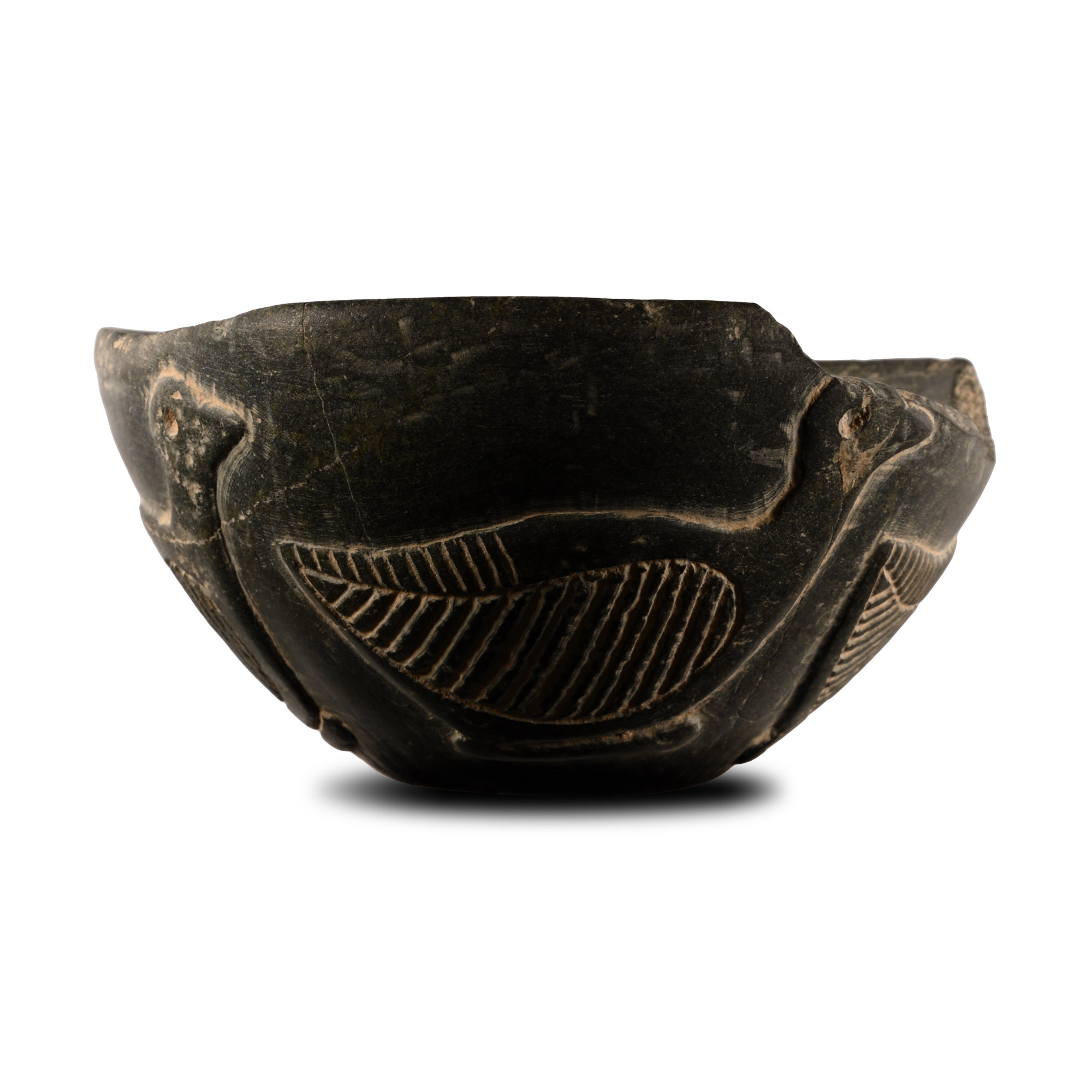
Western Asiatic Stone Bowl with Birds
3RD MILLENNIUM B.C.
4 3/8 in. (273 grams, 11.2 cm).
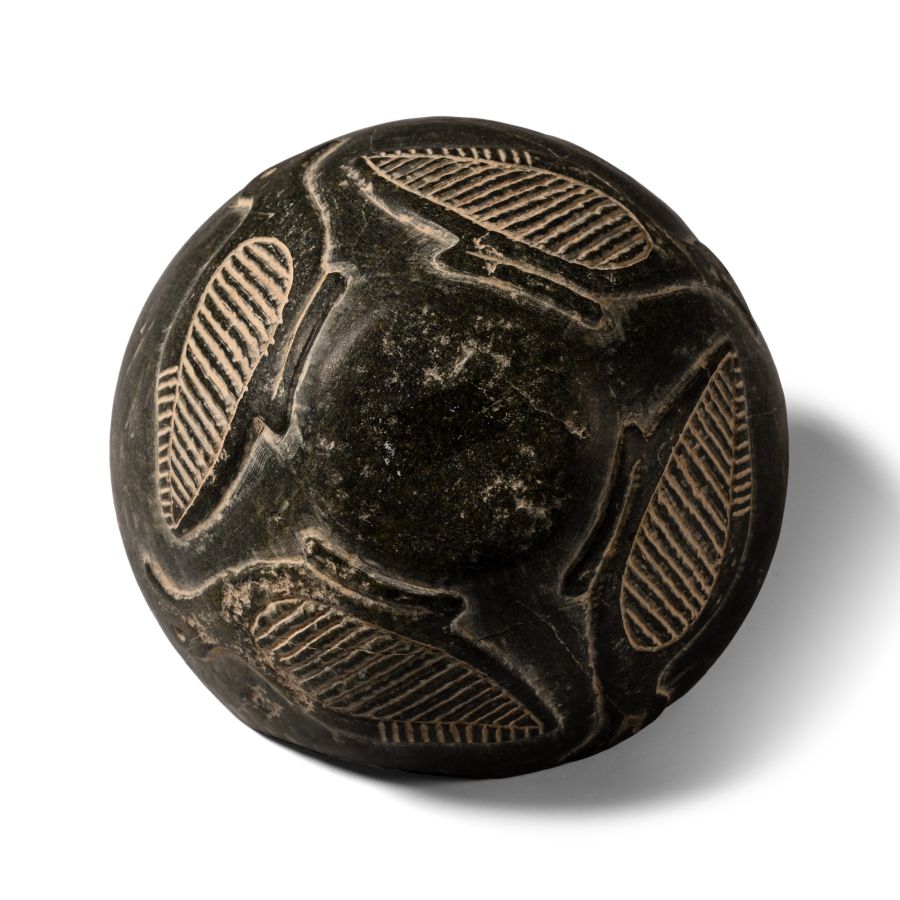
Hemispherical in profile with narrow rim, frieze of perching birds in relief, each with a pellet eye, stub beak, large comma-shaped hatched wing and leg held horizontally beneath the body; rim chipped.
Provenancewith Holy Lands House, Israel, 1960s.
Private collection, 2005.
This lot has been checked against the Interpol Database of stolen works of art and is accompanied by a search certificate no.12595-232195.
This lot has been cleared against the Art Loss Register database, and is accompanied by an illustrated lot declaration signed by the Head of the Antiquities Department, Dr Raffaele D'Amato.
Cf. Salvatori, S., ‘Early Bactrian Objects in private collections’ in Ligabue, G., and Salvatori, S., Bactria. An Ancient Oasis from the Sands of Afghanistan, Venice, 1988, pp.181-7, fig.84, for vessels with figures of animals in the same style, and 90, for a bird in similar style engraved on metal.
FootnotesThe chlorite stone vessels of early Bactria were kidney-shaped vessels with simple geometric decoration or, like our specimen, semi-circular. Small cylindrical vases were used as cosmetic containers, together with chlorite cosmetic flasks.
CONDITIONTimeLine Auctions follows a vetting process to ensure the authenticity and legality of all items, reinforcing our commitment to integrity and responsible trading. Each antiquity, antique, and coin lot undergoes thorough examination by a vetting committee of at least ten external specialists, professional trade association members, scientists, and archaeologists: Our Vetting Process
AUCTIONS:
TimeLine is a leading auction house specialising in antiquities, ancient art, collectables, natural history, coins, medals, and books. Our auctions offer museums, collectors, historians, and enthusiasts the opportunity to acquire unique and historically significant pieces.
LOT 0271
Western Asiatic Stone Bowl with Birds
Estimate £4,000 - 6,000€4,640 - 6,960 (for guidance only)$5,400 - 8,100 (for guidance only)
-
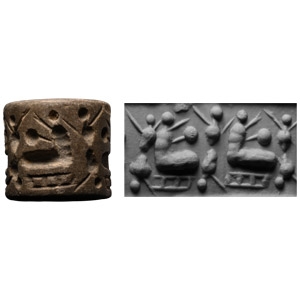
Jemdet Nasr Type Cylinder Seal with Figures
3rd millennium B.C.Sold for (Inc. bp): £390
Drum-shaped with drilled frieze of scenes depicting a seated figure on a segmented seat; supplied with a museum-quality impression. 27.4 grams, 23 mm
From the 'S' collection, acquired 1970-1990s. The collection was seen and studied by W.G. Lambert, late Professor of Assyriology at the University of Birmingham, 1970-1993. This lot has been cleared against the Art Loss Register database, and is accompanied by an illustrated lot declaration signed by the Head of the Antiquities Department, Dr Raffaele D'Amato. -
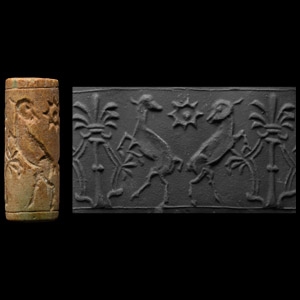
Eastern Syrian Faience Cylinder Seal with Worship Scenes
Circa 800-600 B.C.Sold for (Inc. bp): £650
Accompanied by a copy of an old scholarly note, hand written and signed by W.G. Lambert, late Professor of Assyriology, University of Birmingham, 1970-1993, which states: 'Cylinder seal of Green faience, 36x15mm. The design shows a stylized sacred tree and a reared up kid on either side. A stylized solar disc serves as a terminal. This seal is to be dated c. 800-600 B.C. and comes from Mesopotamia or Eastern Syria. For faience it is a large seal in good condition.'; supplied with a museum-quality impression. 13.5 grams, 36 mm
From the private collection of a North American lady, formed 1970s-early 1990s, with collection reference no.P38. Accompanied by a copy of a scholarly note, hand written and signed by Professor Wilfrid George Lambert dated December 1990. This lot has been cleared against the Art Loss Register database, and is accompanied by an illustrated lot declaration signed by the Head of the Antiquities Department, Dr Raffaele D'Amato. -
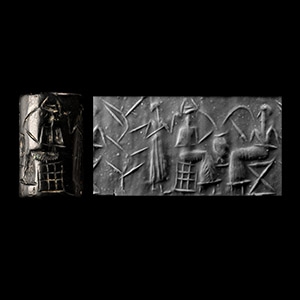
Old Akkadian Cylinder Seal with Drinking Scene
Circa 2300-2200 B.C.Sold for (Inc. bp): £1,300
Cylinder with cord and bead handles; accompanied by a copy of an old scholarly note, typed and signed by W.G. Lambert, late Professor of Assyriology, University of Birmingham, 1970-1993, which states: 'Cylinder Seal of Black Stone, 31 x 19 mm. The scene consist of three figures: on the left is a god, marked out by his horned tiara, and sitting on an angular stool generally thought to represent a temple facade. Facing him is a human seated on a more practical seat, with crossing legs. Each holds a straw to a pot in the middle, from which they are or will be drinking. Behind the god stands an attendant with one hand raised. For a terminal there is a stylised tree. This is an old Akkadian drinking scene, c. 2300-2200 B.C., from Mesopotamia or south-west Iran. It is an important example because normally both figures look either divine or human, but here one, is clearly divine and the other human. The drink in the pot is beer, and straws were used because it was not strained, and all the husks of the barley were in the liquid, and were strained out by the straws.'; supplied with a museum-quality impression. 22.5 grams, 31 mm
UK private collection, acquired 1980-1983. Accompanied by a copy of a scholarly note, typed and signed by Professor Wilfrid George Lambert in January 1992. This lot has been cleared against the Art Loss Register database, and is accompanied by an illustrated lot declaration signed by the Head of the Antiquities Department, Dr Raffaele D'Amato.
