
Loading, please wait...
LOT 1161
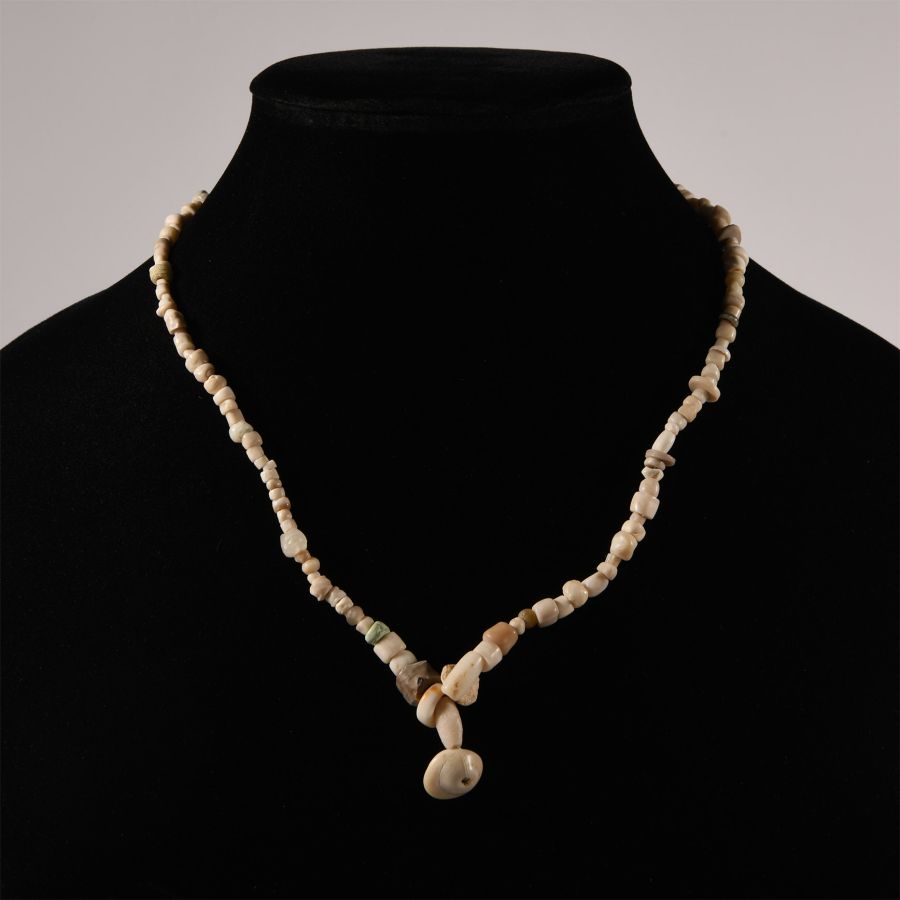
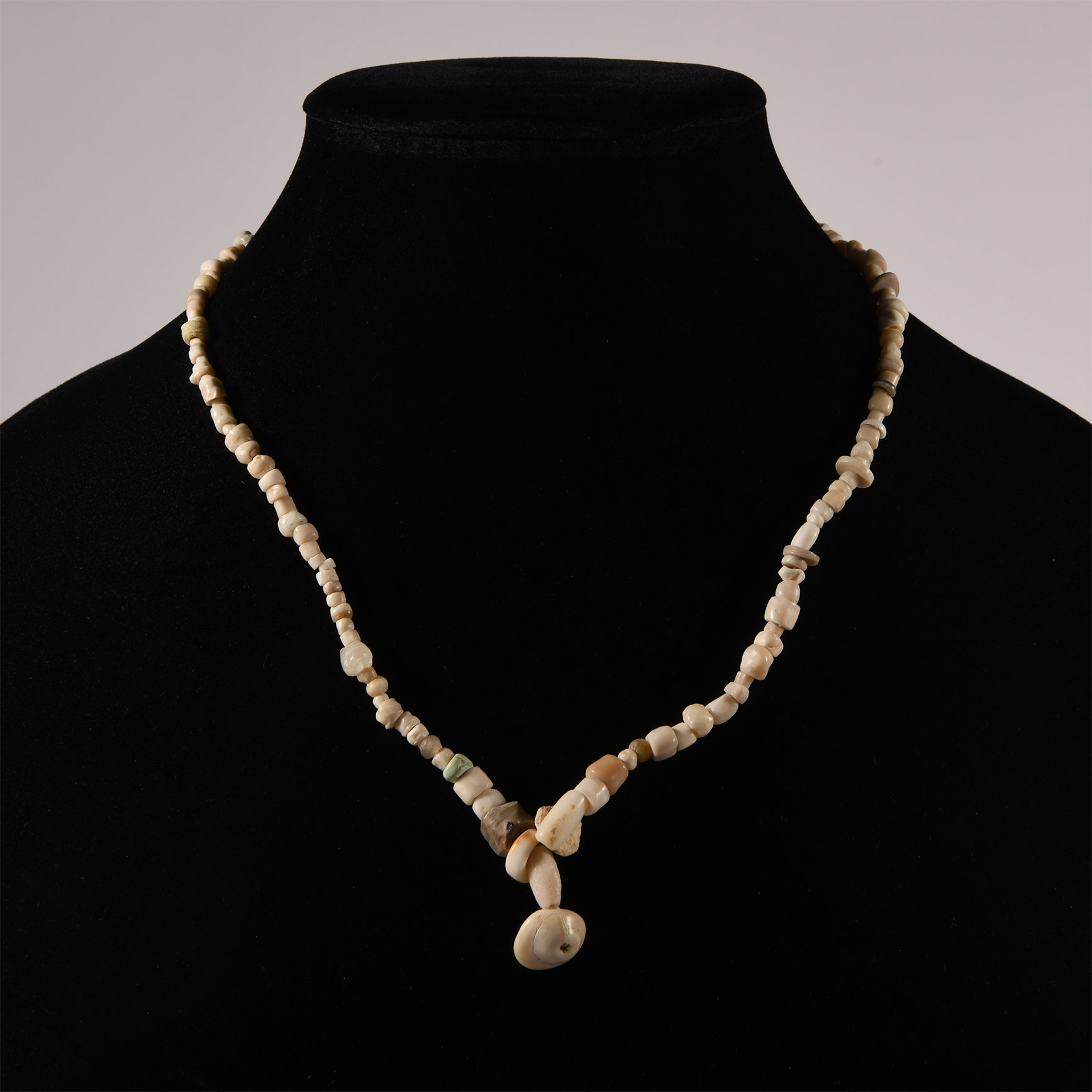
Western Asiatic Stone and Shell Bead Necklace
CIRCA 1ST MILLENNIUM B.C. AND LATER
18 1/8 in. (19.3 grams, 48 cm long).
Composed mainly of cream-coloured restrung stone and shell beads of amorphous, annular, spherical, barrel-shaped and other types. [No Reserve]
ProvenanceUK gallery, early 2000s.
LiteratureCf. Hussein, M.M., Altaweel, M., Gibson, McGuire, Nimrud The Queen’s Tombs, Baghdad-Chicago, 2016, pl.163, for similar necklaces of stone.
FootnotesSimilar beads were found during the excavations of the royal tombs of Nimrud. Thousands of beads were discovered in the sarcophagi, including those of Nimrud’s Queens; they probably originally formed part of wide collars with multiple strands.
CONDITIONTimeLine Auctions follows a vetting process to ensure the authenticity and legality of all items, reinforcing our commitment to integrity and responsible trading. Each antiquity, antique, and coin lot undergoes thorough examination by a vetting committee of at least ten external specialists, professional trade association members, scientists, and archaeologists: Our Vetting Process
AUCTIONS:
TimeLine is a leading auction house specialising in antiquities, ancient art, collectables, natural history, coins, medals, and books. Our auctions offer museums, collectors, historians, and enthusiasts the opportunity to acquire unique and historically significant pieces.
-
Quran Manuscript Two-Page Spread
18th-19th century A.D.Sold for (Inc. bp): £20
Loose paper pages with handwritten text in Naskh script, thirteen lines of text to each side, red and blue inked rings as punctuation, decorative side-panel with perpendicular text; torn at the central fold, edges chipped. 11 grams, 34.5 x 43 cm
From the private collection of M. Cummings, Lincolnshire, UK, 1990s. -
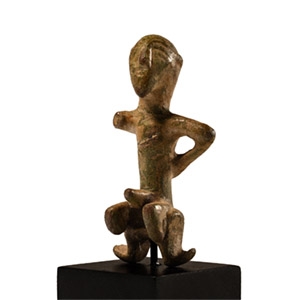
Western Asiatic Bronze Sitting Statuette of a Demon
1st millennium B.C.Sold for (Inc. bp): £1,105
Modelled sitting erect with left hand placed flat against his back; triangular head with low-relief eyes and mouth, knop ears and pointed chin; seated with erect penis on a low stool with everted feet; mounted on a custom-made stand. 77.3 grams total, 76 mm including stand
From a collection acquired on the UK art market from various auction houses and collections mostly before 2000. From an important Cambridgeshire estate; thence by descent. -
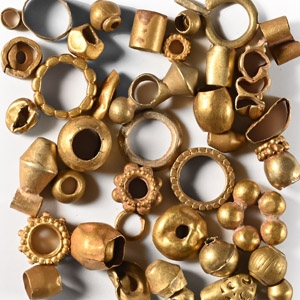
Western Asiatic Gold Bead Group
1st millennium B.C.Sold for (Inc. bp): £572
Including biconvex, annular, spherical and other types, some with granulation. 7.31 grams total, 1-10 mm
Ex property of a late Japanese collector, 1970s-2000s.
