
Loading, please wait...
LOT 0297
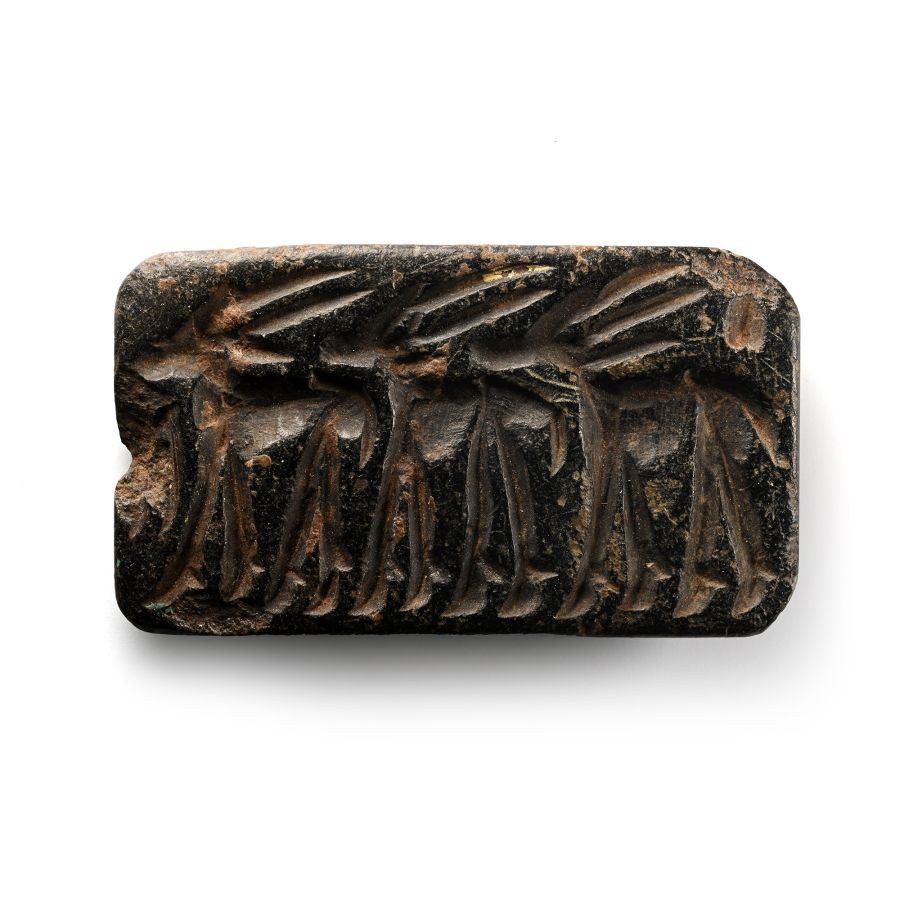
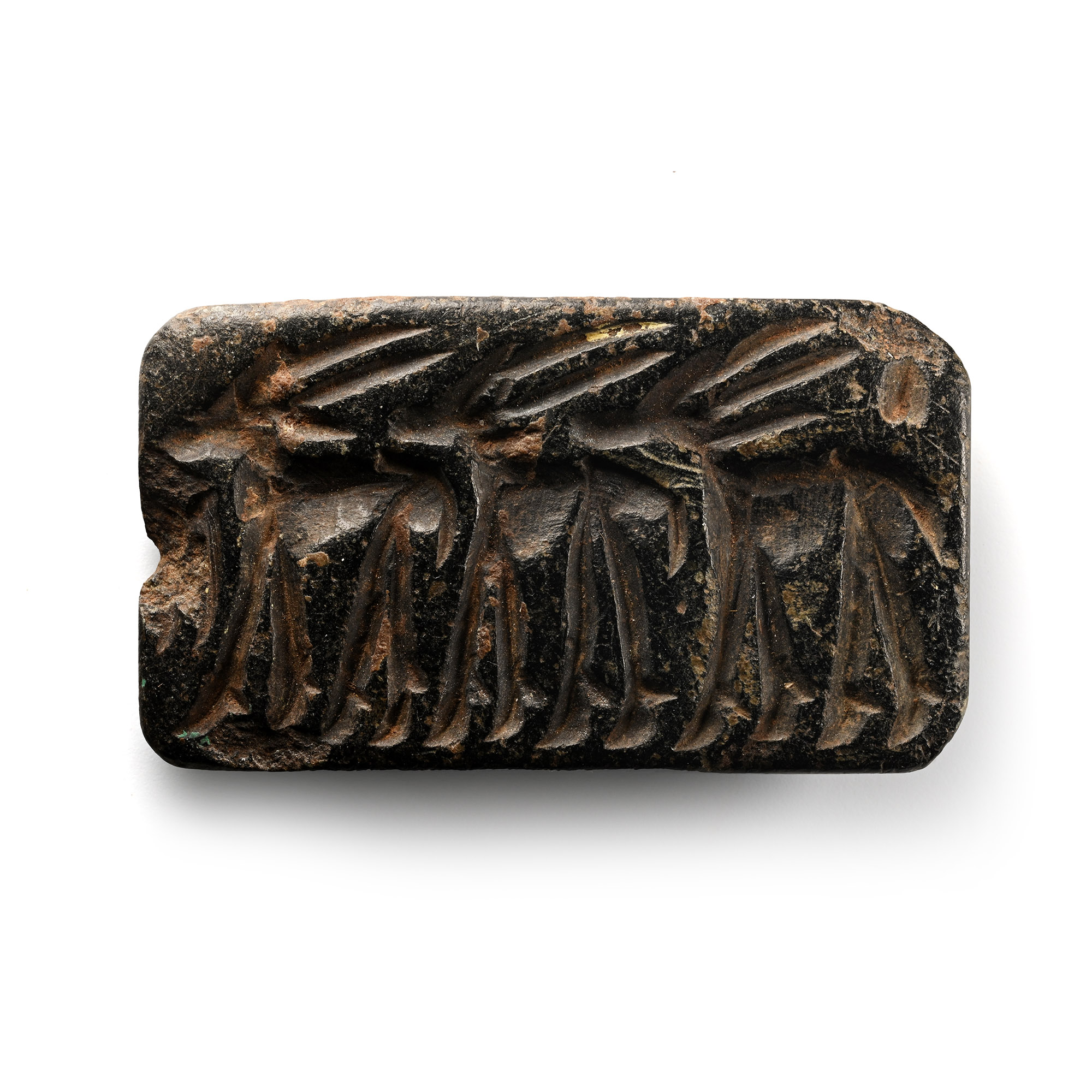
Western Asiatic Steatite Seal with Animals
3300-3000 B.C.
2 3/8 in. (38.9 grams, 61 mm).
Rectangular in plan and triangular in section with median hole, flat face with incuse frieze of ibexes.
ProvenanceAcquired in the mid 1980s-1990s.
Private collection, Switzerland, thence by descent.
Private collection, since the late 1990s.
This lot has been cleared against the Art Loss Register database, and is accompanied by an illustrated lot declaration signed by the Head of the Antiquities Department, Dr Raffaele D'Amato.
TimeLine Auctions follows a vetting process to ensure the authenticity and legality of all items, reinforcing our commitment to integrity and responsible trading. Each antiquity, antique, and coin lot undergoes thorough examination by a vetting committee of at least ten external specialists, professional trade association members, scientists, and archaeologists: Our Vetting Process
AUCTIONS:
TimeLine is a leading auction house specialising in antiquities, ancient art, collectables, natural history, coins, medals, and books. Our auctions offer museums, collectors, historians, and enthusiasts the opportunity to acquire unique and historically significant pieces.
LOT 0297
Western Asiatic Steatite Seal with Animals
Estimate £800 - 1,000€930 - 1,160 (for guidance only)$1,080 - 1,350 (for guidance only)
-
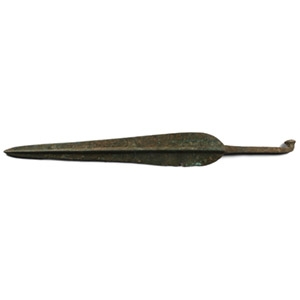
Luristan Bronze Spearhead
Early 2nd millennium B.C.Sold for (Inc. bp): £117
Leaf-shaped blade with a raised midrib, rectangular-section tang bent to a right-angle with a knop to the end. 243 grams, 34 cm
Ex London art market, 1980-1990s. This lot has been cleared against the Art Loss Register database, and is accompanied by an illustrated lot declaration signed by the Head of the Antiquities Department, Dr Raffaele D'Amato.
A number of similar blades, some considered to be spearheads and others to be daggers, all with bent tang, derived from Tepe Hissar Culture III. Some of them, like our specimen, have a button terminal, some others have a plain, pointed terminal. The general dating of these specimens is fixed to the early 2nd millennium B.C. -
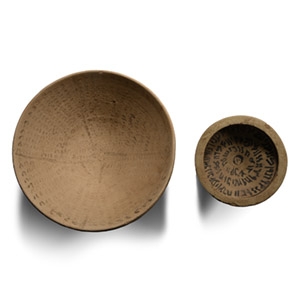
Aramaic Magic Bowl Group
4th-8th century A.D. and laterEstimate: £500 - 700 (+bp*)
Opening Bid: £250
Comprising: large domed vessel with rounded rim and four painted segments each with repeated symbols; plus a smaller non ancient conical vessel with inturned rim, painted legend in three concentric rings and symbol to centre. 388 grams total, 9.1-16.5 cm
Acquired on the German art market, 1989-1995. with The Museum Gallery, 19 Bury Place, London, WC1, UK, 1998-2003. Property of a London based academic, 2003-present. This lot has been cleared against the Art Loss Register database, and is accompanied by an illustrated lot declaration signed by the Head of the Antiquities Department, Dr Raffaele D'Amato.
These simple ceramic bowls, also known as magic bowls, each contain an Aramaic inscription, written in ink, which spirals from the centre. The bowls seem to have played an important part in domestic life. For example, during excavation in Nippur in 1889, one or more incantation bowls were found in each house together with domestic artefacts, most often in doorways or under floorboards in the corner of rooms. The bowls are predominantly apotropaic, and the inscriptions tend to protect their owners from misfortunes such as those faced in child-birth, illness and evil spirits. -
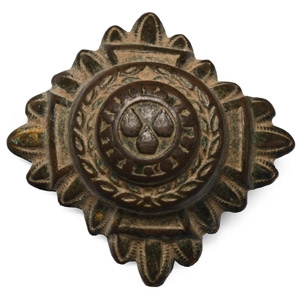
Western Asiatic Bronze Mount
19th-20th century A.D.Sold for (Inc. bp): £7
Square in plan with tiered profile, central rosette in a wreath with radiating leaves; two loops to reverse. 4.27 grams, 23 mm
Acquired before 1983. Ex London gallery, 1990s. This lot has been cleared against the Art Loss Register database, and is accompanied by an illustrated lot declaration signed by the Head of the Antiquities Department, Dr Raffaele D'Amato.
