
Loading, please wait...
_900x900.jpg "Western Asiatic Silver Signet Ring with Gryphon")
_200x200.jpg "Western Asiatic Silver Signet Ring with Gryphon")
.jpg "Western Asiatic Silver Signet Ring with Gryphon")
LOT 1298
Western Asiatic Silver Signet Ring with Gryphon
3RD-2ND CENTURY B.C.
3/4 in. (5.42 grams, 21.89 mm overall, 17.64 mm internal diameter (approximate size British K 1/2, USA 5 1/2, Europe 10.58, Japan 10)).
Barrel-shaped hoop with ellipsoid bezel, incuse gryphon standing in profile; Eastern Greek. [No Reserve]
ProvenanceUK private collection before 2000.
Acquired on the UK art market.
Property of a London gentleman.
TimeLine Auctions follows a vetting process to ensure the authenticity and legality of all items, reinforcing our commitment to integrity and responsible trading. Each antiquity, antique, and coin lot undergoes thorough examination by a vetting committee of at least ten external specialists, professional trade association members, scientists, and archaeologists: Our Vetting Process
AUCTIONS:
TimeLine is a leading auction house specialising in antiquities, ancient art, collectables, natural history, coins, medals, and books. Our auctions offer museums, collectors, historians, and enthusiasts the opportunity to acquire unique and historically significant pieces.
-
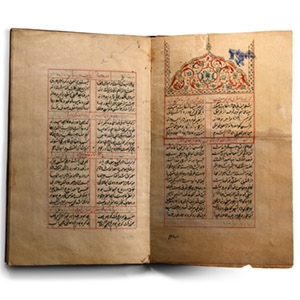
Islamic Leather Bound Manuscript, Allibab al Maenari by the Philosopher Hussain bin Ali Al-Kashif Al-Baihaqi
18th century A.D.Estimate: £1,000 - 1,400 (+bp*)
Opening Bid: £500
Rebound as a hardback with full leather binding, central arabesque foliage panel to covers; 16 laid-paper page; title page with rectangular-red-ink frame and title blocks and panels of naskh text below a triangular panel of scrolled foliage ornament; text pages with red-framed rectangular blocks of black-ink text with red headers, occasional marginal notation, disc stamps to first and last pages. 171 grams, 14 x 23 cm
From an important family collection started in the late 1950s. Property of a West London, UK, gentleman.
The text is the Book of Allibab al Maenari on Philosophy by the Philosopher Hussain bin Ali Al-Kashif Al-Baihaqi; once the property of Judge Ahmed Nazif in Belgrade in the 18th century A.D. -
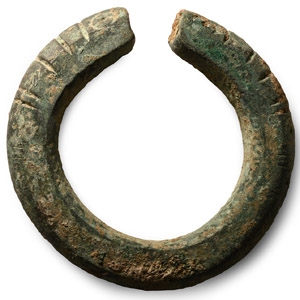
Luristan Bronze Snake-Headed Bracelet
13th-7th century B.C.Sold for (Inc. bp): £33
Substantial D-section hoop with hatching at the ends and incised ring-and-dot eyes. 282 grams, 78 mm
From a collection of a gentleman, acquired on the London art market in the 1990s. -
.jpg)
Mesopotamian Round School Cuneiform Tablet
3rd-2nd millennium B.C.Sold for (Inc. bp): £182
Domed underside with cuneiform text to the upper face; chipped. 114 grams, 70 mm
Specialised collection of cuneiform texts, the property of a London gentleman and housed in London before 1992. Thence by descent to family members. Examined by Professor Wilfrid George Lambert FBA (1926-2011), historian, archaeologist, and specialist in Assyriology and Near Eastern archaeology, in the late 1980s and early 1990s. This small collection is exceptional for the variety of types, including some very rare and well preserved examples.
