
Loading, please wait...
LOT 1137
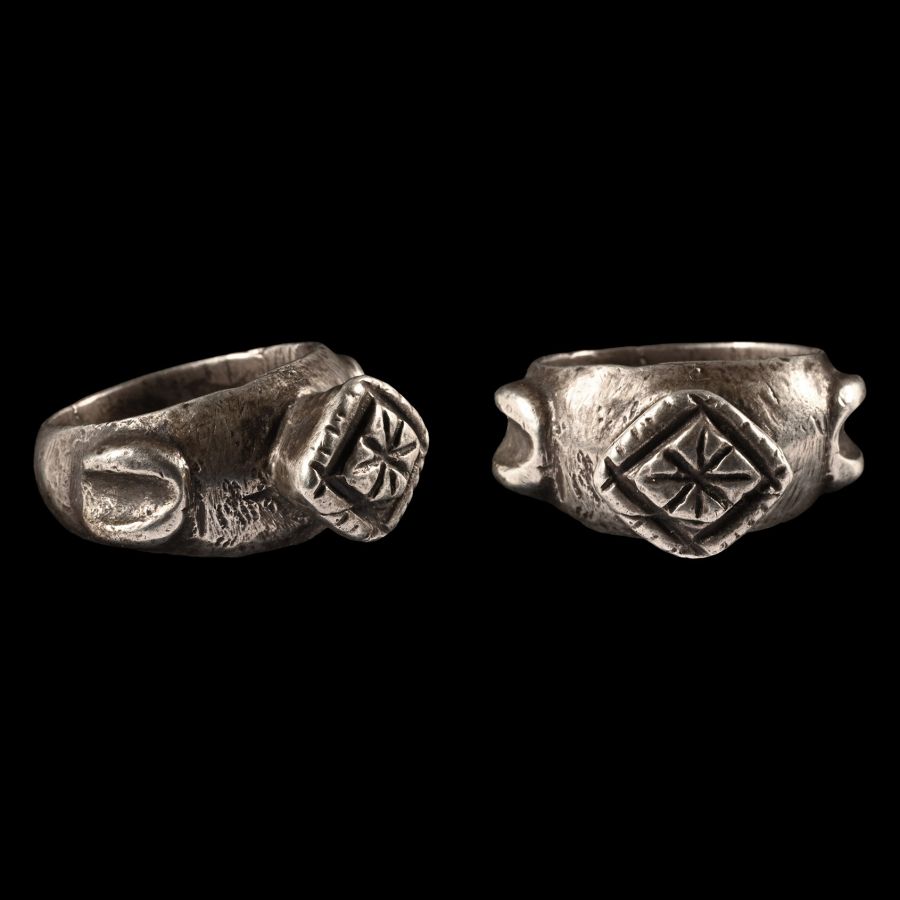
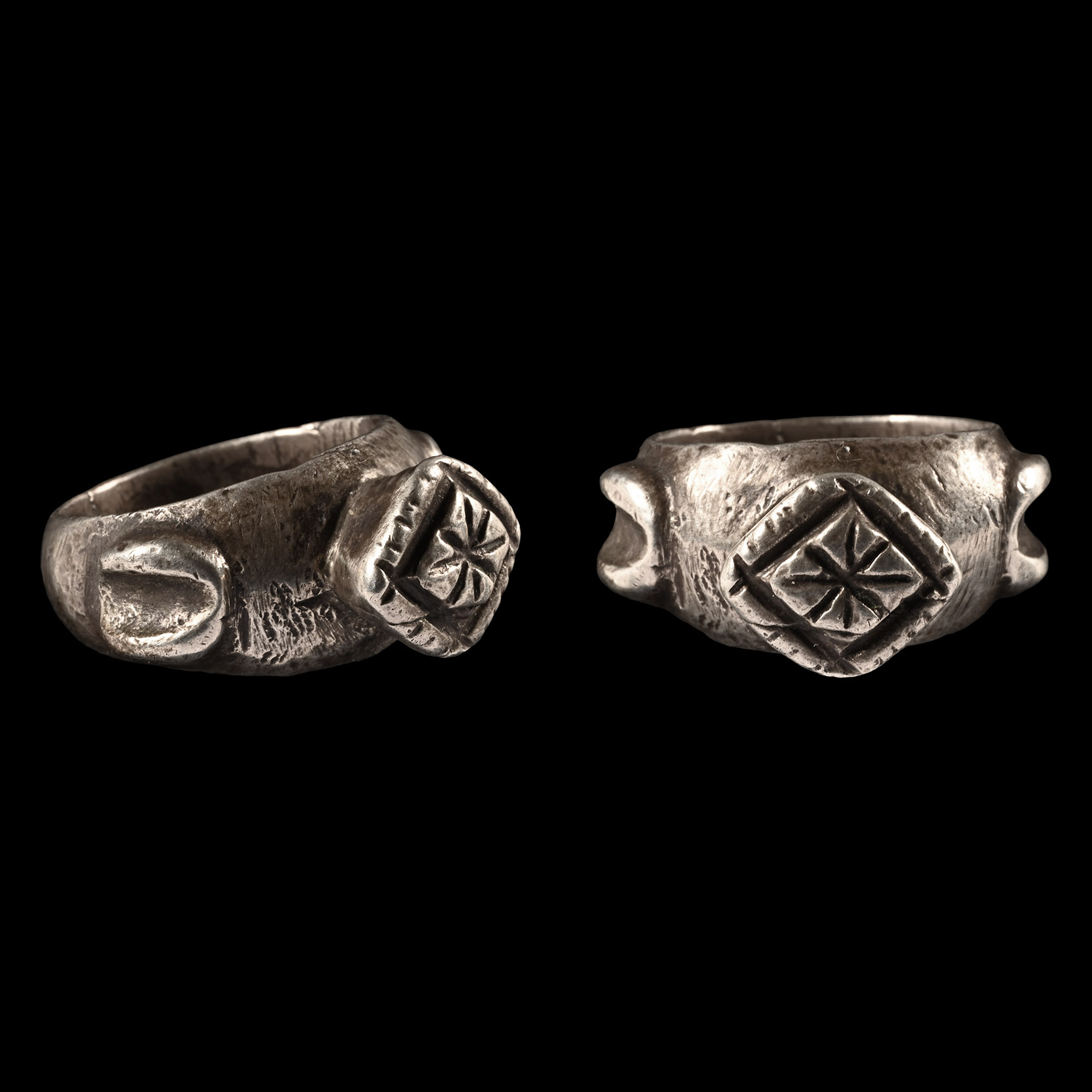
Western Asiatic Silver Ring with Quatrefoil Bezel
12TH-13TH CENTURY A.D.
1 7/8 in. (15.25 grams, 29.66 mm overall, 17.23 mm internal diameter (approximate size British O, USA 7, Europe 14.98, Japan 14)).
With a wide hoop, grooved plaque to each shoulder; raised quatrefoil bezel with ribbing, central starburst motif enclosed within a hatched frame. [No Reserve]
ProvenanceProperty of a North American gallery since the 1990s.
CONDITIONTimeLine Auctions follows a vetting process to ensure the authenticity and legality of all items, reinforcing our commitment to integrity and responsible trading. Each antiquity, antique, and coin lot undergoes thorough examination by a vetting committee of at least ten external specialists, professional trade association members, scientists, and archaeologists: Our Vetting Process
AUCTIONS:
TimeLine is a leading auction house specialising in antiquities, ancient art, collectables, natural history, coins, medals, and books. Our auctions offer museums, collectors, historians, and enthusiasts the opportunity to acquire unique and historically significant pieces.
-
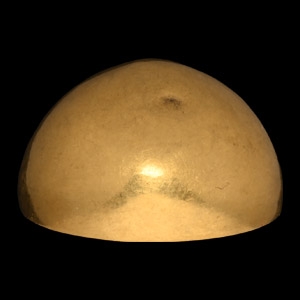
Western Asiatic Gold Bell-Shaped Pendant
Circa 1st millennium B.C.Estimate: £250 - 350 (+bp*)
Opening Bid: £125
Hemispherical with loop to the inner face to accept a clapper. 3.85 grams, 23 mm
From a late Japanese specialist collector, 1970-2000s. -
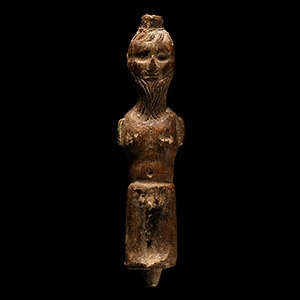
Western Asiatic Bone Bearded Figure
1st millennium B.C.Sold for (Inc. bp): £117
Carved in the round with sockets to the eyes, drilled ears, wavy beard descending to the chest; genitals and stub legs; peg to top of head and another beneath feet, square panels at the arms; possibly a votive, or one element from a larger frieze. 7.37 grams, 59 mm
From the collection of a London antiquarian, 1980s. -
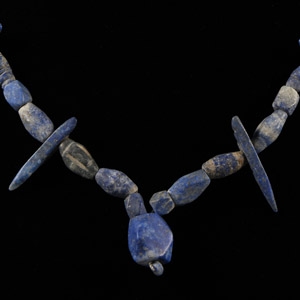
Bactrian Style Lapis Lazuli Bead Necklace
20th century A.D.Sold for (Inc. bp): £72
Mainly tubular, square-section and fusiform types. 30 grams, 41 cm
Acquired 1980-2015. Ex Abelita family collection.
