
Loading, please wait...
LOT 1112
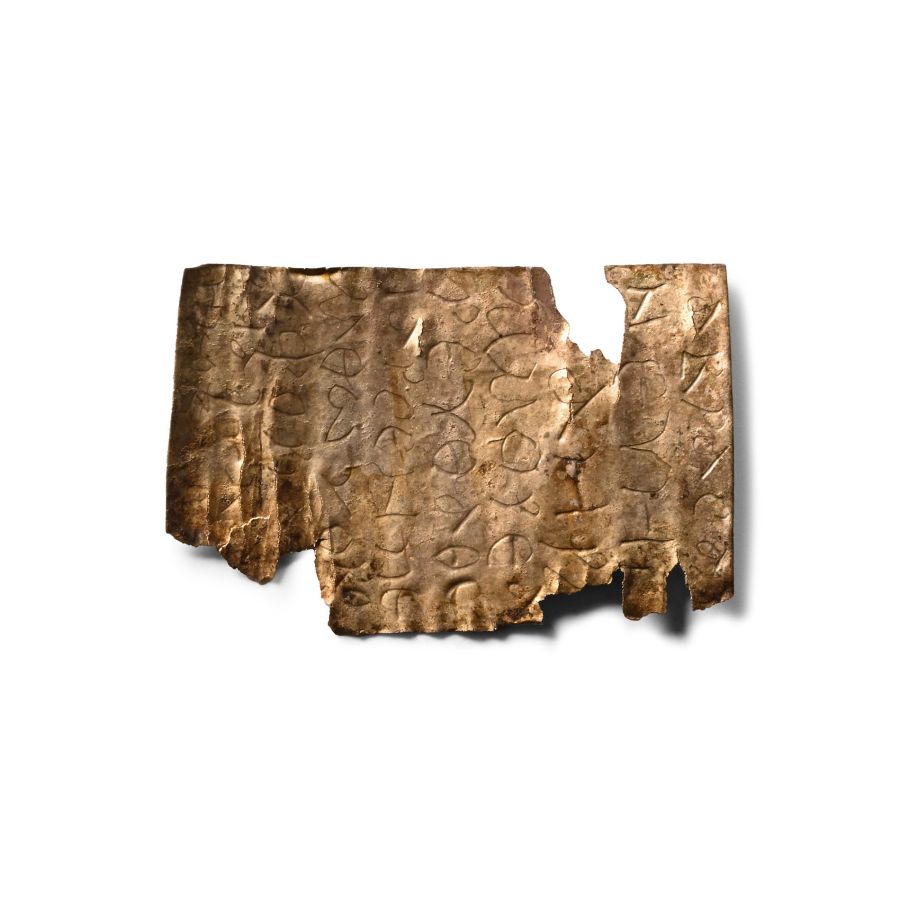
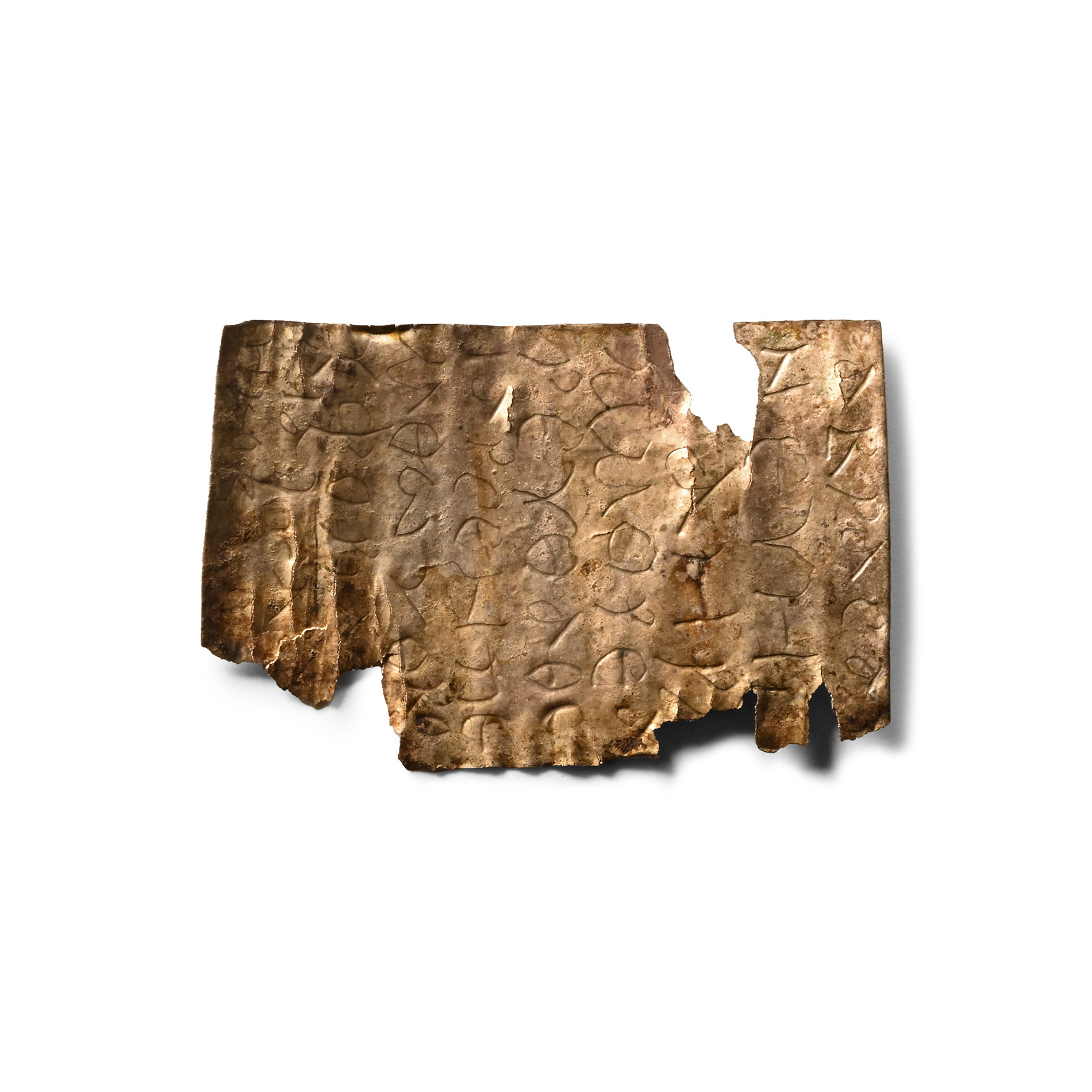
Western Asiatic Silver Magical Scroll with Greek Inscription
CIRCA 2ND-8TH CENTURY A.D.
1 5/8 in. (1.58 grams, 41 mm).
Sheet-silver rectangle with lightly incised enigmatic Greek-script text in nine lines.
ProvenanceFrom the collection of a gentleman, acquired on the London art market in the 1990s.
CONDITIONTimeLine Auctions follows a vetting process to ensure the authenticity and legality of all items, reinforcing our commitment to integrity and responsible trading. Each antiquity, antique, and coin lot undergoes thorough examination by a vetting committee of at least ten external specialists, professional trade association members, scientists, and archaeologists: Our Vetting Process
AUCTIONS:
TimeLine is a leading auction house specialising in antiquities, ancient art, collectables, natural history, coins, medals, and books. Our auctions offer museums, collectors, historians, and enthusiasts the opportunity to acquire unique and historically significant pieces.
LOT 1112
Western Asiatic Silver Magical Scroll with Greek Inscription
Sold for (Inc. bp): £780
-
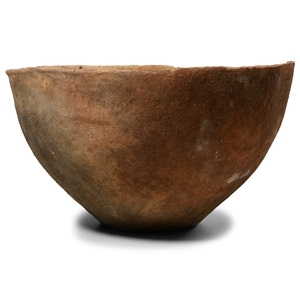
Trans Jordan Terracotta Bowl
Early Bronze Age I, 3rd millennium B.C.Sold for (Inc. bp): £39
Of squat profile with slightly chamfered rim. 1.06 kg, 21.5 cm wide
From an important collection of terracotta pre 1988, London and Geneva. -
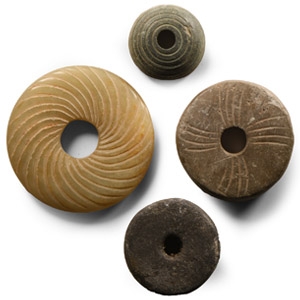
Western Asiatic Mixed Spindle Whorl Group
1st millennium B.C. and laterSold for (Inc. bp): £26
Including plano-onvex, oblate and other types. 113 grams total, 29-55 mm
From a collection acquired on the UK art market from various auction houses and collections mostly before 2000. From an important Cambridgeshire estate; thence by descent. -
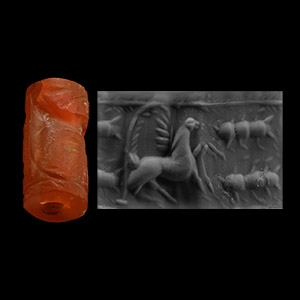
Mesopotamian Carnelian Cylinder Seal with Winged Horse
Circa 7th century B.C.Estimate: £400 - 600 (+bp*)
Opening Bid: £200
With intaglio frieze depicting a winged horse with one foreleg raised facing two smaller beasts among trees; supplied with a museum-quality impression. 1.81 grams, 16 mm
Ex London, UK, collection, before 1988. Accompanied by a previous catalogue information slip.
