
Loading, please wait...
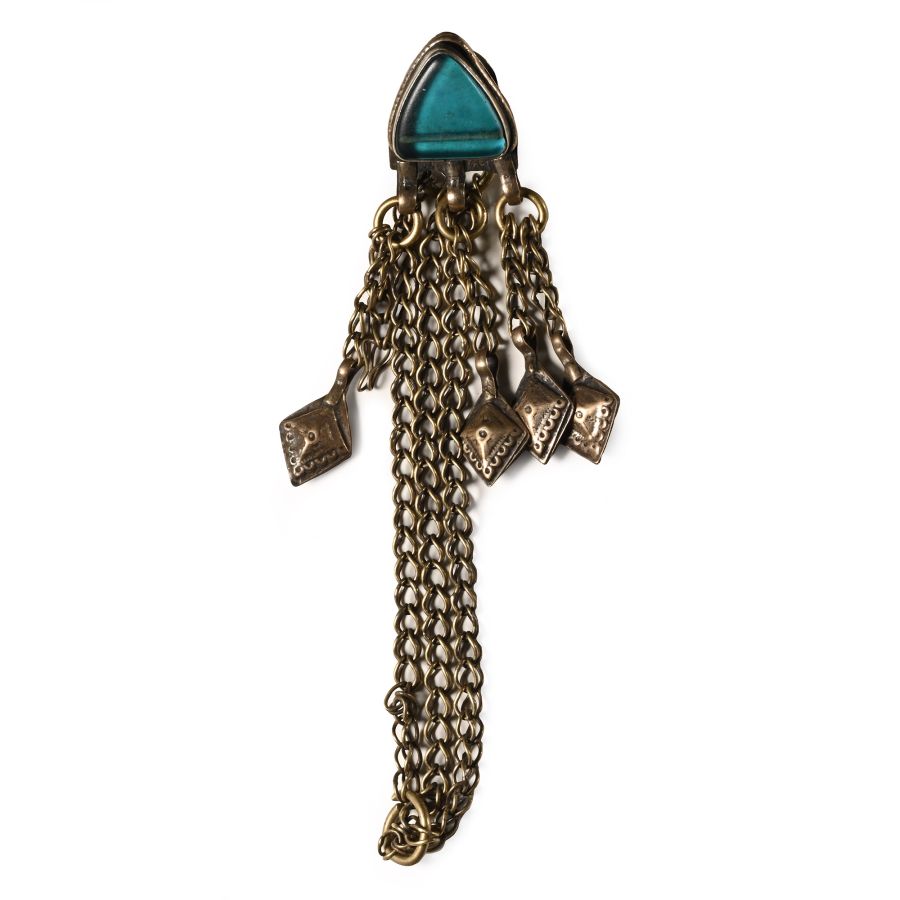
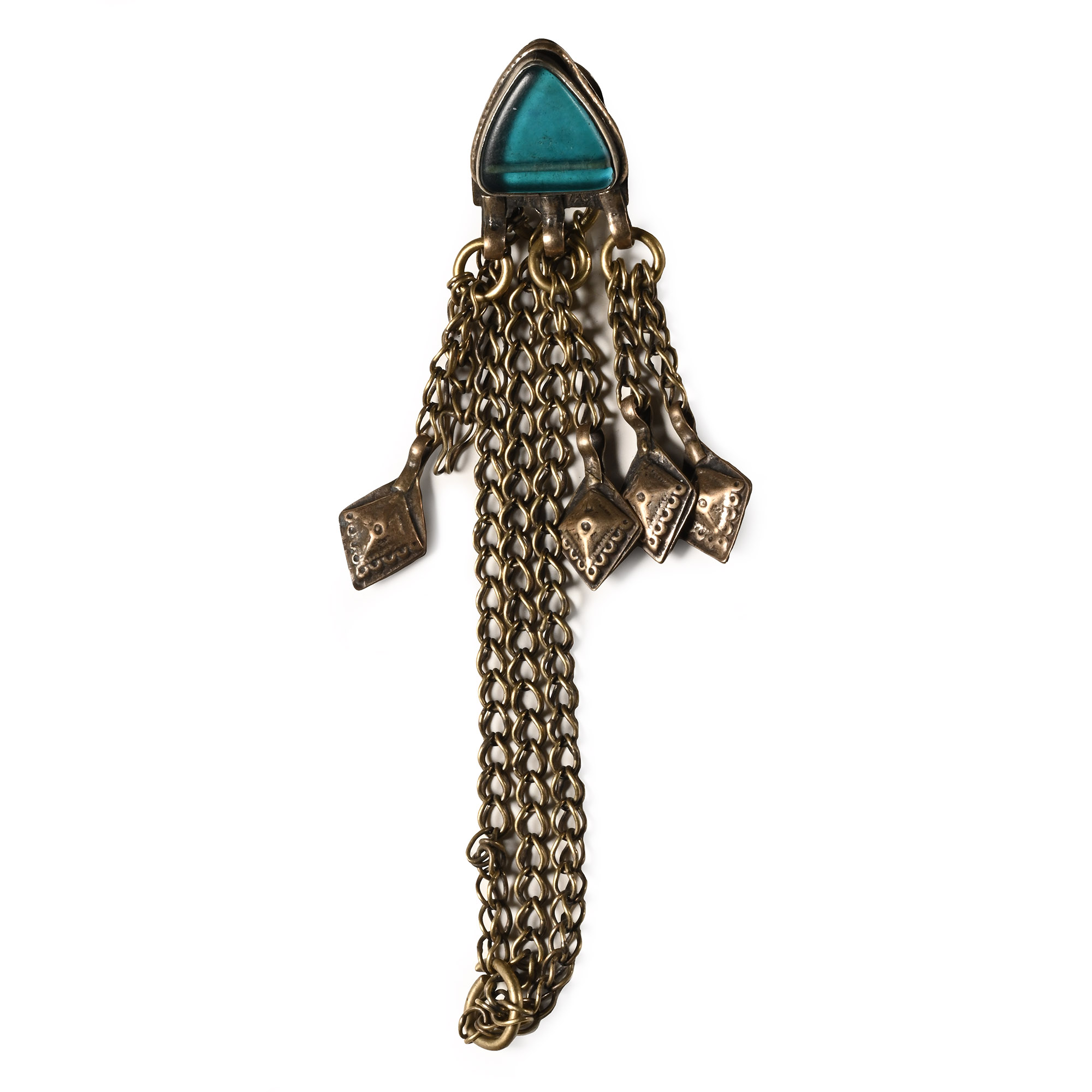
LOT 1387
Western Asiatic Silver-Coloured Metal Pendant
20TH CENTURY A.D.
6 7/8 in. (21 grams, 17.5 cm).
Comprising a triangular plaque with inset glass cloison, chains below with dangles. [No Reserve]
ProvenanceEx collection of a late London, UK, collector, 1970s.
This lot has been cleared against the Art Loss Register database, and is accompanied by an illustrated lot declaration signed by the Head of the Antiquities Department, Dr Raffaele D'Amato.
TimeLine Auctions follows a vetting process to ensure the authenticity and legality of all items, reinforcing our commitment to integrity and responsible trading. Each antiquity, antique, and coin lot undergoes thorough examination by a vetting committee of at least ten external specialists, professional trade association members, scientists, and archaeologists: Our Vetting Process
AUCTIONS:
TimeLine is a leading auction house specialising in antiquities, ancient art, collectables, natural history, coins, medals, and books. Our auctions offer museums, collectors, historians, and enthusiasts the opportunity to acquire unique and historically significant pieces.
-

Stamped Royal Terracotta Amphora Handle Belonging to the King of Hebron
Late 8th-mid 7th century B.C.Sold for (Inc. bp): £390
The handle fragment from a Tufnell type 484 jar, bearing a stamp to the upper handle with a schematic two-winged solar disc with delineated rays, inscribed 'lmlk / ḥbrn'. 287 grams, 16 cm
Ex S.M. London collection, UK, 1970-1990s. Accompanied by a description from Peter Gert Van der Veen, senior lecturer of Levantine Archaeology, Johannes Gutenberg-Universität, Mainz. This lot has been cleared against the Art Loss Register database, and is accompanied by an illustrated lot declaration signed by the Head of the Antiquities Department, Dr Raffaele D'Amato. -

Western Asiatic Painted Terracotta Spouted Vessel
1st millennium B.C.Estimate: £200 - 300 (+bp*)
Opening Bid: £100
Comprising a squat globular body, broad shoulder and short neck with collar, flared rim to the mouth; strap handle and short spout with supporting strap; painted rectangular panels with hatched borders to the shoulder and handle, band of saltires to the equator. 1.9 kg, 25 cm
From the collection of a North London, UK, gentleman, pre 1990s. This lot has been cleared against the Art Loss Register database, and is accompanied by an illustrated lot declaration signed by the Head of the Antiquities Department, Dr Raffaele D'Amato. -

Large Western Asiatic Bronze Dagger
1800-1600 B.C.Sold for (Inc. bp): £117
Tapering blade with raised midrib developing to a short tang pierced at the finial. 218 grams, 32.5 cm
Ex London art market, 1980-1990s. This lot has been cleared against the Art Loss Register database, and is accompanied by an illustrated lot declaration signed by the Head of the Antiquities Department, Dr Raffaele D'Amato.
Around the 17th century BC, Hyksos craftsmen apparently invented daggers with an elongated, narrow blade of a subtriangular shape, sometimes with a mid-rib, but more often flat, and a handle cast together with the blade, flat, fairly wide, with a pronounced, sometimes sharply, more often smoothly, pommel and crossguard. Such daggers very quickly gained popularity in Mesopotamia and further to the east and northeast, as well as to the northwest, in the Aegean, and became almost the most widespread type of dagger in these regions up until the middle of the 1st millennium B.C.
