
Loading, please wait...
LOT 1206
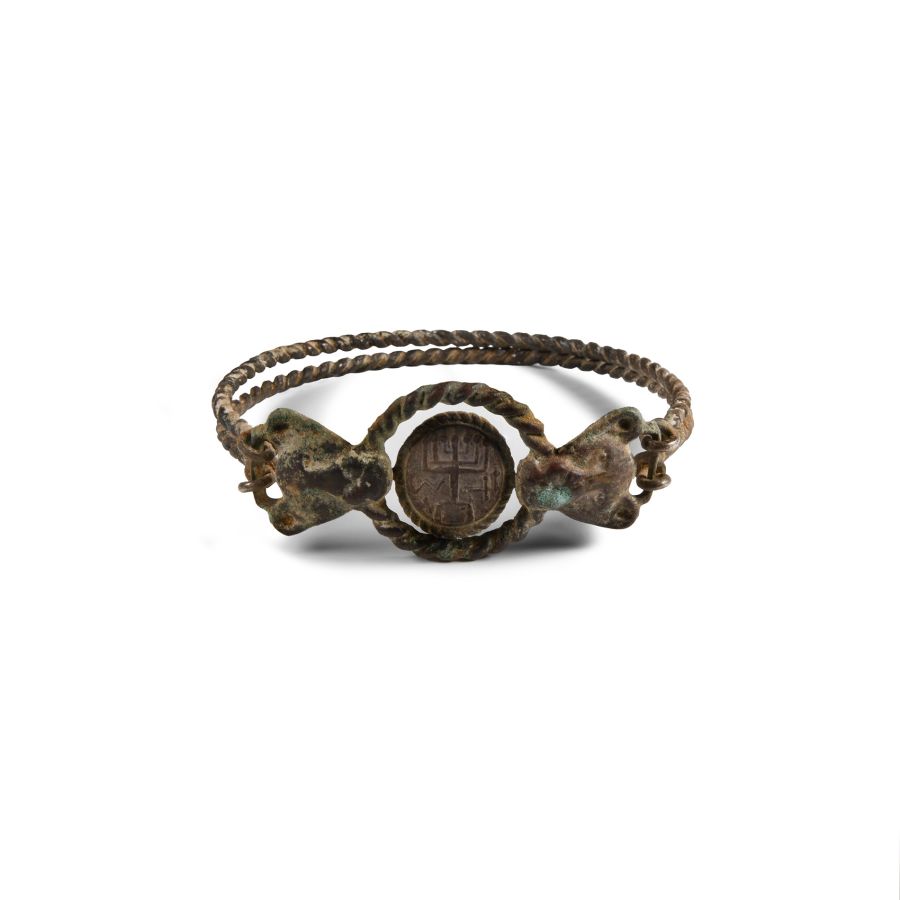
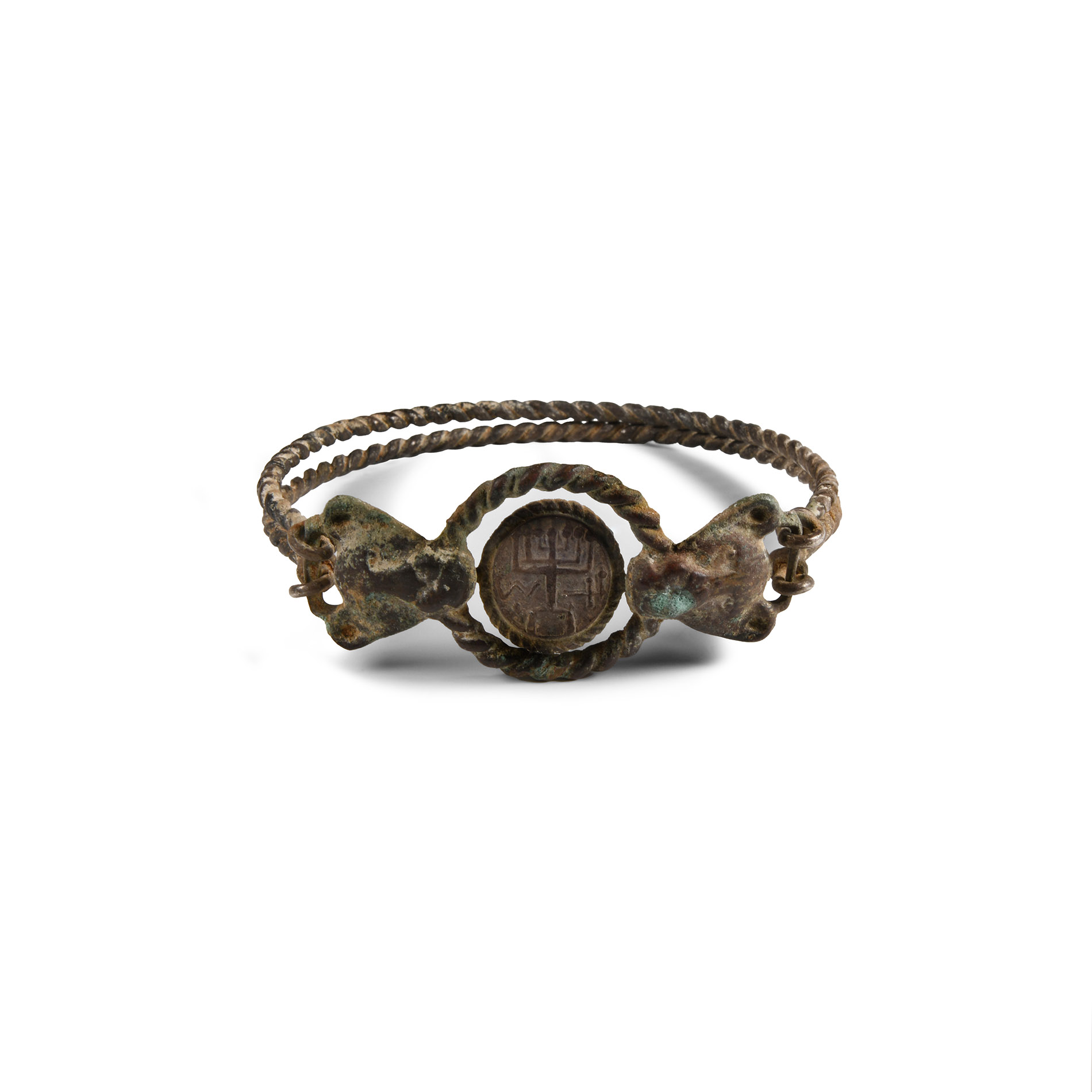
Western Asiatic Silver Bracelet with Lion Head Terminals Holding a Menorah
CIRCA 2ND-3RD CENTURY A.D.
2 7/8 in. (40 grams, 73 mm wide).
Uncleaned, composed of two decoratively twisted hoops, terminals formed as two facing lion (or lioness) heads supporting the bezel, a twisted roundel, in their mouths, central bifacial swivel plaque displaying a menorah flanked by letters 'W-T' on both faces; articulate join between hoops and animal heads.
ProvenanceAcquired before 1988.
From the collection of a deceased collector.
TimeLine Auctions follows a vetting process to ensure the authenticity and legality of all items, reinforcing our commitment to integrity and responsible trading. Each antiquity, antique, and coin lot undergoes thorough examination by a vetting committee of at least ten external specialists, professional trade association members, scientists, and archaeologists: Our Vetting Process
AUCTIONS:
TimeLine is a leading auction house specialising in antiquities, ancient art, collectables, natural history, coins, medals, and books. Our auctions offer museums, collectors, historians, and enthusiasts the opportunity to acquire unique and historically significant pieces.
LOT 1206
Western Asiatic Silver Bracelet with Lion Head Terminals Holding a Menorah
Estimate £700 - 900€810 - 1,040 (for guidance only)$950 - 1,220 (for guidance only)
-
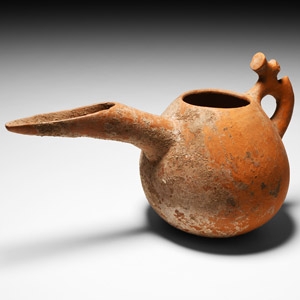
Amlash Terracotta Vessel
1st millennium B.C.Estimate: £300 - 400 (+bp*)
Opening Bid: £150
Of zoomorphic form, with a globular body, u-section spout and handle with figurative animal design. 545 grams, 26.5 cm wide
Fine condition.
Acquired 1970s-1990s. Ex Rabi Gallery, Mayfair, London, UK. From a specialist collection of pottery.
Likely representing a wading bird. -
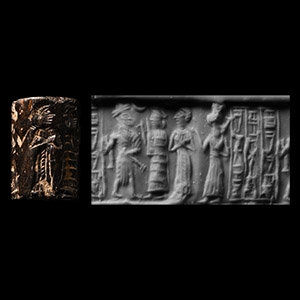
Akkadian Cylinder Seal with Worship Scene
Late 3rd millennium B.C.Sold for (Inc. bp): £286
Haematite with a group of four standing figures consisting of a bearded male wearing a kilt and horned cap, crescent moon to the top; in front a male wearing long robes, hands raised in worship, behind a female in long robes and with arms crossed over chest; behind a male figure in long robes and wearing a horned cap, hand resting on shoulder of female; rectangular panel with three rows of cuneiform text. 4.32 grams, 15 mm
From an important North London collection formed in the late 1980s. From a collection acquired from various auction houses in the UK. From the estate of Mr R.W., a private Wiltshire, UK, collector; thence by descent. -
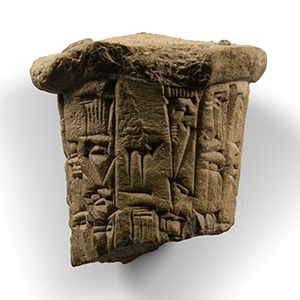
Sumerian Ur-Nammu of Ur Cuneiform Foundation Cone
2112–2094 B.C.Sold for (Inc. bp): £468
The top section of a foundation cone from the reign of Ur-Nammu, with domed face, the side inscribed with columns of cuneiform text; from the Ziggurat at Ur, in the Third Dynasty. 108 grams, 48 mm
Previously from the estate of a West Sussex, UK, collector. From a collection acquired from various auction houses in the UK. From the estate of Mr R.W., a private Wiltshire, UK, collector; thence by descent.
Votive cones are one type of royal foundation deposit, objects that were buried in the walls and beneath the floors of important buildings during construction to sanctify the site and to create a historical memory of the ruler and his achievements. Among Ur-Nammu‘s military exploits were the conquest of Lagash and the defeat of his former masters at Uruk. He was also responsible for ordering the construction of a number of ziggurats, including the Great Ziggurat of Ur. He was killed in a battle against the Gutians after he had been abandoned by his army.
