
Loading, please wait...

LOT 1261
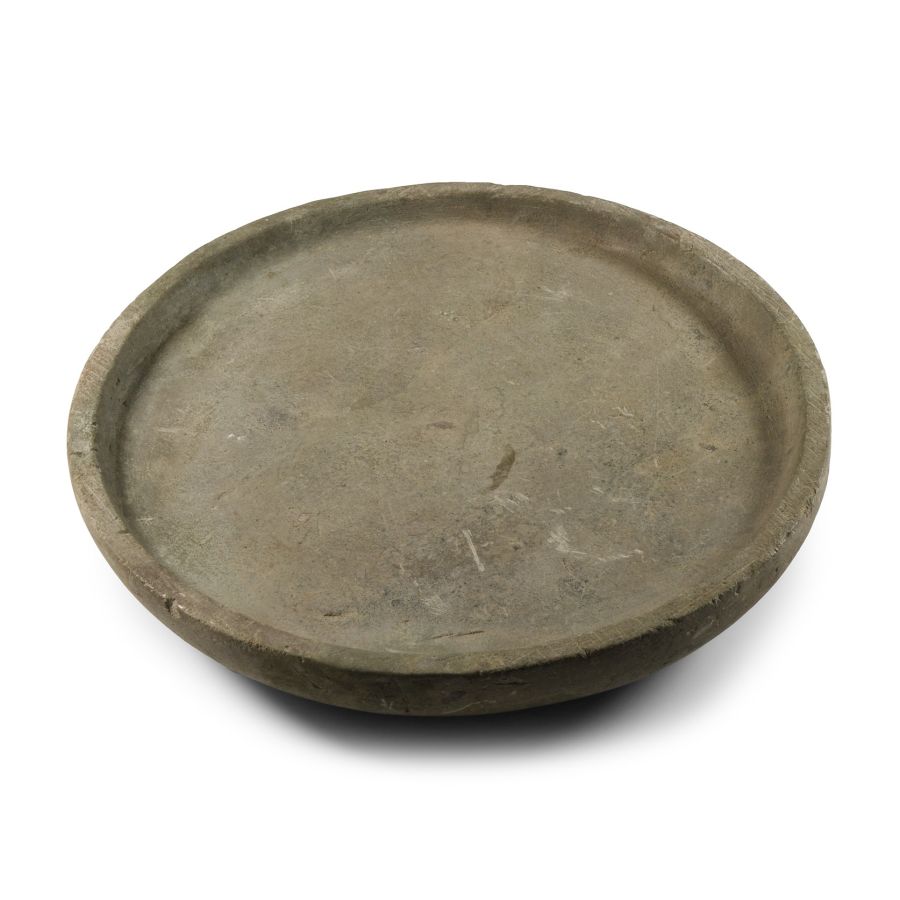
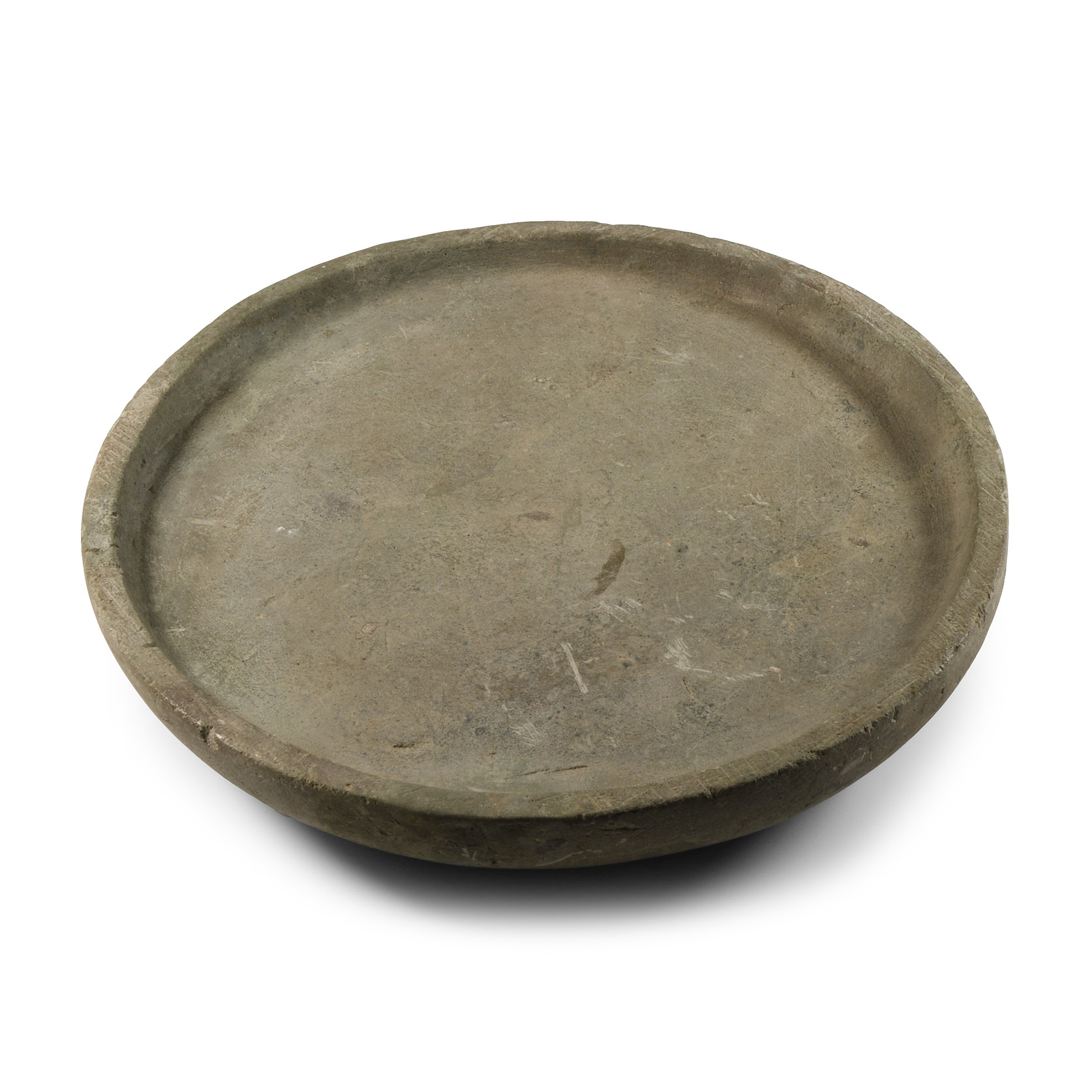
Western Asiatic Schist Votive Offering Table
1ST MILLENNIUM B.C.
8 1/2 in. (2.05 kg, 21.7 cm wide).
Discoid in plan with basal ring and shallow dished face. [No Reserve]
ProvenanceFrom a collection acquired on the UK art market from various auction houses and collections mostly before 2000.
From an important Cambridgeshire estate; thence by descent.
TimeLine Auctions follows a vetting process to ensure the authenticity and legality of all items, reinforcing our commitment to integrity and responsible trading. Each antiquity, antique, and coin lot undergoes thorough examination by a vetting committee of at least ten external specialists, professional trade association members, scientists, and archaeologists: Our Vetting Process
AUCTIONS:
TimeLine is a leading auction house specialising in antiquities, ancient art, collectables, natural history, coins, medals, and books. Our auctions offer museums, collectors, historians, and enthusiasts the opportunity to acquire unique and historically significant pieces.
-
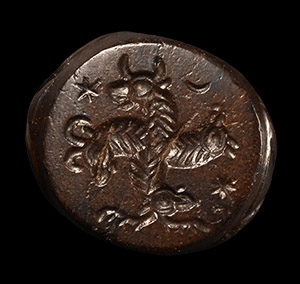
Sassanian Stone Seal with Four Animal Heads
4th-5th century A.D.Sold for (Inc. bp): £130
Plano-convex seal with conjoined animal heads; accompanied by a copy of an old scholarly note dated April 1999, typed and signed by W.G. Lambert, late Professor of Assyriology, University of Birmingham, 1970-1993, which states: 'Stamp Seal of Goethite 16x19x15.4 mm. This is a decorated ellipsoid with nearly round flat face, the back with large suspension hole and decorated with three pairs of two raised circles. The design consists of the protomes of four creatures joining the middle: bull, ram (or ibex), stag and eagle. Around them are three fillers: two stars and a crescent. This is a Sassanian seal. c.200-500 A.D. It is in very good condition and has a very rare design. No doubt there is some symbolism in these four creatures, but the present writer does not know what it is.' 8.46 grams, 19 mm
UK private collection, 1980-1983. Accompanied by a copy of a scholarly note dated April 1999, typed and signed by W.G. Lambert, late Professor of Assyriology, University of Birmingham, 1970-1993. -

Luristan Terracotta Lotus-Formed Vessel
1st millennium B.C.Sold for (Inc. bp): £260
Comprising a broad funicular mouth above a small bulb body, button base, impressed cord detailing to base and shoulder; repaired. 155 grams, 13.5 cm
with a London, UK gallery, 1971-early 2000s. -

Bactrian Camel Applique
3rd-2nd millennium B.C.Sold for (Inc. bp): £650
A finely modelled two-humped camel, shown in a dynamic pose, possibly in the act of kneeling and balancing its body weight on its bent back and front legs; mounted in a display frame. 245 grams total, 17.5 cm including frame
Ex London, UK, gallery, 1971-early 2000s. Property of a London gentleman.
Camels were a symbol of wealth and well-being. The importance of the Bactrian camel is attested in the ancient sources. The two-humped Bactrian camel, object of many seal representations, was already widespread in North India during the first quarter of the 2nd millennium B.C. It was probably an Aryan introduction. The Mitanni came from Bactria and Margiana and maintained a close connection with their regions of origin, via Khorasan, as can be suggested by the presence of Bactrian camels on the Mitanni seals.
