
Loading, please wait...
_900x900.jpg "Western Asiatic Rolled Aramaic Lead Magical Text Scroll")
_200x200.jpg "Western Asiatic Rolled Aramaic Lead Magical Text Scroll")
.jpg "Western Asiatic Rolled Aramaic Lead Magical Text Scroll")
LOT 1008
Western Asiatic Rolled Aramaic Lead Magical Text Scroll
2ND-8TH CENTURY A.D.
2 3/8 in. (41 grams, 60 mm).
A rolled sheet-metal magical document with inscribed text in Aramaic.
ProvenanceAcquired 1979-1999.
London collection of the late Mr S.M., thence by descent.
This lot has been cleared against the Art Loss Register database, and is accompanied by an illustrated lot declaration signed by the Head of the Antiquities Department, Dr Raffaele D'Amato.
TimeLine Auctions follows a vetting process to ensure the authenticity and legality of all items, reinforcing our commitment to integrity and responsible trading. Each antiquity, antique, and coin lot undergoes thorough examination by a vetting committee of at least ten external specialists, professional trade association members, scientists, and archaeologists: Our Vetting Process
AUCTIONS:
TimeLine is a leading auction house specialising in antiquities, ancient art, collectables, natural history, coins, medals, and books. Our auctions offer museums, collectors, historians, and enthusiasts the opportunity to acquire unique and historically significant pieces.
LOT 1008
Western Asiatic Rolled Aramaic Lead Magical Text Scroll
Sold for (Inc. bp): £234
-
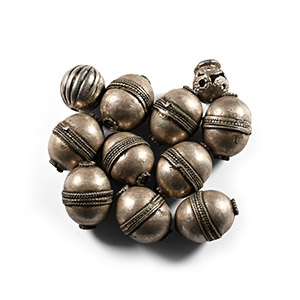
Western Asiatic Silver-Coloured Metal Bead Group
Circa 18th-19th century A.D.Sold for (Inc. bp): £46
Comprising nine beads with central filigree collar and beaded collar to each end, one melon bead and one openwork bead. 38 grams total, 13-21 mm
Ex collection of a late London, UK, collector, 1970s. This lot has been cleared against the Art Loss Register database, and is accompanied by an illustrated lot declaration signed by the Head of the Antiquities Department, Dr Raffaele D'Amato. -
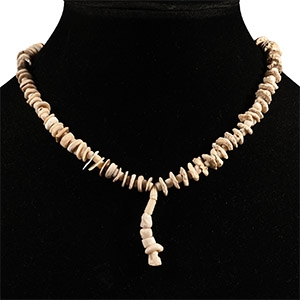
Western Asiatic Bead Necklace String
1st millennium B.C. and laterSold for (Inc. bp): £33
Restrung group of biconvex, annular, drum-shaped and other beads in stone and shell. 22.5 grams, 32.5 cm
Ex London, UK, collection, 1990s. This lot has been cleared against the Art Loss Register database, and is accompanied by an illustrated lot declaration signed by the Head of the Antiquities Department, Dr Raffaele D'Amato. -
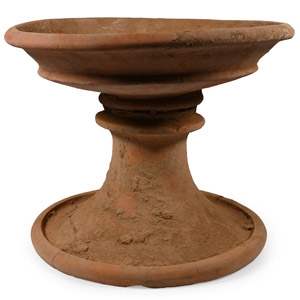
Bactrian Terracotta Chalice
2nd-1st millennium B.C.Sold for (Inc. bp): £65
Comprising a columnar stem flaring to the broad base with carinated rim, collar below the junction with the bowl. 6.5 kg, 25.5 cm
From a West London, UK, collection, 1990s. This lot has been cleared against the Art Loss Register database, and is accompanied by an illustrated lot declaration signed by the Head of the Antiquities Department, Dr Raffaele D'Amato.
