
Loading, please wait...
LOT 1106
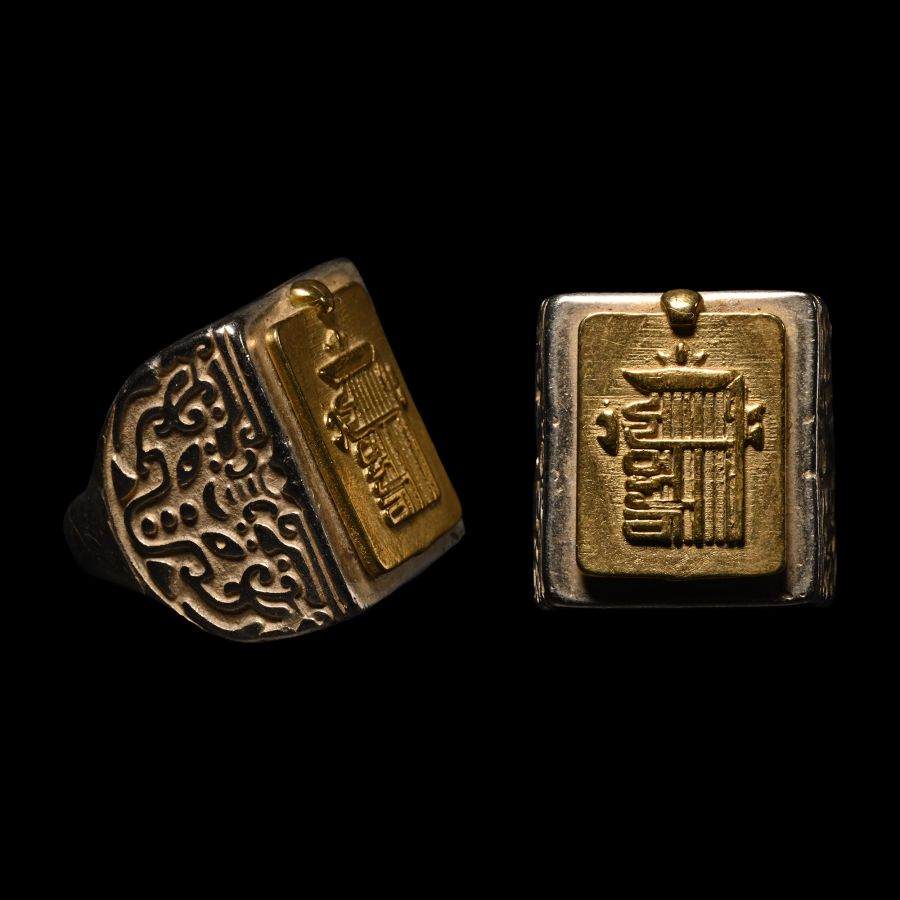
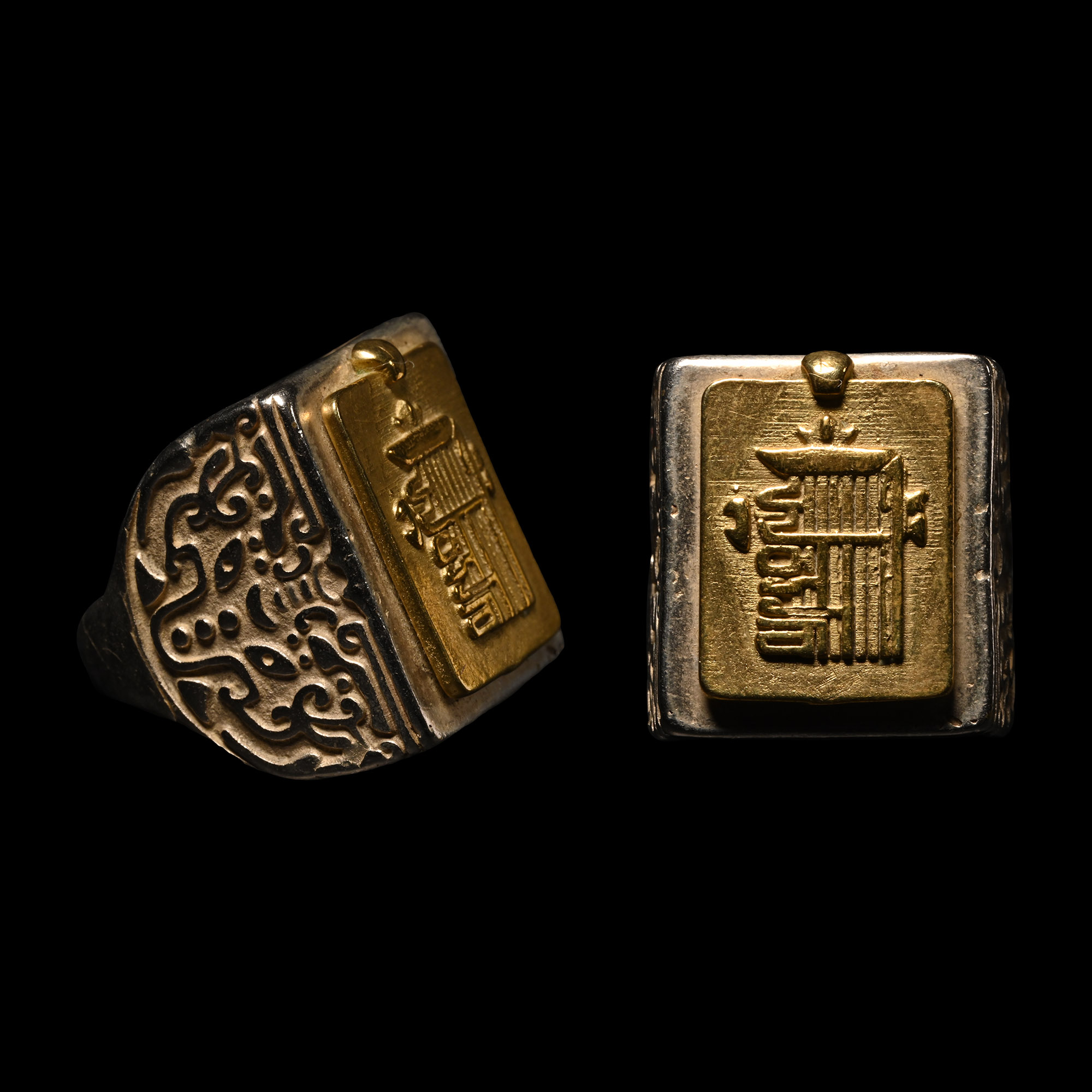
Western Asiatic Ring with Arabic Inscription
19TH-20TH CENTURY A.D.
1 in. (19.78 grams, 26.18 mm overall, 18.33 mm internal diameter (approximate size British Q, USA 8, Europe 17.49, Japan 16)).
A white metal ring with adjustable hoop, D-shaped shoulders with tendrils decoration, square bezel with openwork underside and applied gilt plaque bearing an Arabic inscription above. [No Reserve]
ProvenancePrivate collection, London, UK.
This lot has been cleared against the Art Loss Register database, and is accompanied by an illustrated lot declaration signed by the Head of the Antiquities Department, Dr Raffaele D'Amato.
TimeLine Auctions follows a vetting process to ensure the authenticity and legality of all items, reinforcing our commitment to integrity and responsible trading. Each antiquity, antique, and coin lot undergoes thorough examination by a vetting committee of at least ten external specialists, professional trade association members, scientists, and archaeologists: Our Vetting Process
AUCTIONS:
TimeLine is a leading auction house specialising in antiquities, ancient art, collectables, natural history, coins, medals, and books. Our auctions offer museums, collectors, historians, and enthusiasts the opportunity to acquire unique and historically significant pieces.
-
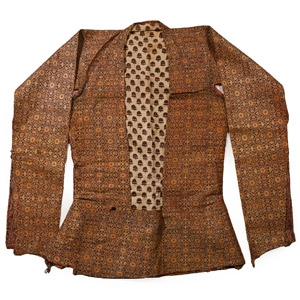
Western Asiatic Textile Shirt
19th-20th century A.D.Sold for (Inc. bp): £13
An unfinished shirt in floral fabric with lighter coloured lining. 436 grams, 165 cm
Private collection of a London gentleman, acquired between 1965-2020. This lot has been cleared against the Art Loss Register database, and is accompanied by an illustrated lot declaration signed by the Head of the Antiquities Department, Dr Raffaele D'Amato. -
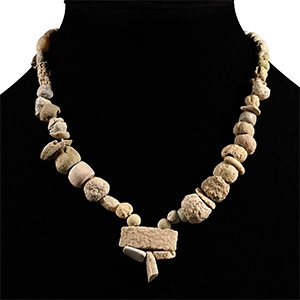
Western Asiatic Mixed Bead Necklace String
1st millennium B.C. and laterSold for (Inc. bp): £7
Restrung group of tubular, melon, drum-shaped and other beads in stone and ceramic. 44 grams, 38 cm
Ex London, UK, collection, 1990s. This lot has been cleared against the Art Loss Register database, and is accompanied by an illustrated lot declaration signed by the Head of the Antiquities Department, Dr Raffaele D'Amato. -
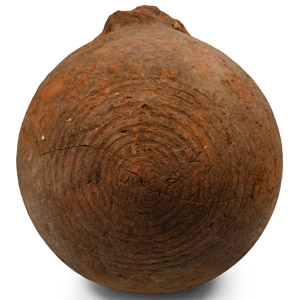
Western Asiatic Terracotta Storage Vessel
3rd-1st millennium B.C.Sold for (Inc. bp): £39
Globular in profile with stub neck; two panels of incised concentric rings to the equator. 3 kg, 25.5 cm
From a West London, UK, collection, 1990s. This lot has been cleared against the Art Loss Register database, and is accompanied by an illustrated lot declaration signed by the Head of the Antiquities Department, Dr Raffaele D'Amato.
