
Loading, please wait...
LOT 1310
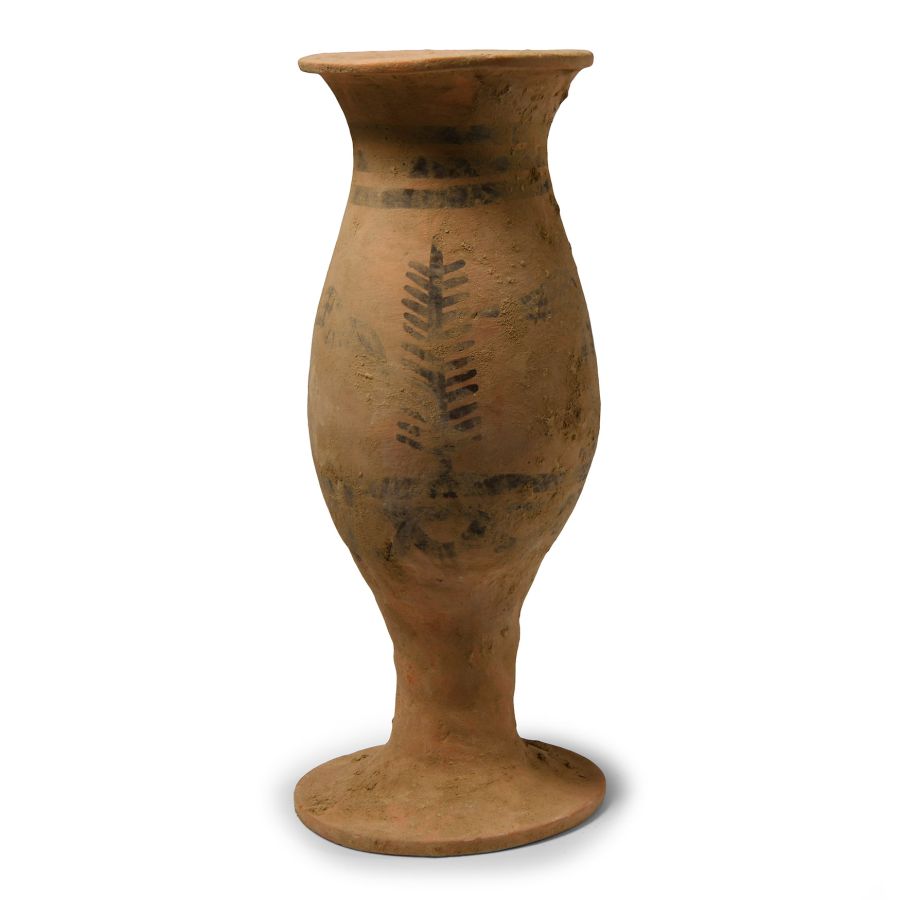
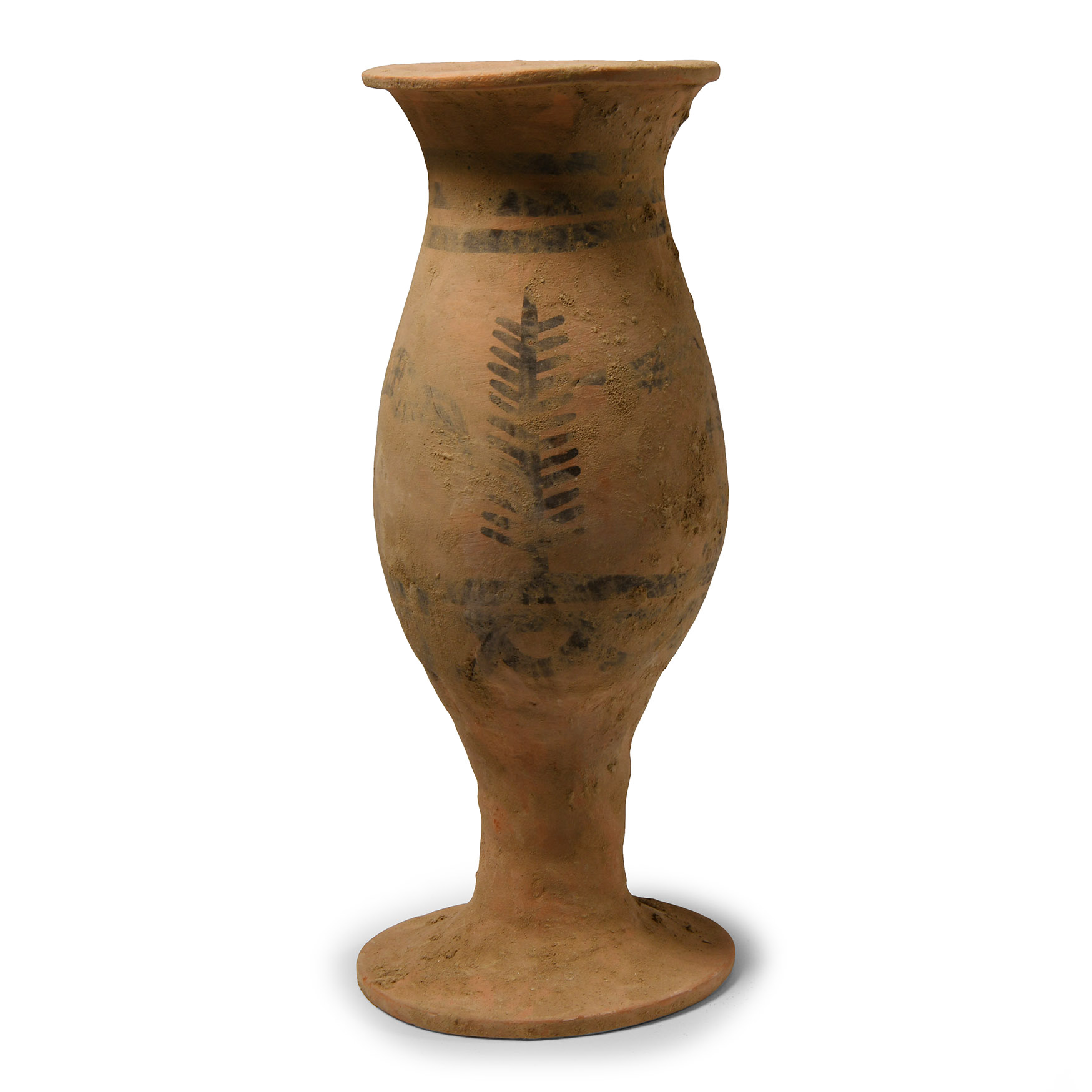
Western Asiatic Painted Terracotta Vase
1ST MILLENNIUM B.C.
8 1/4 in. (428 grams, 21.5 cm).
With fusiform body and broad carinated rim, short stem and flared base; circumferential painted bands and frond motifs. [No Reserve]
ProvenanceAcquired 1990s-2000s.
From the late David Gold (d.2015) collection of pottery.
David Gold and his brother were famous for setting up the first clothes shop in Carnaby Street and dressed the famous in the swinging 1960s, making Carnaby Street famous.
CONDITIONTimeLine Auctions follows a vetting process to ensure the authenticity and legality of all items, reinforcing our commitment to integrity and responsible trading. Each antiquity, antique, and coin lot undergoes thorough examination by a vetting committee of at least ten external specialists, professional trade association members, scientists, and archaeologists: Our Vetting Process
AUCTIONS:
TimeLine is a leading auction house specialising in antiquities, ancient art, collectables, natural history, coins, medals, and books. Our auctions offer museums, collectors, historians, and enthusiasts the opportunity to acquire unique and historically significant pieces.
-
Western Asiatic Painted Terracotta Vase
1st millennium B.C.Sold for (Inc. bp): £104
With fusiform body and broad carinated rim, short stem and flared base; circumferential painted bands and frond motifs. 428 grams, 21.5 cm
Acquired 1990s-2000s. From the late David Gold (d.2015) collection of pottery.
David Gold and his brother were famous for setting up the first clothes shop in Carnaby Street and dressed the famous in the swinging 1960s, making Carnaby Street famous. -
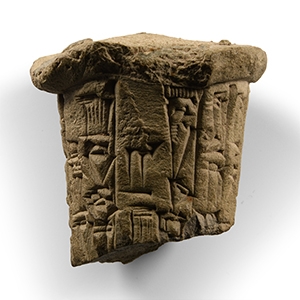
Sumerian Ur-Nammu of Ur Cuneiform Foundation Cone
2112–2094 B.C.Sold for (Inc. bp): £468
The top section of a foundation cone from the reign of Ur-Nammu, with domed face, the side inscribed with columns of cuneiform text; from the Ziggurat at Ur, in the Third Dynasty. 108 grams, 48 mm
Previously from the estate of a West Sussex, UK, collector. From a collection acquired from various auction houses in the UK. From the estate of Mr R.W., a private Wiltshire, UK, collector; thence by descent.
Votive cones are one type of royal foundation deposit, objects that were buried in the walls and beneath the floors of important buildings during construction to sanctify the site and to create a historical memory of the ruler and his achievements. Among Ur-Nammu‘s military exploits were the conquest of Lagash and the defeat of his former masters at Uruk. He was also responsible for ordering the construction of a number of ziggurats, including the Great Ziggurat of Ur. He was killed in a battle against the Gutians after he had been abandoned by his army. -
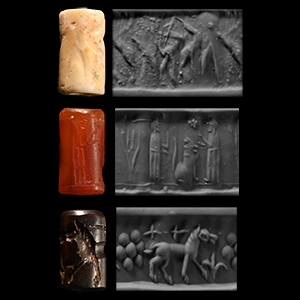
Cylinder Seal Group
Circa 2300-2200 B.C. and laterSold for (Inc. bp): £286
Comprising: an Akkadian example with a heroic scene carved in shell, accompanied by an old scholarly note, typed and signed by W.G. Lambert, late Professor of Assyriology, University of Birmingham, 1970-1993, which states: 'Cylinder Seal of White Marble, 18 x 10 mm. The design shows hero in the middle, succouring on either side a domestic quadruped on its hind legs, each being attacked by a lion. This is an Akkadian seal from Mesopotamia or West Iran, c. 2300-2200 B.C. The surface is somewhat worn.'; a haematite seal engraved with a walking dog or wolf with three stars above, rosette to the back; a carnelian seal engraved with a group of worshippers wearing long robes and Median caps, tree motif to the back. 7.62 grams total, 13-18 mm
The first property of a London gentleman; part of his family collection since the 1970s. Academically researched and catalogued by the late Professor Lambert in the 1980s. The other examples the property of a London gentleman; acquired before 1995. From a collection acquired from various auction houses in the UK. From the estate of Mr R.W., a private Wiltshire, UK, collector; thence by descent. Accompanied by a original typed and signed scholarly note by the late W.G. Lambert, Professor of Assyriology at the University of Birmingham, 1970-1993.
