
Loading, please wait...
LOT 1308
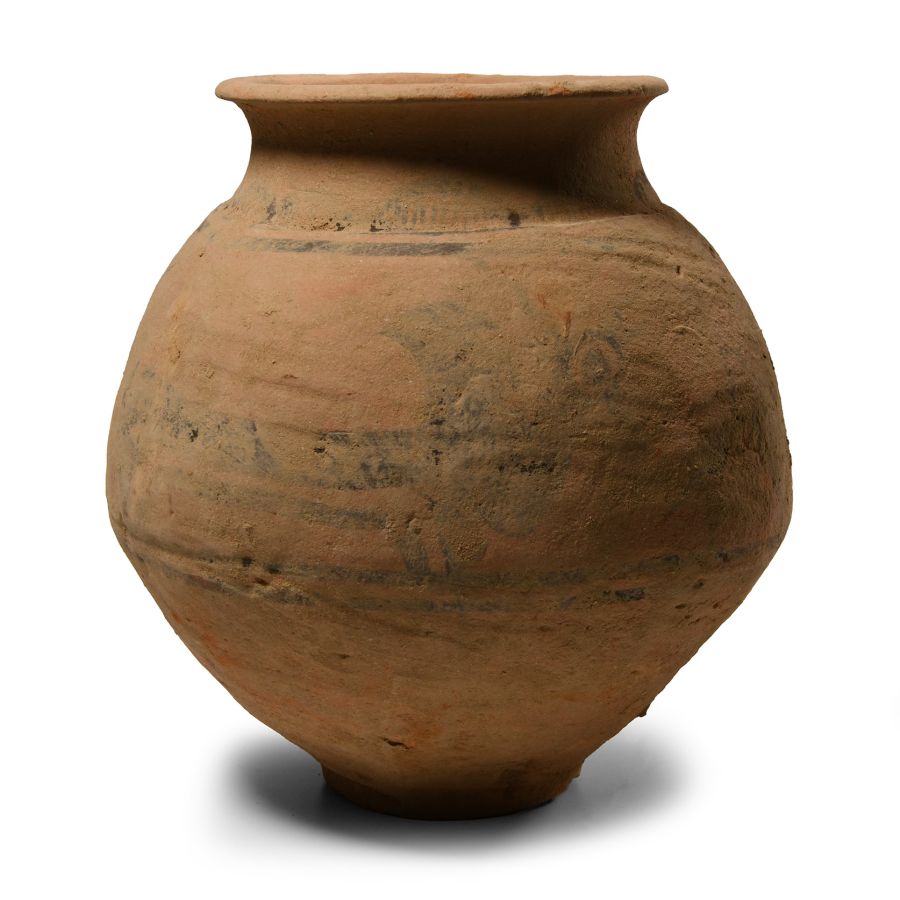
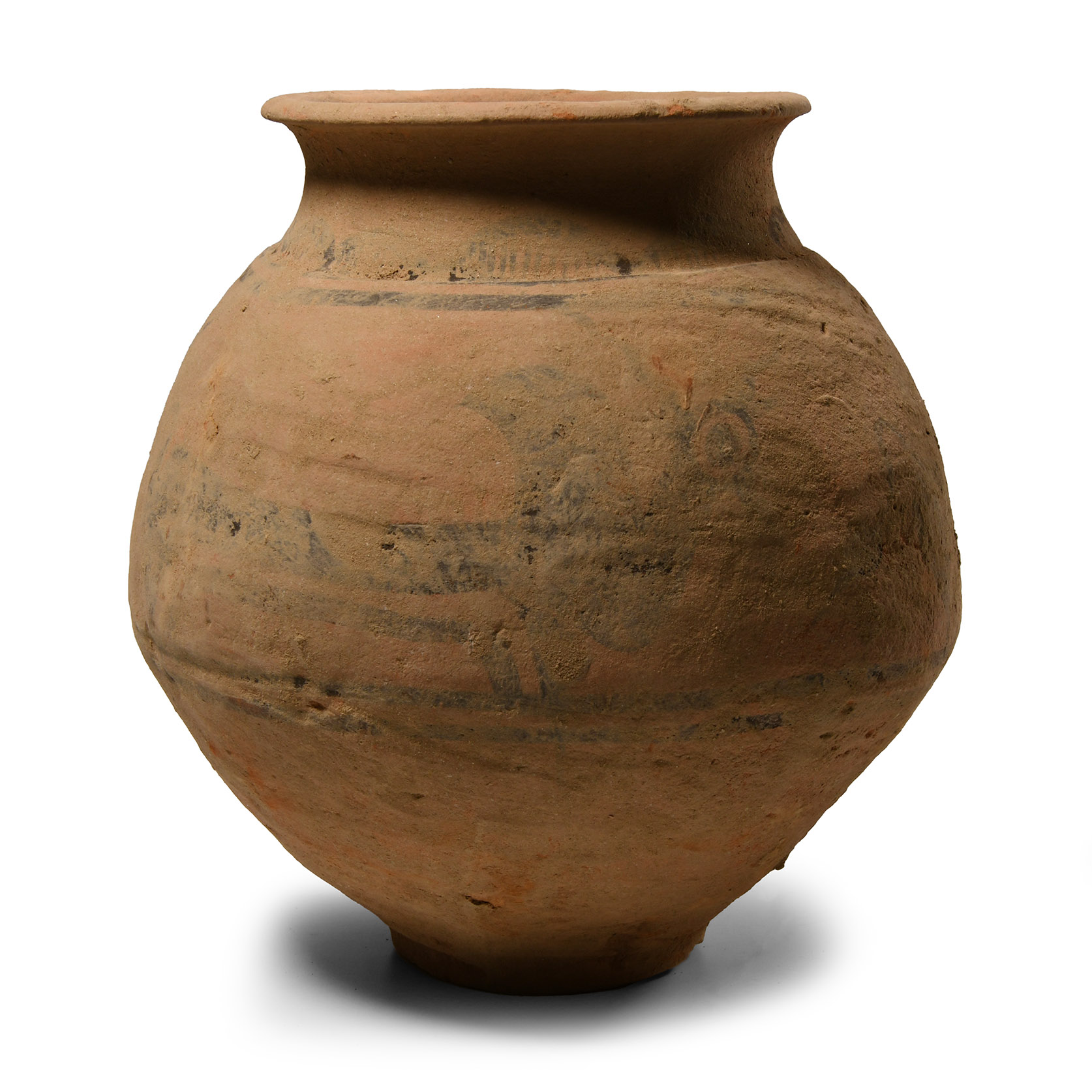
Western Asiatic Painted Terracotta Jar
1ST MILLENNIUM B.C.
7 in. (819 grams, 18 cm).
With rounded profile, low foot and rounded everted rim to the mouth, painted horizontal bands to the shoulder enclosing a frieze of zebus. [No Reserve]
ProvenanceAcquired 1990s-2000s.
From the late David Gold (d.2015) collection of pottery.
David Gold and his brother were famous for setting up the first clothes shop in Carnaby Street and dressed the famous in the swinging 1960s, making Carnaby Street famous.
CONDITIONTimeLine Auctions follows a vetting process to ensure the authenticity and legality of all items, reinforcing our commitment to integrity and responsible trading. Each antiquity, antique, and coin lot undergoes thorough examination by a vetting committee of at least ten external specialists, professional trade association members, scientists, and archaeologists: Our Vetting Process
AUCTIONS:
TimeLine is a leading auction house specialising in antiquities, ancient art, collectables, natural history, coins, medals, and books. Our auctions offer museums, collectors, historians, and enthusiasts the opportunity to acquire unique and historically significant pieces.
-
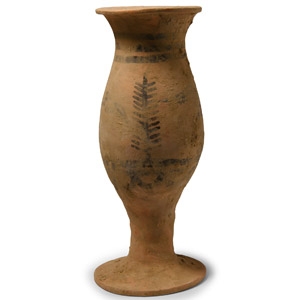
Western Asiatic Painted Terracotta Vase
1st millennium B.C.Sold for (Inc. bp): £104
With fusiform body and broad carinated rim, short stem and flared base; circumferential painted bands and frond motifs. 428 grams, 21.5 cm
Acquired 1990s-2000s. From the late David Gold (d.2015) collection of pottery.
David Gold and his brother were famous for setting up the first clothes shop in Carnaby Street and dressed the famous in the swinging 1960s, making Carnaby Street famous. -
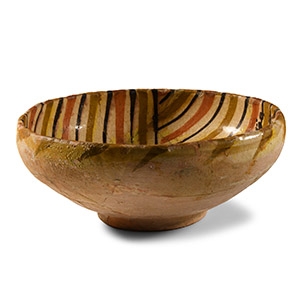
Central Asian Pottery Bowl with Kufic Inscription
Circa 10th century A.D.Estimate: £500 - 700 (+bp*)
Opening Bid: £160
Of rounded profile with painted design to inner face: quartered design of black, olive green and coral stripes on a cream field, one and a half lines of Kufic text across the centre; repaired. 384 grams, 16.5 cm wide
with a London, UK gallery 1971-early 2000s. -
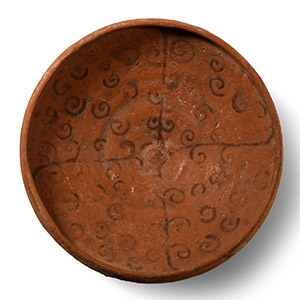
Nabataean Decorated Red Pottery Dish
Circa 3rd-1st century B.C.Estimate: £300 - 400 (+bp*)
Opening Bid: £100
Broad and of low conical profile with inturned carinated rim, basal ring; applied pattern of quarters and coiled swirls. 99 grams, 12.6 cm
From an important collection of terracotta pre 1988, London and Geneva.
