
Loading, please wait...
LOT 1360
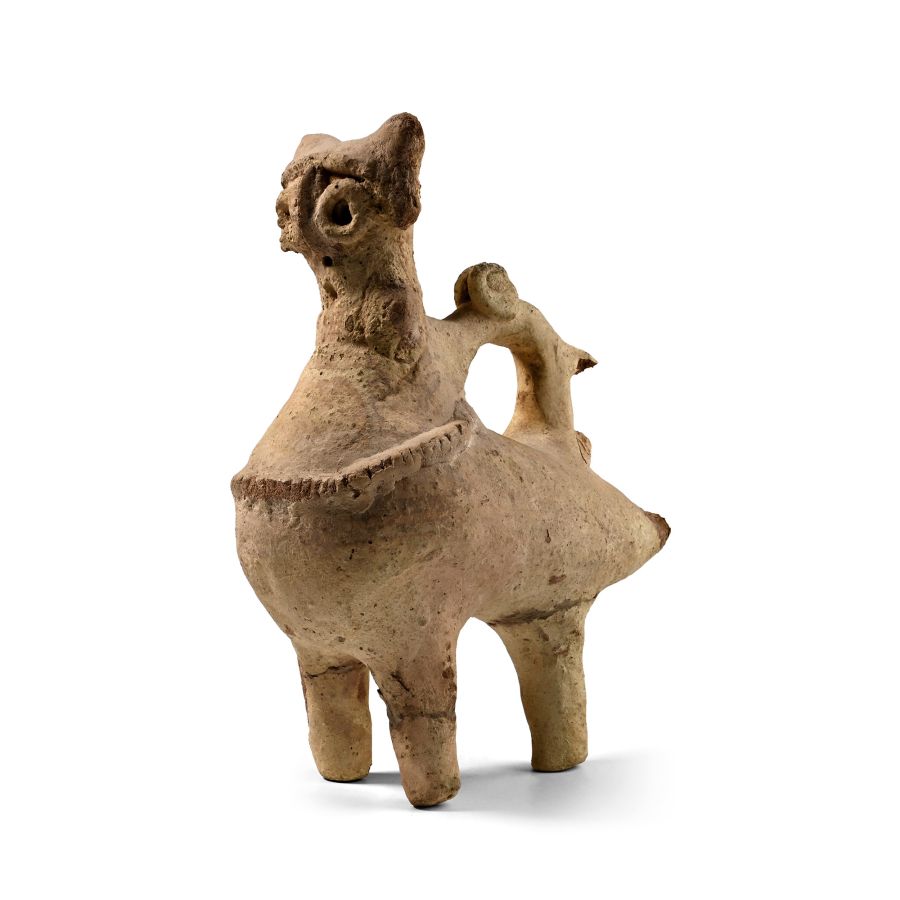
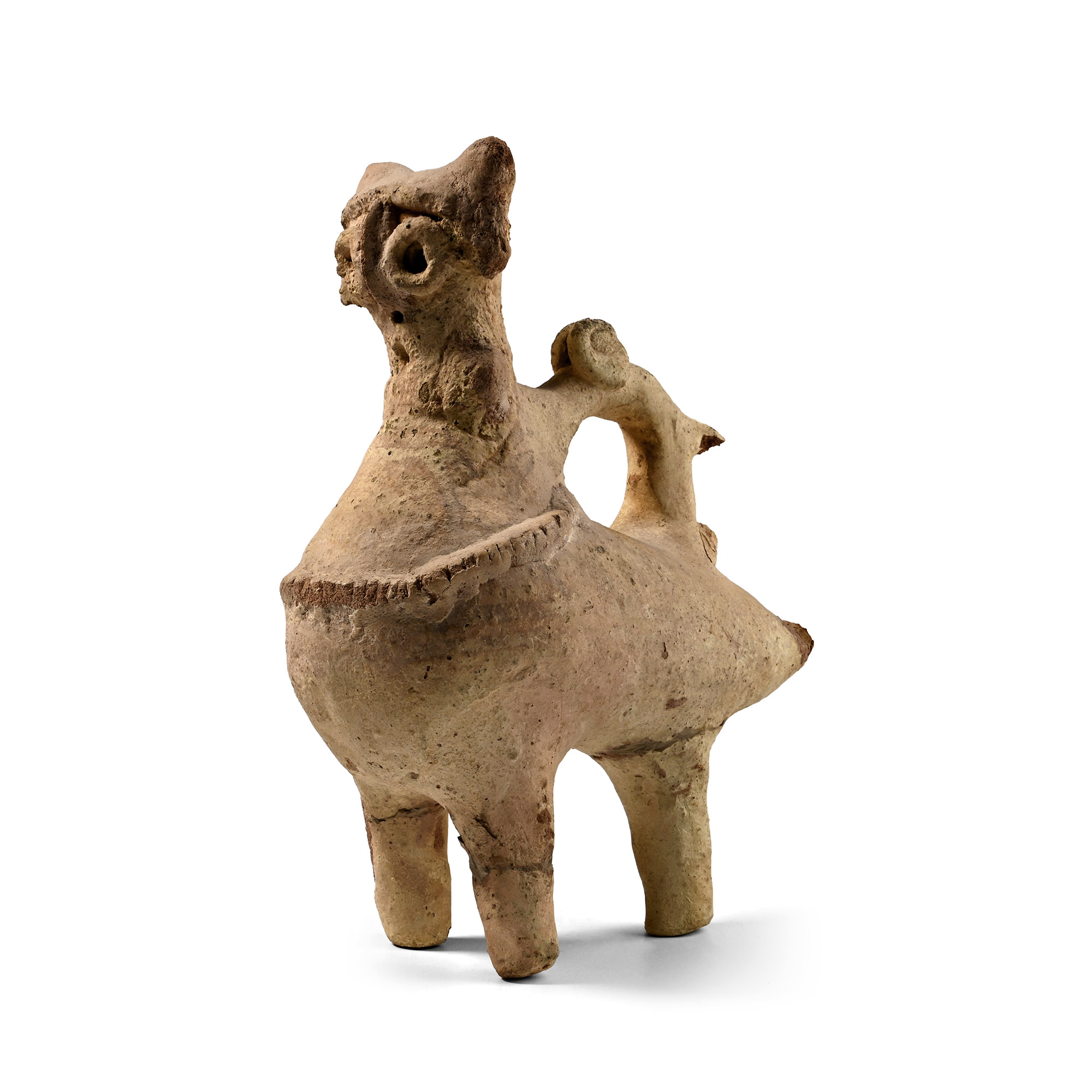
Western Asiatic Painted Bird Vessel
8TH-9TH CENTURY A.D.
6 3/4 in. (442 grams, 17 cm high).
Hollow-formed piriform body with three columnar legs, strap handle with applied detailing and applied collar, tapering neck and strigine head with applied loops to the eyes.
ProvenanceUK collection, 1990s.
Acquired on the UK art market, before 2000.
Private collection, Mr M.V., a London-based businessman.
TimeLine Auctions follows a vetting process to ensure the authenticity and legality of all items, reinforcing our commitment to integrity and responsible trading. Each antiquity, antique, and coin lot undergoes thorough examination by a vetting committee of at least ten external specialists, professional trade association members, scientists, and archaeologists: Our Vetting Process
AUCTIONS:
TimeLine is a leading auction house specialising in antiquities, ancient art, collectables, natural history, coins, medals, and books. Our auctions offer museums, collectors, historians, and enthusiasts the opportunity to acquire unique and historically significant pieces.
LOT 1360
Western Asiatic Painted Bird Vessel
Estimate £200 - 300€230 - 350 (for guidance only)$270 - 410 (for guidance only)
-
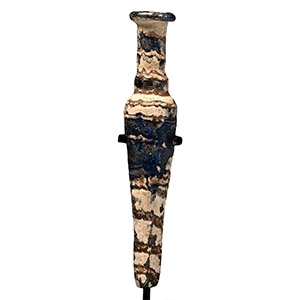
Achaemenid Glass Flask
Circa 5th century B.C.Sold for (Inc. bp): £468
Comprising a tapering square-section body, square base and rounded shoulders; dragged trail ornament to each face narrow neck and everted rolled rim; mounted on a custom-made stand. 76 grams total, 14.6 cm including stand
From an important collection of glass, London, UK, 1990s. -
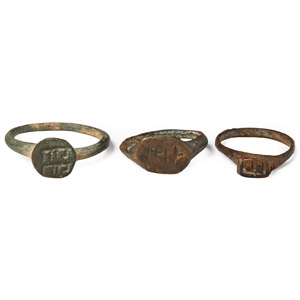
Western Asiatic Inscribed Bronze Ring Group
1st millennium B.C. and laterEstimate: £100 - 140 (+bp*)
Opening Bid: £50
Comprising three rings with slender hoops and bezels with incised inscription. 6.06 grams total, 18-23 mm
From the collection of a gentleman, acquired on the London art market in the 1990s. -
.jpg)
Sasanian Bronze Ring with Insect Gemstone
3rd-5th century A.D.Sold for (Inc. bp): £91
Inset scaraboid with intaglio insect (hornet?) to the gemstone. 4.07 grams, 26.53 mm overall, 18.06 mm internal diameter (approximate size British O, USA 7, Europe 14.98, Japan 14)
Acquired on the UK art market before 2000. Property of an Essex, UK, gentleman.
