
Loading, please wait...
_900x900.jpg "Western Asiatic Openwork Lion Incense Burner")
_200x200.jpg "Western Asiatic Openwork Lion Incense Burner")
.jpg "Western Asiatic Openwork Lion Incense Burner")
LOT 0833
Western Asiatic Openwork Lion Incense Burner
LATE 20TH CENTURY A.D.
7 1/8 in. (1 kg, 18 cm wide).
Ornamented with a dense series of pierced scrolled vines, stylised face with pricked ears, long nose, almond-shaped eyes; the head hinged.
ProvenanceAcquired before 1970.
Property of a London gentleman.
TimeLine Auctions follows a vetting process to ensure the authenticity and legality of all items, reinforcing our commitment to integrity and responsible trading. Each antiquity, antique, and coin lot undergoes thorough examination by a vetting committee of at least ten external specialists, professional trade association members, scientists, and archaeologists: Our Vetting Process
AUCTIONS:
TimeLine is a leading auction house specialising in antiquities, ancient art, collectables, natural history, coins, medals, and books. Our auctions offer museums, collectors, historians, and enthusiasts the opportunity to acquire unique and historically significant pieces.
LOT 0833
Western Asiatic Openwork Lion Incense Burner
Estimate £400 - 600€460 - 700 (for guidance only)$540 - 810 (for guidance only)
-
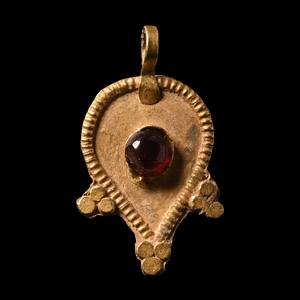
Western Asiatic Gold and Gemstone Pendant
1st millennium B.C.Sold for (Inc. bp): £169
Displaying a central polished garnet cabochon within an applied border; suspension loop above. 0.65 grams, 21 mm
Acquired 1970-2010. Collection of a late Japanese gentleman. -
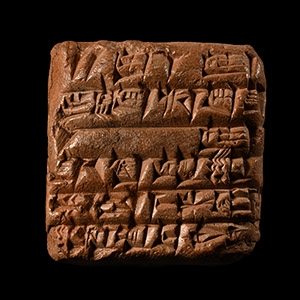
Ur III Cuneiform Clay Tablet
3rd millennium B.C.Sold for (Inc. bp): £936
Small pillow-shaped tablet with crisp cuneiform text to two broad faces and one edge. 24.6 grams, 34 mm
From an important collection pre 1988. J.L. collection, Surrey, UK, 2000s. -
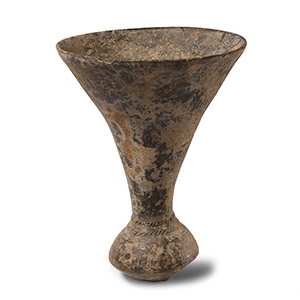
Luristan Black Terracotta Drinking Cup
1st millennium B.C.Estimate: £200 - 300 (+bp*)
Opening Bid: £83
Composed of a funnel-shaped body with carinated foot decorated with bands of impressed ropework motif. 151 grams, 13.5 cm high
with a London, UK gallery 1971-early 2000s.
