
Loading, please wait...
LOT 1128
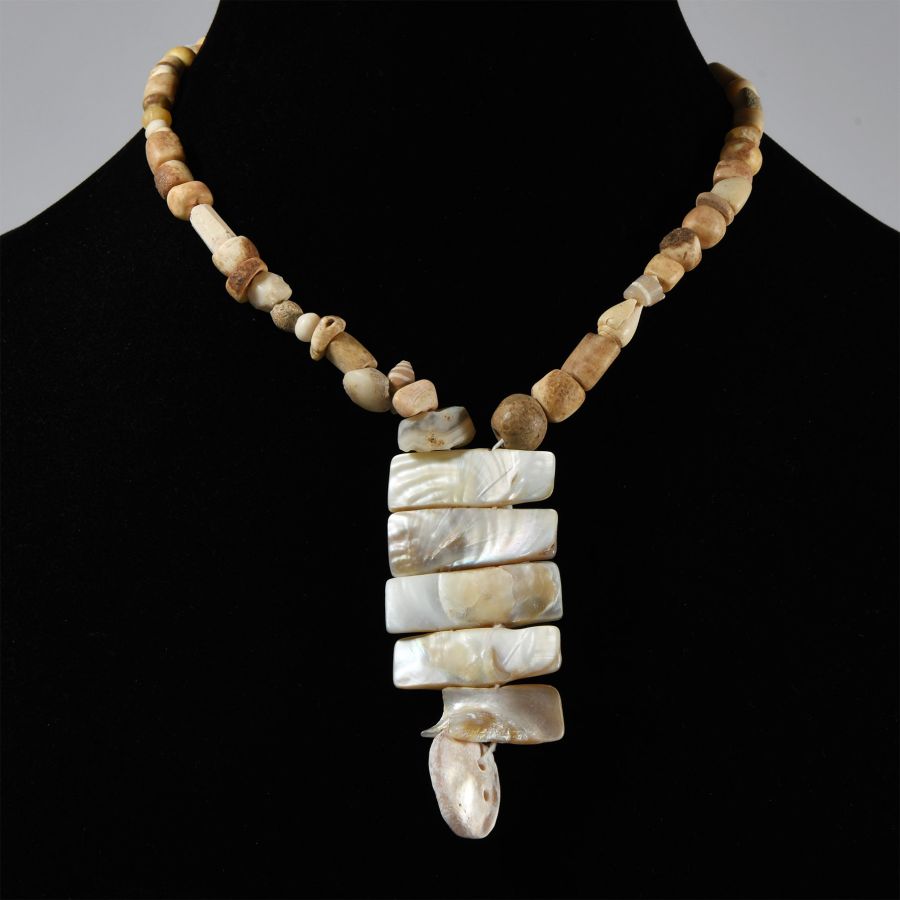
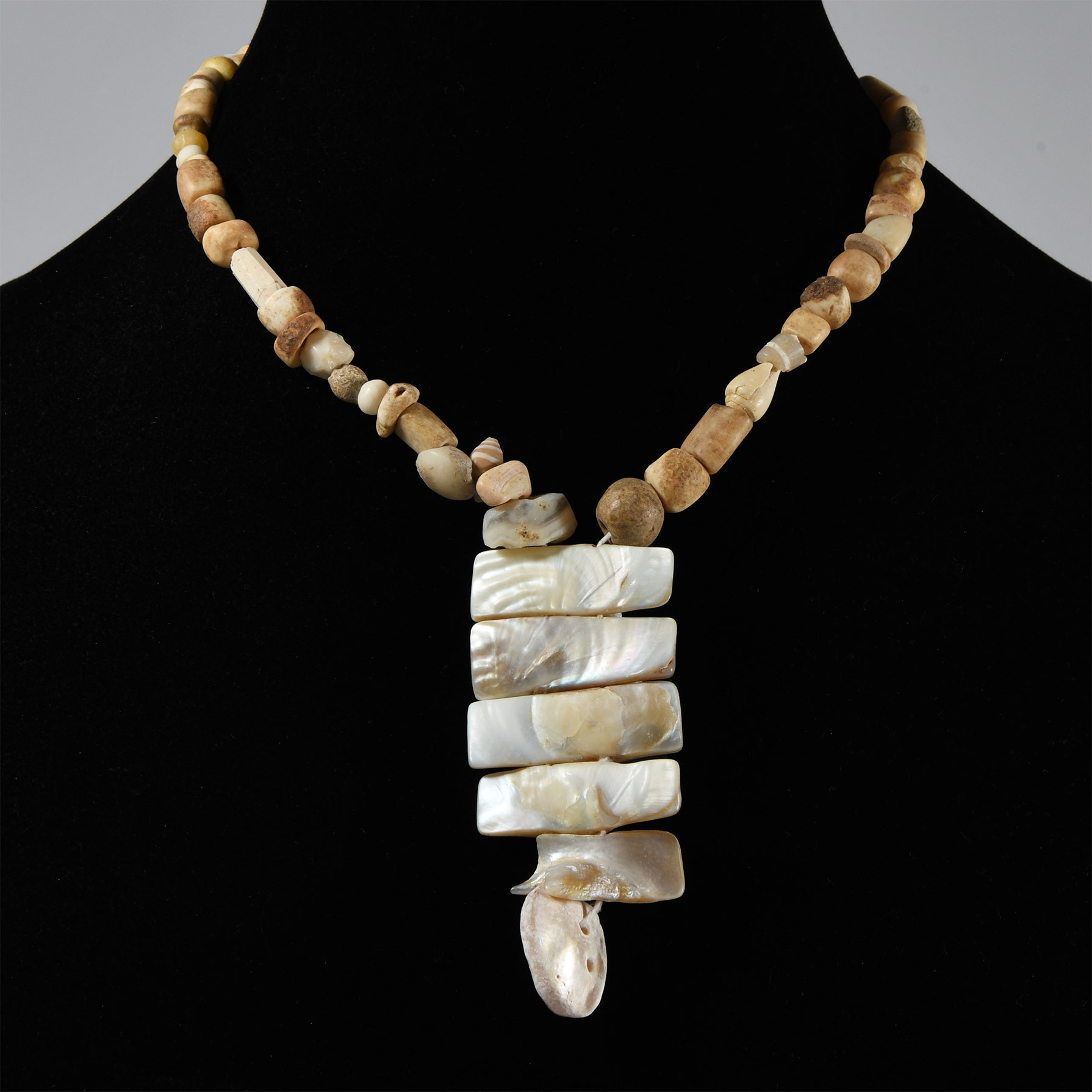
Western Asiatic Mixed Stone Bead Necklace
1ST MILLENNIUM B.C. AND LATER
13 3/8 in. (45.3 grams, 34 cm).
Restrung designer necklace with tubular, oblate and other beads, the centrepiece formed of six shell bracelet sections. [No Reserve]
ProvenanceAcquired on the London, UK, art market in the 1990s.
Ex London, UK, gallery.
TimeLine Auctions follows a vetting process to ensure the authenticity and legality of all items, reinforcing our commitment to integrity and responsible trading. Each antiquity, antique, and coin lot undergoes thorough examination by a vetting committee of at least ten external specialists, professional trade association members, scientists, and archaeologists: Our Vetting Process
AUCTIONS:
TimeLine is a leading auction house specialising in antiquities, ancient art, collectables, natural history, coins, medals, and books. Our auctions offer museums, collectors, historians, and enthusiasts the opportunity to acquire unique and historically significant pieces.
-
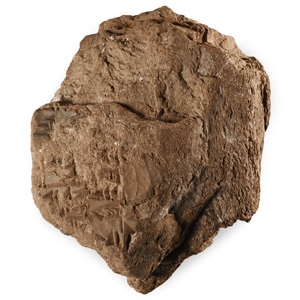
Ur III Terracotta Cuneiform Tablet Fragment
Circa 2000 B.C.Sold for (Inc. bp): £65
Irregular fragment with remains of original surface bearing columns of cuneiform text. 106 grams, 73 mm
Acquired from Ancient Art, London, UK, in 1985. From the personal collection of a West London, UK, gentleman. -
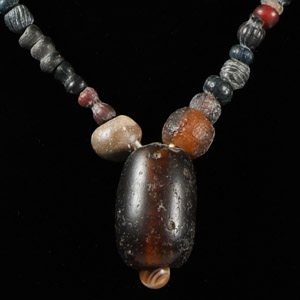
Western Asiatic Mixed Bead Necklace
1st millennium B.C. and laterSold for (Inc. bp): £46
Restrung group of glass seed beads with melon beads, centrepiece a large fusiform bead. 21.2 grams, 40.5 cm
Acquired on the London, UK, art market in the 1990s. Ex London, UK, gallery. -
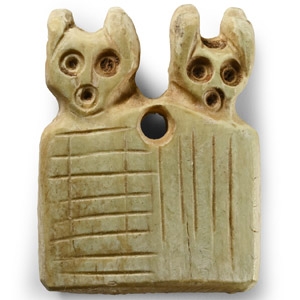
Western Asiatic Bone Twin-Headed Amulet
1st millennium B.C. or laterSold for (Inc. bp): £156
Rectangular pendant with hatched and cross-hatched panels to the body, median piercing, two feline heads with sockets for the eyes, ears and nose, to accept coloured inserts. 8.3 grams, 33 mm
From a collection acquired on the UK art market from various auction houses and collections mostly before 2000. From an important Cambridgeshire estate; thence by descent.
