
Loading, please wait...
LOT 1289
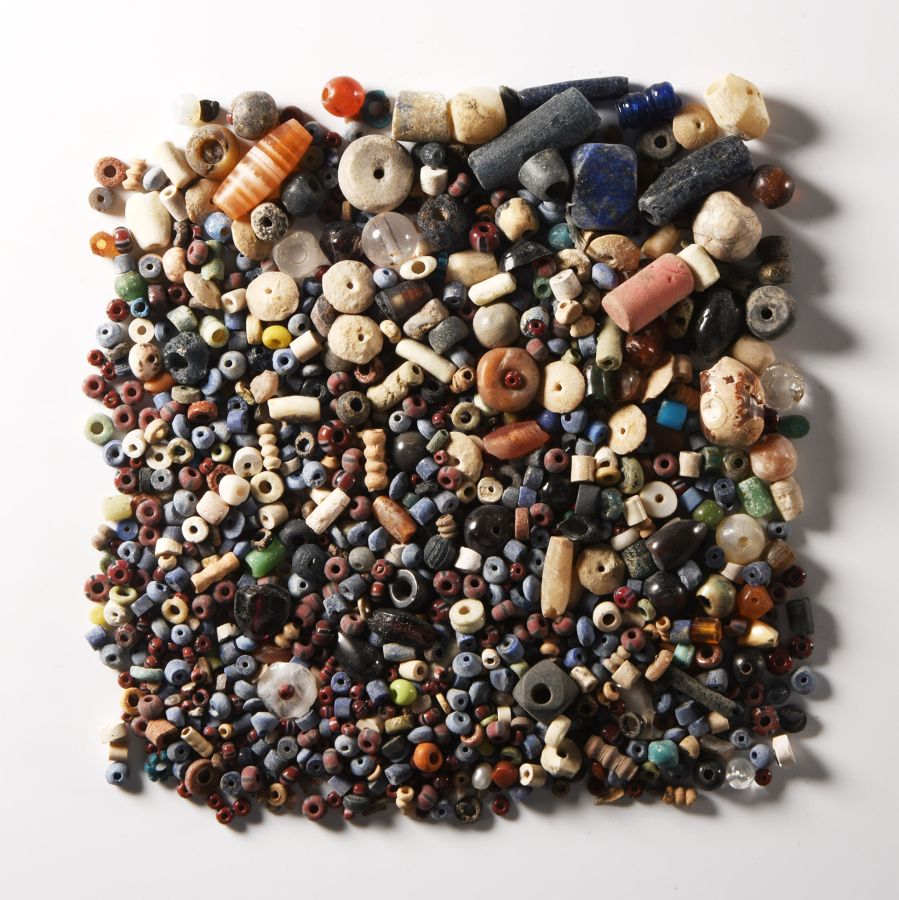
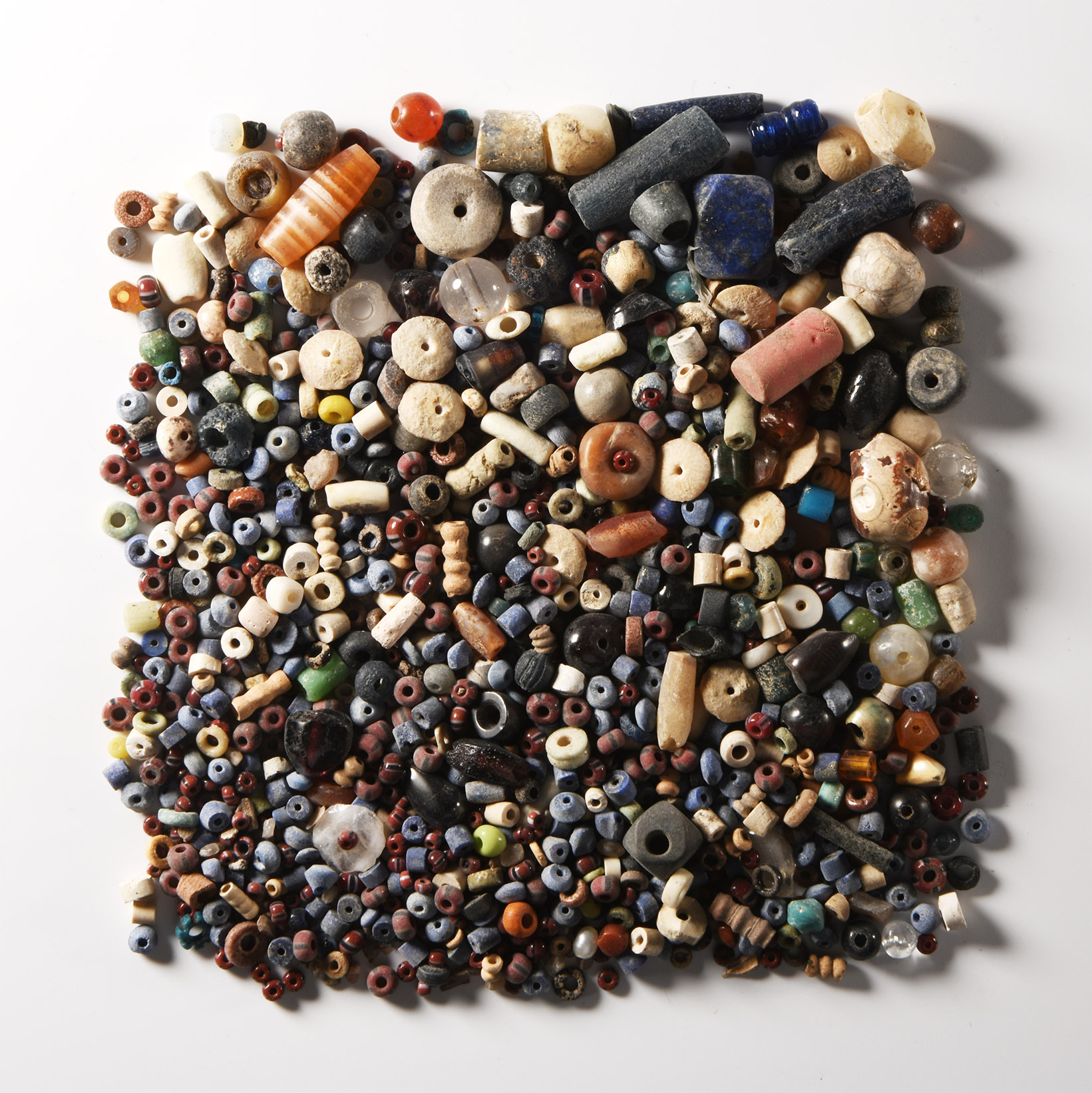
Western Asiatic Mixed Stone and Glass Necklace Bead Collection
1ST MILLENNIUM B.C. AND LATER
1/8 - 3/4 in. (87.1 grams total, 2-21 mm).
Comprising a large quantity of variously shaped beads in lapis lazuli, carnelian, agate, glass and other materials.
ProvenanceUK gallery, early 2000s.
LiteratureCf. Francis, P. Jr., ‘Glass Beads in Asia. Part I. Introduction’ in Asian Perspectives Vol. 28, no. 1, 1990, University of Hawaii Press, pp.1-21, pl.I, for similar.
FootnotesGlass is the premier bead material. Invented in the Middle East around 2500 B. C., glass making spread slowly. There are mainly two types of beads, drawn beads (when the tubes are cut in a short segments, which are usually agitated over heat to smooth off the sharp edges) or wound beads (made by wrapping molten glass around a rock, stick or wire. Once the bead is built up, it can be further pressed or paddled into shape, placed in a mold, or decorated with other colours of glass.
CONDITIONTimeLine Auctions follows a vetting process to ensure the authenticity and legality of all items, reinforcing our commitment to integrity and responsible trading. Each antiquity, antique, and coin lot undergoes thorough examination by a vetting committee of at least ten external specialists, professional trade association members, scientists, and archaeologists: Our Vetting Process
AUCTIONS:
TimeLine is a leading auction house specialising in antiquities, ancient art, collectables, natural history, coins, medals, and books. Our auctions offer museums, collectors, historians, and enthusiasts the opportunity to acquire unique and historically significant pieces.
LOT 1289
Western Asiatic Mixed Stone and Glass Necklace Bead Collection
Sold for (Inc. bp): £234
-
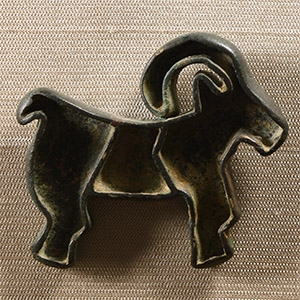
Bactrian Copper Stamp Seal with Ibex
Late 3rd millennium B.C.Sold for (Inc. bp): £468
Ibex-shaped seal with segmented body and long horns, facing right, standing on all four legs; mounted in a modern wooden frame with fabric backing. 220 grams total, 17.8 cm including frame
Ex London, UK, gallery, 1971-early 2000s. Property of a London gentleman.
The object belongs to a large class of compartmented seals, characteristic of this area. These stamps were frequently produced in either copper or bronze and would feature distinctive figural or geometric patterns such as floral and cross motifs, or animals such as goats, snakes, scorpions and mythical beasts. The wild goat or markhor or ibex Shumashti Siru, was a tribal animal subject to representation on the most ancient Bactrian seals. -
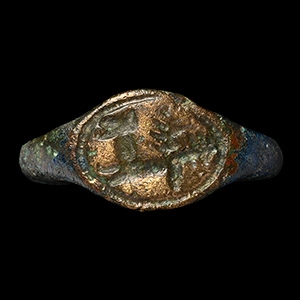
Western Asiatic Bronze Ring with Stag
Mid 1st millennium B.C.Sold for (Inc. bp): £26
With broad shank and ellipsoid bezel, incuse profile stag within a cartouche. 6.90 grams, 27.45 mm overall, 18.22 mm internal diameter (approximate size British P 1/2, USA 7 3/4, Europe 16.86, Japan 16)
UK private collection before 2000. Acquired on the UK art market. Property of a London gentleman. -
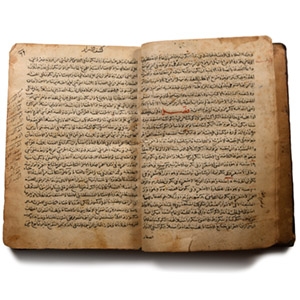
Islamic Leather-Bound Manuscript, Discovery and Science of Chemistry and the Stars by Ali bin Abd al-Rahman al-Ta'ifi al-Makki
Mecca, 996 A.H. (1588 A.D.)Estimate: £4,000 - 6,000 (+bp*)
Opening Bid: £2,000
Rebound laid paper manuscript with full leather binding, drypoint border to covers and central impressed arabesque foliage panel; conserved, with usage wear and many marginal notes and five-point stars in red and black; usage wear to edges repaired and restored, with feint drypoint lineation; title page with red and black naskh script triangular text-block framed with annulets; text in blocks of typically 23 black-ink lines per page with red underscoring and titles. 252 grams, 14.3 x 19.5 cm
From an important family collection started in the late 1950s. Property of a West London, UK, gentleman. This lot has been checked against the Interpol Database of stolen works of art and is accompanied by a search certificate number no.12271-220416.
The text is 'Kashf al'asrar fi hatk al'astar' (the discovery of science and chemistry) written by Ali Shalby Zadeh. This copy was written by Alin bin Abd al-Rahman al-Ta'ifi al-Makki in front of the Holy House at Mount Ajyad in Mecca in the year 996 A.H.
