
Loading, please wait...
LOT 1132
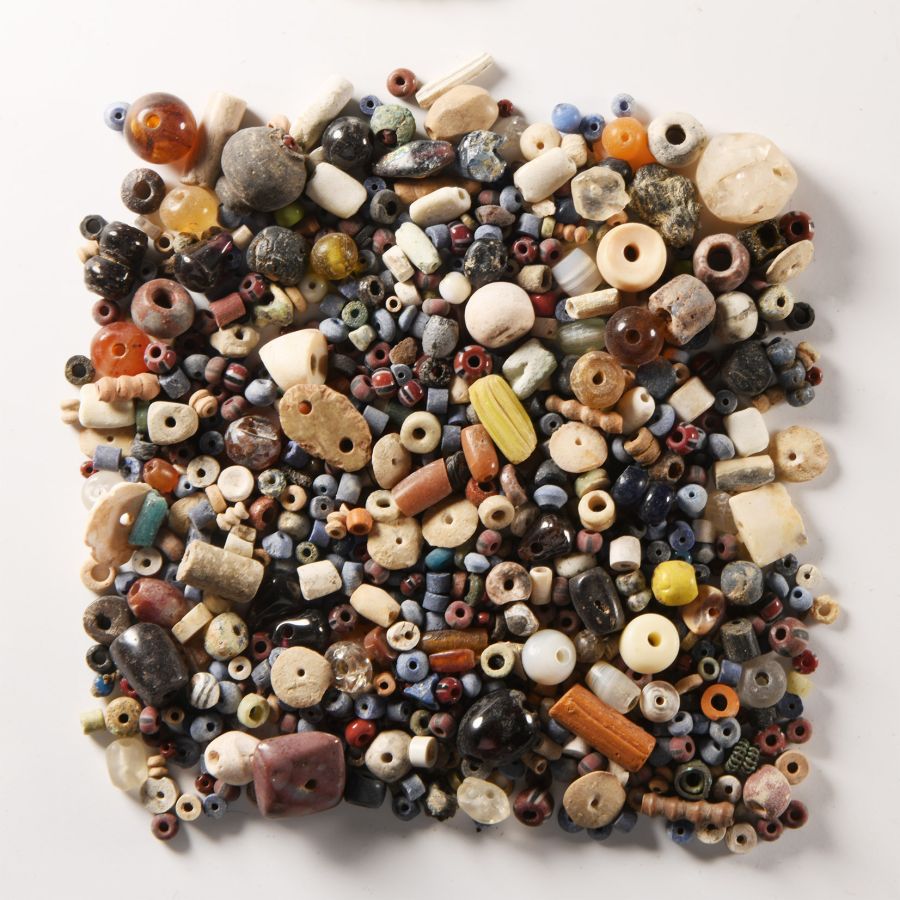
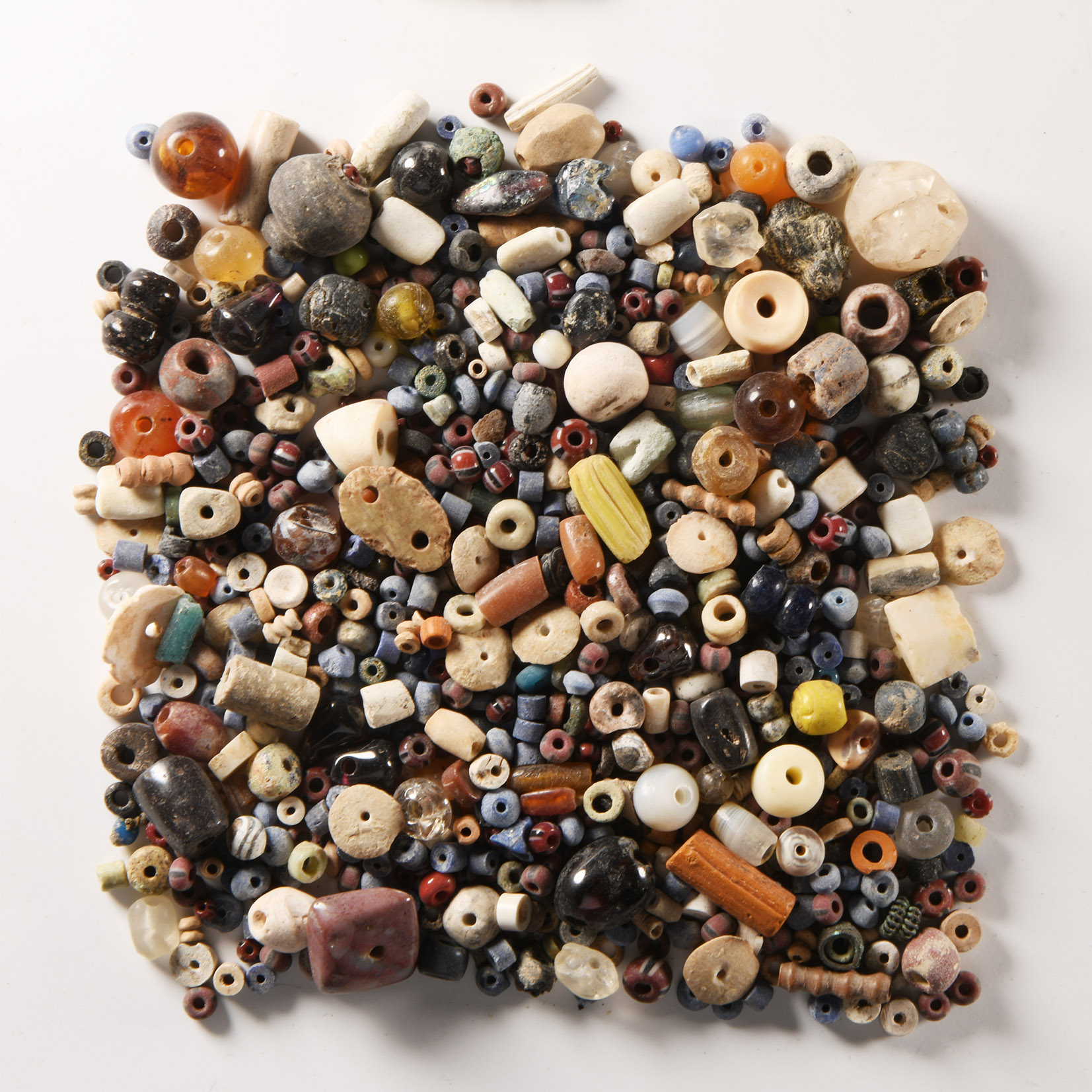
Western Asiatic Mixed Stone and Glass Necklace Bead Collection
1ST MILLENNIUM B.C. AND LATER
1/8 - 5/8 in. (78.4 grams total, 2-14 mm).
Comprising a large quantity of variously shaped beads in lapis lazuli, red jasper, rock crystal, glass and other materials.
ProvenanceUK gallery, early 2000s.
LiteratureCf. Francis, P. Jr., ‘Glass Beads in Asia. Part I. Introduction’ in Asian Perspectives ol. 28, no. 1, 1990, University of Hawaii Press, pp.1-21, pl.I, for similar.
FootnotesGlass is the premier bead material. Invented in the Middle East around 2500 B. C., glass making spread slowly. There are mainly two types of beads, drawn beads (when the tubes are cut in a short segments, which are usually agitated over heat to smooth off the sharp edges) or wound beads (made by wrapping molten glass around a rock, stick or wire. Once the bead is built up, it can be further pressed or paddled into shape, placed in a mould, or decorated with other colours of glass.
CONDITIONTimeLine Auctions follows a vetting process to ensure the authenticity and legality of all items, reinforcing our commitment to integrity and responsible trading. Each antiquity, antique, and coin lot undergoes thorough examination by a vetting committee of at least ten external specialists, professional trade association members, scientists, and archaeologists: Our Vetting Process
AUCTIONS:
TimeLine is a leading auction house specialising in antiquities, ancient art, collectables, natural history, coins, medals, and books. Our auctions offer museums, collectors, historians, and enthusiasts the opportunity to acquire unique and historically significant pieces.
LOT 1132
Western Asiatic Mixed Stone and Glass Necklace Bead Collection
Sold for (Inc. bp): £130
-
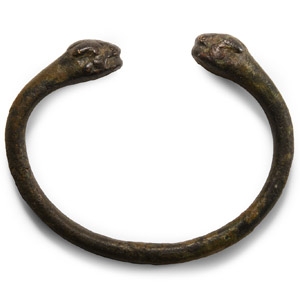
Urartu Bronze Bracelet with Beast Heads
9th-6th century B.C.Sold for (Inc. bp): £65
D-section hoop with finials formed as opposed serpent-heads. 54 grams, 74 mm
UK private collection before 2000. Acquired on the UK art market. Property of a London gentleman. -
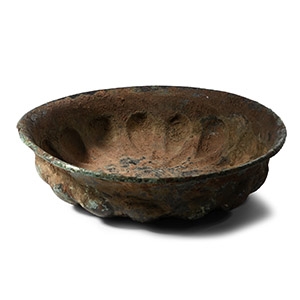
Achaemenid Bronze Phiale with Boss
7th-5th century B.C.Estimate: £700 - 900 (‡+bp*)
Opening Bid: £350
Broad lotiform bowl with everted and turned rim, domed mesomphalos. 298 grams, 16.5 cm
Acquired in the mid 1980s-1990s. Private collection, Switzerland, thence by descent. Private collection, since the late 1990s. -
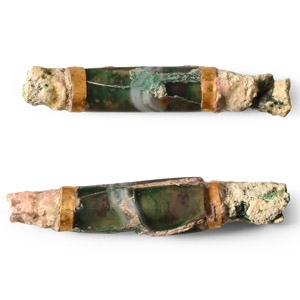
Phoenician Glass Beads with Gold Spacers
1st millennium B.C.Sold for (Inc. bp): £156
Comprising two tubular banded green beads with gold collars, fused with other beads. 7.05 grams, 79 mm
Collected from 1970-1999. From the collection of the late Mr S.M., London, UK.
