
Loading, please wait...


LOT 1113
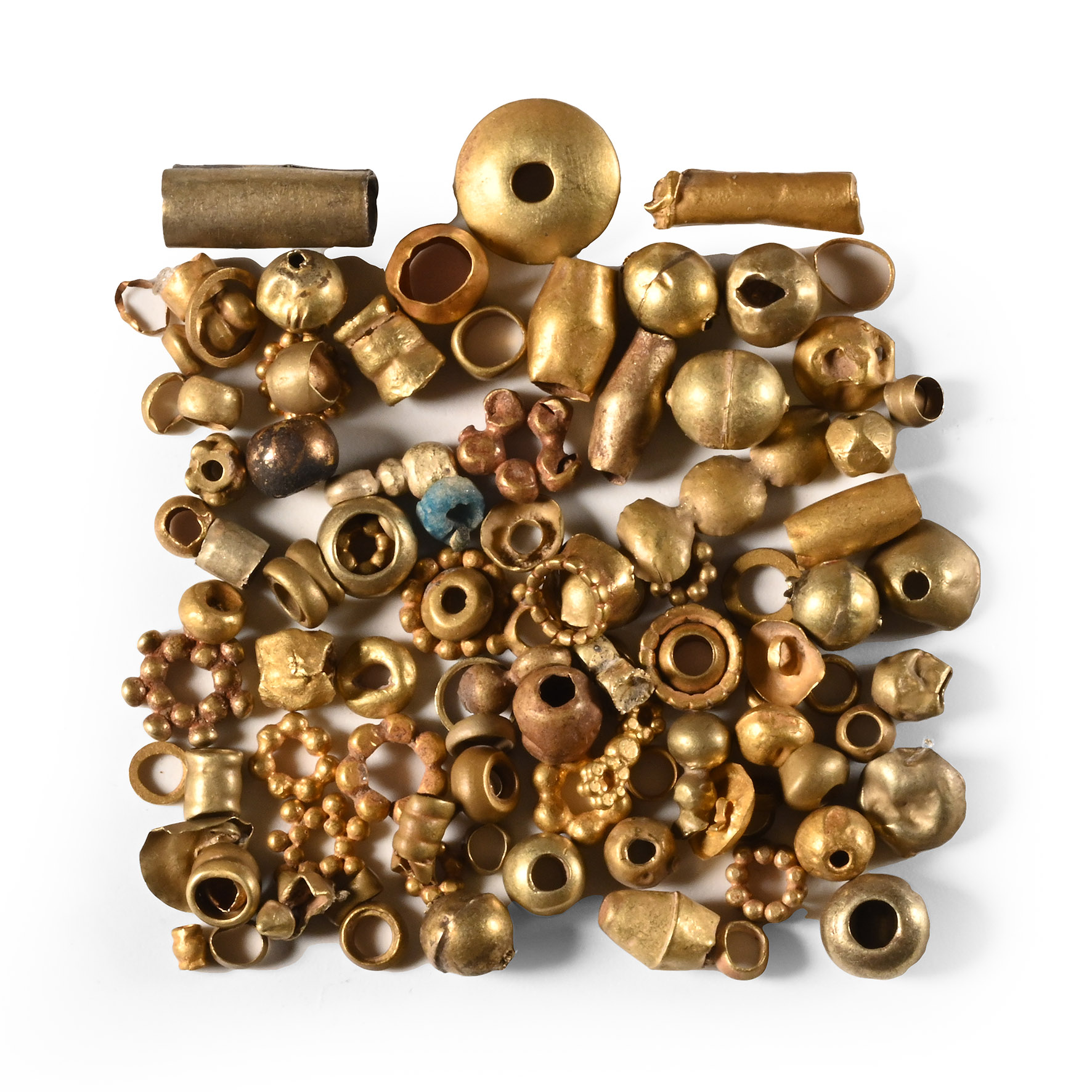
Western Asiatic Mixed Gold Bead Group
2ND-1ST MILLENNIUM B.C.
1/8 - 5/8 in. (8.32 grams total, 1-14 mm).
Including spherical, tubular, biconvex and other types, some with granule detailing. [96]
ProvenanceEx property of a late Japanese collector, 1970s-2000s.
CONDITIONTimeLine Auctions follows a vetting process to ensure the authenticity and legality of all items, reinforcing our commitment to integrity and responsible trading. Each antiquity, antique, and coin lot undergoes thorough examination by a vetting committee of at least ten external specialists, professional trade association members, scientists, and archaeologists: Our Vetting Process
AUCTIONS:
TimeLine is a leading auction house specialising in antiquities, ancient art, collectables, natural history, coins, medals, and books. Our auctions offer museums, collectors, historians, and enthusiasts the opportunity to acquire unique and historically significant pieces.
LOT 1113
Western Asiatic Mixed Gold Bead Group
Estimate £500 - 700€580 - 810 (for guidance only)$680 - 950 (for guidance only)
-
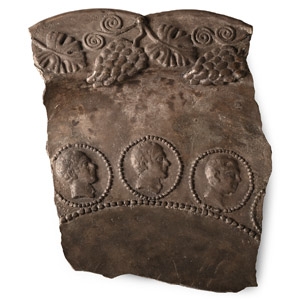
Bactrian Style Bowl Fragment
20th century A.D.Sold for (Inc. bp): £98
Comprising a portion of the rim, silver-coloured metal short sidewall and base; rim with vine tendrils, leaves and bunches of grapes modelled in high-relief and extending into the bowl; base with a ring of right-facing male profile busts each within a pelletted hoop, and border of larger pellets below; underside abraded. 132 grams, 13.5 cm
Collected from 1970-1999. From the collection of the late Mr S.M., London, UK. -
.jpg)
Western Asiatic Carnelian Bead Necklace String
1st millennium B.C. and laterSold for (Inc. bp): £39
Graduated string of irregular beads and dangles, banded centrepiece. 22.5 grams, 34 cm
Acquired 1980-2015. Ex Abelita family collection. -
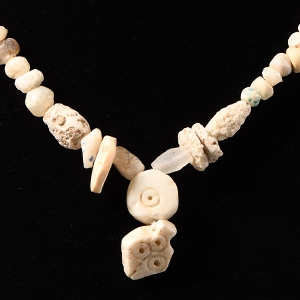
Western Asiatic Bead Necklace String
1st millennium B.C. and laterSold for (Inc. bp): £52
Restrung designer necklace with two central feature beads; composed of graduated beads of various types of stone, glass and shell. 16.6 grams, 35 cm
Acquired 1980-2015. Ex Abelita family collection.
Similar beads were found during the excavations of the royal tombs of Nimrud. Thousands of beads were discovered in the sarcophagi, including those of Nimrud’s Queens; they probably originally formed part of wide collars with multiple strands.
