
Loading, please wait...
LOT 1257
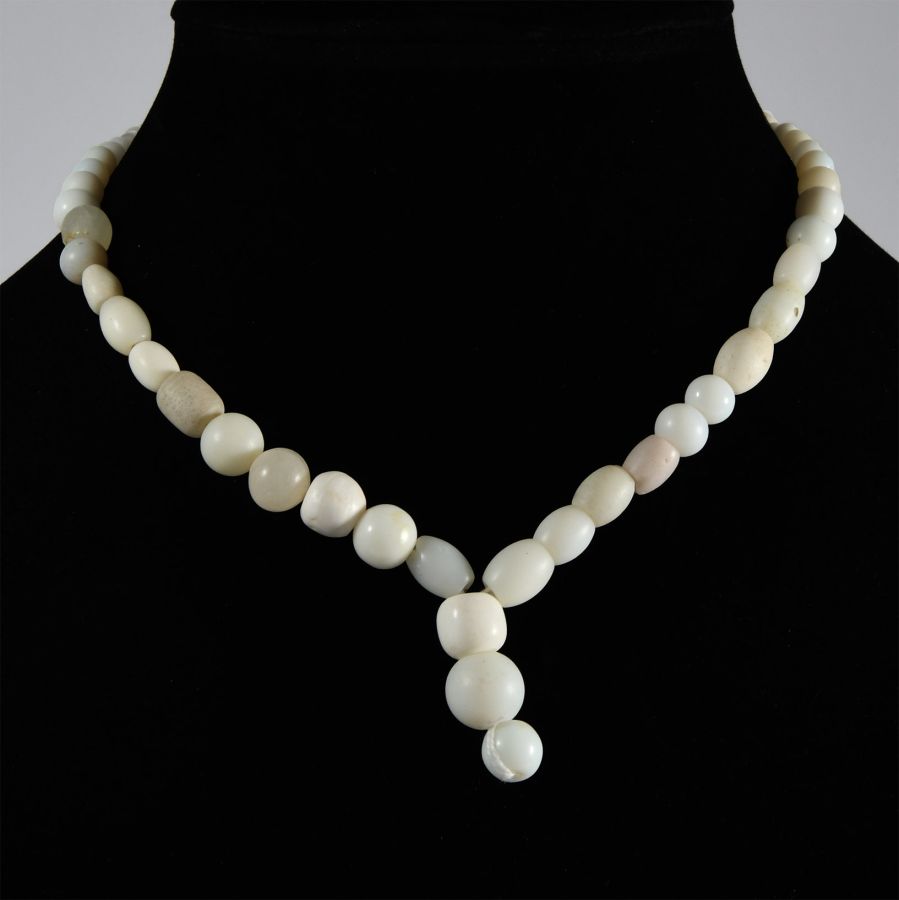
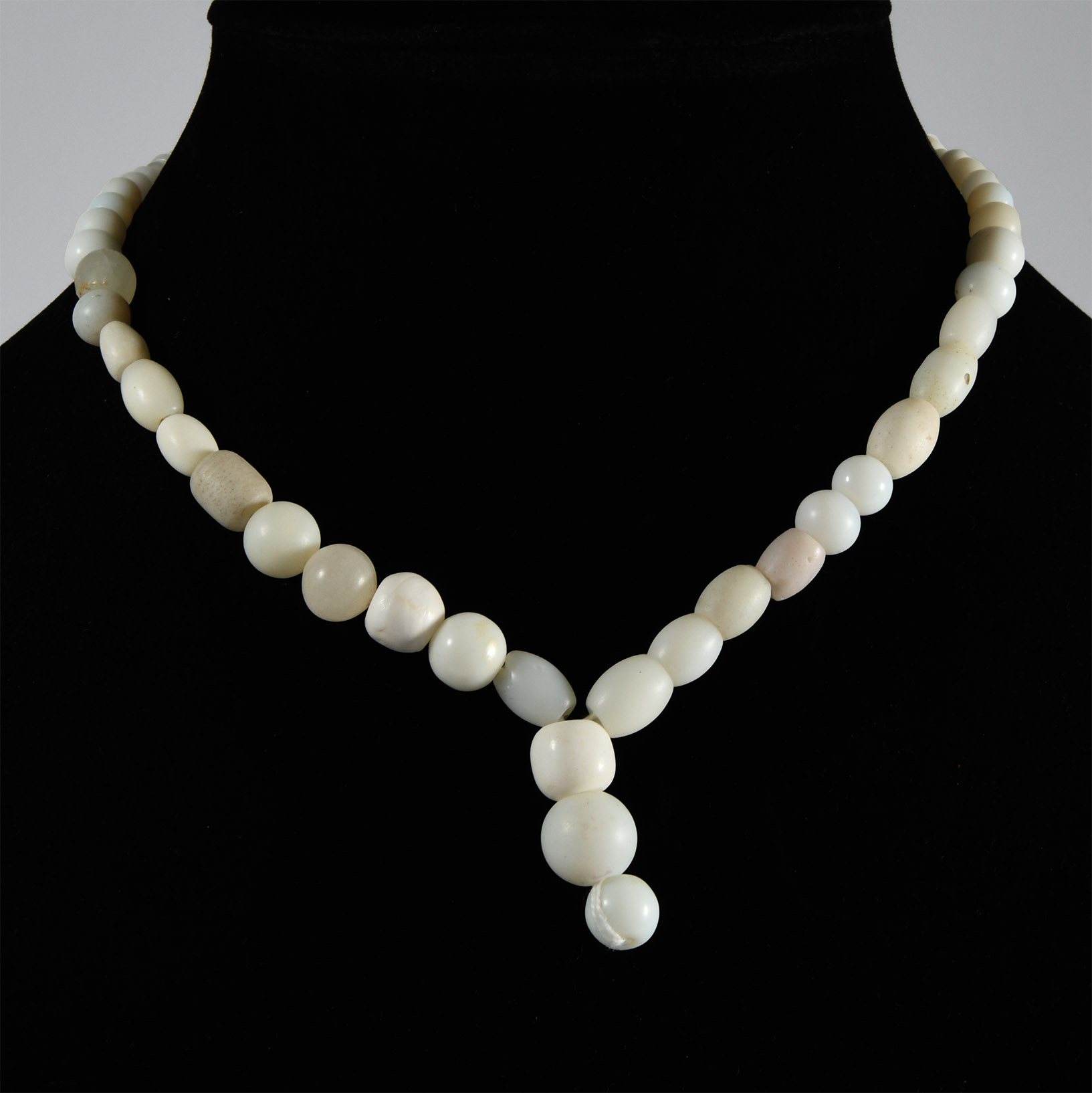
Western Asiatic Mixed Bead Necklace
1ST MILLENNIUM B.C. AND LATER
12 1/4 in. (28.9 grams, 31.2 cm).
A restrung designer necklace of glass beads, mainly spherical and fusiform types. [No Reserve]
ProvenanceAcquired on the London, UK, art market in the 1990s.
Ex London, UK, gallery.
TimeLine Auctions follows a vetting process to ensure the authenticity and legality of all items, reinforcing our commitment to integrity and responsible trading. Each antiquity, antique, and coin lot undergoes thorough examination by a vetting committee of at least ten external specialists, professional trade association members, scientists, and archaeologists: Our Vetting Process
AUCTIONS:
TimeLine is a leading auction house specialising in antiquities, ancient art, collectables, natural history, coins, medals, and books. Our auctions offer museums, collectors, historians, and enthusiasts the opportunity to acquire unique and historically significant pieces.
-
.jpg)
Large Mesopotamian Stone Stamp Seal with Lamassu
Circa 2000 B.C.Estimate: £800 - 1,000 (+bp*)
Opening Bid: £400
Plano-convex in section with broad face, incuse profile image of a lamassu (winged bull with a human head) with pellets and objects in the field. 70 grams, 59 mm
Collected from 1969-1999. From the collection of the late Mr S.M., London, UK. -
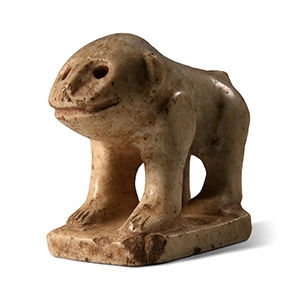
Western Asiatic Alabaster Quadruped
20th century A.D.Sold for (Inc. bp): £169
Carved figure of a hound standing on a rectangular base, ssockets to the eyes to accept coloured inserts. 641 grams, 11.3 cm wide
From the property of late Mr SM, London, UK, 1969-1999. -
.jpg)
Western Asiatic Alabaster Bowl
Circa 1st millennium B.C. or laterSold for (Inc. bp): £98
Squat in profile with rounded underside, gently curved rim. 1.03 kg, 16 cm wide
From a collection acquired on the UK art market from various auction houses and collections mostly before 2000. From an important Cambridgeshire estate; thence by descent.
